











Akris makes fashion you can feel Albert Kriemler meets the universe of Colombian artist Olga de Amaral

Some clothes make you want to draw closer. To understand how a surface is constructed, trace an interlacing, imagine the weight of a coat on your shoulders. Even through a screen, they retain something that an image cannot fully convey. The Autumn Winter 2026 collection by Akris inhabits this space: that distance between seeing a garment and wanting to feel it between your fingers. Albert Kriemler starts from the material and lets its possibilities define everything else, building a wardrobe in which the precision of design coexists with an almost instinctive sensibility.
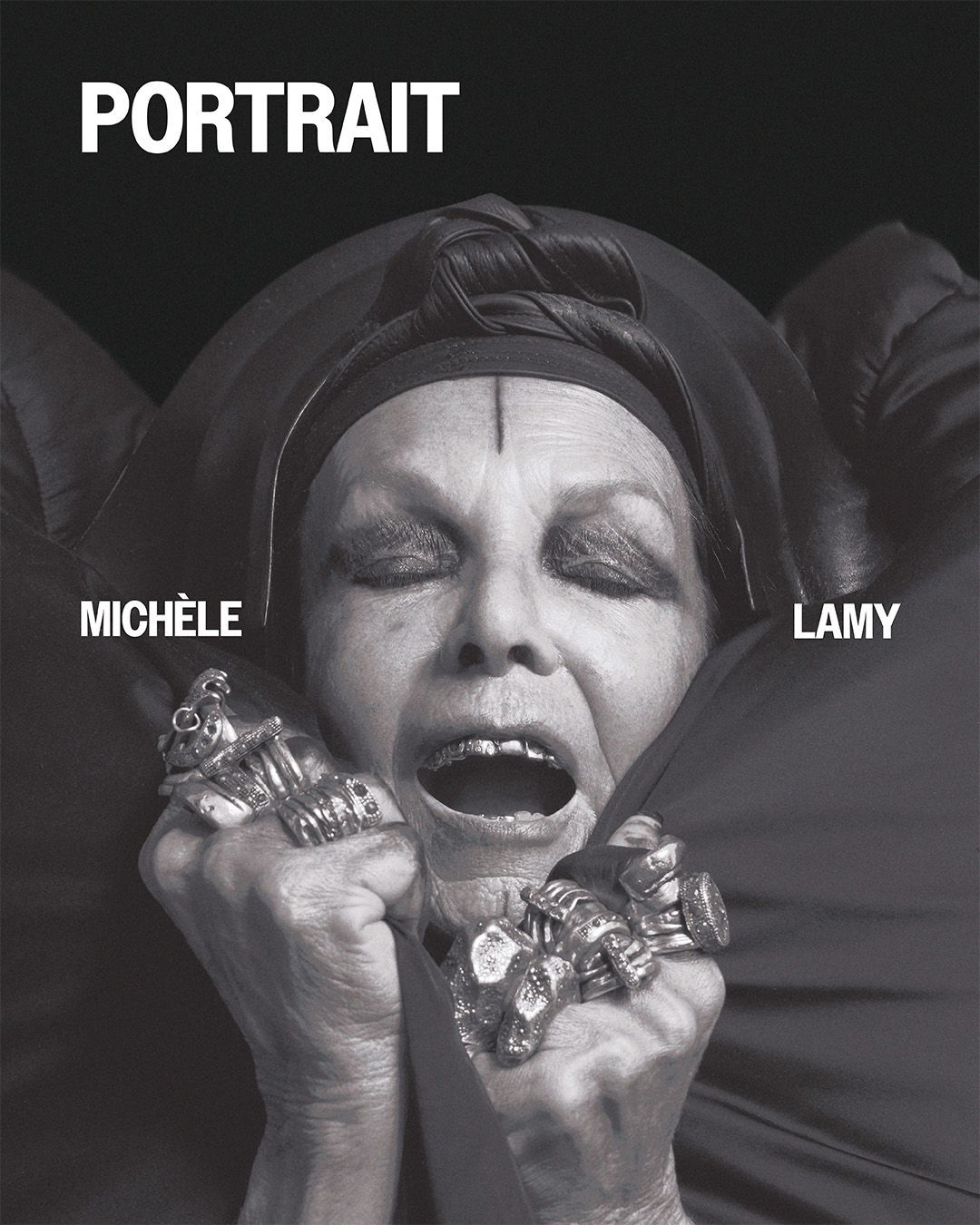
Guiding this exploration is the work of Olga de Amaral, a Colombian artist who for over sixty years has explored textile through works capable of occupying space like sculptures. Wool, linen, cotton and horsehair are woven, knotted, coated with plaster, pigments and gold leaf. In her hands, familiar materials acquire a new density: they become cascades, columns, surfaces that hold light. Weaving expands beyond the wall, taking on a physical presence that invites the viewer to move around the work.
Kriemler had long been familiar with this world. Following the retrospective at the Fondation Cartier, in September 2025 he travelled to de Amaral's studio in Bogotá, spending three days with her. It is from this encounter that the collection takes shape, through an exchange about craft and the experience of touch. The point of connection is concrete: both think through materials. For the designer, a piece of fabric held in the hand is already the beginning of a garment; for the artist, a thread can suggest a form before it has even been imagined.
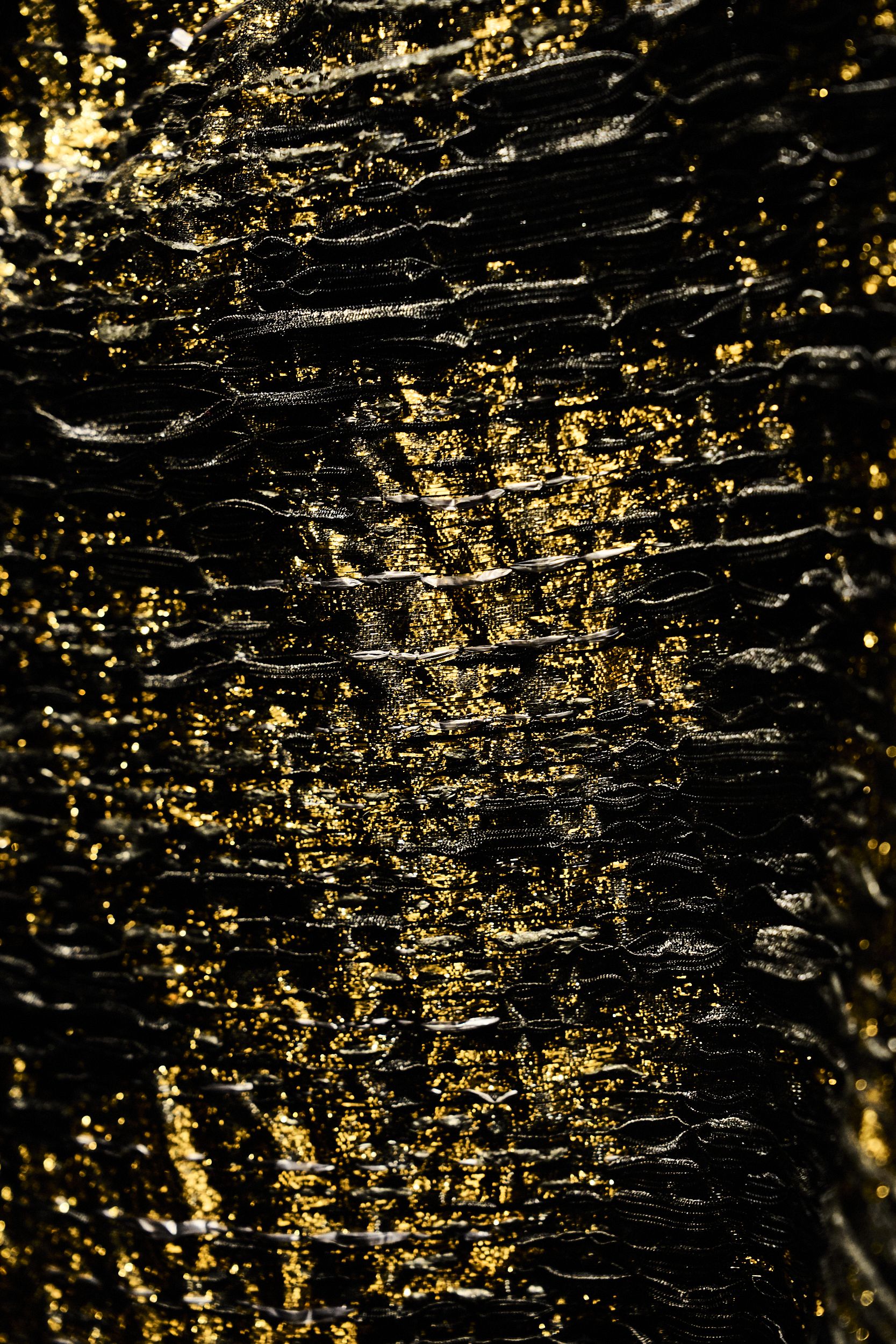
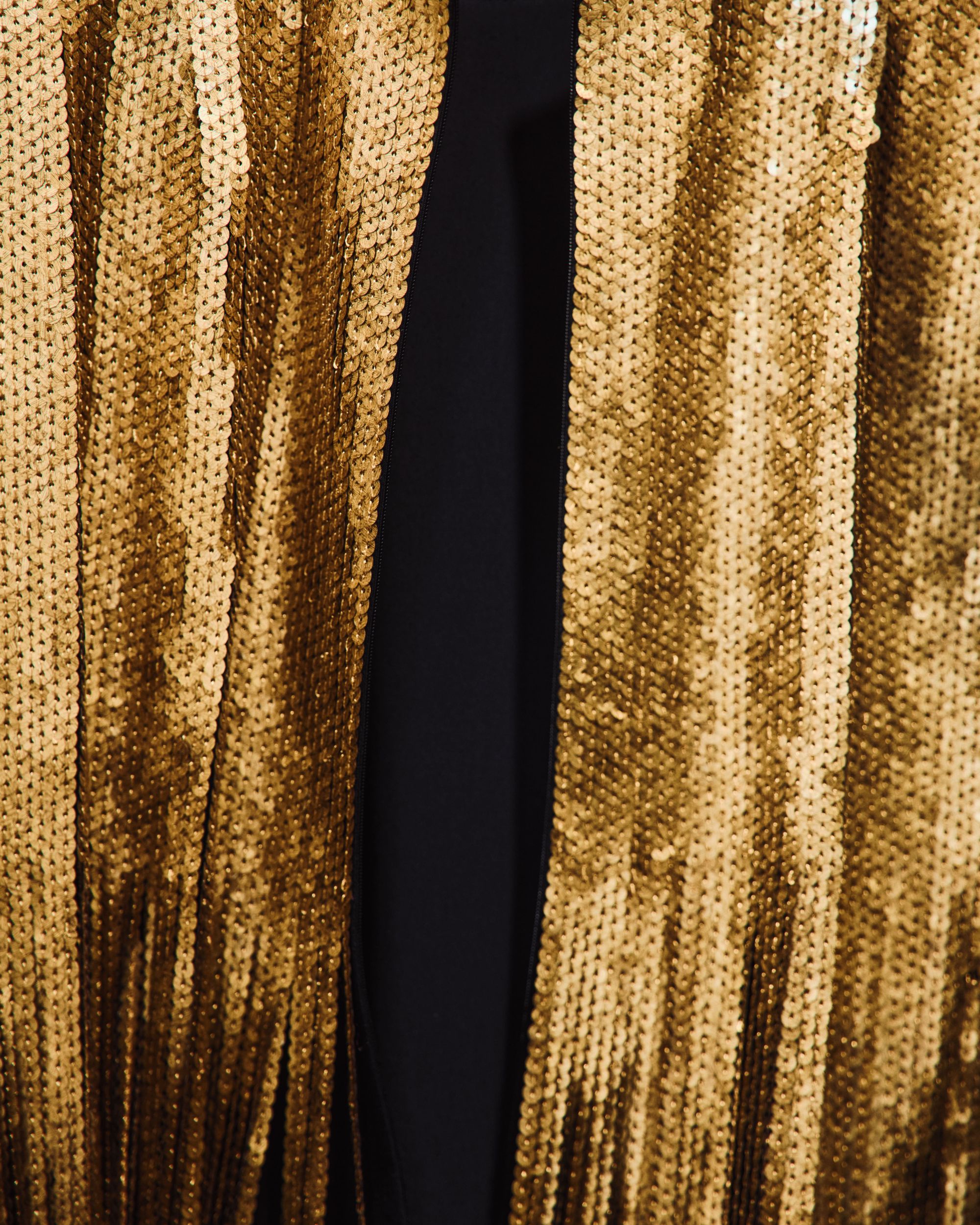
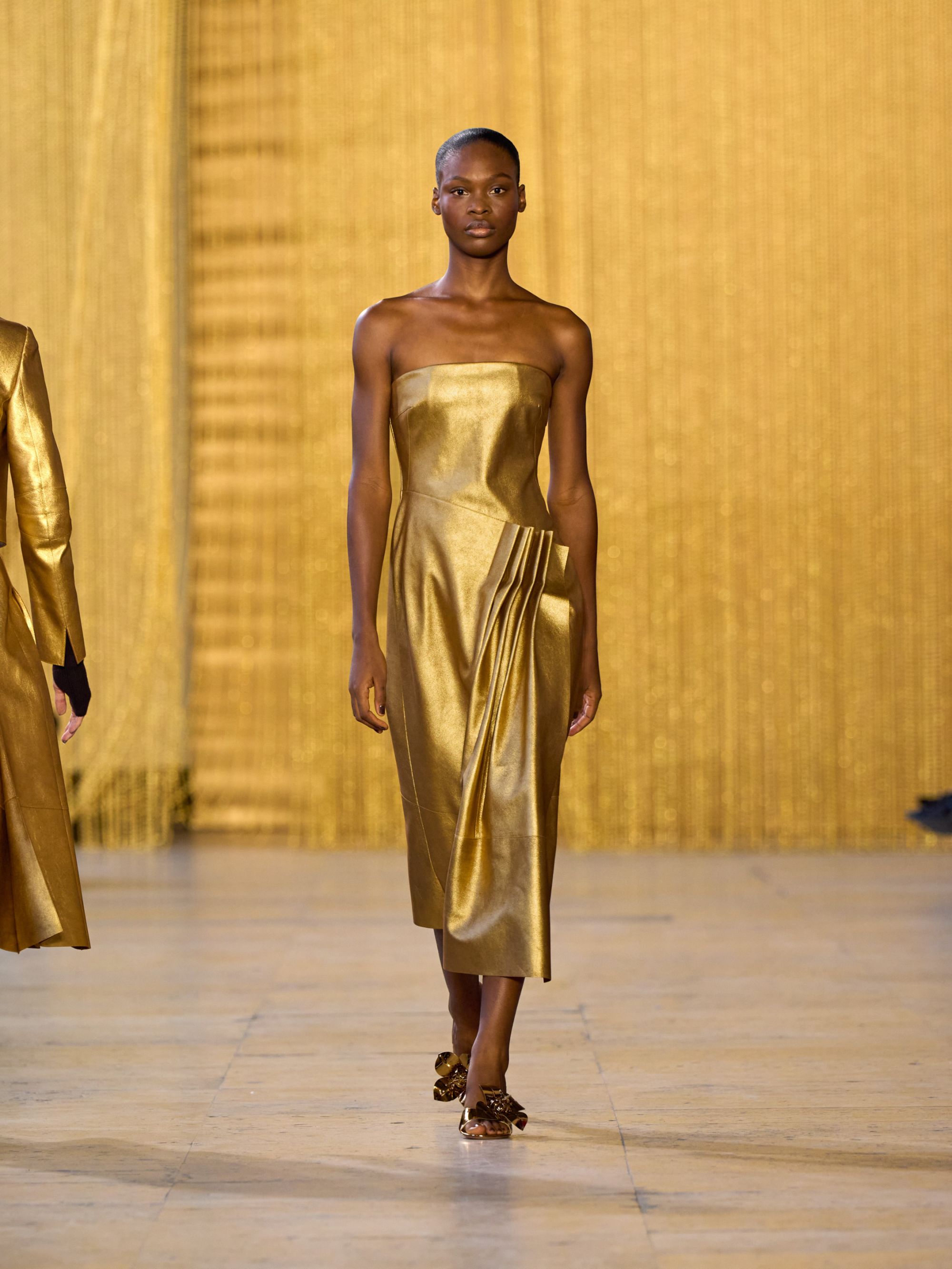
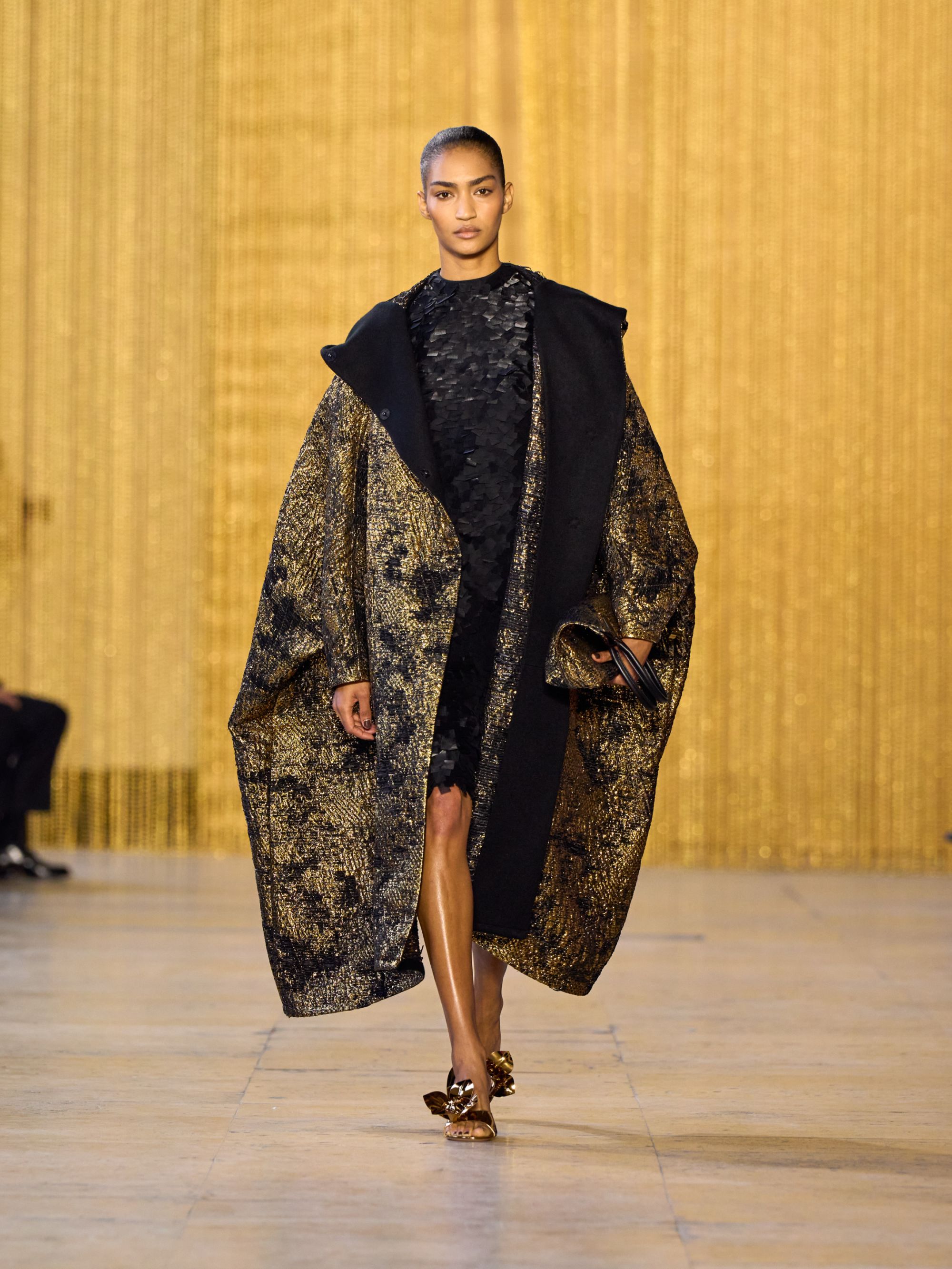
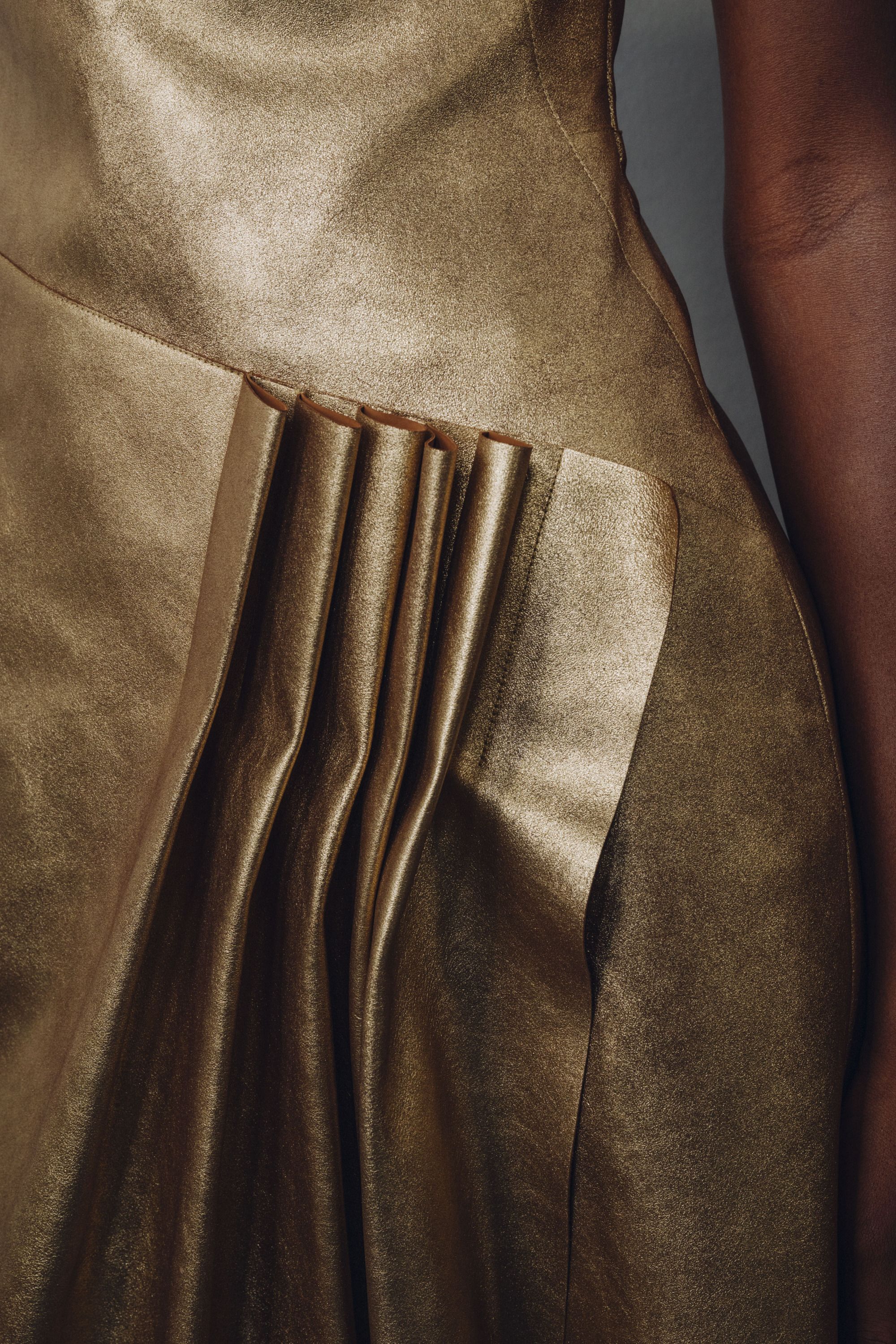
This affinity is most apparent in the way Akris works with light. The black and gold jacquard of the cocoon coat that opens the collection creates a fragmented surface, while gilded leather takes the form of fitted jackets, asymmetric skirts and bustier dresses. The reference to de Amaral's Alquimia series runs through the wardrobe in reflections that shift according to the technique used. Gold seems to have a different texture each time — more compact in the leather, fluid in the fringing, delicate in the transparent layers.
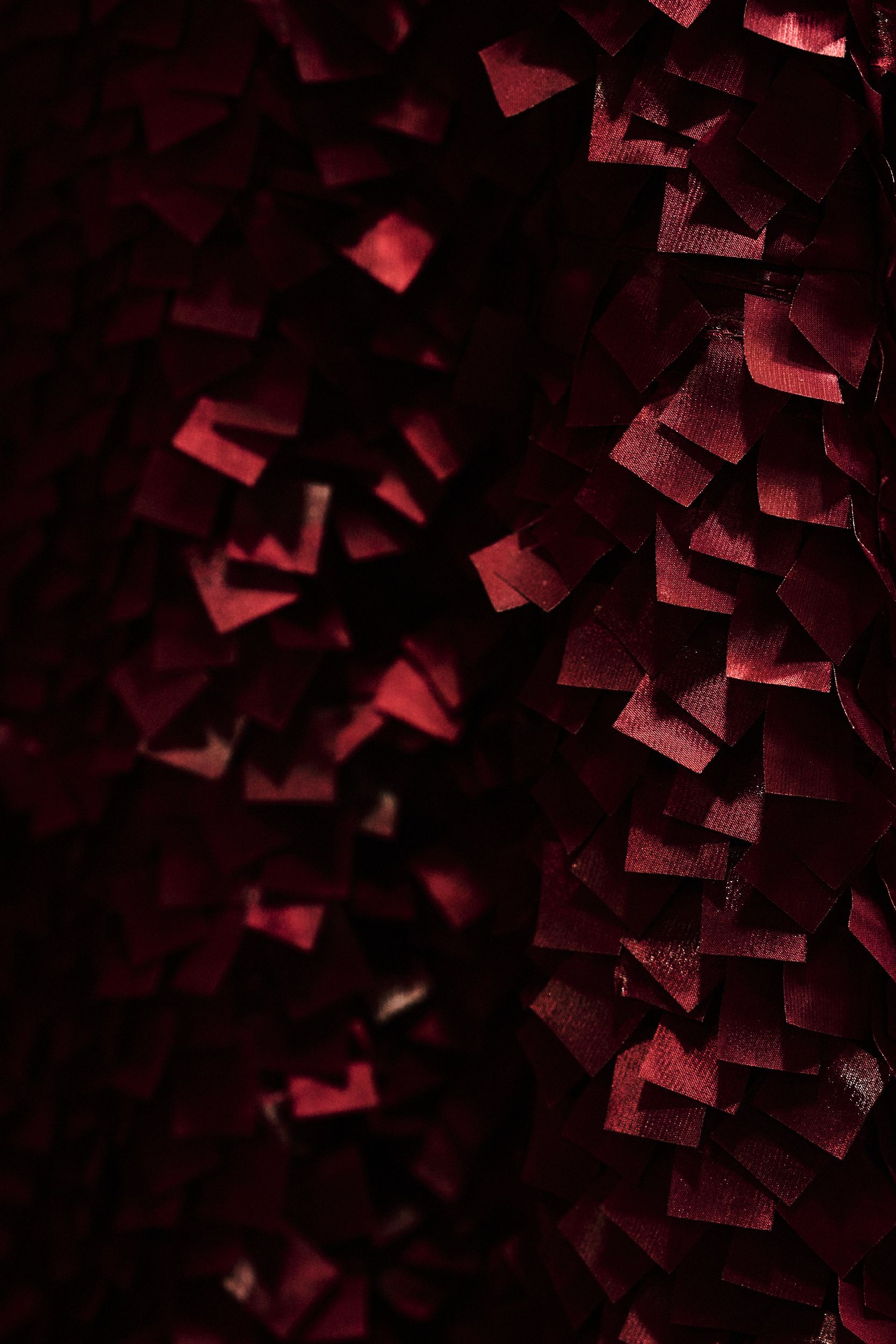
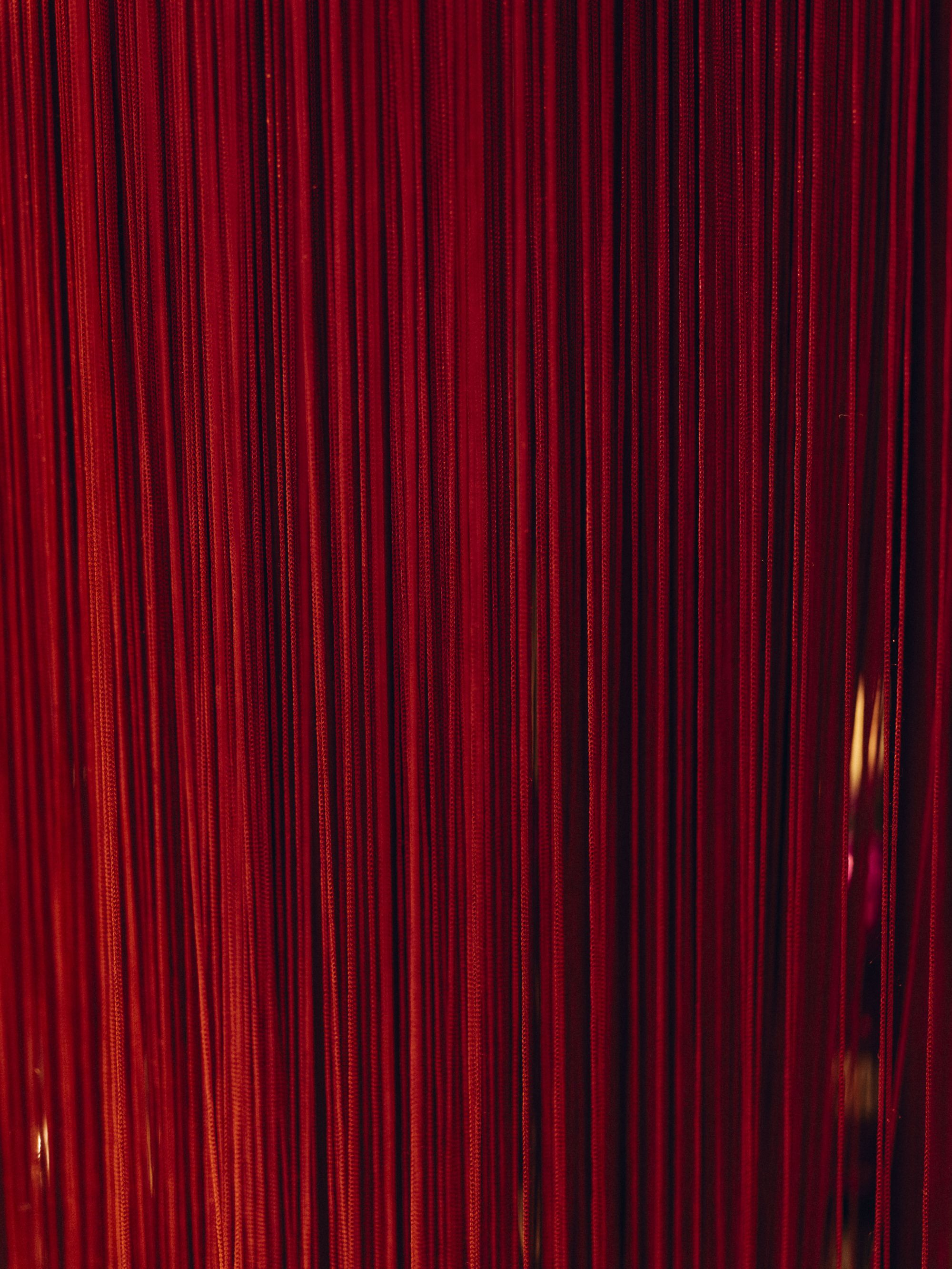
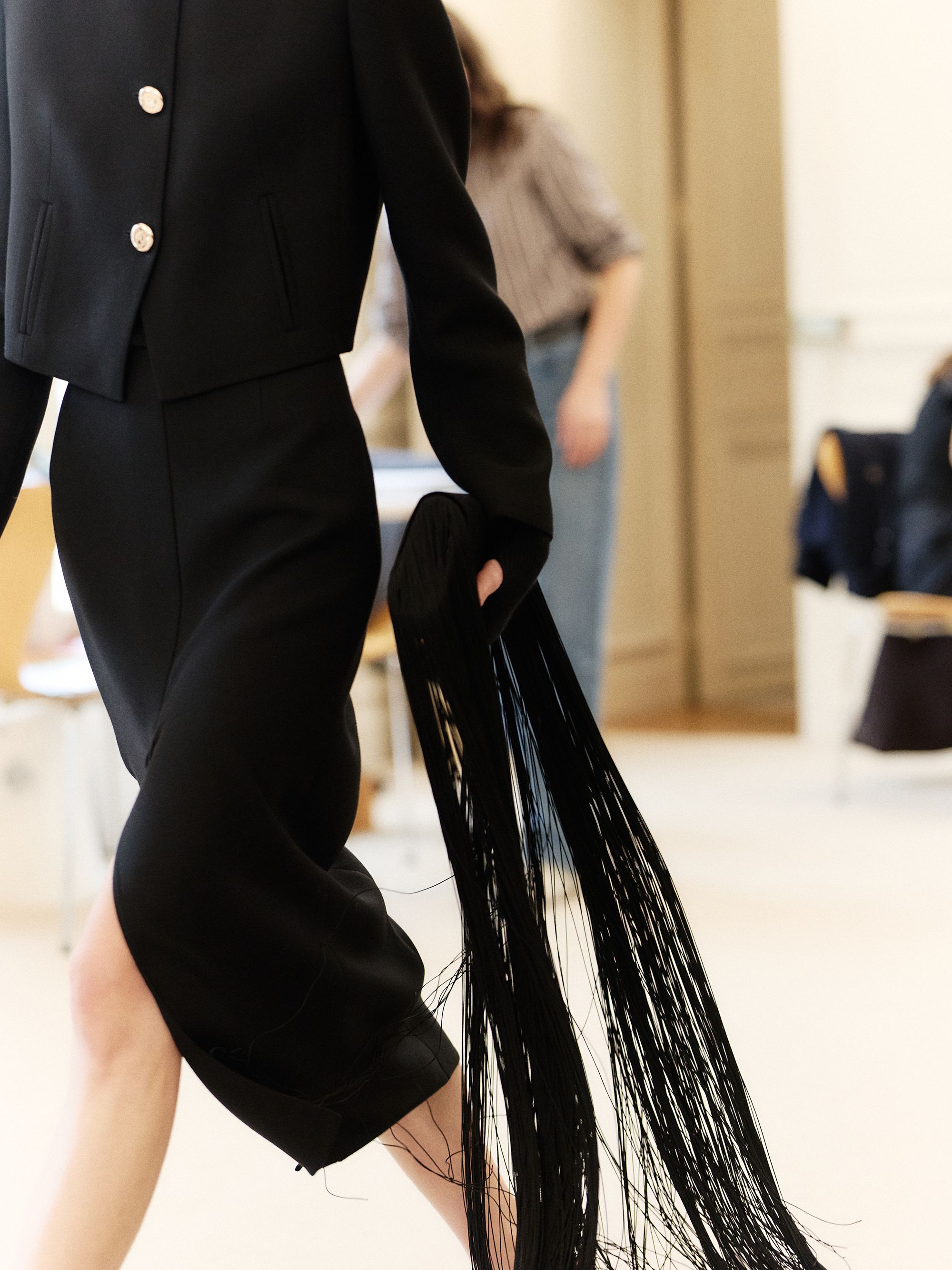
Organza is constructed through layered elements, like small tessellations that lend depth to the garments without sacrificing their lightness. Fringing, meanwhile, elongates the silhouettes and makes movement visible: it falls from skirts, runs through knitwear, and adorns evening dresses. In the references to the works Nudo and Lienzo, one finds the pleasure of interlacing — that ability to achieve a complex structure from an elemental gesture. This is where the dialogue between art and fashion becomes truly compelling, because the reference enters into the construction of the garment and alters its behaviour.
Colour, too, follows a sensory trajectory. Coffee browns and Merlot reds introduce a warm depth, joined by Forest and Amazon greens. Then come turquoise, magenta and Caladium red, capable of sharpening the volumes of coats and lending vibrancy to the lighter surfaces of georgette. Pairings of green and magenta, or magenta and red, energise a wardrobe that maintains clarity of form. Colour becomes part of the structure, influencing the way we read each silhouette.
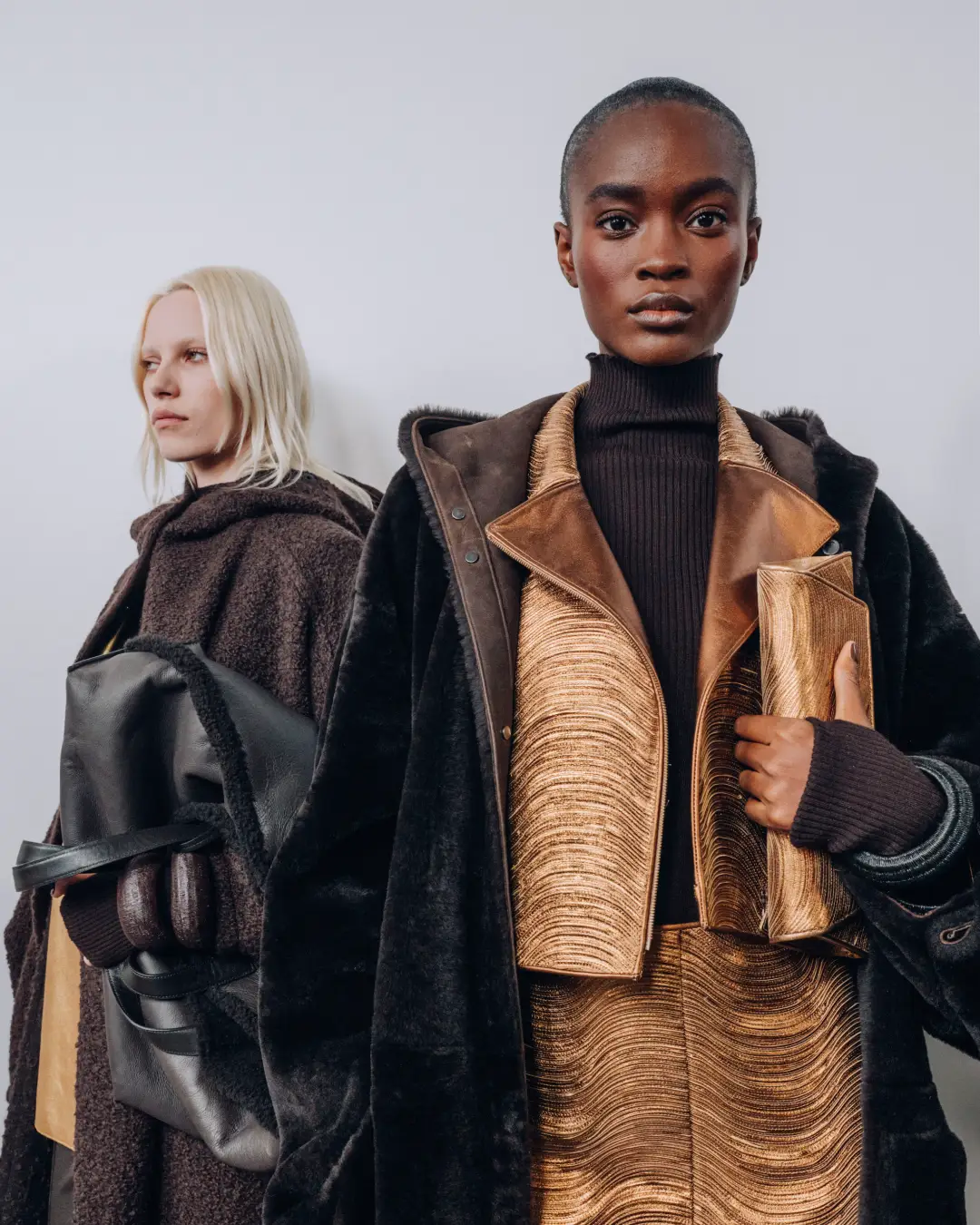
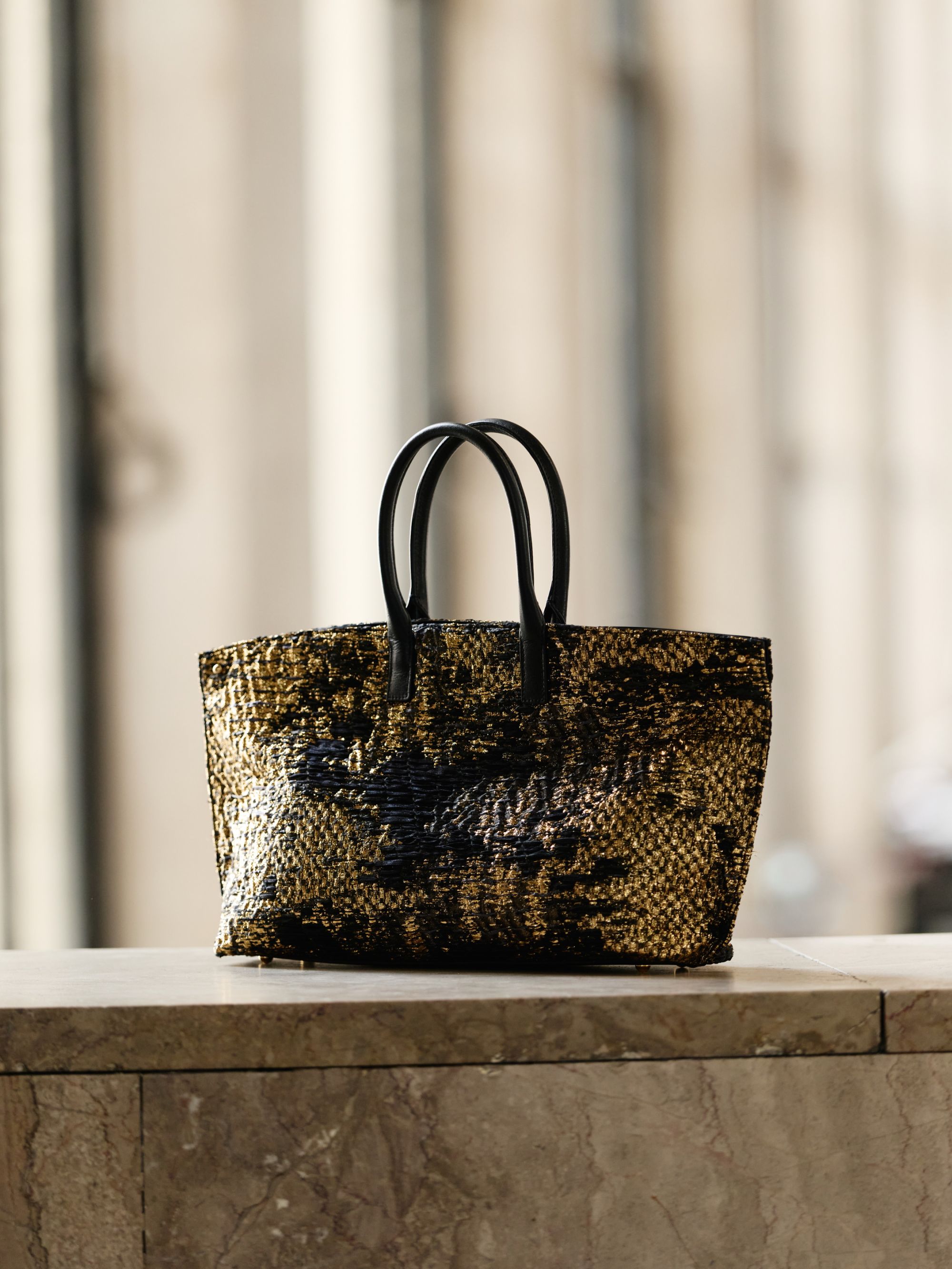
It is the materials that bring everything back close to the body. Shearling envelops, cashmere softens volumes, eel skin introduces a compact luminosity. Velvet neoprene allows dresses and skirts to be precisely shaped, while horsehair adds a drier texture. The bags, too, are part of the exploration: Alice comes in horsehair, Anouk in metallic weave or velvet with long fringing, Ai in suede and shearling. Objects to carry with you, in which the same attention to surfaces is found at a smaller scale.
In a fashion system accustomed to demanding an immediately recognisable message from its collections, Akris invites us to linger on the details. A knot, the edge of a fringe, the transparency of a layer can tell as much as an entire silhouette. The emotion arises from this attentiveness, from the possibility of imagining how a fabric will accompany a gesture or rest against the skin. The dialogue with Olga de Amaral thus restores to the collection an intimate quality: the desire for a garment begins with what we see, but continues in what we imagine touching.