
What does the "Six Seven" meme mean? Hundreds of exasperated boomers are asking this question on TikTok
In an era dominated by brainrot and post-literacy, slang evolves at an astonishing pace, constantly leaving adults baffled. Among the most talked-about terms of recent months is the meme (but is it really a meme?) «six seven», a phrase that teens and preteens across the US and the UK have been repeating endlessly without anyone truly knowing what it means. The trend represents a linguistic meme with no defined meaning, which predictably has its roots in rap and drill music.
Skrilla’s original song
@paymeskrilla_ Doot Doot (6 7) Remix out on all platforms @G Herbo #skrilla #gherbo #67 original sound - Skrilla
The first appearance of the phrase can be traced to the track Doot Doot (6-7) by American rapper Skrilla, released unofficially at the end of 2024 and then officially in February 2025. In the chorus, Skrilla repeats the «6-7» sequence to close some of his verses, but even in the lyrics, the numbers have no clear meaning. Judging by the many comments, not all of them positive, it’s fair to assume that the song went viral (18 million views on YouTube in eight months) precisely because it’s intentionally dissonant and confusing, with uneven beats and mumbled lyrics, almost as if the artist were under the influence of opioids or benzodiazepines. In fact, the lyrics mention taking pills of different colors.
Speculation about the origin of the numbers abounds: some link them to a specific street in the rapper’s hometown, such as 67th Street in Philadelphia or Chicago, while others suggest it’s a reference to police radio codes indicating serious emergencies. The artist himself clarified in an interview with WSJ that he never assigned a specific meaning to the phrase, and that this very vagueness helped fuel its success: «I don’t want to define it, that’s why it keeps spreading». It’s actually quite common among young people for a random phrase to go viral simply because it’s meaningless, serving as a kind of neutral expression of swagger.
The power of nonsense
The popularity of the meme exploded thanks to the world of sports, especially basketball. The meme is linked to viral videos featuring NBA players like LaMelo Ball, who stands exactly 2.01 meters tall (6 feet 7 inches in English), with Skrilla’s song playing in the background of various game highlight reels. Rising athletes like Taylen "TK” Kinney also contributed to the trend, earning the nickname «Mr. 6-7» for using it obsessively in his content - particularly when he described a Starbucks drink as “six seven,” as if rating it on a scale from zero to ten. From there, the phenomenon spread across social media, with videos ranging from on-court celebrations to humorous endorsements, like a bottled water line called «6-7» launched by Kinney himself.
The phrase «six seven» is essentially meaningless. Like other recent trends (notably «skibidi,» various Italian brainrot memes, and past meme songs like Ylvis’s The Fox), its use marks a community of people who treat it as a shared code - one that refers to nothing except the mutual understanding that it means nothing. According to Screenshot, some use it to describe something mediocre, hinting at a double entendre not far from the number “69.” Most, however, use it plainly, as a spontaneous exclamation that sparks collective laughter.
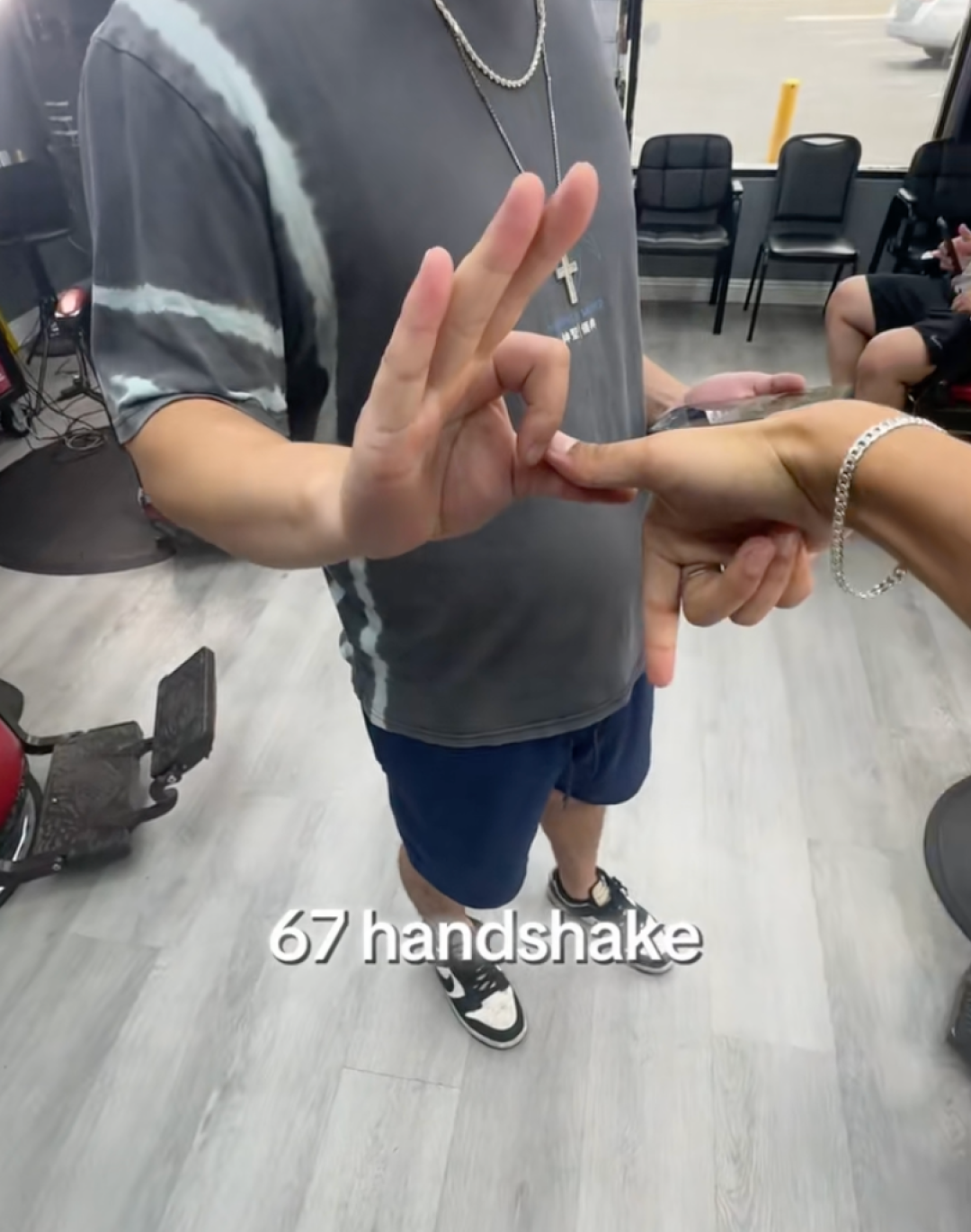
The gesture that accompanies it amplifies the effect: a rhythmic hand motion, palms facing upward, mimicking the movements of a juggler. On social media, the trigger for shouting it seems to be any appearance of the number 67, whether it’s a fast-food order number or the 67th minute of a match. Overall, on TikTok, the hashtag #67 has surpassed two million posts, with a recent peak of 123,000 videos in the first week of October 2025, according to platform analytics. Even the TV series South Park has poked fun at the phenomenon, dedicating an episode portraying it as a “cult” obsessed with numbers.