
























The double-edged charm of JoliPNJ rings, as told by their designer Interview with Chloé Foulquier, the designer who replaces diamonds with glass
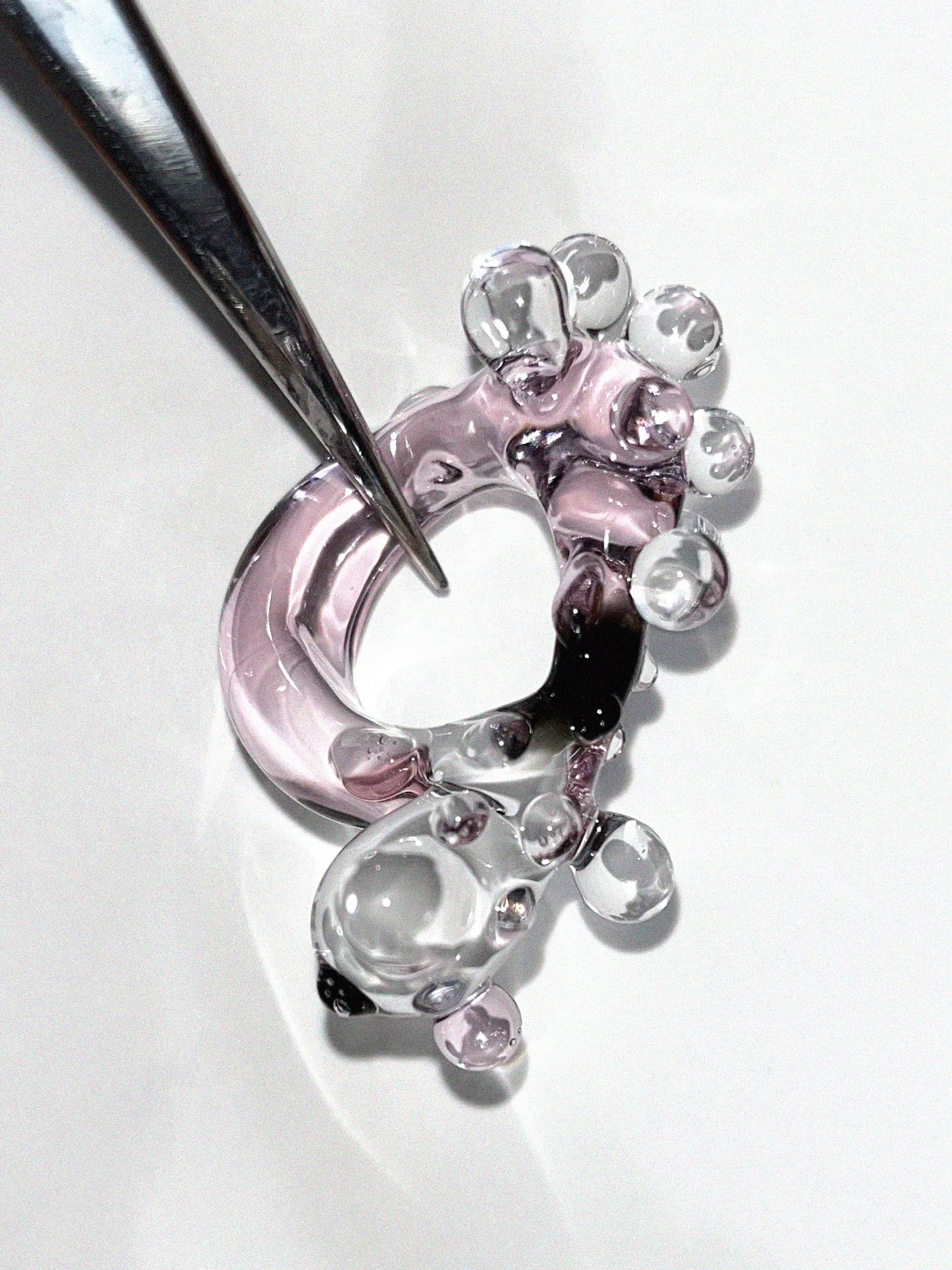
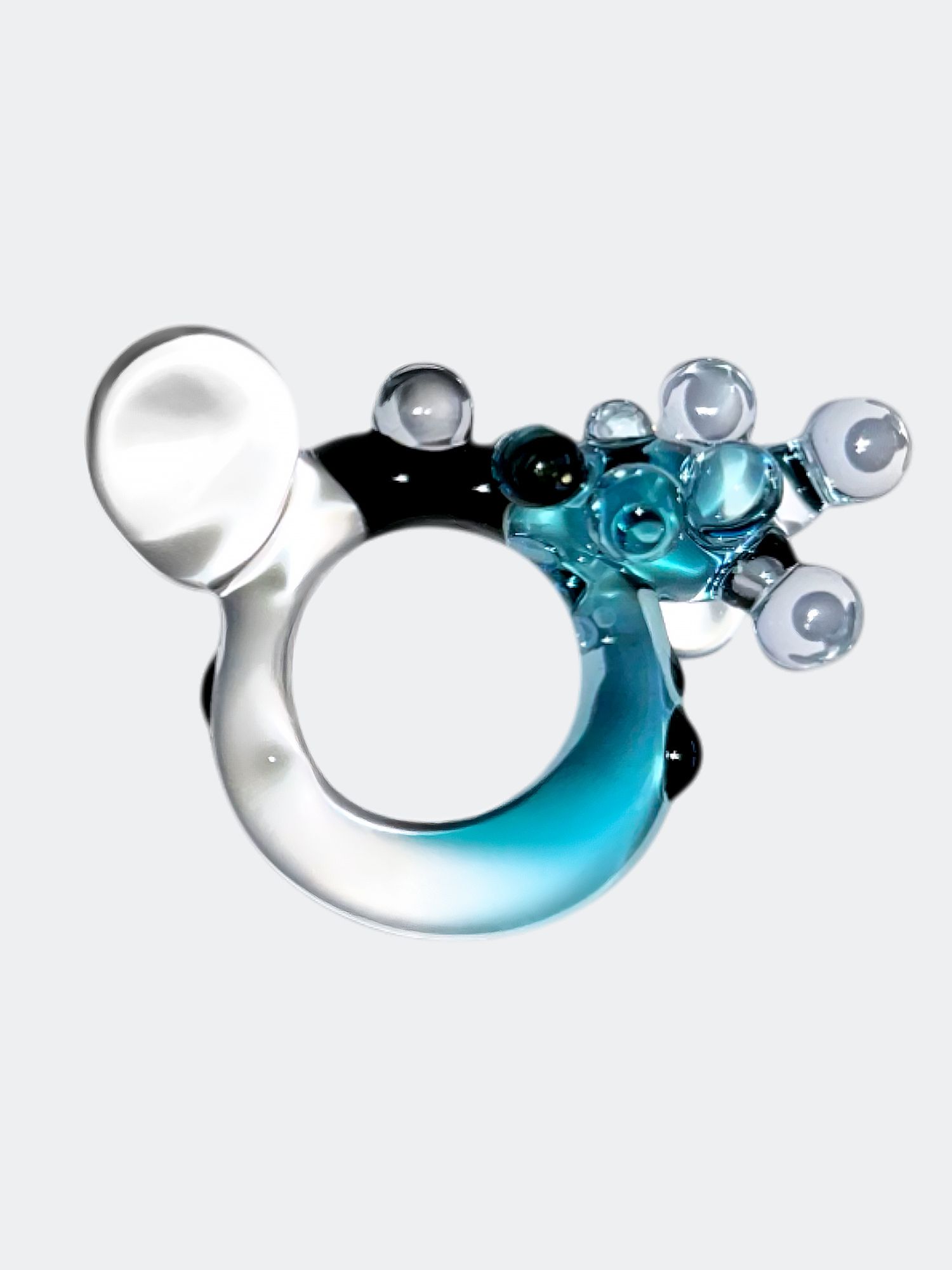
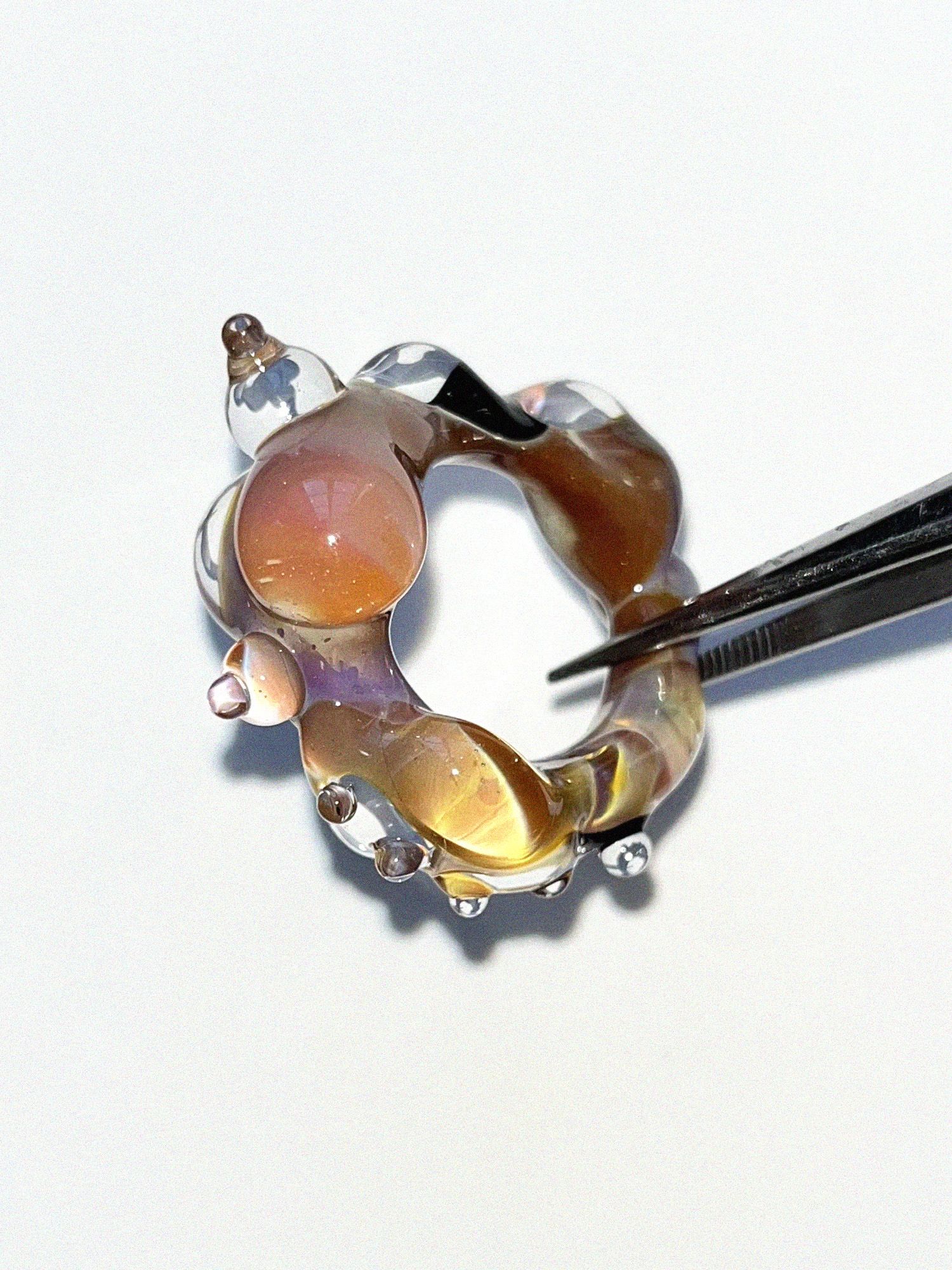
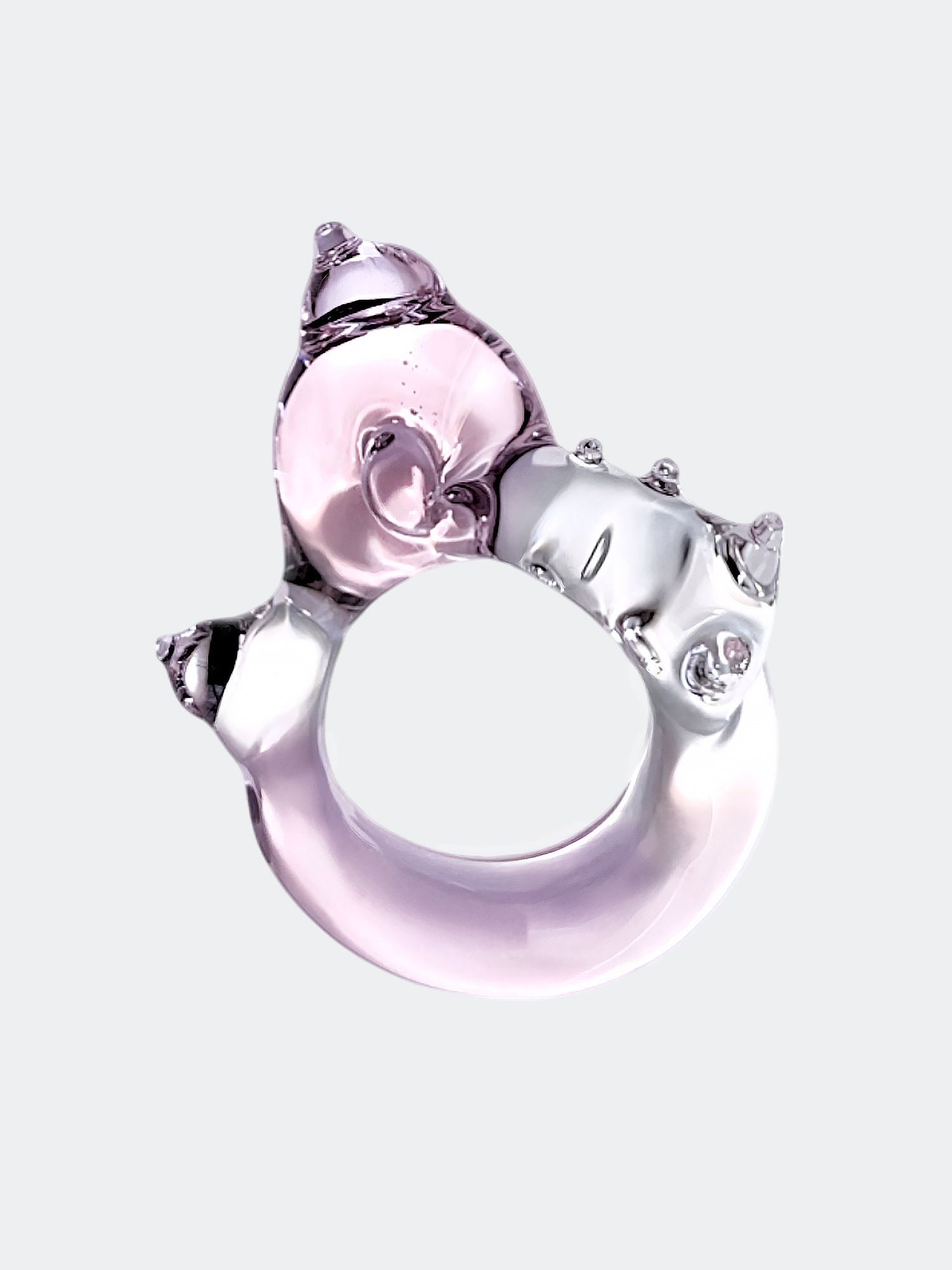
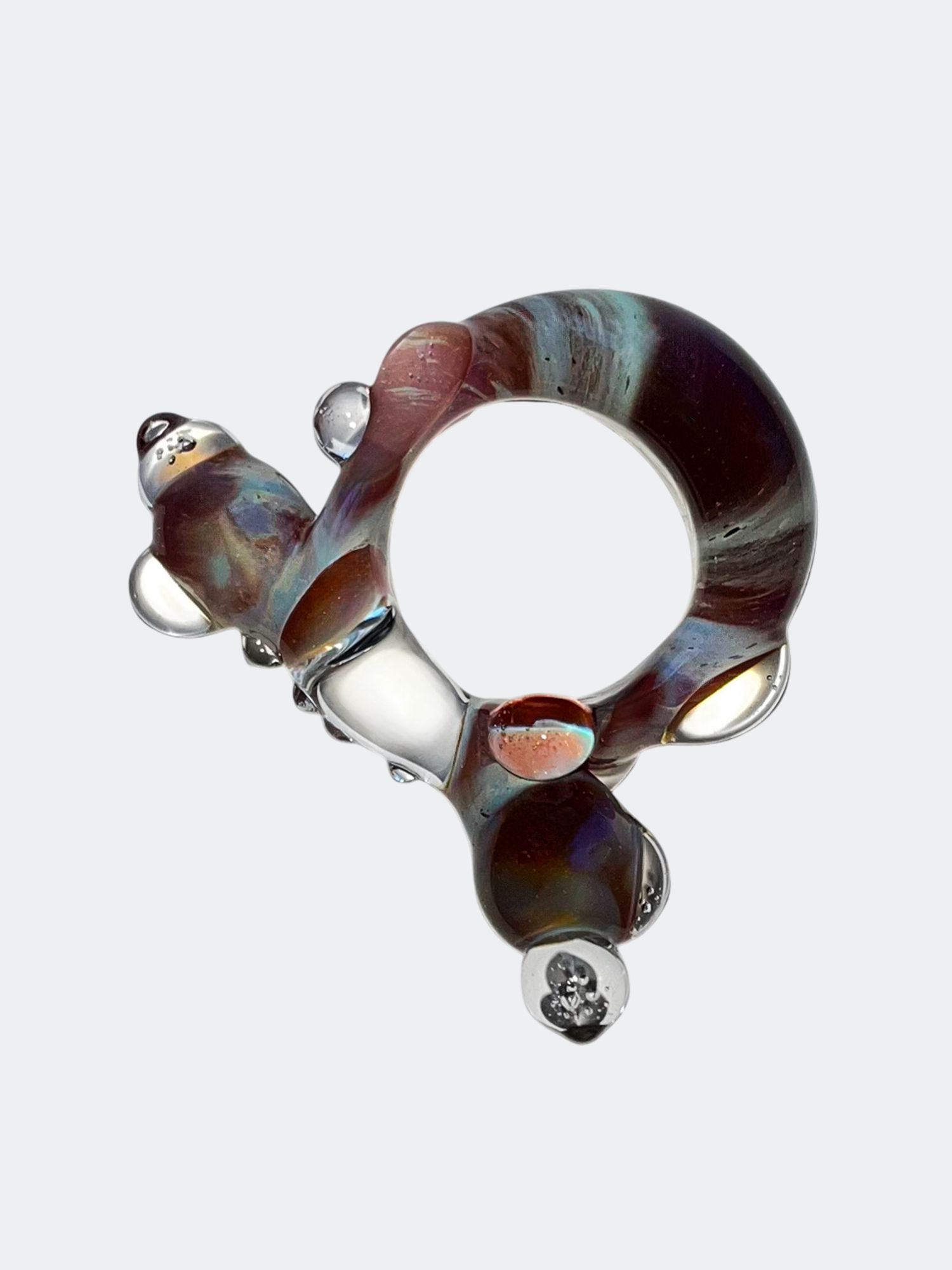
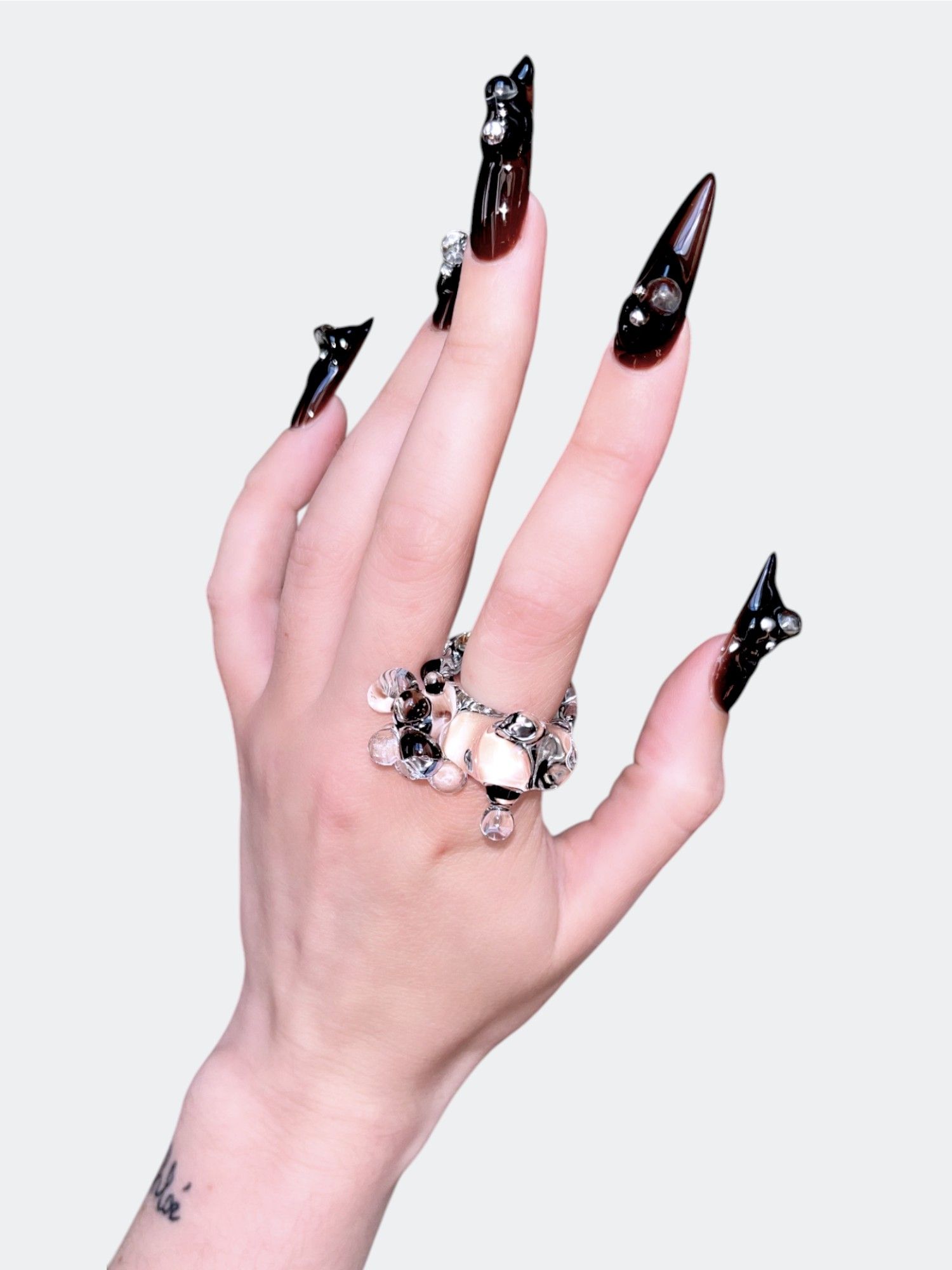
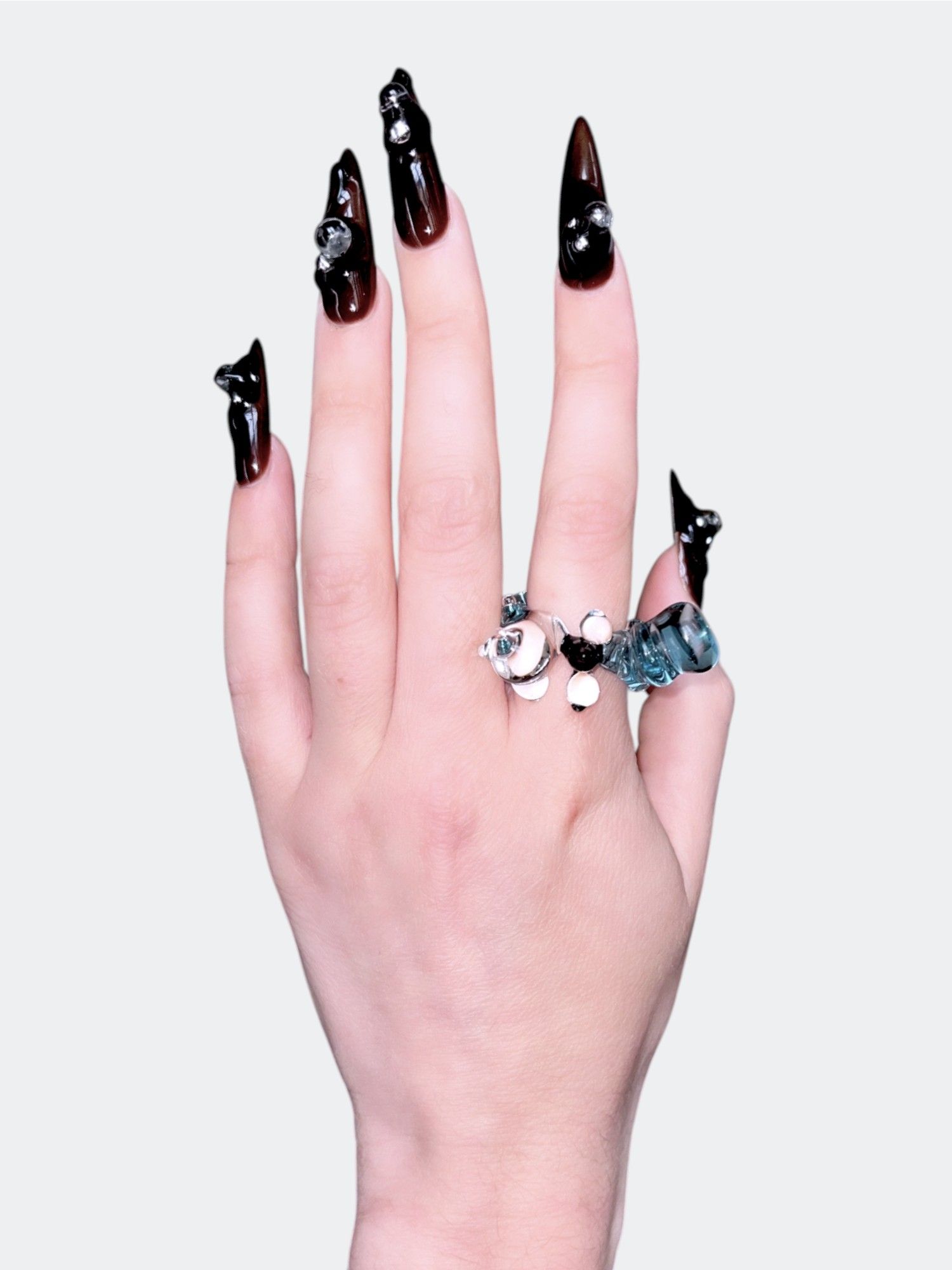
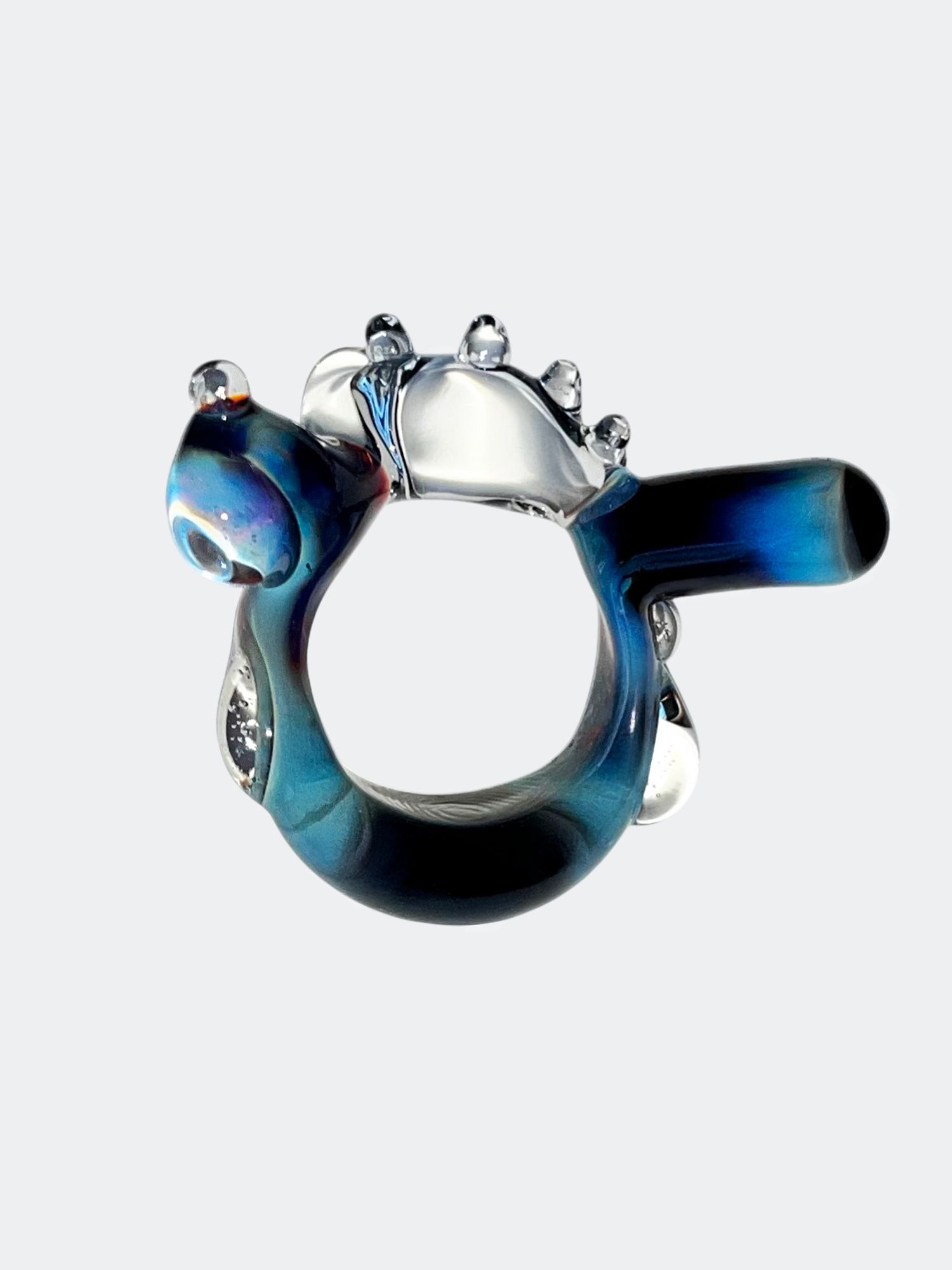
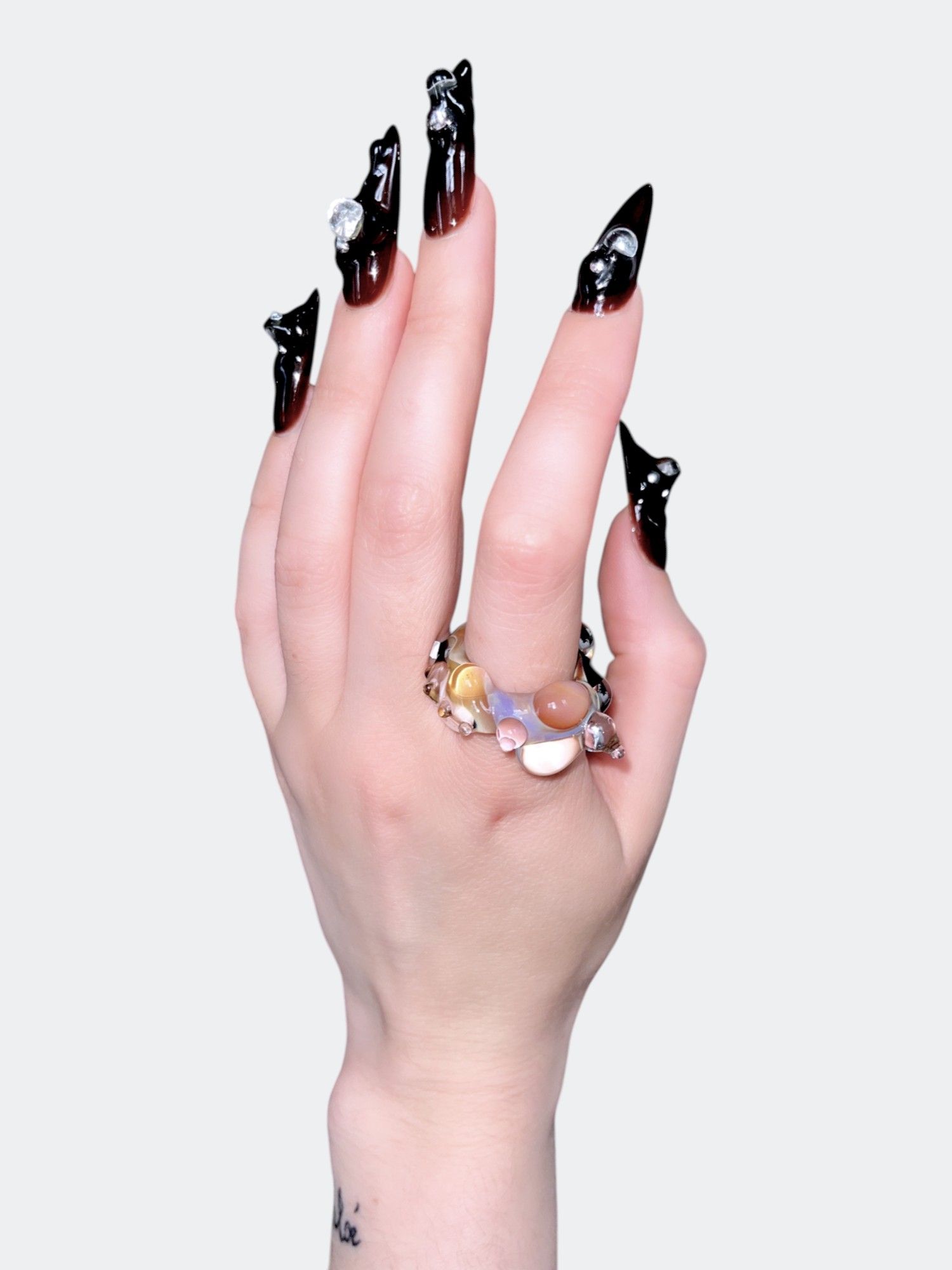
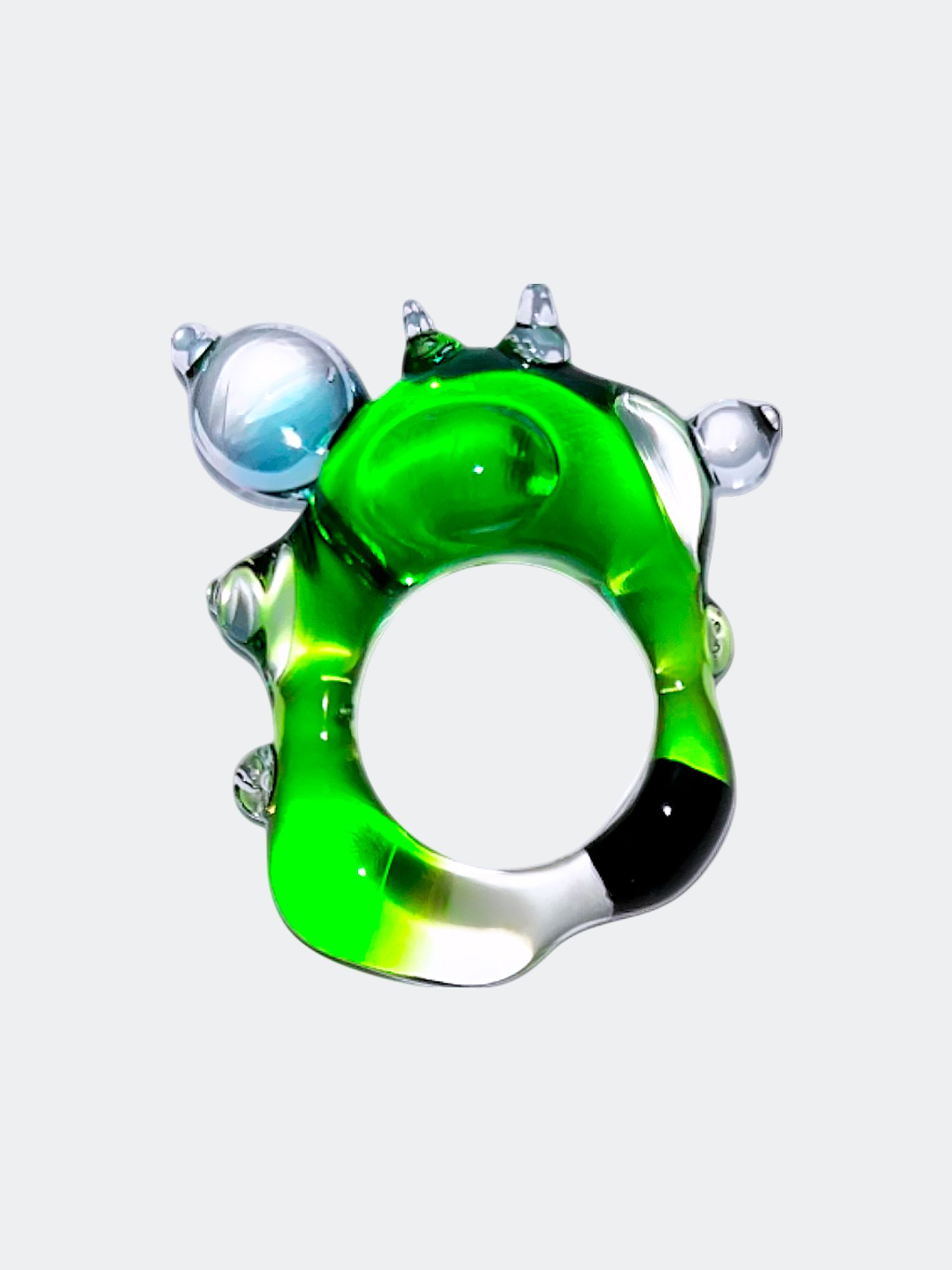
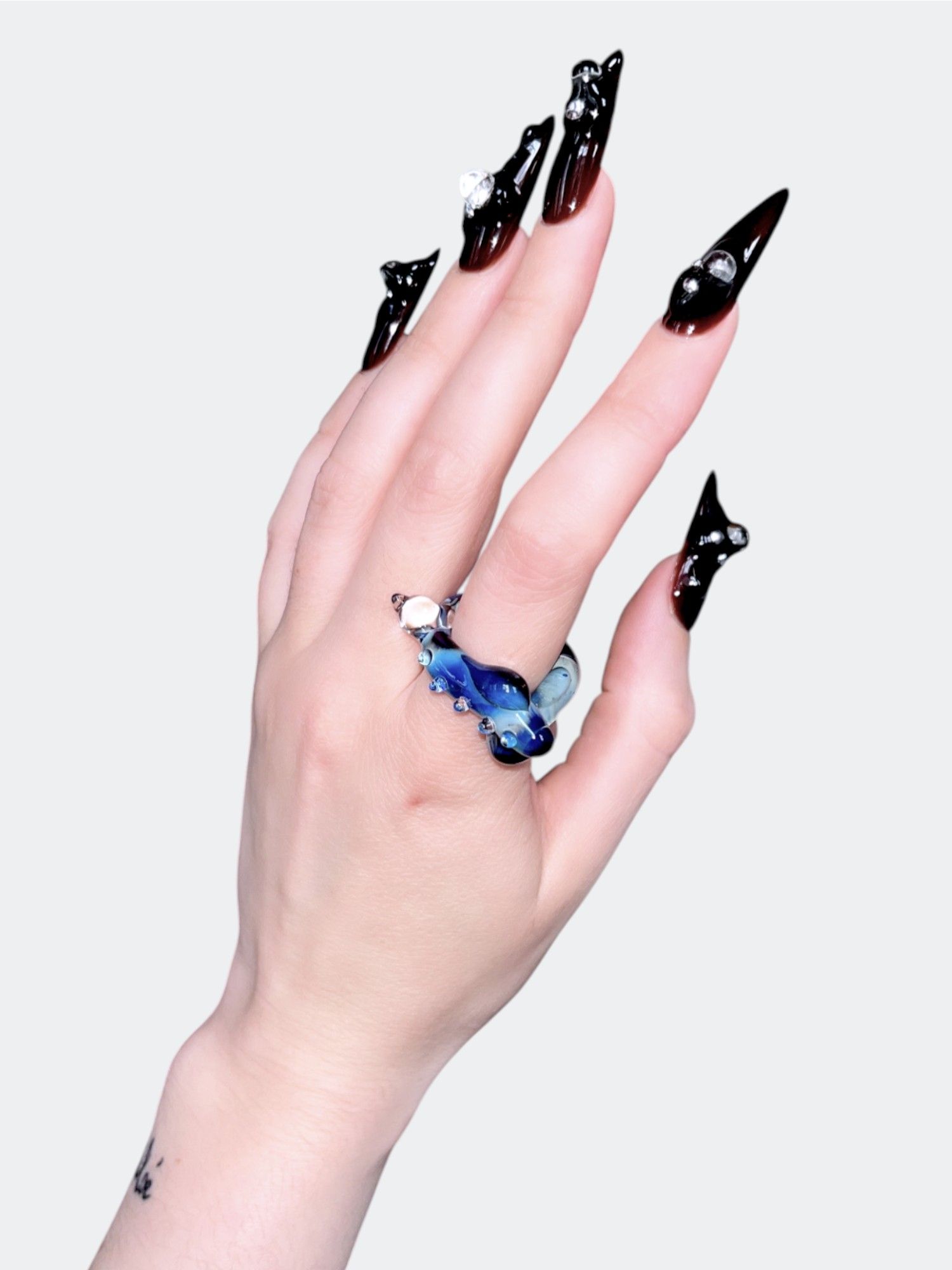
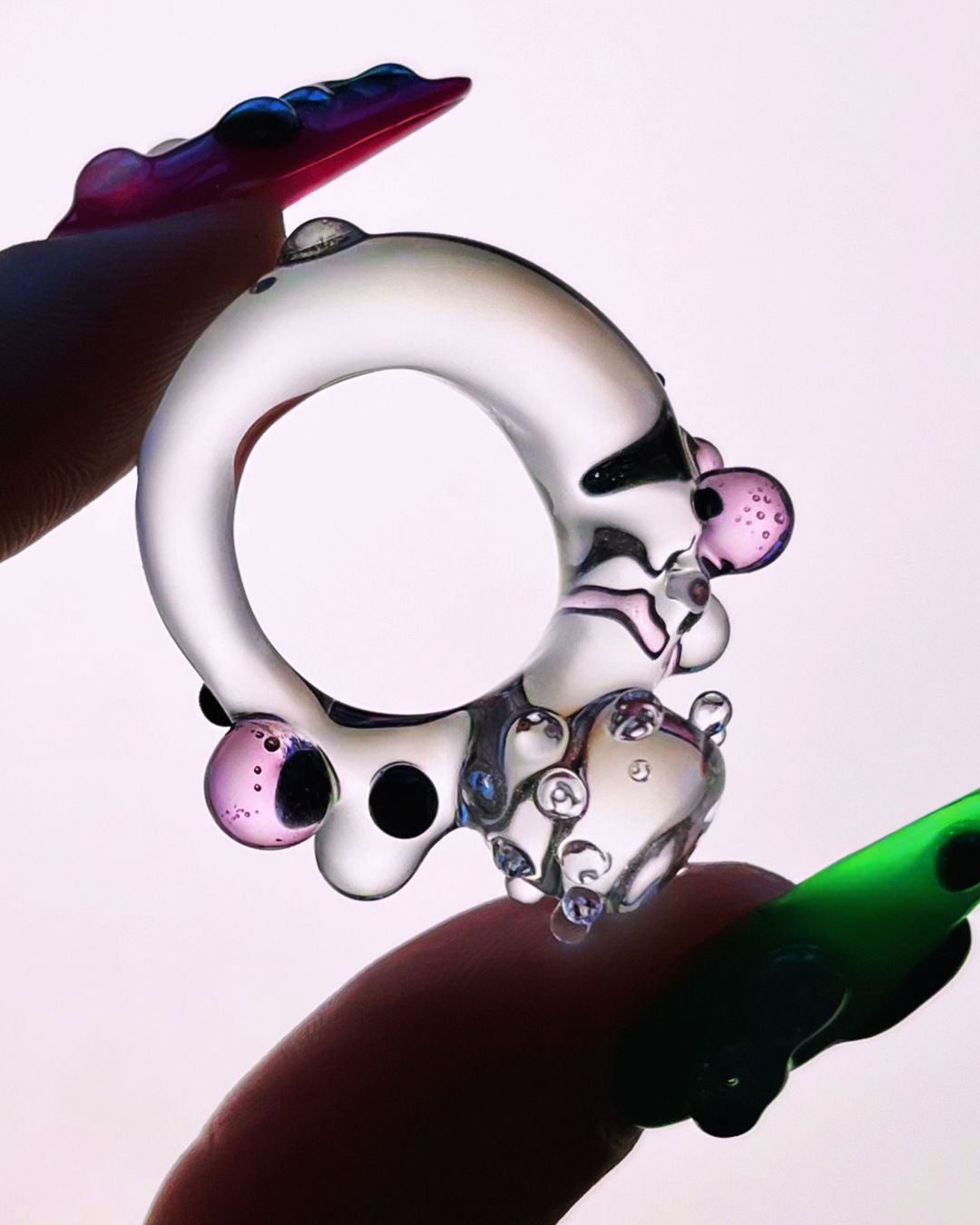
From the fingers of the lovely Théodora to those of Yeozang from the group Ateez in a Numéro Magazine cover, JoliPNJ rings are everywhere. Sometimes transparent, sometimes colorful, with corners sometimes rounded, often sharp but always glass, the jewels of designer Chloé Foulquier represent the perfect balance between soft and fierce, transparent and opaque, shadow and light. With her experience at Balmain and Miu Miu, Chloé now manages to combine like no one else all these contradictory yet complementary elements in unique, poetic, self-sufficient jewelry, at the heart of a brand with a strong personality that she tells us about today in her own words.
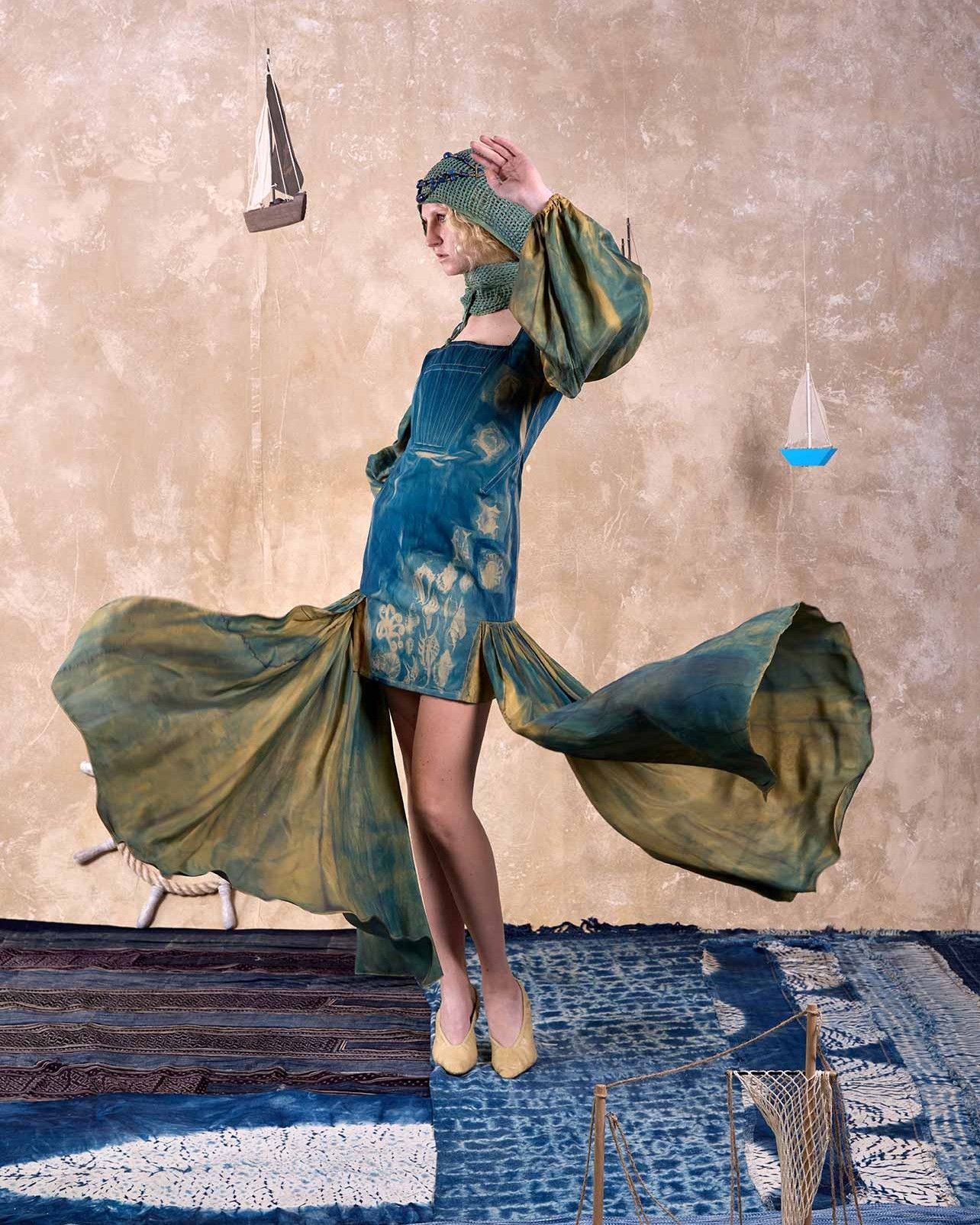
If she shines today through jewelry and handles borosilicate glass to perfection, it was fabric and patterns that Chloé once skillfully worked with, having started in creation through Fashion Design studies. “After my studies, even though I loved clothing, I felt a sort of overdose. Too many brands, too many seasons, too many ‘products’. I no longer found what made me dream. So I turned to accessories, closer to objects, less seasonal, lasting through time.” she explains to us “But after Miu Miu and Balmain, something else was calling me. I needed material, freedom, to imagine a universe that looks like me, made of gestures and imagination. Something that would allow me again to dream and to create a direct connection with people.” “In leather goods, we draw, we make technical sheets, then it is the modelers and factories who bring the models to life. Contact with the material remains fairly limited. Sometimes, we make prototypes to look for volumes — that was one of my favorite parts. Today, in my work, it is different: material is at the center. I create directly in the flame of my torch, as if I were drawing in three dimensions.”
And speaking of material, although she loves handling the torch, Chloé did not choose the easiest path, opting for borosilicate glass for her jewelry. “I started with soda-lime glass, another type of glass which is more sensitive, more liquid, more prone to thermal shocks. It was when I started working on rings that I switched to borosilicate. It is a glass more resistant to thermal shocks, longer lasting over time, which retains all its brilliance. It is notably used in laboratory glassware, aeronautics, optics. It withstands shocks better, even though of course it still remains glass, a delicate material that must be cared for. It also requires a higher heating temperature” she continues.
However, she was not alone in her journey toward understanding and mastering this complex and unique material, but was lucky enough to be supported by Japanese artist Michi Suzuki, a veteran of glass bead work. “It was a real encounter. Her precision, her concentration, her kindness. We didn’t talk much, she offered me tea, we exchanged a lot through gestures. She showed me, then let me do. I first made many beads to learn. Then one day, she showed me how to make rings. And from there, I started testing, experimenting. I was amazed to have access to this know-how” says Chloé.
A know-how that is shared and becomes tangible today in jewelry that seems light as air, dangerously fragile, yet tenacious, solidified by a descending annealing, step by step, eliminating all tensions in the glass. “It is a contrast that I find very beautiful, the delicacy of glass and the hand that lives. Borosilicate is resistant, but it still requires attention, care. It’s like taking care of oneself. Fragility is the living: powerful, magnificent but also vulnerable. It is the mirror of our world.” The mirror of our world, but also of the designer’s making process, which is carried out gently and poetically: “When I create a piece, I don’t draw. I start from a glass rod that I gently melt, then I let the dialogue settle between the material, the flame and me. The accident happens when the material takes us to a place where we would not have gone by imagining a piece. That is what makes it profoundly alive. It allows to go beyond a simple idea or mental projection, toward renewal, the unexpected, wonder.”
A lyricism that can be found in every detail of JoliPNJ, even in its name, taken from the world of video games: “What interests me in gaming is not really the game itself. What speaks to me is the idea of being able to evolve in an imaginary world, to experience a parallel life, to explore an elsewhere. It is also what I like in science fiction: they are open doors, allowing imagination to live experiences that could not be otherwise experienced.”