




























What to expect from George Lucas's new museum in Los Angeles In addition to a small section dedicated to Star Wars, the museum will feature works by many visual artists
The Lucas Museum of Narrative Art is set to open soon in Los Angeles — a museum founded by American filmmaker George Lucas, creator of, among other things, the Star Wars and Indiana Jones film franchises. The opening is scheduled for September 22 and marks the conclusion of a journey that began in 2010, having passed through two failed projects in San Francisco and Chicago. According to CNN, Lucas personally invested approximately 1 billion dollars to make the building a reality.
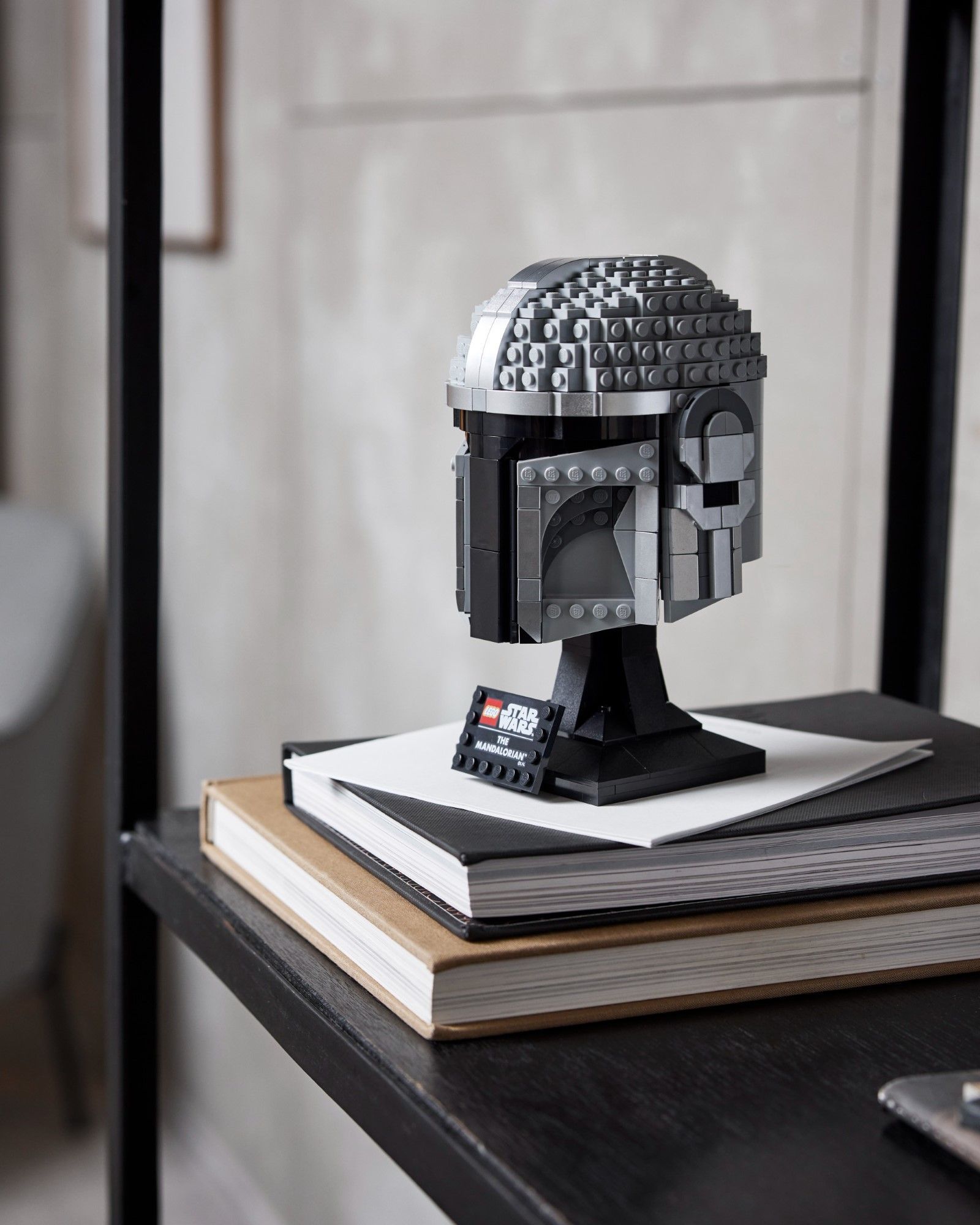
The museum will house comics, illustrations, photographs, and film and animation works, among other things. The collection includes more than 1,300 objects, many of them drawn from Lucas's own personal archive. Although the American filmmaker is best known for Star Wars, works dedicated to the saga will make up less than 10% of the total. The Lucas Museum of Narrative Art will in fact feature works by American artists such as Frida Kahlo, Norman Rockwell, and Gordon Parks, as well as American illustrators Frank Miller and Frank Frazetta, among many others. The museum's cinema galleries will instead showcase the works of Man Ray, anime from the Cowboy Bebop series, and short films made by Lucas himself when he was still a student.
What to see at the Lucas Museum of Narrative Art
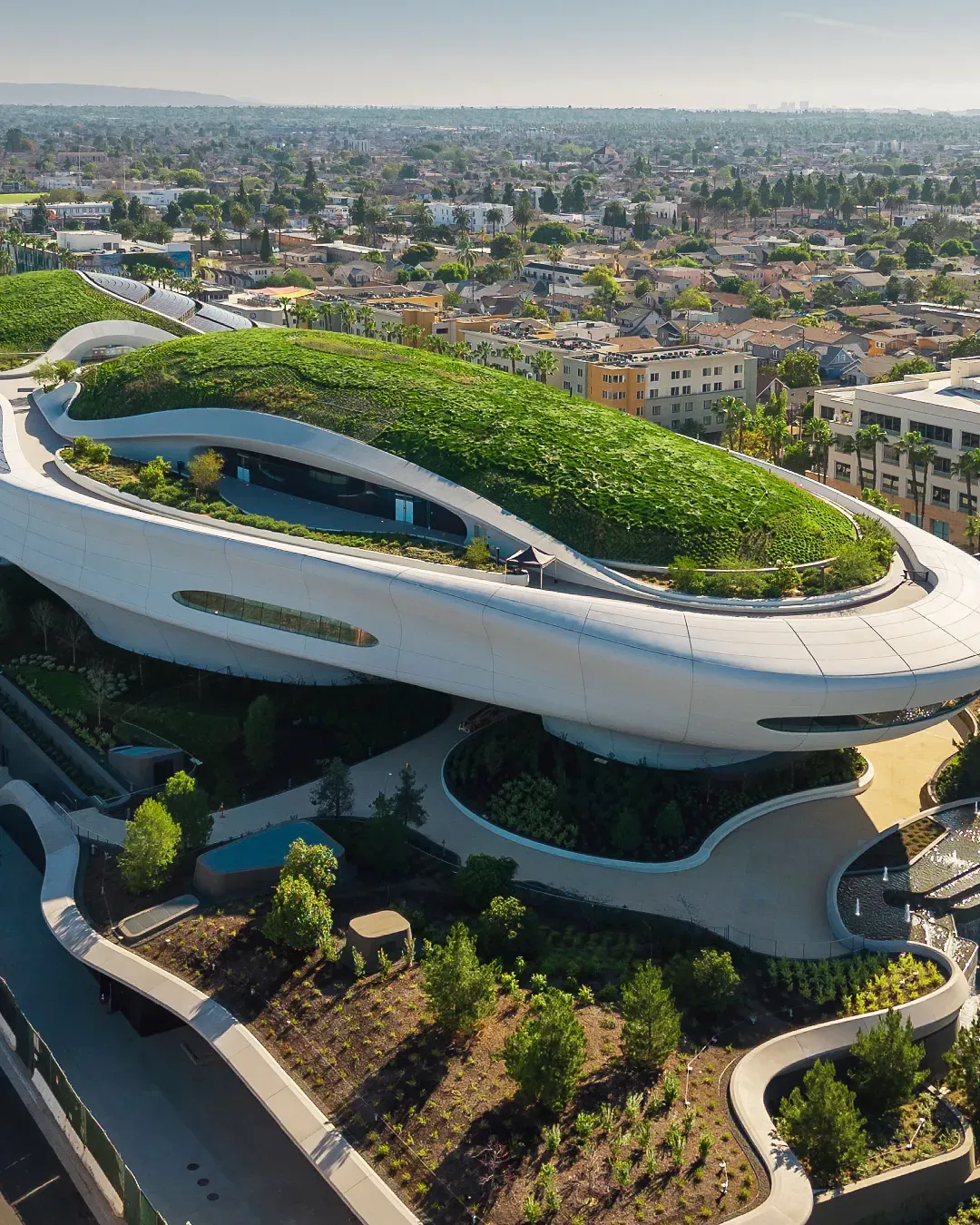
Designed by international architecture firm MAD Architects, founded by Chinese architect Ma Yansong, the museum occupies approximately 28,000 square meters within Exposition Park, a large public park in southern Los Angeles that is already home to institutions such as the Natural History Museum, the California Science Center, and the California African American Museum.
The building — a large white structure with an undulating silhouette — fully reflects Yansong's architectural style, which has long centered on organic, fluid forms inspired by nature. Inside, this approach translates into curvilinear spaces, tubular elevators, and expansive interconnected galleries. The design of the Lucas Museum of Narrative Art also seeks to move away from the idea of a museum as an orderly succession of works: the exhibition route, for example, opens with a show dedicated to the history of narrative art — that is, those forms of visual art that, more or less directly, revolve around storytelling — illustrating how visual narrative has spanned different eras and cultures. On the upper floors, the original works in the collection are organized according to different criteria: some galleries are devoted to individual artists, while others bring works together around specific themes or genres.
The criticism and problems surrounding the museum
The opening of the Lucas Museum of Narrative Art comes after a rather troubled journey, one that has also affected its internal organization. The institution's initial director and CEO, American curator Sandra Jackson-Dumont, left her position in 2025 — before the museum even opened to the public — during the planning and installation phase. Shortly afterward, George Lucas began taking a more hands-on role in the museum's curatorial activities, and last December the new curator Pilar Tompkins Rivas also resigned, at odds with the institution's leadership.
Since the project was first announced in 2010, the museum has been the subject of various criticisms — from those who view it primarily as a personal project of Lucas's to those who object to the $25 ticket price. The choice of location has also long been contentious: before settling on Los Angeles, Lucas had attempted to build the museum in San Francisco and then in Chicago, where the prospect of constructing the building on public land — despite it being a formally private institution — met with strong opposition from a local nonprofit organization.
What to read next
Star Wars returns to theaters with “The Mandalorian and Grogu”
A project that bridges the gap to the future of the saga

Why are the sounds so important in 'Dune'?
They stem from recordings that are anything but ordinary