




















Luxury has escaped to the countryside Farmhouses, rural estates and villages are the new premium imaginary: regeneration or aesthetic colonisation?
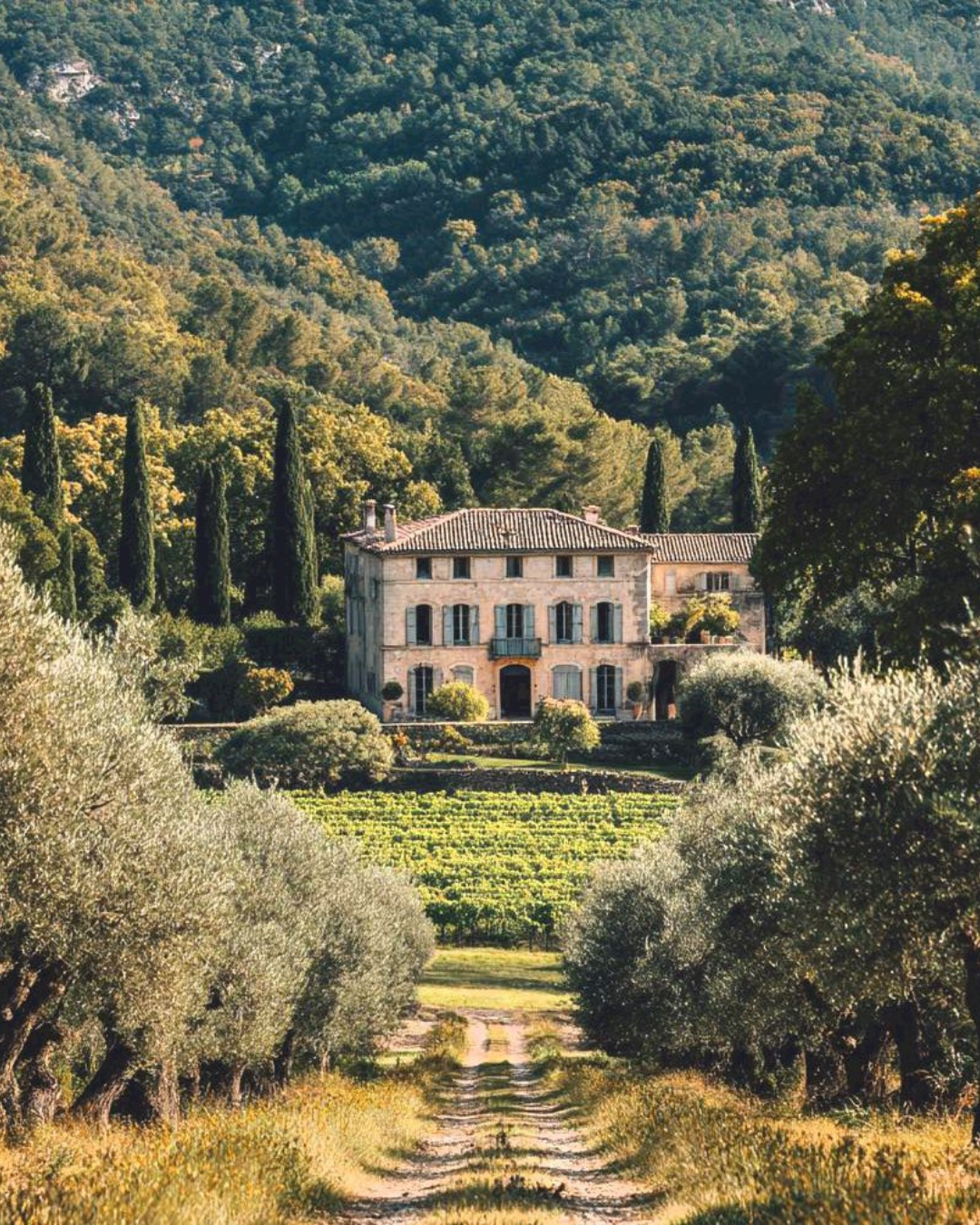
At some point, luxury stopped wanting to look like luxury. It no longer needed the penthouse in the city center or the skyline view. It began looking for stone walls, worn beams, olive trees, silence, white roads, old farmhouses and isolated masserie. It began to desire the countryside, but not just any countryside: a restored, designed, photographable countryside. A countryside that looks simple but costs as much as an apartment in the city.
This transformation is not only about the real estate market. It is about the way we now imagine well-being, leisure time and even authenticity. For years, residential luxury was associated with location: the right neighborhood, the historic center, the prestigious address. Today, a growing part of the premium imaginary seems to be looking for something else: space, privacy, distance from noise. Not simply owning something rare, but owning a form of isolation.
The numbers show that this is not just a passing trend. According to ISTAT, in 2024 there were over 26,000 agritourism businesses in Italy, welcoming around 4.7 million guests. Rural tourism is no longer a romantic niche, but an important component of the national tourism offer. At the same time, Tuscany continues to be one of the strongest territories in the high-end real estate market: according to data reported by idealista, it accounts for more than 40% of Italian luxury listings. Places such as the Val d’Orcia or the hills around Siena do not simply sell houses, but a lifestyle.
The countryside as an evolution of the city
And this is where the phenomenon becomes cultural. The countryside is no longer sought only as a temporary escape, but as an identity. The restored masseria, the minimalist country house or the village transformed into a hospitality structure become symbols of a new way of presenting oneself. They speak of slowness, nature and authenticity, but also of social selection and economic capital.
The success of this imaginary comes from its ability to combine two apparently opposite elements: tradition and contemporaneity. On one side there is stone, wood, thick walls and the marks of time. On the other, infinity pools, large glass windows, minimal furnishings and interiors that look as if they came out of a design magazine. It is not nostalgia. It is a reinterpretation of the rural landscape designed for a global audience.
In this sense, the countryside becomes the opposite of the city, but also its most sophisticated evolution. The city is associated with density, speed and saturation. The premium countryside, instead, promises space, silence and horizon. But it uses the same tools as urban culture: branding, storytelling, architecture, social media. Even silence becomes a product to sell.
The risk of aesthetic colonisation
Gen Z understands this aesthetic very well. It has grown up between the desire for authenticity and the continuous consumption of images. Luxury that is too obvious often appears outdated; places that seem natural, coherent and understated work better. A masseria in Puglia or a country house in Tuscany communicates more exclusivity than many design apartments precisely because it seems not to want to communicate it.
It is the principle of quiet luxury applied to territory. No longer logos and recognizable symbols, but discreet details: a swimming pool hidden among olive trees, a stone kitchen, a long table under a pergola. Everything appears spontaneous, but everything is carefully designed. Luxury does not disappear: it camouflages itself.
The problem is understanding what happens when a landscape becomes desirable. On one hand, these interventions can have positive effects. They recover abandoned buildings, attract investment, create jobs and save architecture that would otherwise be lost. In many cases, the contemporary project represents a true form of territorial regeneration.
On the other hand, there is an evident risk: aesthetic colonisation. It happens when a place is used as a backdrop rather than as a lived space. When only the most photogenic elements of local culture are preserved — bread, oil, stone, sunset — while everything complex or uncomfortable is excluded from the narrative. Agricultural labor, the lack of services, depopulation and everyday difficulties disappear from the image.
It is a mechanism similar to the one observed in many urban neighborhoods that suddenly became trendy. What was once perceived as marginal becomes desirable. Isolation turns into privacy, emptiness into peace, the forgotten village into an exclusive destination. The countryside stops being just a place and becomes an aesthetic language.
A dream to sell
Villa di Piazzano, Tuscany, Italy
— Appart Design (@AppartDesign) June 3, 2026
Once the residence of Cardinal Passerini, this historic estate is now one of Tuscany's most elegant countryside hotels.
Traveling Balanced pic.twitter.com/4SSRYNvXwB
The question, then, is not whether this process is right or wrong. The question is who benefits from it. Who can afford to turn a ruin into a residential dream? Who remains when prices rise and houses become second homes? Can a countryside designed for those arriving from elsewhere continue to be a living space for those who inhabit it every day?
Of course, this does not mean defending a static idea of rural life. The Italian countryside is not a museum and does not have to remain abandoned in order to be authentic. A masseria can become a hotel, a farmhouse can be transformed into a contemporary home, a village can find new life through tourism. The difference lies in how this transformation takes place. If it generates stable employment, involves local communities and respects the complexity of the territory, then it can be regeneration. If, instead, it uses the landscape as a mere backdrop for a privileged few, then it becomes another form of consumption.
Perhaps the new rural luxury fascinates us precisely because it tells of a contradiction of the present. We want slowness, but immediately. We want authenticity, but filtered. We want nature, but controlled. We want to move away from the city without giving up its gaze. Luxury has escaped to the countryside because the city is no longer enough to represent contemporary desire. But perhaps it has not really escaped: it has simply found a new landscape in which to hide. And when even an abandoned farmhouse or a field of olive trees become symbols of exclusivity, the question is no longer whether the countryside is back in fashion. The question is what remains of the countryside when it is transformed into a dream to sell.
What to read next
These are the secondhand handbags that are worth the most in 2026
Searches for the Chloé Paddington have risen by 610%, but the real star of the secondhand market is Chanel
LVMH's fashion division keeps getting worse
Third-quarter results showed a -5% decline driven by the Chinese market
Gen Z is spending more on art than any other generation
A new Arts Economics report on global collecting reveals the trend