





































What if "Avatar" had nothing left to say? James Cameron brings “Fire and Ash,” the third chapter of the saga, to the big screen
To start, it is necessary to say one thing about Avatar, James Cameron, his work, and the vision he brought to cinema with Pandora: the Canadian director and screenwriter created something no one else would have even dreamed of. It had already happened in the past in his career and it happened in 2009, when he managed to give life to a new and entire universe, setting it in the pantheon of cinematic and cultural imagery, crossing the borders inhabited by the Na'vi and opening up to the whole world. However, it is difficult not to wonder about the actual success of Avatar - Fire and Ash, the third chapter of the saga, disconnecting it from everything that the franchise and Cameron's mastery represent, while acknowledging a prowess that one is quite certain will never diminish in the author's production.
The repetitiveness to which Avatar - Fire and Ash subjects us cannot be condoned, especially when it chooses to keep spectators seated in front of the big screen for three hours and twenty minutes. The third chapter resumes the story of Jake Sully (Sam Worthington) and his rivalry with Colonel Miles Quaritch (Stephen Lang). The central theme is still the great metaphor about environmental destruction by industrial giants that already characterized the first film, playing on classic narrative elements combined with urgent discussions on climate, which in the subsequent 2022 and in the new chapter appear even more relevant.
Adding to this, as with The Way of Water, is another topic, from which great cinematic narrative has always drawn for the construction of its myth and its stories: the family as the core and engine of the narrative, which dictates the actions and reactions of the characters. Once again, Jake, his wife Neytiri (Zoe Saldana), and their children, along with the rest of their clan, will have to accept having lost contact with their mother-land and become good neighbors to the Metkayina tribe. The conflict is between the Na'vi's desires to reclaim their culture and the need to maintain the right balance in this new society. Inevitably, the conflict arises precisely when both will try in every way to safeguard their own pack. This too, as in the previous film, is a theme that returns and reiterates itself identically within the narrative, even with the introduction of a new enemy community.
James Cameron's message to theater techs for 'Avatar: Fire and Ash' pic.twitter.com/FcdeRKWAbe
— Culture Crave (@CultureCrave) December 15, 2025
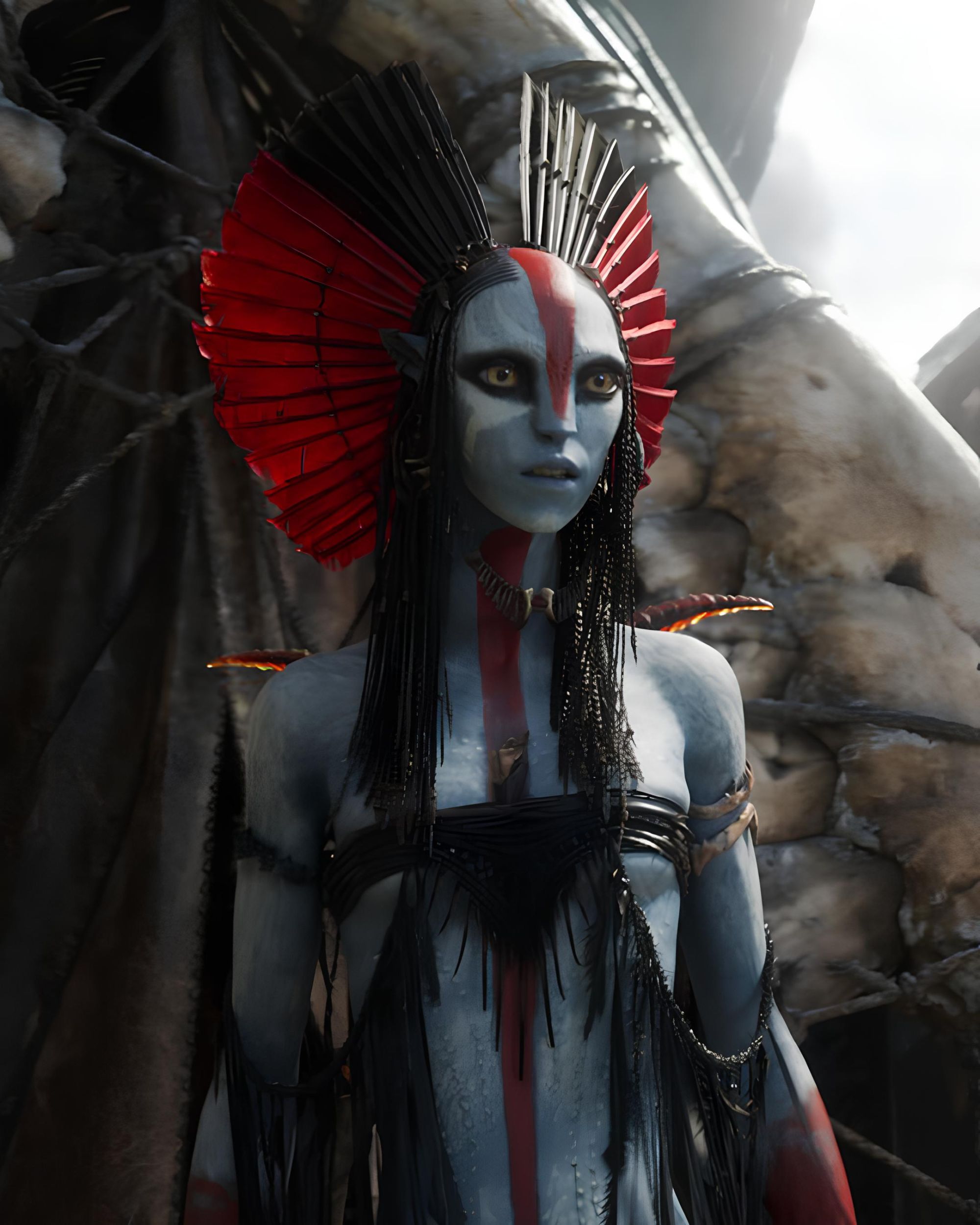
The only novelty that adds real surprise in Avatar 3 is the lethal leader Varang, played by Oona Chaplin. Head of the Ash People, the warrior is ravenous, brutal, and fiercely unforgiving. She is the most interesting character, just as Zoe Saldana's Neytiri returns to be, since the first film, whose intensity pierces the membrane of the CGI, simultaneously offering an acting lesson, making the character true, real.
@avatar From the ashes, Varang rises. Experience #AvatarFireandAsh original sound - Avatar
And if the feeling of déjà vu doesn't help, the situation is aggravated by the sense of an ending that the work evokes - even though we know very well that two more films in the saga are planned. With Avatar 4 scheduled for 2029 and Avatar 5 for 2031, not only does the third title re-propose visual and entertainment solutions already tested and therefore not unprecedented, but one wonders what else there would be to say given the emotional and spectacular weight of Avatar - Fire and Ash. What else is there to tell that hasn't been told yet, especially considering the film seems like a repetition? What is there to see that hasn't been shown yet?
Confidence remains high for James Cameron. When Avatar 4 and 5 are released, one will still have the desire to discover them in the cinema (just like for Fire and Ash). But who knows if it will be done only out of love and respect for one of the greatest visionaries in cinema history, or because it will truly be worth it.