



























Pope Leo doesn't want you to use AI The dispute between the Pope and Silicon Valley, explained
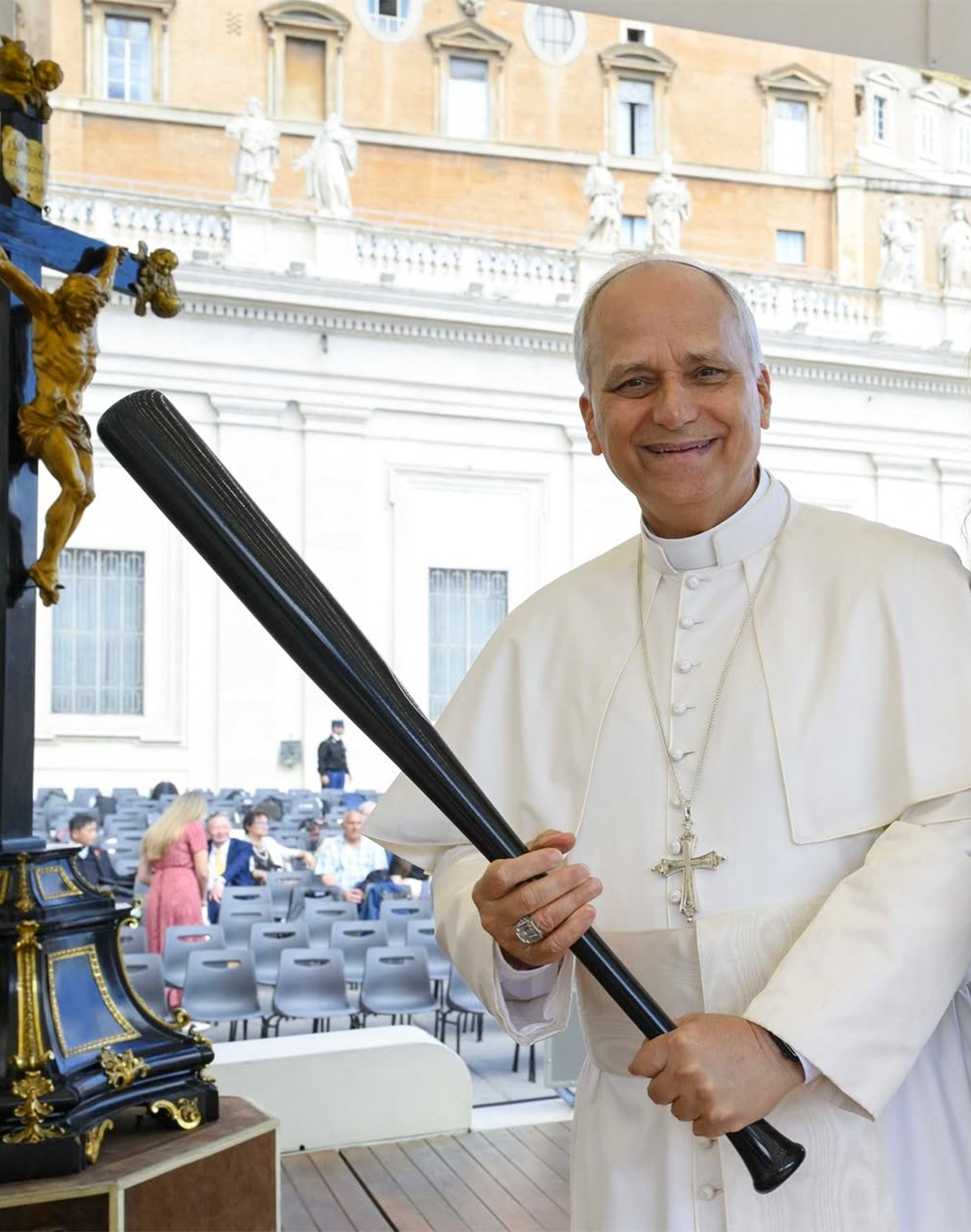
AI is sparking debate all over the world, including in the Vatican. Recently, as il Post explains, Pope Leo XIV, on the occasion of the second annual Rome conference on Artificial Intelligence, spoke out on the topic of the progressive integration of AI into the contemporary landscape, stating that the Church must «respond to another industrial revolution and to developments in artificial intelligence, which pose new challenges for the defense of human dignity, justice, and labor».
What did the Pope say?
As early as June, the Pope reminded that AI raises «troubling questions about its possible repercussions on humanity’s openness to truth and beauty, and on our particular capacity to understand and process reality». Last November as well, the Pope reiterated his concerns about the increasingly decisive role of algorithms in our lives: «The logic of algorithms tends to repeat what “works,” but art opens us to what is possible», he said. Last week, Pope Leo XIV spoke of a technological evolution that could «accentuate injustices, rather than help to dissolve them», stressing the need to «alter the trajectory of development and repair the damage already inflicted on the unity of the human family».
These statements have drawn the attention of several figures in the US technology sector, which more than any other is investing in artificial intelligence. Many companies, driven by interests and significant capital, have responded to this attempt to regulate the sector by appealing to the US Congress, calling for a moratorium that, had it passed, would have banned any regulation of AI.
The opposition of part of Silicon Valley to the Pope—not as a direct rejection of his figure, but in ideological forms—became evident last November, when, on his X profile, Leo XIV invited «all AI builders to cultivate moral discernment as a fundamental part of their work; to develop systems that reflect justice, solidarity, and an authentic respect for life». Marc Andreessen, cofounder of the investment fund Andreessen Horowitz, one of the richest and most influential in Silicon Valley, ironically commented on the Pope’s post with a meme used to express skepticism: a few hours later the tweet was deleted, after receiving much criticism.
What is happening with AI
@kengreen531 Incase you missed it.... President Trump on AI President Trump has signed an executive order to block the states from regulating Artificial Intelligence, to keep us "UNIFIED" like top rival China
original sound - Kelvis
The clash between the Vatican and Silicon Valley already had a precedent during the time of Pope Francis, who at the 2024 G7 spoke about the risks of AI reinforcing a technocratic paradigm, increasing inequalities between countries, and promoting a “throwaway culture,” while stressing the need to reflect ethically on its development. The recent alliance between the White House and technology companies constitutes an additional difficulty for the Vatican, making the discourse more complex. An example of this is the entry into the public debate of figures such as Mark Zuckerberg, Peter Thiel, and Elon Musk, futurist technocrats.
With these statements, therefore, the Vatican has entered the fierce debate on artificial intelligence that for some years has been dividing public opinion. On one side are the “techno-optimists” like Andreessen; on the other are the more critical voices of those who deal with the ethical questions of technology.
With the election of Donald Trump, this divide has taken on a political dimension, with the more critical voices often being accused whenever greater security in the AI field is called for. Yet some of the concerns raised remain concrete, such as the high energy consumption of the data centers required for its operation, or the risk that the ambition tied to its optimization could lead to the disappearance of certain professions.
Raising doubts is the creation of systems such as AGI, so-called Artificial General Intelligence (strong artificial intelligence, or AGI), an AI 2.0 system, so to speak, capable of replicating human mental activity. A technological entity in which part of the companies in the sector are ready to invest. The example of “Roko’s Basilisk,” initially published by Less Wrong in 2010 by a user named Roko, reflects the mystical or pseudo-religious nature of some AI experts and developers. A thought experiment according to which a benevolent artificial superintelligence, in the future, might decide to punish those who have hindered or slowed its development: a sort of blackmail from the future that many, including Musk, say they believe in, perhaps fueled by the enormous expectations surrounding the future development of the technology.
What does AI have to do with the Vatican?
Lol marc andreesen deleted all tweets mocking the pope after growing_daniel absolutely destroyed him. It’s over https://t.co/GqVtHIiuKZ pic.twitter.com/czrokQ95IN
— NIK (@ns123abc) November 9, 2025
Still in religious terms, “antichrist” is the label assigned to those who oppose the progress of AI. This is how they are described by Peter Thiel, co-founder of Palantir, a US data analytics and artificial intelligence company specializing in software for governments and large institutions. A controversial figure in Silicon Valley, to whom The New Yorker devoted a famous profile; he was also among the earliest supporters of the Trump administration. Among those accused of being “legionaries of the Antichrist” by Thiel are the Swedish activist Greta Thunberg and Pope Leo XIV. As extreme as Thiel’s opinion may be, it is important both because of the influence he wields in the technology sector and because he was one of the main political sponsors of J.D. Vance, now Vice President of the United States, whom he reportedly advised not to listen to the Pope’s words on AI, despite Vance having converted to Catholicism in 2019.
These are the ideologies that worry many, including Massimo Faggioli, professor of Religious Studies at Trinity College Dublin: «a mix of old religious conservatism and hyper-technological futurism». Their circulation represents an unprecedented challenge for the Catholic Church—not because they could replace Catholicism, but because they could influence it. The election of an American pope thus took place at a crucial moment and helps explain Silicon Valley’s interest in the Vatican in recent months, which in this case coincides with an ideological friction.
The Pope’s concerns also stem from his Augustinian background, which entails «a disenchanted and skeptical взгляд regarding the siren call of modernity and progress», says Faggioli. Paolo Benanti, professor of Ethics of Artificial Intelligence at LUISS and member of the UN advisory body on AI, agrees that the religious question is increasingly present in the US technological debate. Benanti also notes that Silicon Valley has always had an openly hostile attitude toward traditional institutions, from banks to the media.
In light of recent events, one might ask what the consequences of this ideological clash could be and how they might affect the optimization of AI technology and the way we will use it in the future. Who, between Pope Leo XIV and Silicon Valley, is willing to compromise?