






































What is going on at Kodak? The company is doing worse and worse
Kodak was for decades one of the largest and most influential companies in the photography industry, as well as one of the most well-known. However, starting in the 1990s, it faced increasing difficulties adapting to the rapid changes in the market and coping with competition. The most recent data on the company's performance show that Kodak now has about $500 million in debt, and it is by no means certain that it will be able to maintain operations in the long term. The biggest concern is the financial aspect, as in the second quarter of 2025 the company reported losses of $26 million. Despite this, the company believes it can meet a significant portion of its loan obligations on time and then renegotiate, extend, or refinance the remaining debt. This is not the first time Kodak has faced a critical situation: back in 2012, it filed for U.S. bankruptcy protection, declaring over $6 billion in debt, though it emerged from it the following year, albeit rather bruised.
@gakulange Kodak 800 Film #film #photography #35mm #fyp #filmphotography original sound - gakuyen
The story of Kodak began in 1888, when George Eastman registered his company’s trademark with the U.S. Patent Office. For several years already, the company had been producing highly functional and innovative cameras for its time. The name «Kodak» does not mean anything specific, it was simply the combination of letters that most appealed to Eastman because of its sound. Over the decades, the company grew rapidly, eventually achieving a dominant position in the global photography market. However, with the advent of digital technology and the rise of competition, difficulties followed, and Kodak began a long process of transformation that led it to diversify its activities.
In recent years, the company has increasingly focused on inks and industrial printing technologies, as well as on sensors for touchscreen displays in phones and tablets, among other things. More recently, in an effort to further expand its market, Kodak has also entered the medical and pharmaceutical sectors, producing chemical substances used in healthcare. Meanwhile, the company has been forced to sell many of the more than a thousand patents accumulated over the years for photographic films, as well as the network of roughly one hundred thousand photo development shops that for decades were one of the brand’s most recognizable symbols, so much so that they earned a place in pop culture, especially in the eyes of the Gen Z.
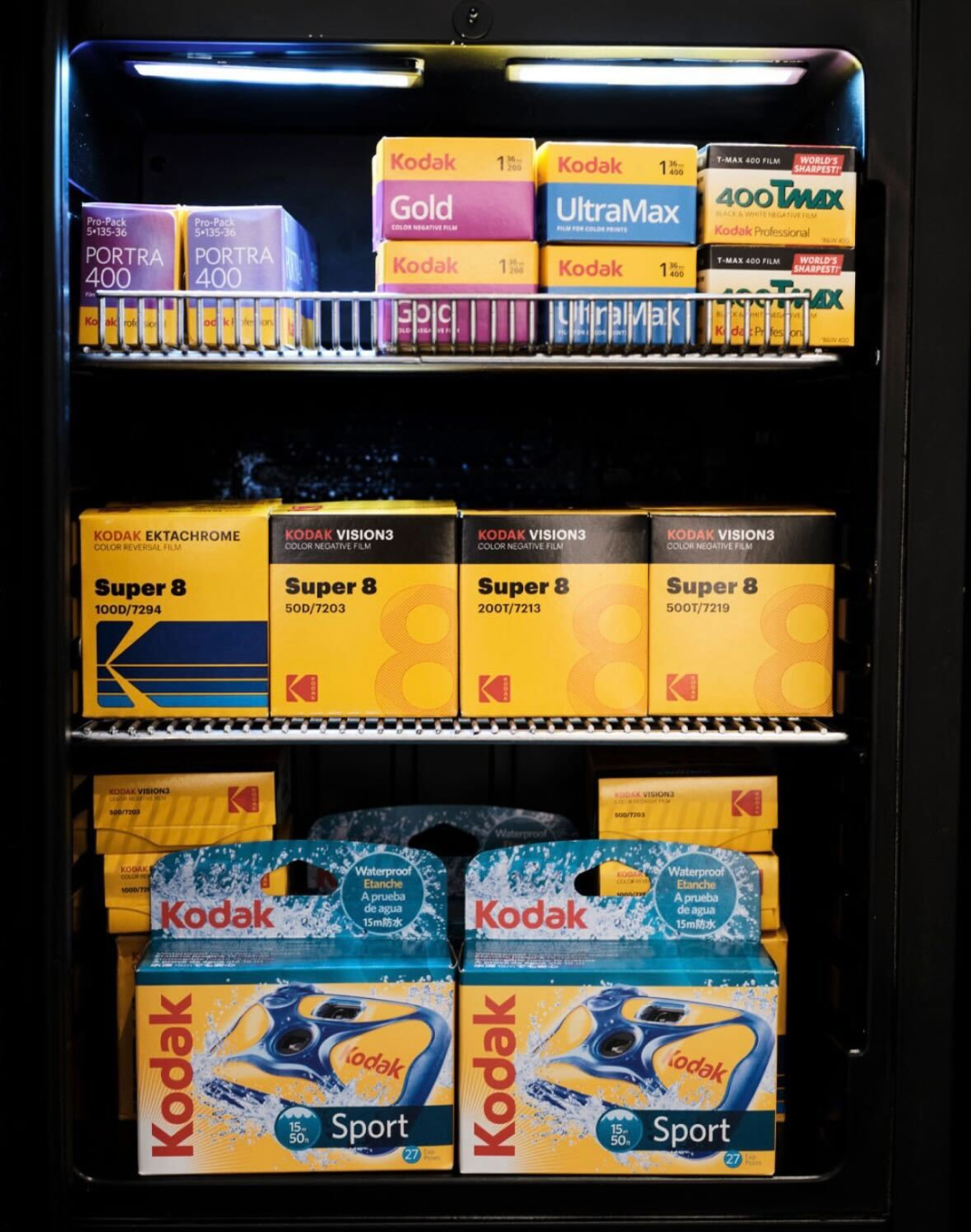
As part of its ongoing efforts to diversify its business, Kodak has also carved out a role in the film industry, producing motion picture film in response to renewed interest in movies shot on film. A good example is the company’s Instagram account dedicated to audiovisual works shot on film, which is highly followed and appreciated by industry professionals. Directors such as Paul Thomas Anderson, Christopher Nolan, Quentin Tarantino, Luca Guadagnino, and Brady Corbet often shoot using Kodak film. Although filming without digital tools is still something for a few, Kodak does not rule out that in the future, the tariffs introduced by the Trump administration may prove advantageous for its business, considering that much of its market is concentrated in the United States. Like many other American companies, Kodak looks favorably on the White House’s idea of bringing audiovisual production back to U.S. soil, along with the economic and employment opportunities that come with it.