























Food is the ultimate muse of photographers of the last century Short history of cuisine in front of the objective, from the 20th century to today
In any country in the world, the likelihood that the first art class revolves around drawing a bowl of fruit is quite high. Even video games that deal with the theme of art, if you think about it—like the Nintendo game Art Academy—mostly start with a simple apple. Well, it’s somewhat the same for photography, as shown by Dans ma cuisine, an exhibition tracing the role of food in the photographic imagination of the 20th century, open until July 31st at Les Douches Gallery in Paris. From Henri Foucault’s alphabet pasta to Roger Catherinau’s sprouted potatoes and Irving Penn’s frozen fruits and vegetables, the exhibition is a true ode to culinary art captured through the lens of the greatest. But the trend goes far beyond framing a photo of a fish trap, and in 2025 seems to be expanding into a broader network of emerging creatives who make cuisine their undisputed muse.
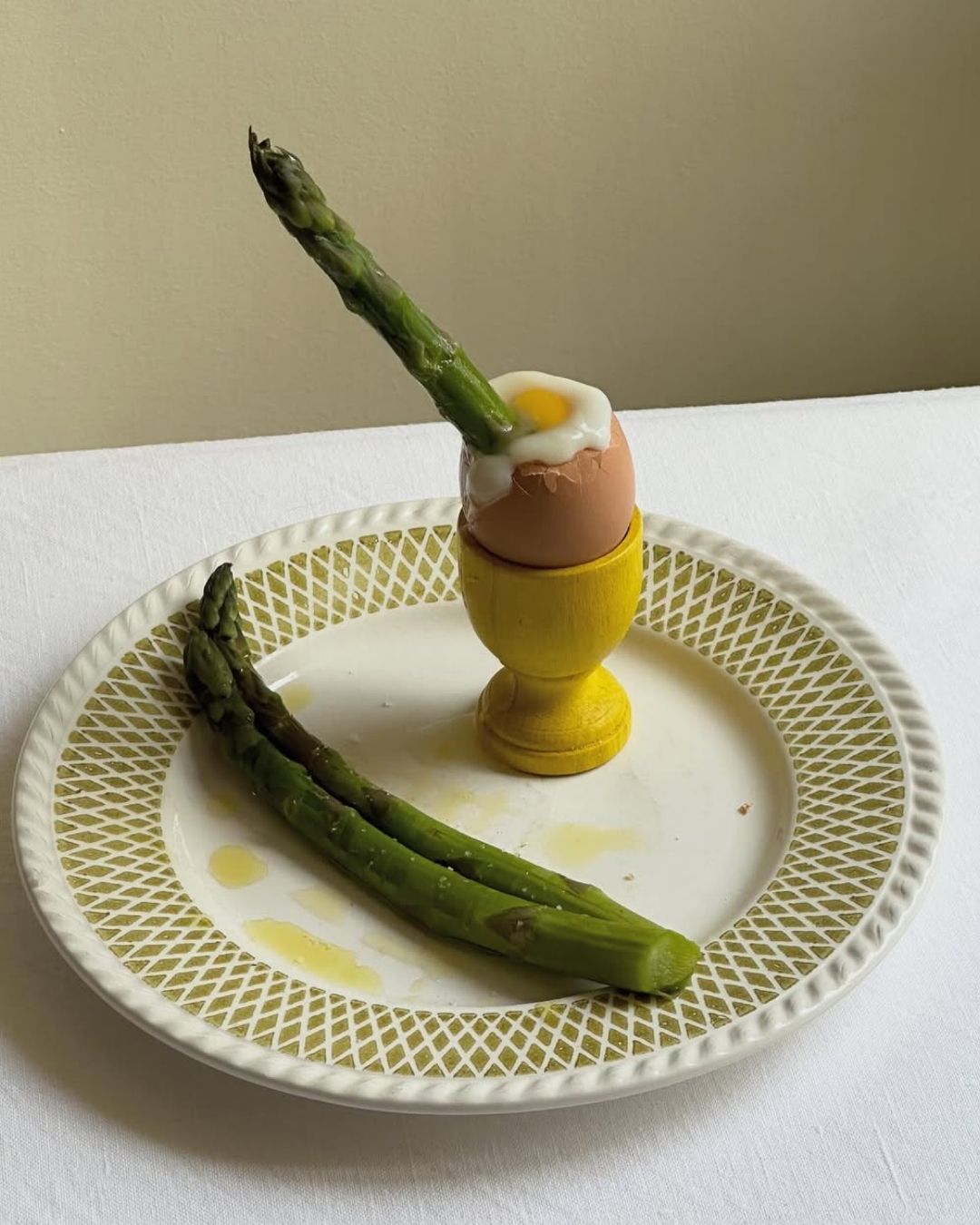
It all begins in the 20th century, as various trends sweep through the world of photography—from pictorialism to constructivism and the new objectivity—table settings also begin to appear in front of the lens. This is thanks especially to Nicéphore Niépce and his Table Servie, which brings to the forefront once-hidden scenes like meal preparations, presenting the intimate and hidden kitchen space in a new light. Then comes the war, but above all, the interwar period and its artists, who rethink their conception of photography, giving it a new, humbler, more everyday, accessible, even banal turn. Photographers must make do with what's left after the war and thus find new inspiration in kitchen objects and their textures. In the 1930s, André Kertész adds his contribution with an image that quickly becomes iconic: a fork placed on a saucer, surrounded by studied lighting in a compelling play of light and shadow. Then come onto the creative scene Erwin Blumenfeld, a renowned fashion photographer for Vogue and Harper’s Bazaar, with his silky halved pears, and Irving Penn and his still lifes featuring asparagus, corn, and blueberries in a textural, layered, constructed composition. Over the years, food photography detaches from the object and focuses more on the context, highlighting the women hidden, confined, and limited within it. Starting in the 1970s, the Blume couple brings novelty with a more futuristic approach involving flying pots and threatening saucers. The feminist movement continues with Michel Journiac, dressed as a housewife, portraying himself cooking and doing the dishes for his husband. Although the exhibition centers on iconic artists from the past century, today, food photography—reimagined through modern codes—continues to shine.
One such example is Caro Diario Paris, real name Zélikha Dinga, a culinary creative who showcases dishes and snacks on her Instagram with such perfect aesthetics that they become utterly satisfying. “Some people use the term ‘culinary artist,’ but I prefer ‘culinary creative,’ I find it more accurate to what I do daily. Honestly, most of my current work involves running Caro Diario like a studio,” she explains in an interview available in Paris Future, the first print issue of nss france. In Caro Diario’s photos, food is simple yet depicted in such a complex way: “A culinary creative, or culinary designer, must think visually: what can we create with food in terms of shape, texture, color, assembly?” “Caro Diario is about beauty, joy, wonder. I want people to find the result beautiful, to wonder how it was done, to feel they’ve never seen anything like it before, and then be surprised by the taste. Keeping strong creative energy is essential for me.” she concludes. A strong creative energy is definitely what one feels when looking at Journiac’s flying potatoes or Foucault’s pasta. If we’ve always been told not to play with our food, perhaps a morning drawing session using jam on toast could add a bit of joy and creativity to our lives after all.