





























Hamnet teaches us that art conquers even death And we will see director Chloé Zhao and actors Jessie Buckley and Paul Mescal again at the Oscars
Chloé Zhao has returned to cinema. She even returned to Rome, where in 2021 she presented Marvel Eternals at the Rome Film Festival, this time with another film where someone saves someone else, but it is not a superhero. Hamnet is the adaptation of the novel written by Maggie O’Farrell («In the Name of the Son. Hamnet»), who also co-wrote the screenplay with Zhao. It is interesting to note how the rights to the book were acquired for the film even before the publication of the novel, which was published in 2020.
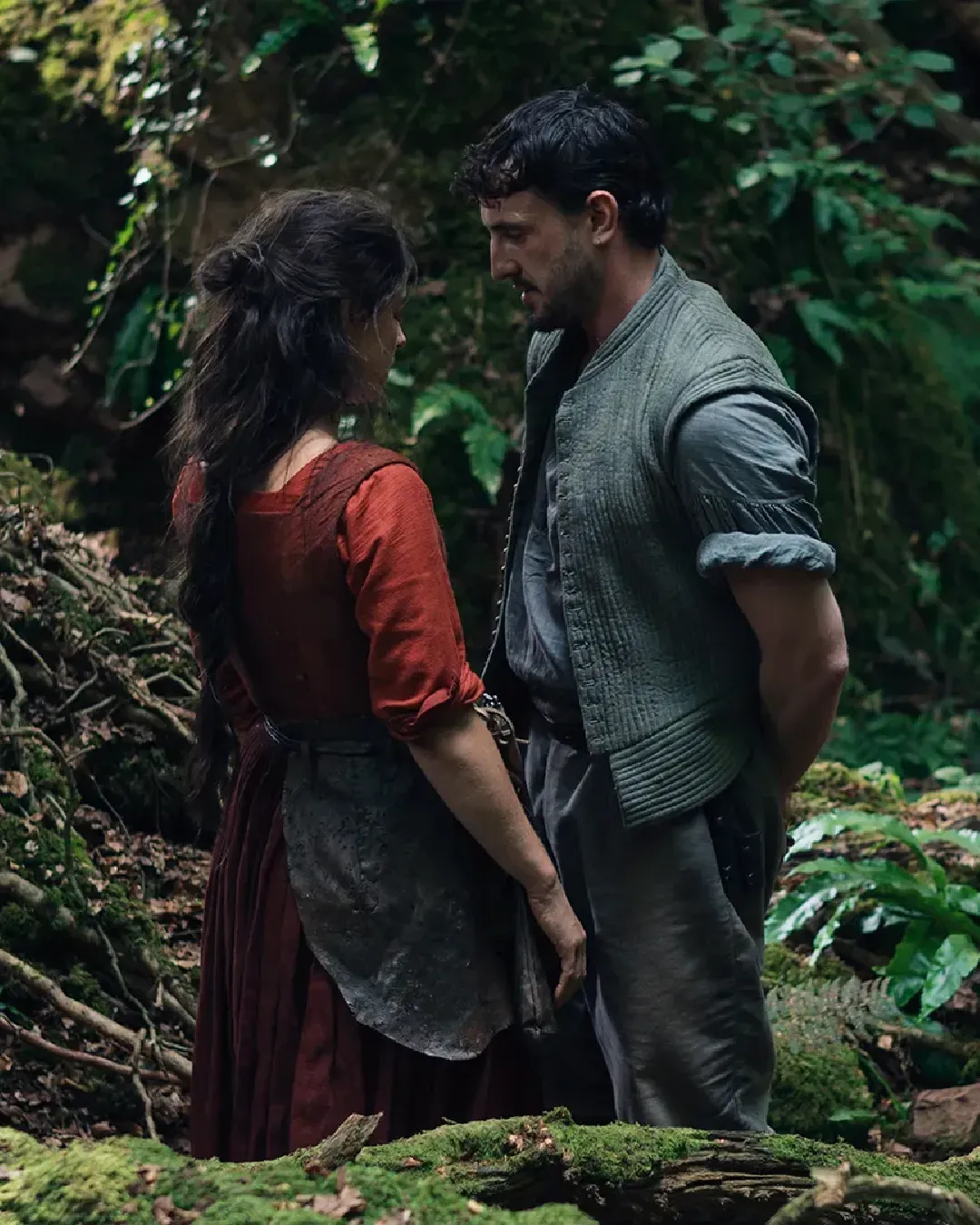
Zhao chooses as protagonists Jessie Buckley and Paul Mescal, bringing back to the center of her filmography the untamed and wild nature that pervades the film and nourishes it. Mother Earth here becomes the embodiment of the protagonist, Agnes, mother of her children and, symbolically, mother of all of us who inhabit her. It is in the midst of greenery that the woman meets William, not yet Shakespeare: the young poet steals a kiss from her before even knowing her name, a meeting that will lead to a love that will bring them to marriage and the creation of a family. A forest wanderer considered the daughter of a witch, Agnes has visions and can peer into people's souls to trace back their past. But she knows that, to avoid losing herself in the future, her husband must leave, depart from the countryside, and follow his destiny. The same tragic fate will befall their son Hamnet, taken from life too soon.
It is astonishing how Hamnet manages to encompass all of this: from the meeting between Agnes and William to their companionate passion, from creating a family to the craft of a playwright of the man destined for London glory. Everything is immersed in a living landscape, where leaves and roots cover the ground on which the characters move, an environment with which the protagonist maintains an intimate bond. This connection with nature echoes those present in other films by Chloé Zhao, from the bond between flora and fauna in The Rider to the peripheral landscapes of Nomadland. And then life, which blooms and flows until death comes. The old friend, death, hovers over the Shakespeare family, but it is always nature that returns to the scene, as if Zhao finds in it a gateway between the earthly world and the afterlife. If the forest represents the concrete and tangible world, the theater represents the possibility of giving form to what we do not see.
Shakespeare summons Hamnet's spirit in this poem. Terrifyingly beautiful. pic.twitter.com/1kKAywMDcR
— Edmund (@Kulambq) October 14, 2025
Hamnet is the sublimation of representation. It is bringing back to life those who are no longer alive, whether it is a person, a world, a past, or something that never existed, like a demon or a ghost. Chloé Zhao and Maggie O’Farrell speak of art as a possibility of return through the liminal boundary between us and the beyond. The stage thus becomes the place where these two universes collide, where the processing of grief becomes a sharing of a pain experienced individually, but which, through the possibilities offered by art, can become communal and shared. Hamnet is a film about the power of representation, an essay on theater and how its images can evoke and make sense even of what has none. Perhaps because it is art, in the end, that helps give meaning to life.