.gif 2000w)






















Minimalist and collective art takes center stage in Paris When the Bourse de Commerce and the Monnaie de Paris explore value beyond money
When we were young, we were often asked: “What do you want to be when you grow up?” To which we answered: teacher, lawyer, writer, and so on, enumerating all the dream jobs that could one day define us. Today, the idea of work is shifting. The job market apparently is at a tipping point. According to the World Economic Forum, artificial intelligence is transforming the labor market and putting many jobs at risk, but the biggest loss of all is “losing purpose, identity, and social belonging.” While most global discussions center on productivity, regulation, or economic gain, what remains largely unacknowledged is the psychological toll of this reality on people. For the first time in a long time, many are forced to ask: Where is my value? We turn to art for answers.
At the Monnaie de Paris, the government institution responsible for producing France’s coins, questions of value appear, almost literally, in the latest installation Espèces humaines / Fides. Commissioned from the Marseille-based Irish duo gethan&myles, who collaborated with the humanitarian association La Chorba, the work is described as “offering a reflection that is both poetic and political on value, solidarity, and our collective relationship with money.” Perhaps, even, on ourselves. Designed specifically for one of the rooms of the permanent museum tour, the installation presents a pile of coins that invites contemplation. Stripped of all financial value, what was once treasured is now demonetized. The work concludes with a choice where each visitor receives a coin, and it is up to them what to do with it. Return it to the pile, or keep it as a keepsake? Though it is no longer worth anything, its new value is what we choose to give it.
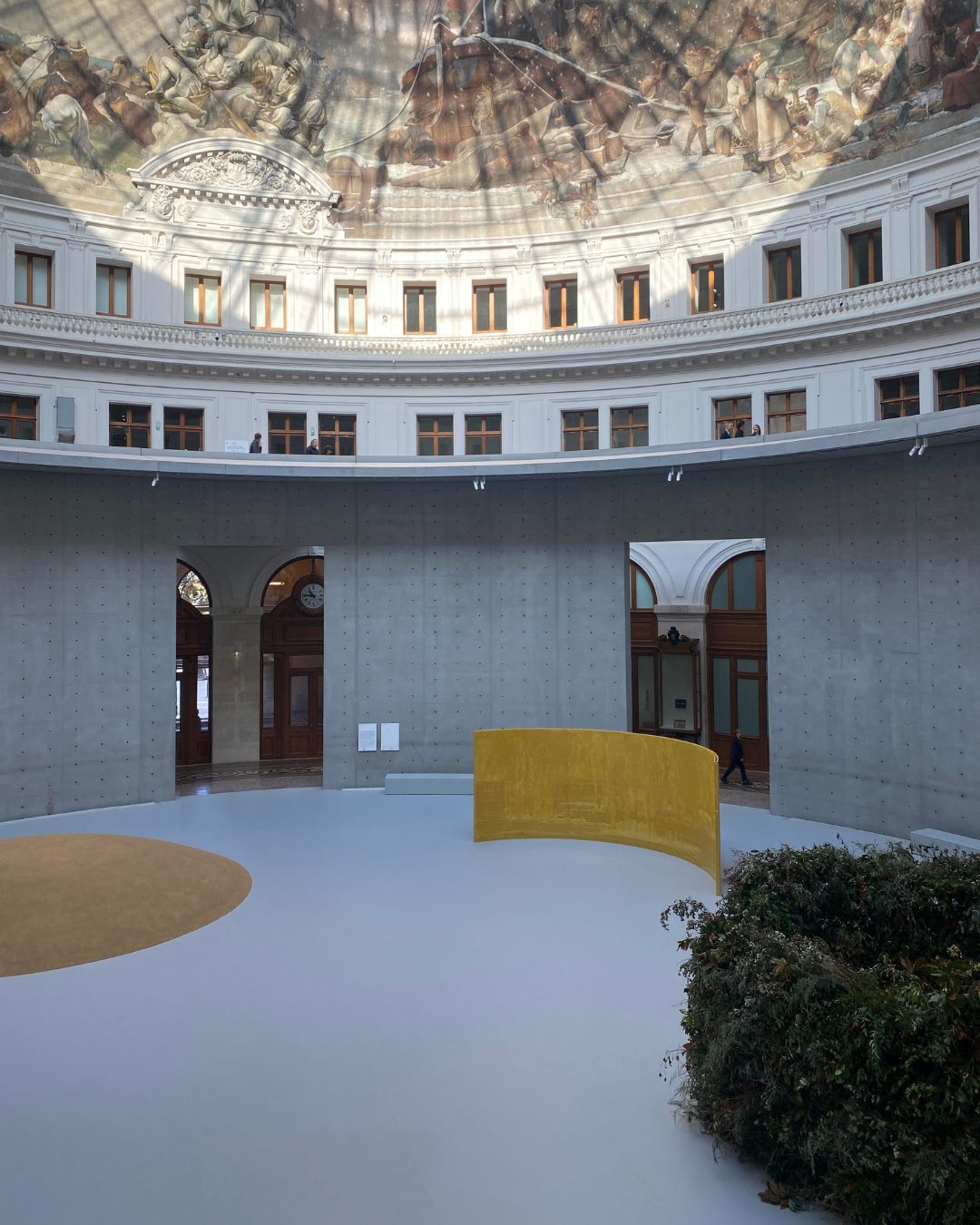
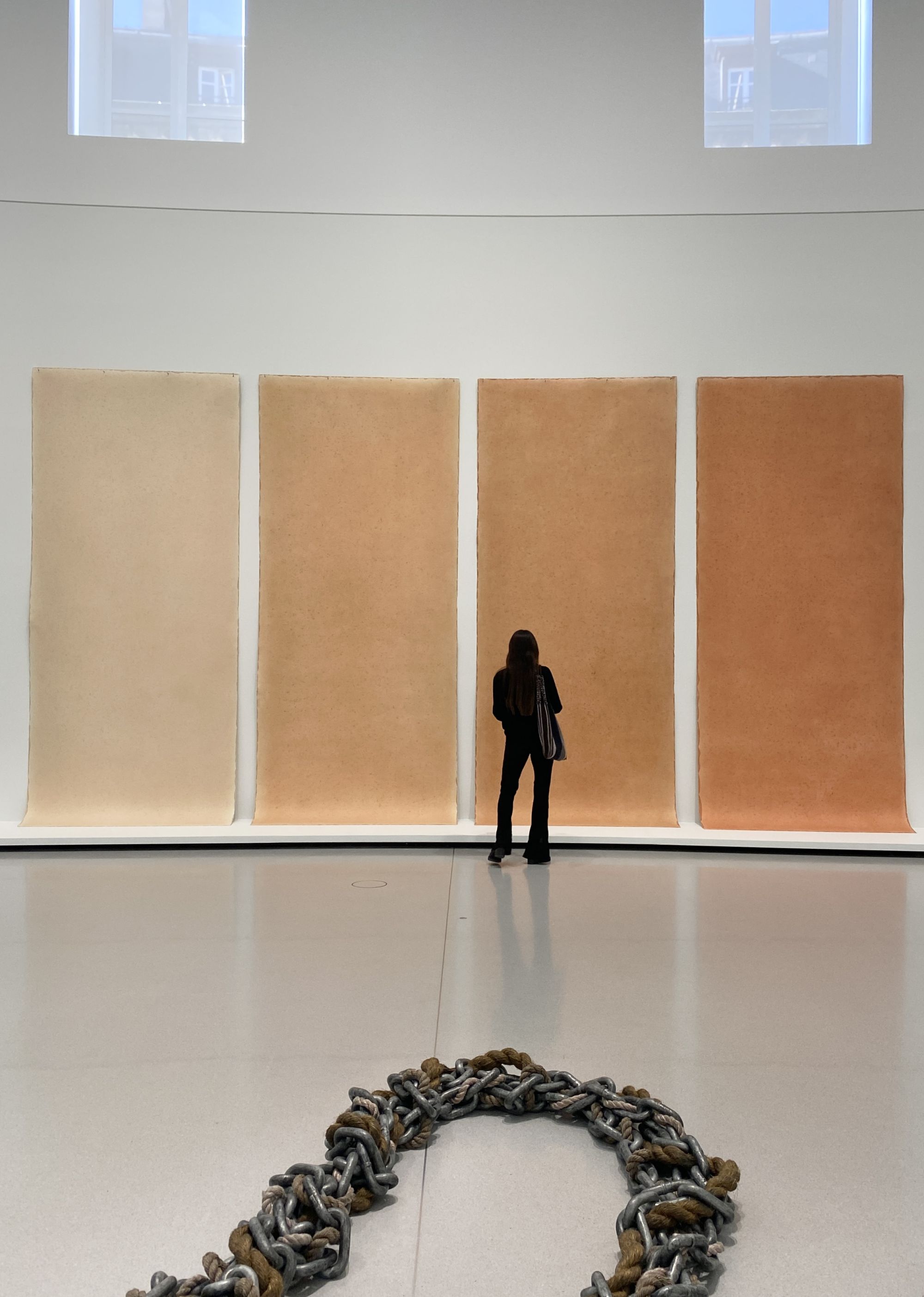
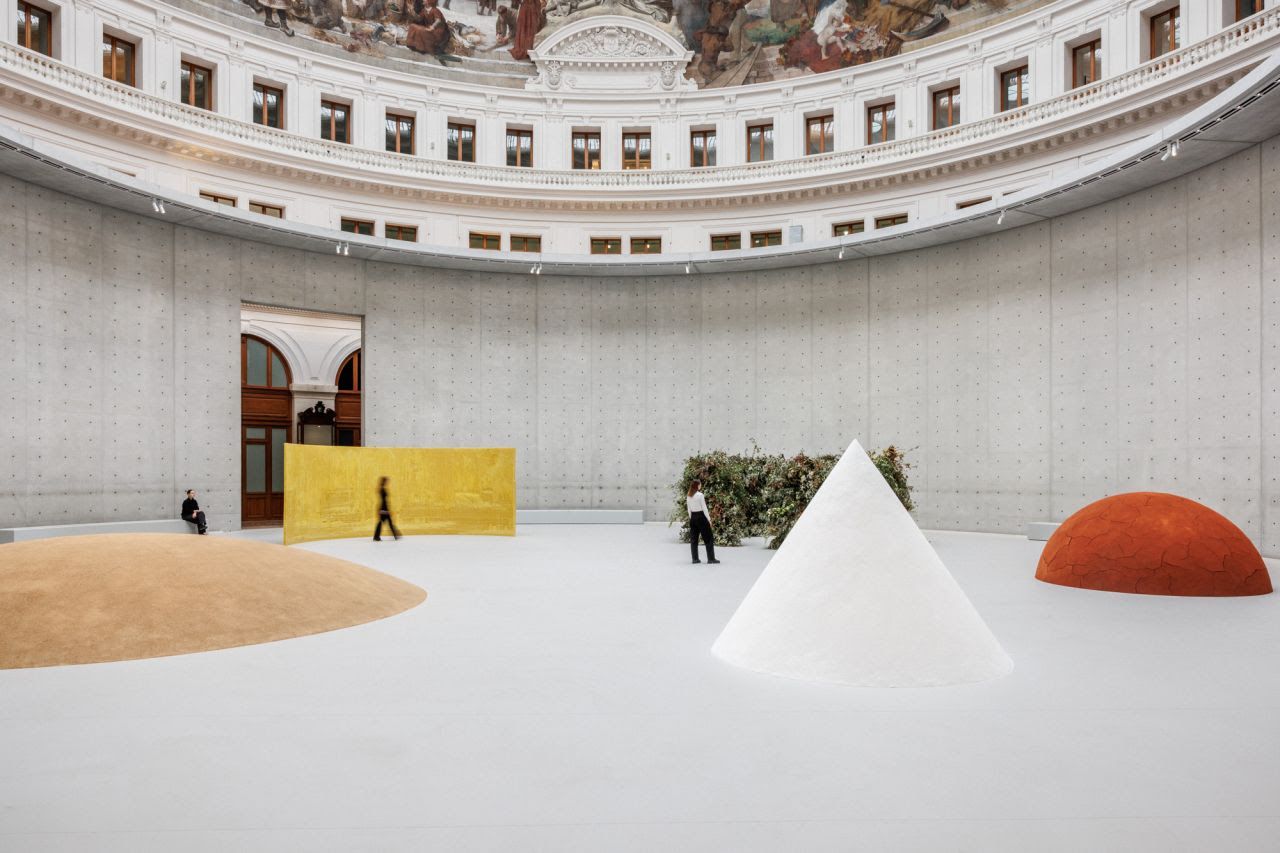
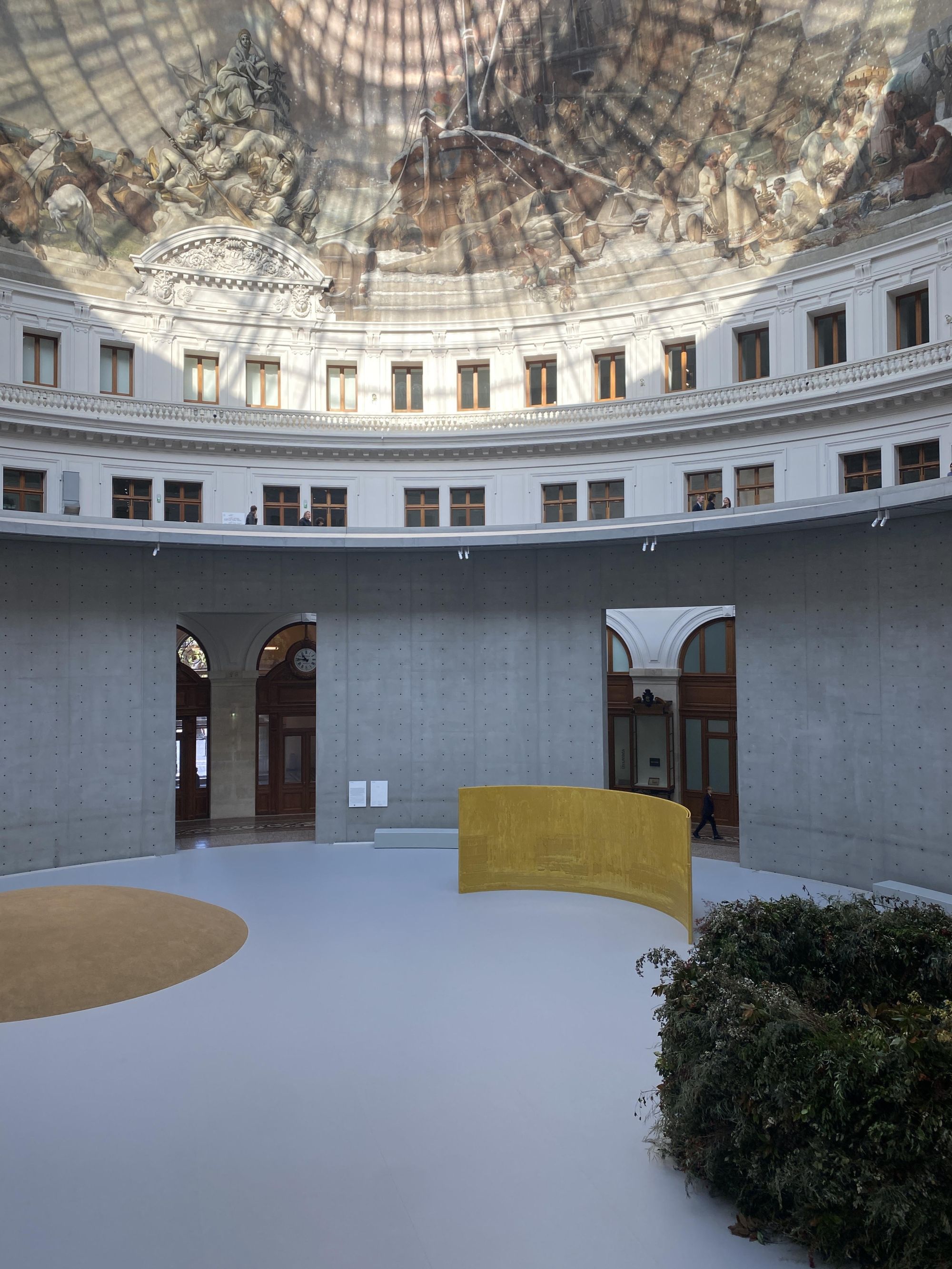
Across the Bourse de Commerce, the exhibition Minimal, curated by Jessica Morgan, director of the Dia Art Foundation, seems to offer an answer. Here, value is no longer found in symbols or speculation, but in the tactile and the sensory, in labor, care, materials, history, and experience. The New York–based artist Meg Webster stages works created entirely onsite using locally sourced materials. Her installations, made from both the natural and the industrial, feel like an antidote to a world growing increasingly automated. Mother Mound, a dome-shaped structure made of earth, reacts to its environment and subtly evolves over time. Surrounding it, works like Wall of Wax, crafted from scented beeswax; Circle of Branches, assembled from local vegetation; Cono di Sale, formed from salt; and Mound, shaped from soil. For us, her works all point to a return to nature. Are craft, handwork, and nature central to our survival?
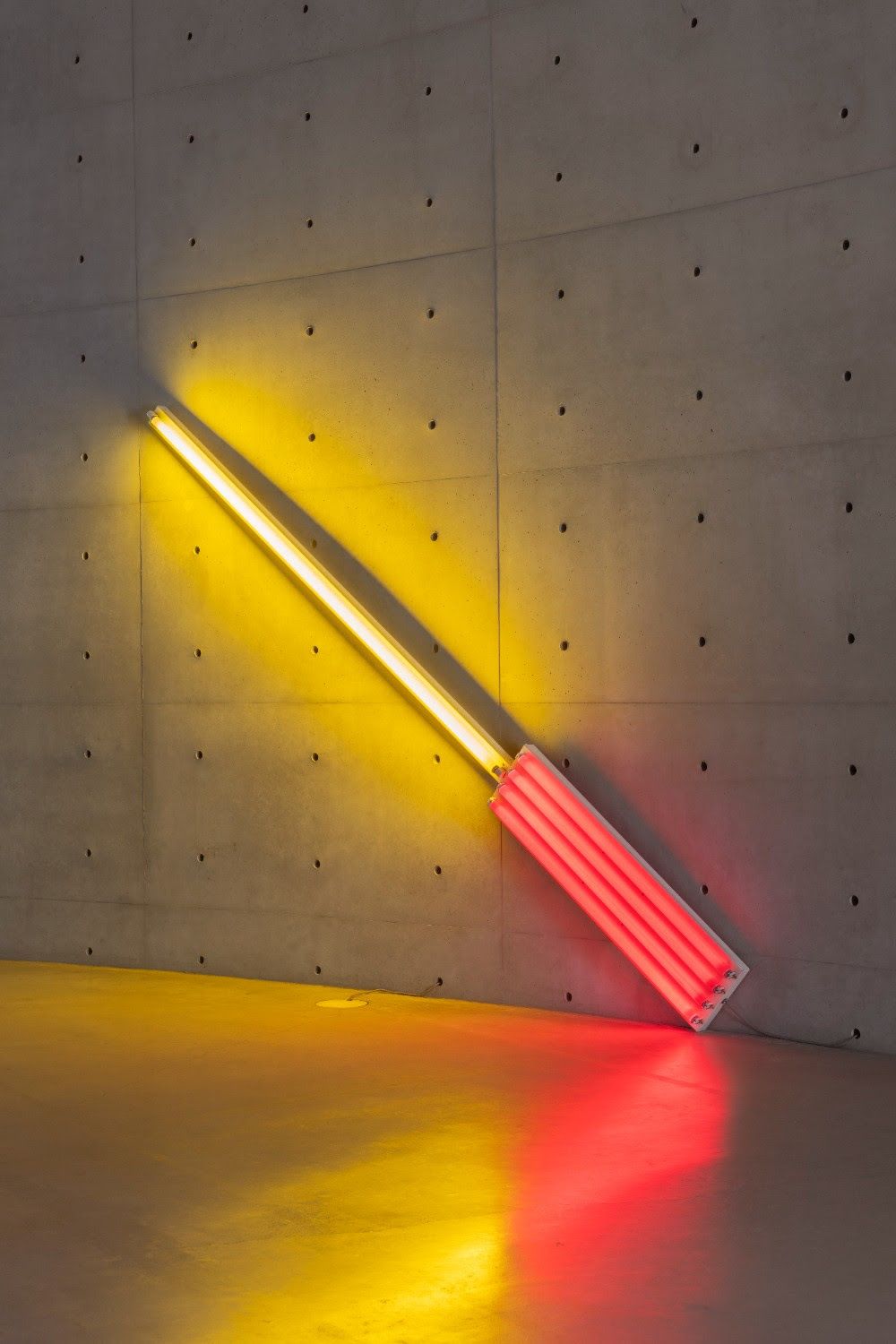
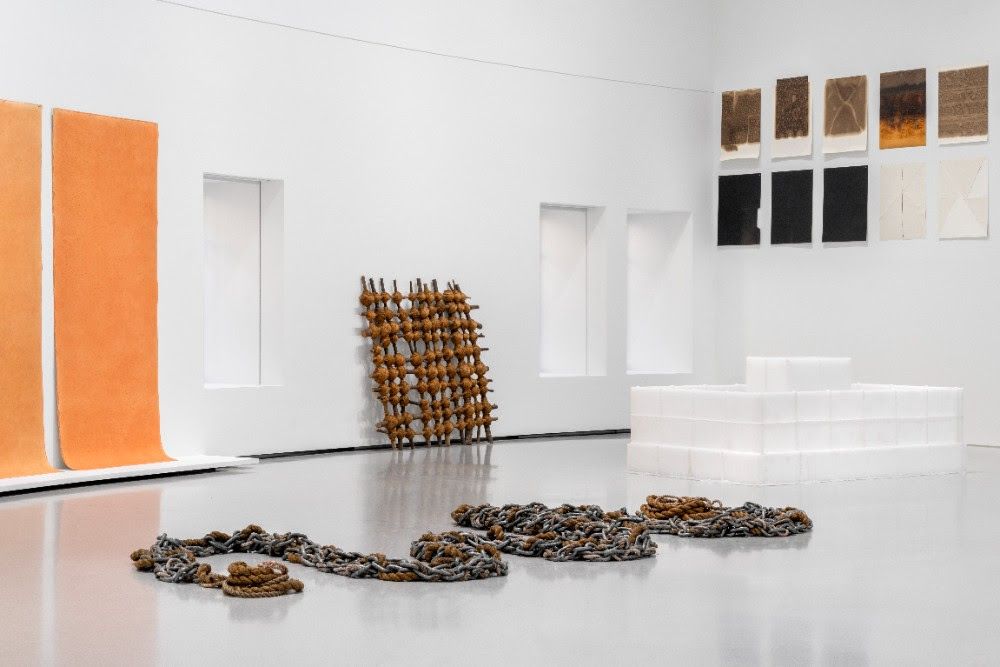
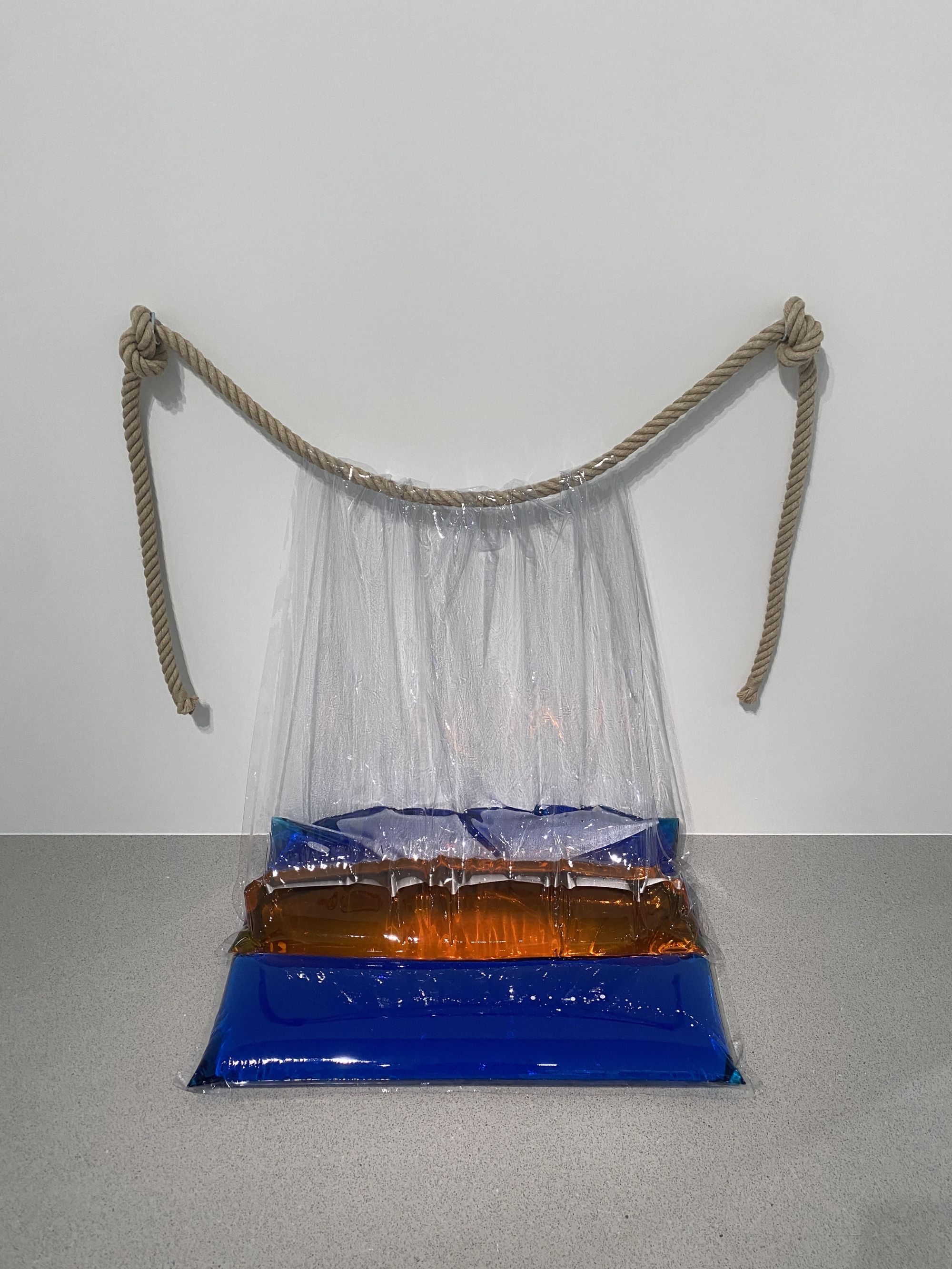
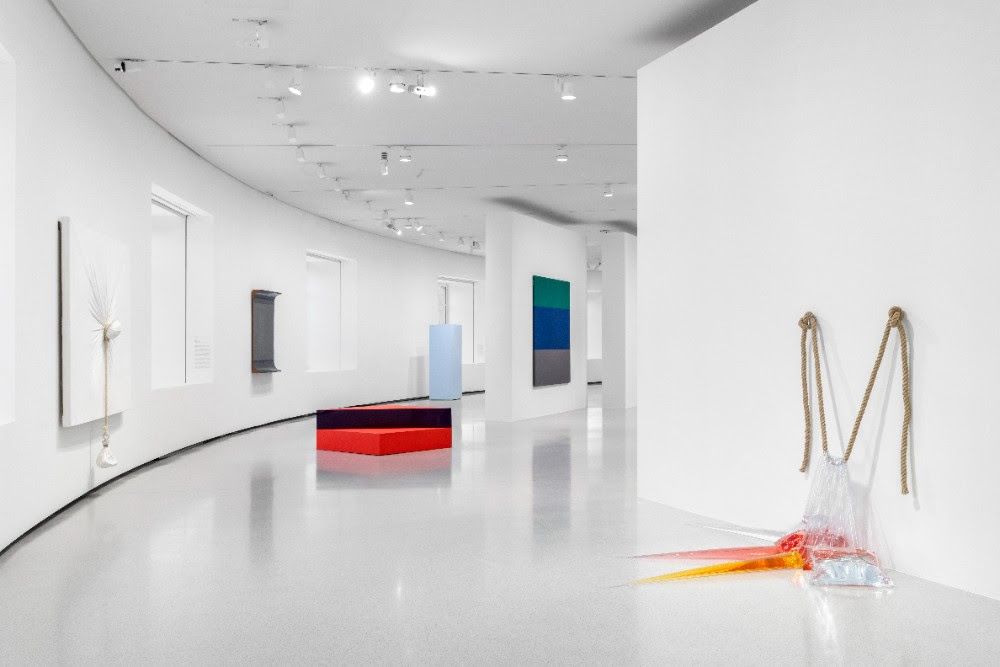
Fittingly, Webster’s work occupies the heart of the exhibition, bringing together works of 52 artists from Europe, Asia, and the Americas, and itself divided into seven sections: Light, Mono-ha, Balance, Surface, Grid, Monochrome, and Materialism. Minimalism from Dan Flavin’s and Chryssa’s neon light echoes commercial signages and advertising. Senga Nengudi’s Water Composition series, which curator Morgan describes as a response to pressure and gravity, features liquid, sealed in plastic, collapsing heavily on the floor, ropes holding it like tired, injured limbs—almost like a representation of the weight of realities. The 30-foot River Floor sculpture by Marden Hassinger stretches across the gallery, using shipping ropes to tell the story of the transatlantic voyages of enslaved Africans to the Americas. The piece calls attention to the waterways that facilitated the slave trade, and industrialization’s destructive effects on life and labor. These artists, among many, radically changed art in the 1960s and 1970s, “in part a response to changing political, social, and technological developments” by utilizing “pared-back forms, everyday materials, and direct engagement with the environment.”
@boursedecommerce L’art minimal prend ses quartiers à la Bourse de Commerce ! Une expo à ne pas manquer #CollectionPinault #ArtMinimal #expoparis #bonplan #sortiraparis original sound -
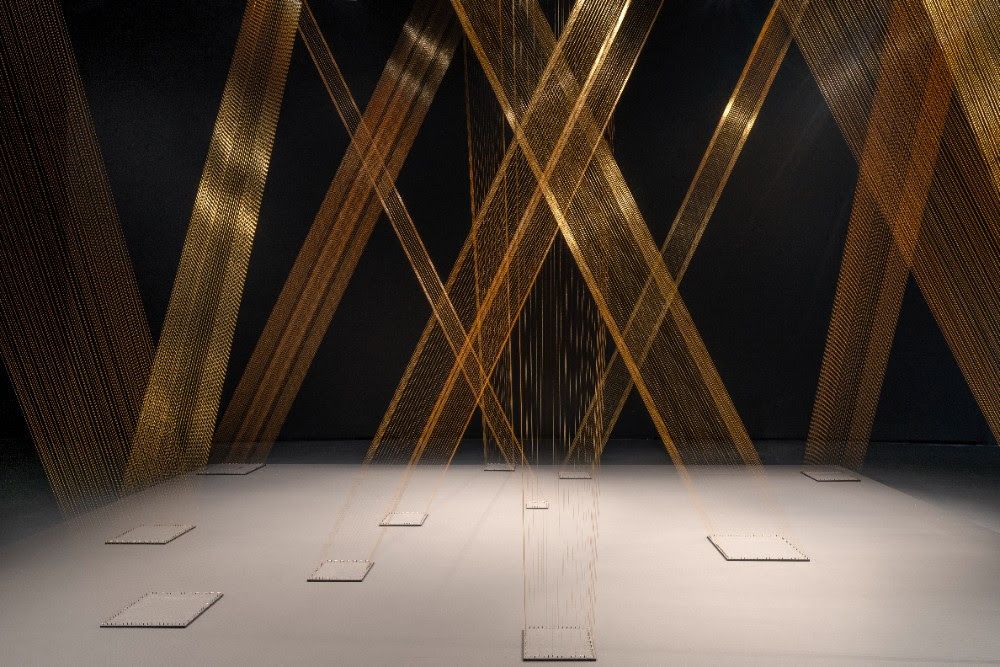
Within the Bourse de Commerce is also Weaving Space, a special exhibition on artist Lygia Pape, curated by Emma Lavigne. On a large screen, her 1968 performance Divisor plays on loop. It features a hundred people from all walks of life walking beneath a huge white sheet, only their heads showing through small openings. In this shared garment, class and hierarchies do not exist. Everyone is equal in their participation in a system where one’s worth is measured through productivity and possessions. Being part of a “fabric” much bigger than ourselves, trust and community become the currency. In another room, another one of her works, Ttéia 1, C, stands as a main event, featuring golden threads nailed into wood, creating a strategic play of light and shapes. Like value itself, its boundaries seem undefined.
All together, these works invite us to rethink worth, value, and currency. The world doesn’t wait. It keeps changing. But where do we begin? Perhaps now. The new currency, these exhibitions suggest, may no longer be what we think we know. Value emerges in community, in craft, in care. In our physical presence and in our dreams. Maybe even in the choices that remind us what it means to be human.
Minimal at the Bourse de Commerce runs until January 16, 2026, while Espèces Humaines / Fides is at the Musée de la Monnaie de Paris until March 8, 2026.