


























Who is Tilly Norwood? The world's first AI actress divides Hollywood
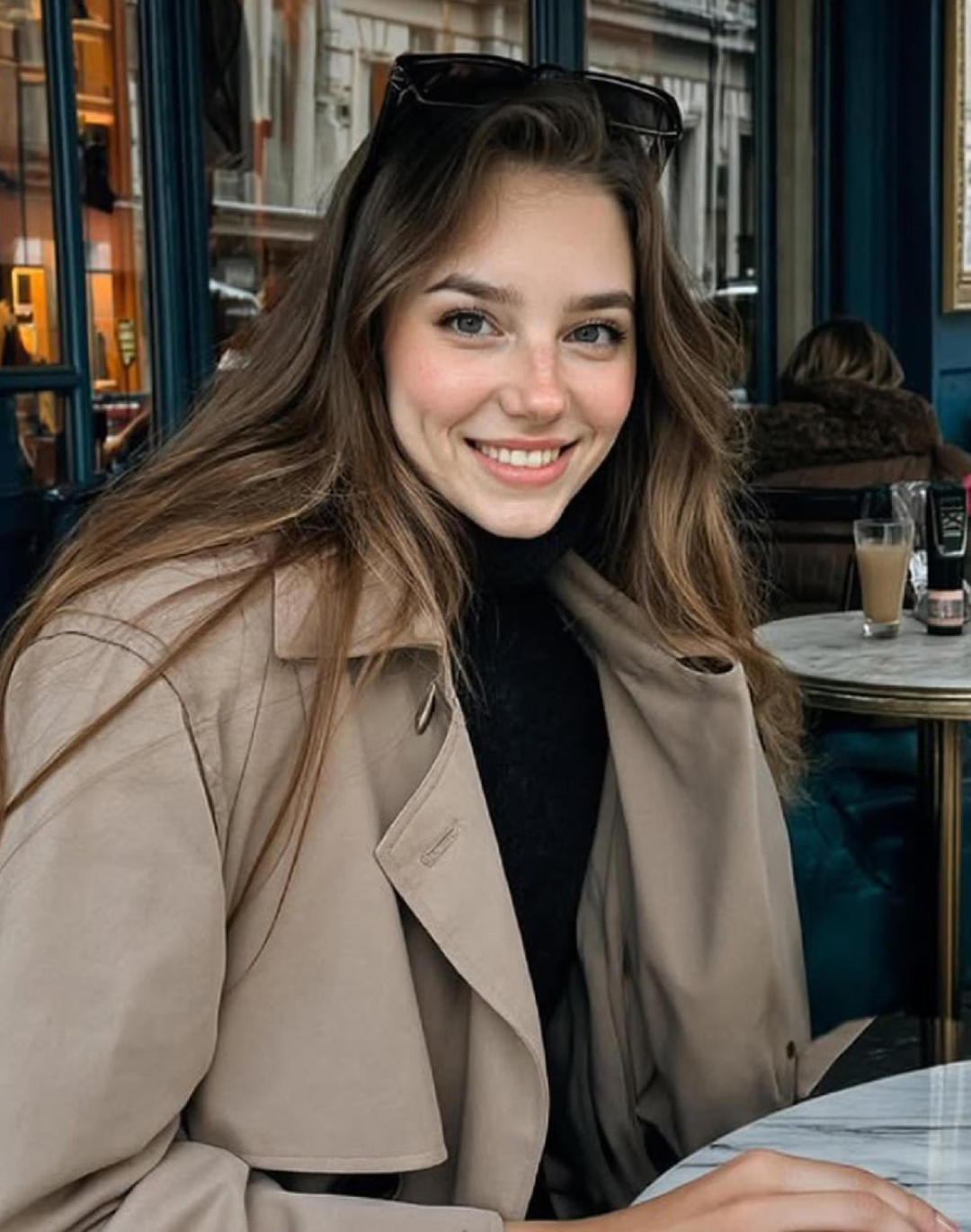
In the surreal world of Hollywood, fiction has always surpassed reality. It’s the industry where anything is possible, unimaginable feats, unreachable actors, and special effects that bend the laws of time and space. But this time, the magic has gone beyond the screen. Tilly Norwood doesn’t exist, yet she acts, smiles, and signs contracts. Tilly Norwood is the first actress entirely created through artificial intelligence,— a perfect yet girl-next-door face born from code and computation, capable, it seems, of evoking real emotions. For some, she represents the future of cinema; for others, proof that we are living in a dystopia.
Who is Tilly Norwood?
Behind her creation is Xicoia, the AI division of the production company Particle6, founded by Dutch actress and producer Eline Van der Velden. Tilly was officially introduced at the Zurich Summit during the Zurich Film Festival last September, in a satirical short film titled AI Commissioner, where she stars alongside sixteen other digital characters. The stated goal was to spark reflection on the future of cinema, but the result turned into a cultural earthquake.
Tilly’s career obviously goes beyond cinema, she has also turned to social media. Her official Instagram profile is a constant stream of selfies, digital sets, and “everyday life” moments. In just a few months, she has gained tens of thousands of followers, becoming a hybrid icon between actress and synthetic influencer. It’s the evolution of a trend already seen with virtual models like Lil Miquela — but this time, the leap is bigger: no longer just images, but interpretation, presence, and performance.
Hollywood vs. AI Actors
@actingalex1e this is not right!! #hollywood #actresses #tillynorwood original sound - actingalex1e
Hollywood, however, hasn’t welcomed Tilly with open arms. As reported by Reuters, the SAG-AFTRA union described her creation as “a direct threat to human creativity”, emphasizing that “acting is not just about reproducing emotions, but about living them.” Similarly, the British union Equity expressed concern about the data used to train the artificial intelligence, demanding transparency regarding its sources and resemblances to real actors. Meanwhile, several industry professionals have spoken out.
Emily Blunt, according to the Guardian, called the case “terrifying,” while Natasha Lyonne and Melissa Barrera urged agencies to boycott any collaboration with such artificial entities. Their fear is tangible: if an actress can be generated by software, what happens to the craft built from the body and years of study?
The future of the film industry
The concept of signing an AI actress https://t.co/28XNgvamro pic.twitter.com/omDBPfXEuc
— Jonathan Fujii (@jonathanfujii_) September 27, 2025
It’s a question that touches countless professions and the future of AI itself. Yet beyond the panic, some see Tilly as an experiment rather than a revolution. Van der Velden told Vox that the project “doesn’t aim to replace actors but to expand the possibilities of cinematic storytelling,” comparing AI to “a new brush on the filmmaker’s palette.” However, according to some reports, several production companies have already drafted contract templates to use Tilly Norwood in minor roles, promising to cut costs by up to 90%.
The debate, therefore, goes beyond technology; it’s a question of identity. Tilly Norwood is not just a face generated by algorithms; she’s the reflection of our moral contradictions toward unchecked technological progress. In an era where everything is content, her existence forces us to ask whether authenticity still matters, or if its simulation is enough to move us. As The Guardian wrote, “Tilly is the perfect symptom of a film culture that has lost its hunger for reality.” And perhaps that’s why her presence, however artificial, strikes us so deeply: because it reminds us how rare it has become to see something truly human.
What to read next
5 trends that Trainspotting anticipated Back in 1996
There is much more to the film than the famous Helmut Lang tank top
Andrew Scott gives the best performance of his career in "Elsinore"
Simon Stone's film tells the true story of actor Ian Charleson and his production of "Hamlet"
"Il rumore delle cose" by Paolo Genovese opens the 2026 Rome Film Festival
The film, adapted from Genovese's novel of the same name, is nonetheless the usual Italian drama