


























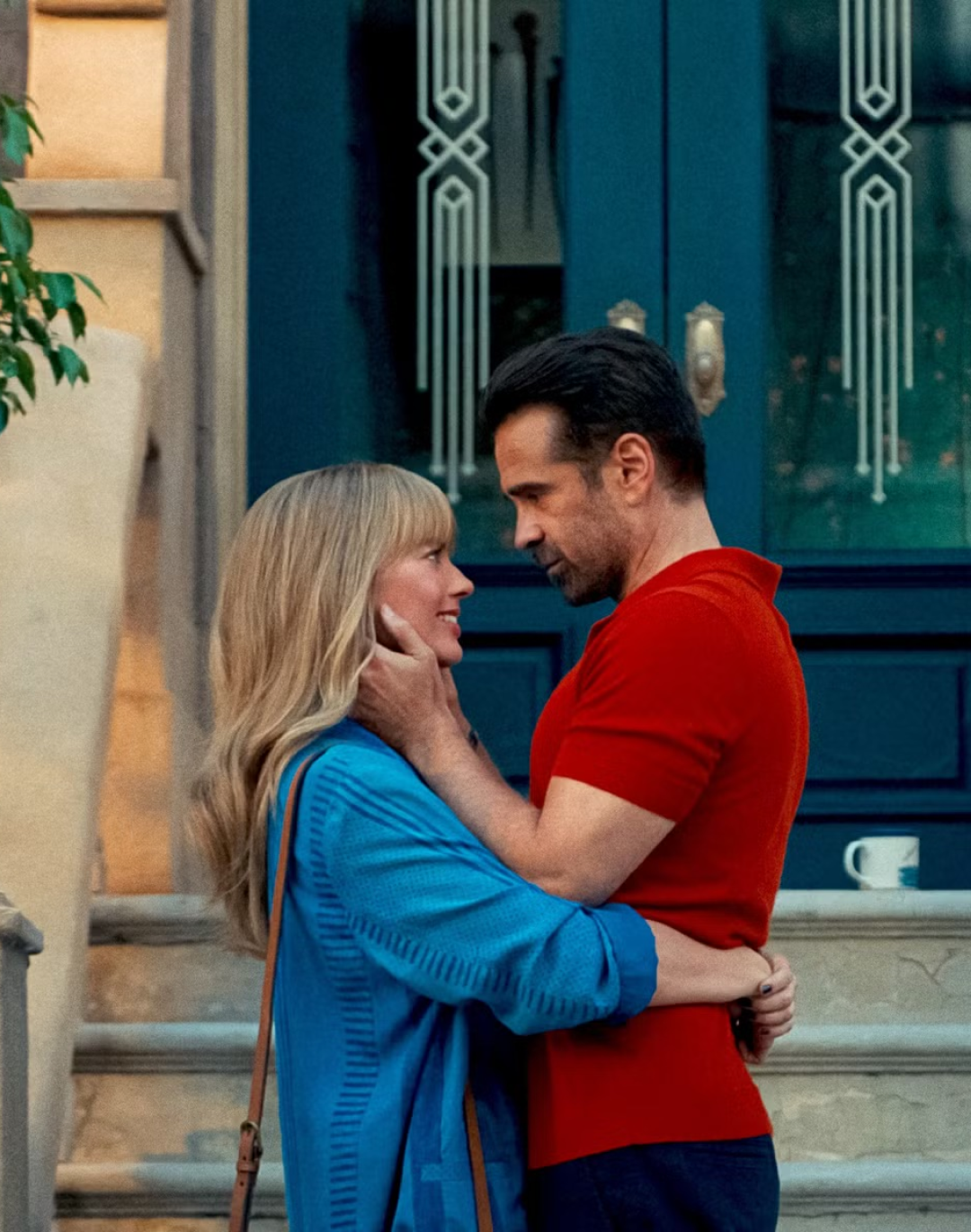
A Big Bold Beautiful Journey is an (overly) romantic film The film starring Margot Robbie and Colin Farrell has been in cinemas since 2 October
For those who know a bit about Kogonada’s cinema, the latest A Big Bold Beautiful Journey feels rather out of place within his filmography. The sentimental piece starring Margot Robbie and Colin Farrell, the latter returning to work with the director after After Yang, is the Hollywood-ized and industrialized version of a poetics of time, place, and relationships that the filmmaker has explored since his 2017 debut with Columbus. This makes the film a strange hybrid, influenced by the author’s metaphysical touch yet this time placed at the service of a work that tries to be far more accessible, even within its fantasy, particularly for a mainstream audience.
A Big Bold Beautiful Journey is, in fact, a romantic film that basks in and loses itself within its romanticism. It’s the surreal encounter of its protagonists, as much as the journey that awaits them aboard two cars whose GPS leads them down roads they would otherwise never have taken, roads that first cross their paths and then set them off on an unusual adventure. After meeting at a wedding, David (Farrell) and Sarah (Robbie) find themselves on the way home and decide to follow an itinerary that makes them stop at different points where they are forced to confront events from their past.
Real doors that the characters discover in completely unexpected contexts and that, when crossed, allow them to travel like a time machine. A kind of adult Monsters, Inc. where the door, isolated and decontextualized, is the key to accessing a personal world. In this case, the intimate and complicated inner lives of two people afraid of fully giving themselves to another person. The path they embark on doesn’t just aim to foster deeper knowledge of each other’s existence but forces them to face their own limits and shortcomings, the very ones that pose the question of whether they are willing to change.
The film, where Kogonada’s intangibility meets and clashes with the need for a clear narrative and straightforward readability, is in fact the director’s first cinematic work not written by himself. The script is by Seth Reiss, and the filmmaker does everything he can to integrate his own touch into a story that, in theory, could have blended seamlessly into his cinematic vision, but instead results in a bizarre mix that at times works, moving the audience to tears, and at others clashes with the excessive layer of sugar that the need to produce a romantic film starring two superstars inevitably demands.
This happens on every level. On the introspective and human side, with an analysis of relationships that seems to want to dig deeper but, for the sake of clarity and easy consumption, remains on the surface, particularly regarding the characters’ unresolved issues as children and their need to mend rifts with parental figures. And on the aesthetic side, with a particularly refined taste that distinguishes the grace of Kogonada’s films, from architecture (crucial in his cinema) to the wardrobe of his characters, an artistry that A Big Bold Beautiful Journey embraces, though not at its fullest expression.
me looking at that 2.9 average rating of A Big Bold Beautiful Journey on Letterboxd pic.twitter.com/kZXHLib5Dr
— The Righteous Gemstones’ rightful Emmy (@criticroc) September 24, 2025
But given the obvious direction the film takes and the so blatantly clear intentions for any viewer, there is little point in nitpicking an opus whose aim is evident and, in part, accomplished. With Kogonada surrendering himself to this reinterpretation of his own doctrine, it may well help introduce him to audiences unfamiliar with his name, encouraging them to look back at the suspended, deeply human worlds of his previous two films.
Meanwhile, for him as well as for Robbie and Farrell, A Big Bold Beautiful Journey remains an incredibly simple, overly romantic endeavor, yet one that is aware of itself and thus fulfills its path exactly as intended. A film that stands as the apotheosis of both lyrical and mainstream languor. A film where it has been decided that the protagonists must fall in love, the audience must fall in love, and where this indeed happens.
What to read next
There is a scene in El ser querido that explains how the world is changing
The film is directed by Rodrigo Sorogoyen and stars Javier Bardem and Victoria Luengo
What is VisionQuest, the new Marvel series on Disney+?
Paul Bettany once again plays Vision, although this is not the same character from the films of the cinematic universe
5 trends that Trainspotting anticipated Back in 1996
There is much more to the film than the famous Helmut Lang tank top