

























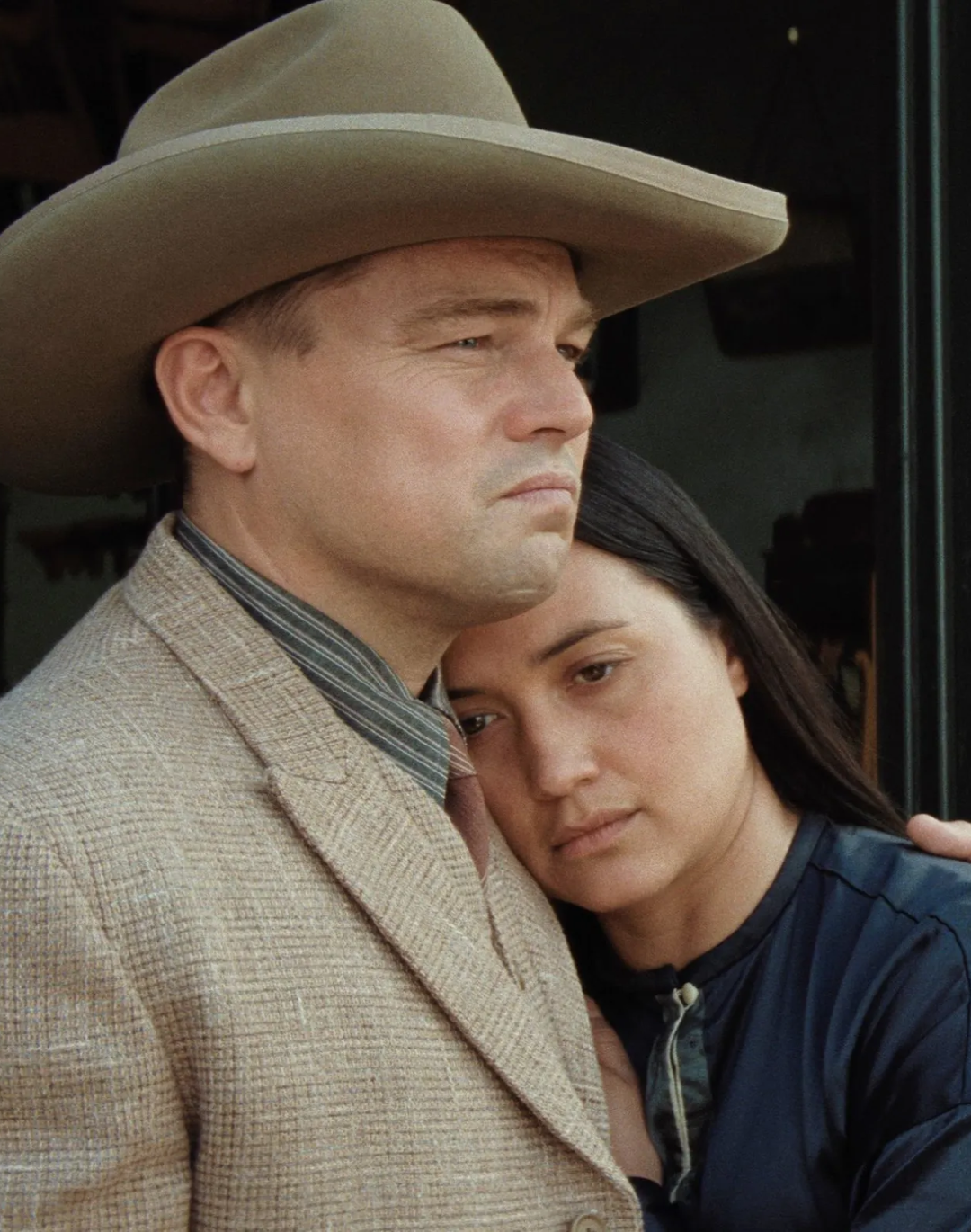
Films are too long nowadays From the dominance of series to the freedom of productions: why does any work exceed two hours?
It is now clear to everyone: movies, any movie, any type of movie, last too long. Dramas, comedies, modern westerns. Horror, biopics, sometimes even documentaries. What once was a synonym of grandeur and solemnity has ended up becoming the norm in an industry where nothing lasts less than two hours and, at times, even reaching just one hundred and twenty minutes seems too little. Festivals are the reservoir where such a multitude of runtimes converge. Works that cannot last less than a certain amount of time, otherwise it is as if one were not a true author.
Even blockbusters are no exception, eager to give depth to their stories, when often speed and fun would be enough. The trend is so evident that we have reached a point where if a movie lasts only an hour and a half, or let’s say an hour and forty minutes, it is seen as the ugly duckling of the group. But not by the audience, who instead feel a sort of relief in knowing they will be entertained for a probably more balanced amount of time compared to what usually happens.
Faced with this obvious shift in gear toward endless narratives, an explanation must be found. Some, in a romantic key, may see something good in this excess of length: extending the hours of a movie means extending the time people spend in the movie theater, away from the frenzy of their phone screens, scrolling, and videos of brevity that do not last beyond a minute. It would be a wonderful idea if it weren’t for the fact that, most of the time, filmmakers do not dwell so much on thinking about the quality time the audience could experience, but rather only on the fact that they do not want to part from their story.
It’s all a matter of production
@domischainsaw and then I just give up and sleep #letterboxd#cinephile all too well 10min version - c (taylor‘s version)
This is where the figure of the producer should step in. Although the animosity between directors and producers is age-old, it is true that the balance of many masterpieces in cinema history was achieved precisely thanks to the decisions of the latter against the will of the former. Not that they did not have their faults. Among the many, suffice it to cite the various versions (currently seven) of Ridley Scott’s Blade Runner in circulation because the studios did not want a grim ending for Scott’s cyberpunk work. But, to stay on the topic of length, it was New Line Cinema’s idea to stretch the two films of Peter Jackson’s Lord of the Rings saga and turn them into a trilogy. A “theatrical” version is essential for the proper circulation of a film and for the rest, there is the wonderful world of director’s cuts.
It should also be remembered that figures like Irving Thalberg, David O. Selznick, or Louis B. Mayer, or to mention an Italian name, Dino De Laurentiis, no longer exist. Even Barbara Broccoli preferred to sell all the James Bond rights rather than compromise with Amazon, which can now finally do whatever it wants with secret agent 007. This leads to another point, concerning both the length and the current influence producers can have. If, in the past, a major could pour its heart and soul into a film, today it requires the support of as many production companies as possible to complete a project.
That’s why films also last those extra two or three minutes during the opening credits, seemingly few, but endless on a big screen, necessary to list one after another the various company logos. A matter that concerns small, European, and/or independent works even more, but which affects the fact that if a film has too many voices to be heard and no one steering the ship, then the director will surely prevail. And not always, in the frenzy of navigating their vision, do they take the right course, which most of the time happens to be the longest one.
TV series keep winning
Bro why are kdrama episodes the length of movies pic.twitter.com/v9OlYEbZnI
— ang (@watcherandmore) January 4, 2023
Another factor that may have influenced authors’ urge to push their stories to the extreme could be the expansion of the domain of TV series, which have increasingly infiltrated the media and, in addition, cinema itself, leading to the development of logics that, however, tend to forget the nature of one medium and the other. With the opportunity to explore a story over multiple episodes, even multiple seasons if a show reaches the necessary success, the serial format allows for a treatment of narrative and, in particular, of the psychology of characters that is certainly tempting for those told they must remain within a cinematic time bubble.
And perhaps authors are also right when they see their work, intended exclusively for the big screen, undermined by awards that instead go to stories conceived for another format. This was the case of Valeria Golino’s The Art of Joy at the last David di Donatello, six episodes to transpose the first part of Goliarda Sapienza’s novel, premiered at the Cannes Festival and later released in theaters with a special run to allow the series to compete for awards.
Perhaps the problem is the authors
Of course, when complaining about the excessive length of films, one cannot help but recall the words of Mario Monicelli, who, when someone pointed out that some titles were good but too long, would ask what people were supposed to do with those extra thirty minutes, were they going to miss a train or a dentist appointment? Today, however, those thirty (or twenty, or fifteen, or forty) extra minutes amount to the inability of many filmmakers to rediscover the gift of conciseness. To know exactly where the heart of their story lies and not be afraid to cut a few branches for the sake of the whole work. A lack of restraint that, at times, can weaken a film.
Other times, not, but trimming a story could have made it even more impactful for the viewer. Everyone knows each work is like a child and every cut sequence leaves a void, but it is always better to suffer that small sacrifice in order to enhance the viewing experience of the audience, who, let’s remember, should be the main interlocutor of a work, not its creators. Once upon a time, films like Titanic or Avatar lasted two and a half hours (with the director’s cut even a bit more). But if today all films last as long as Titanic and Avatar, then the very sense of grandeur has been lost, leaving room for solipsism. The three hours of Christopher Nolan’s Oppenheimer are no more and no less than the two hours and forty minutes of any other biopic or drama. We need to restore value to time, even when it comes to cinematic time.
What to read next
5 trends that Trainspotting anticipated Back in 1996
There is much more to the film than the famous Helmut Lang tank top
Andrew Scott gives the best performance of his career in "Elsinore"
Simon Stone's film tells the true story of actor Ian Charleson and his production of "Hamlet"
"Il rumore delle cose" by Paolo Genovese opens the 2026 Rome Film Festival
The film, adapted from Genovese's novel of the same name, is nonetheless the usual Italian drama