





























What Italian marble quarries tell us today Carrara, Trani, Custonaci: a journey through quarrying, beauty, and environmental tensions
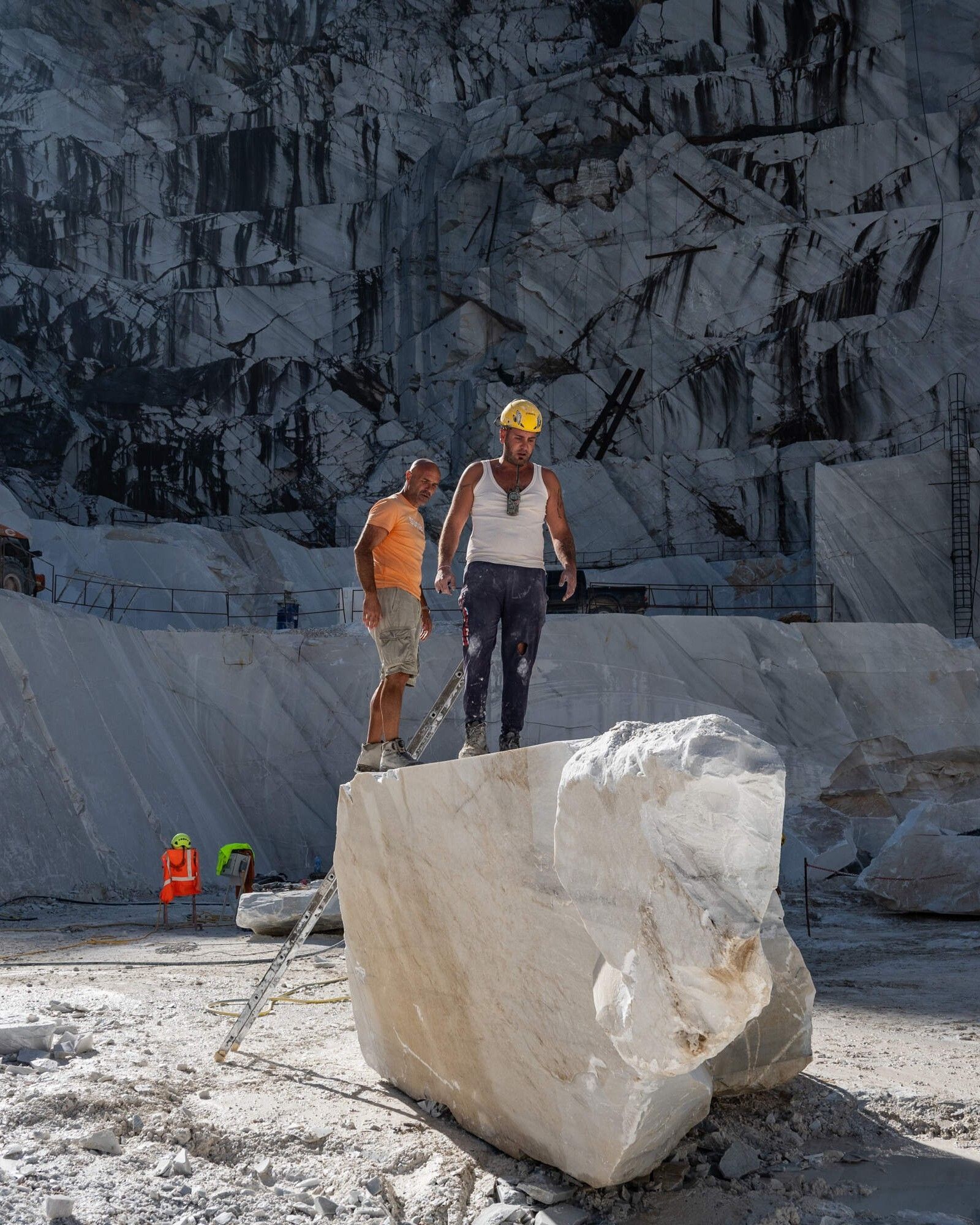
Italian marble has been for centuries not only one of the most legendary and precious materials in the world of design and architecture, but a true archetype. From the sculptural forms of classical statues found in museums worldwide to the sleek, minimal surfaces of contemporary interiors, this stone is much more than a decorative element. It is symbolic matter, capable of telling millennia of history and culture, a tangible testimony to unique territories, a vital economic engine for entire communities and, today more than ever, a focal point in the environmental and ethical debate. To fully understand the directions of contemporary design and its growing responsibilities, it is helpful to start where its materials begin, from their deepest roots. And marble—painstakingly quarried, precisely cut, and polished until it reflects light—is one of its most powerful original forms. Carrara is the almost inevitable starting point. Here, in the Apuan Alps, white stone has been synonymous with prestige for centuries: used by Michelangelo to sculpt the David, it is now at the heart of an industry that moves hundreds of millions of euros every year. Currently, over 650 quarries are active in the area, and some, like Canalgrande, extract more than 60,000 tons per year. That’s a work pace ten times higher than in the 1980s. It’s not just about quantity, but about symbolic power: Carrara represents one of the world’s marble capitals. An identity reflected in the city, the landscape, the economy, and the work culture.
Yet behind the monumental charm and ephemeral prosperity of the quarries lie less celebrated figures and deep social tensions. About half of the extracted marble becomes marmettola, an ultra-fine powder waste that, if not properly managed, can pollute aquifers and watercourses, altering delicate ecosystems. The ravaneti, massive accumulations of rocky debris, not only permanently reshape the mountainous profiles of the Apuan Alps with glaring white scars but can also increase hydrogeological risk. Added to this are issues related to workplace safety, a sore and unfortunately still relevant topic: accidents, including fatal ones, remain sadly recurrent. Despite the economic importance of the sector, with thousands of workers directly and indirectly involved and many artisanal and industrial companies keeping centuries-old know-how alive, the debate on the balance between economic development and environmental protection, between employment and landscape preservation, is more heated than ever, often dividing the same local communities.
And while Carrara represents the historical and media apex of marble, Southern Italy tells its own stories. In Trani, the limestone known as Trani Stone is used worldwide for its warm, compact hue. Custonaci, in Sicily, is another center of excellence where tradition blends with more sustainable practices, such as waste reuse through 3D printing for circular design. In these areas, often far from the spotlight, marble forms a deep economic fabric: small districts, local craftsmanship, strategic exports. The value of marble extends well beyond the raw block. It is estimated that the global marble industry has exceeded 42 billion dollars, with an annual growth rate of 3.9%. And in Italy, design has always been the main driver of transformation: from polished kitchen and bathroom surfaces to indoor sculptures that decorate the most exclusive living rooms, to monolithic sinks and sculptural tables that become the focal point of a space. But it is precisely this extreme aestheticization, which often ignores upstream processes, that now demands a change of pace. More and more designers, sensitive to new ethical and environmental demands, are questioning the possibility of imagining and promoting an “ethical marble”: a material not only aesthetically sublime but also traceable from extraction to installation, responsibly produced in compliance with environmental regulations and worker safety, with a transparent supply chain that does not destroy the landscape to feed showrooms and glossy magazines. This means investing in new cutting technologies that reduce waste, encouraging the reuse of marmettola in other sectors, and supporting local communities.
This mountain range in Italy produces 4 million tons of marble per year, fueling the industry worth over $1 billion pic.twitter.com/dU7giWAtxx
— Business Insider (@BusinessInsider) March 18, 2022
There is no shortage of virtuous conversion attempts. Some former quarries, once open wounds in the landscape, have been intelligently transformed into evocative spaces for artistic performances, open-air museums that tell the story of the territory, or breathtaking hiking trails offering new perspectives on the mountains. At the same time, the "No Cav" movement—one of the strongest and most persistent voices in the debate—continues to call loudly for a halt to intensive extractivism, emphasizing that landscape protection—especially in protected areas like the Apuan Alps—is a collective and non-negotiable duty. The dramatic events of 2021, when the Regional Park of the Apuan Alps was drastically reduced to make room for new extraction permits, sparked nationwide and international protests but also helped trigger new public awareness about the urgency of protecting a one-of-a-kind natural heritage. Marble, therefore, is not just raw material. It is territorial culture shaped by millennia of labor, industrial history that has marked entire generations, political conflict between economic interests and environmental protection, an ethical choice that defines our relationship with the planet. Every marble slab carries with it a carved landscape, a complex network of workers, an unresolved tension between progress and preservation. In an era when design increasingly questions its environmental and social impact, looking at Italian quarries means returning to the origin of the material and confronting its complex truths. And understanding that, to build beauty in a sustainable and responsible way, we must first learn to protect it and respect the territory it comes from, turning every design decision into a cons
What to read next

Will the new EU regulations on unsold goods really help independent brands?
Yes, but there's a catch
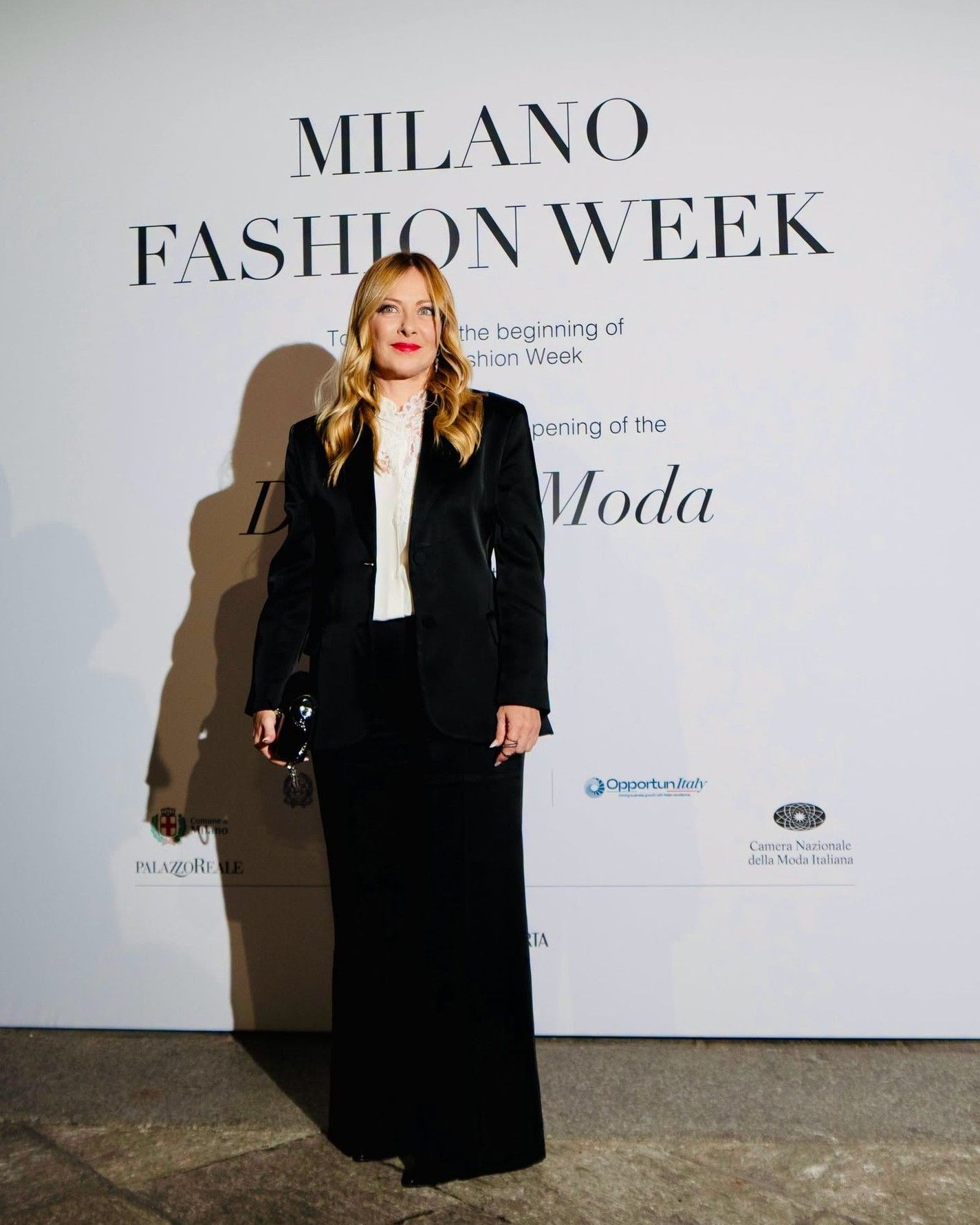
Why was Giorgia Meloni at the Milan Fashion Week gala?
A gesture of closeness to the industry, as meaningful as it is symbolic