























The exhibition “Living in Black” brings to Milan three of the greatest Japanese designers Issey Miyake, Yohji Yamamoto and Junya Watanabe meet the work of Alberto Burri
There is a precise moment when the color black stops being a color and becomes a system. It happens when matter breaks, when fabric tears, when form loses control. This is the premise behind the exhibition “Abitare il Nero”. From Alberto Burri to the Fashion Designers of the Japanese school, on view from April 16 to May 5, 2026 at CUBO Museo d’Impresa of the Unipol Group. A project curated by Silvia Casagrande, which places the work of Alberto Burri in dialogue with the radical aesthetics of Issey Miyake, Yohji Yamamoto and Junya Watanabe. While in recent years fashion has rediscovered black as a dominant aesthetic code, here black is not a trend, but an originating language.
The influence of Japanese fashion
Everything begins with a profound reflection on Burri’s masterpiece Nero con punti: his jute canvas, stitched and wounded, is one of the most powerful images of the second half of the twentieth century. It does not represent something, it is matter that has undergone trauma and exposes it without filters. The black, dense and opaque, does not conceal but amplifies: it makes visible the tension between destruction and reconstruction. And it is precisely this tension that, decades later, we find in Japanese fashion.
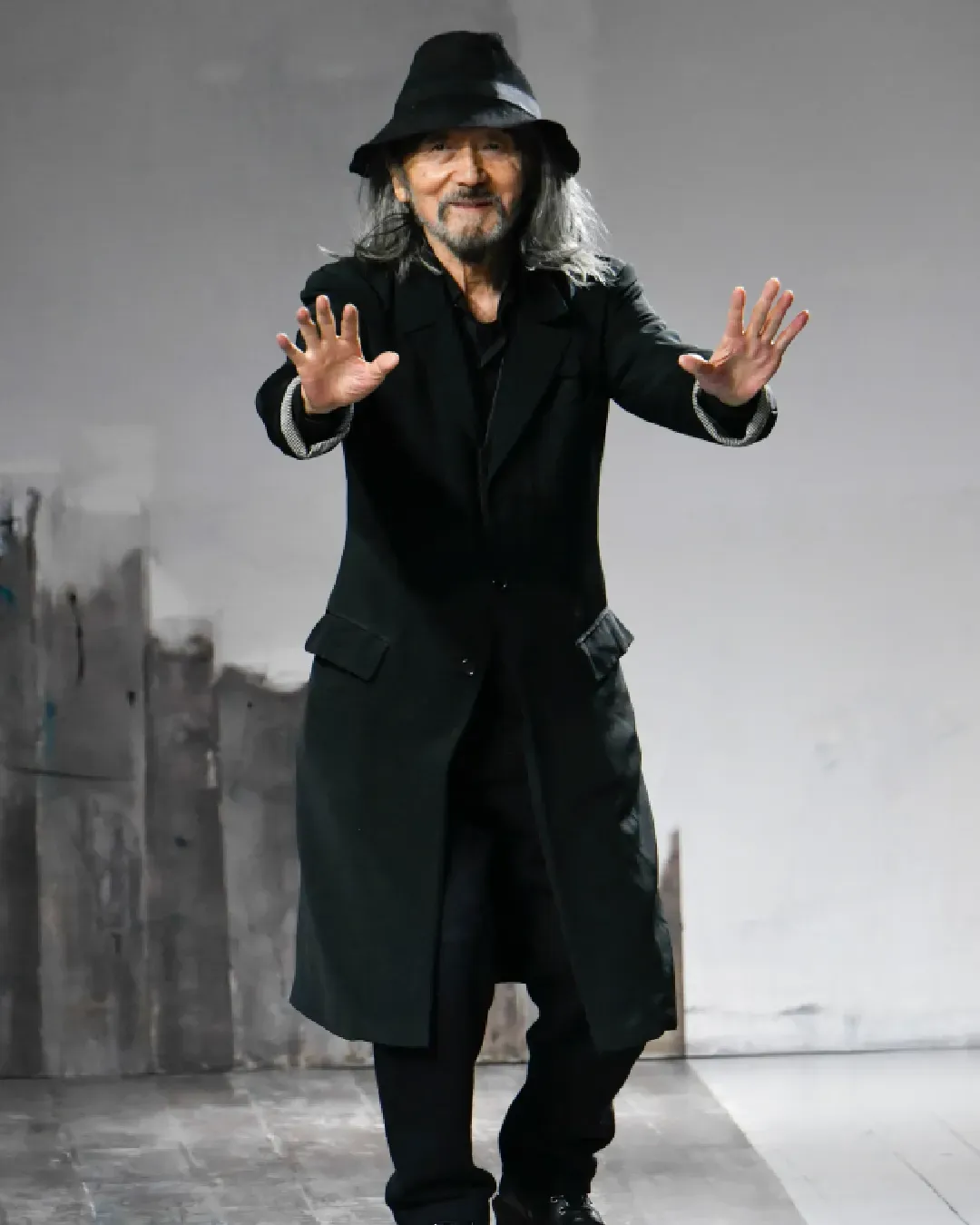
When in the 1980s Yohji Yamamoto and Rei Kawakubo arrived in Paris, the Western fashion system collapsed. Their garments, at the time defined as Hiroshima chic or poverty look, seemed to deny everything: silhouette, proportion, seduction. But in reality they were building a new language. «I want scars, failures, disorder», Yamamoto would say. And that is exactly what we see: garments that appear unfinished, punctured, torn. Black becomes the perfect medium to narrate this aesthetic because it removes the superfluous and brings everything back to construction.
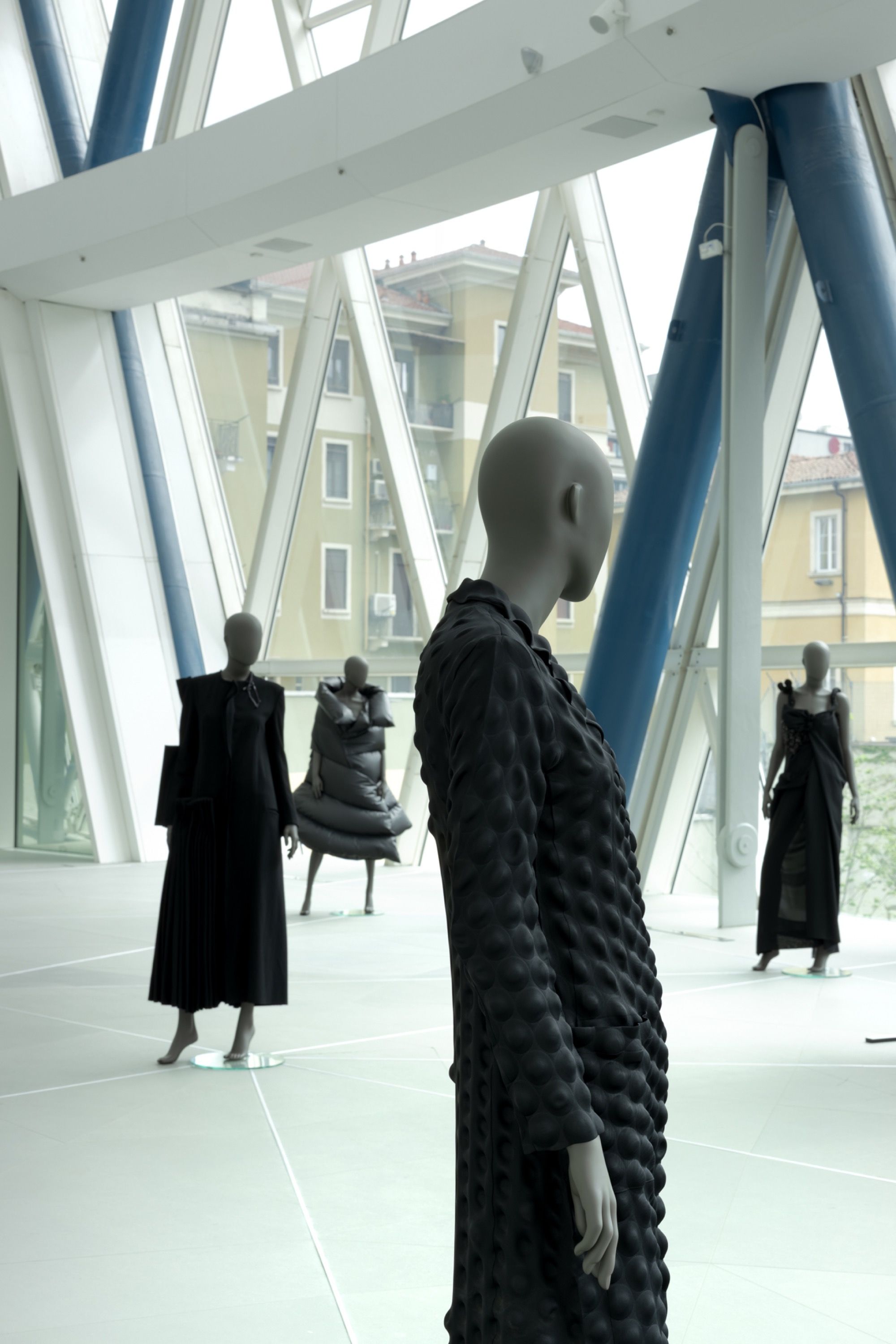
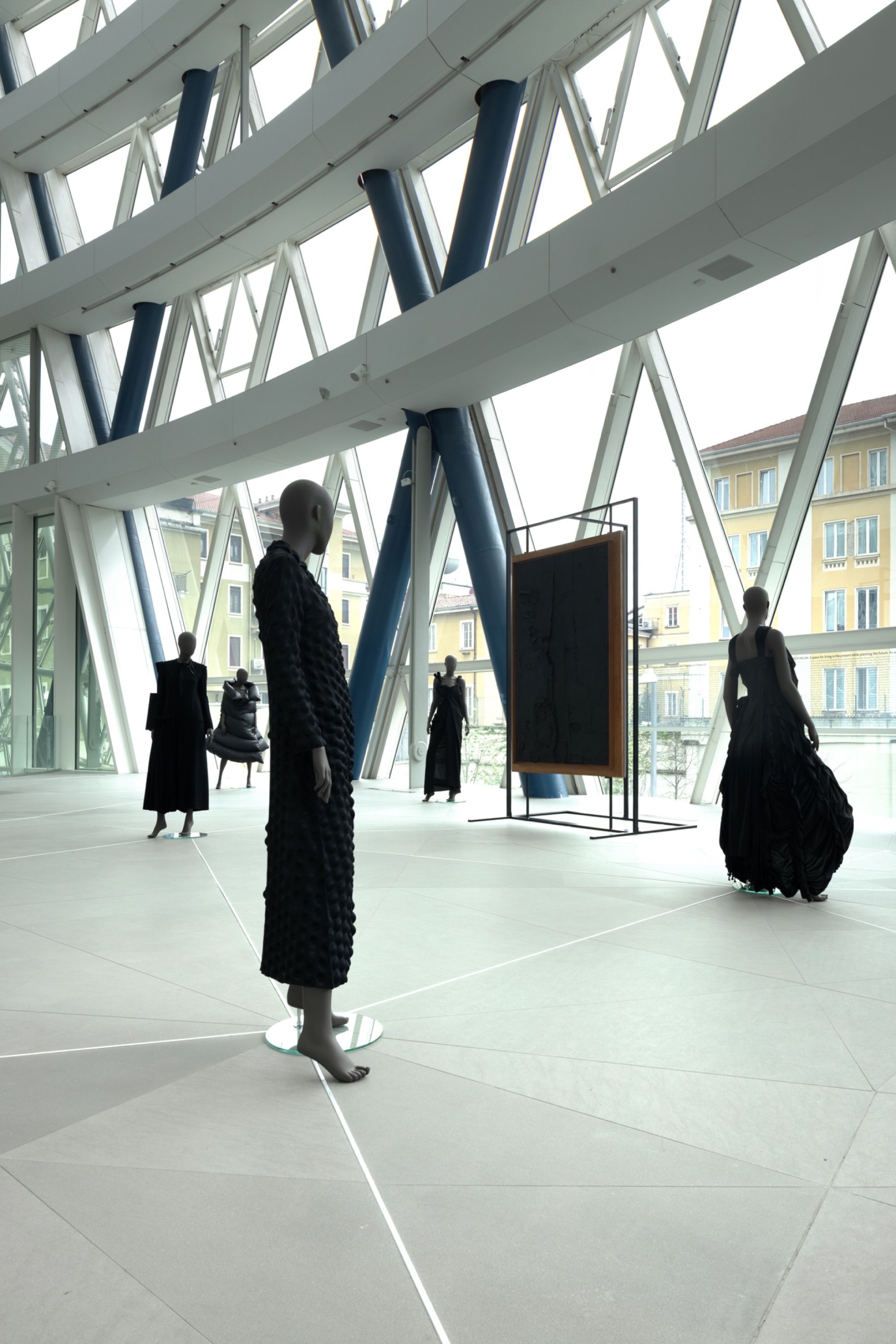
As curator Silvia Casagrande explains: «When CUBO invited me to conceive a multidisciplinary vision for the Milan exhibition at Unipol Tower of Alberto Burri’s work, I immediately felt a strong resonance with its materiality, but also with the echo of experimental restoration that saw it reborn thanks to Japanese algae. Everything called for the idea of looking there, to Japan with its five elements, with the void that regulates earth, water, air and fire. I therefore questioned this masterpiece through the lens of three fashion designers of the Japanese school, starting from their experimental stylistic language; their research in fashion marked a rupture with the rhythmic-compositional scheme of the stylistic code known until that moment. Fabric, for them, is a metaphor for skin and the cuts that adorn it, deliberately exposed, suggest the act of lacerating human flesh, opening up to new visions».
Japanese perspectives
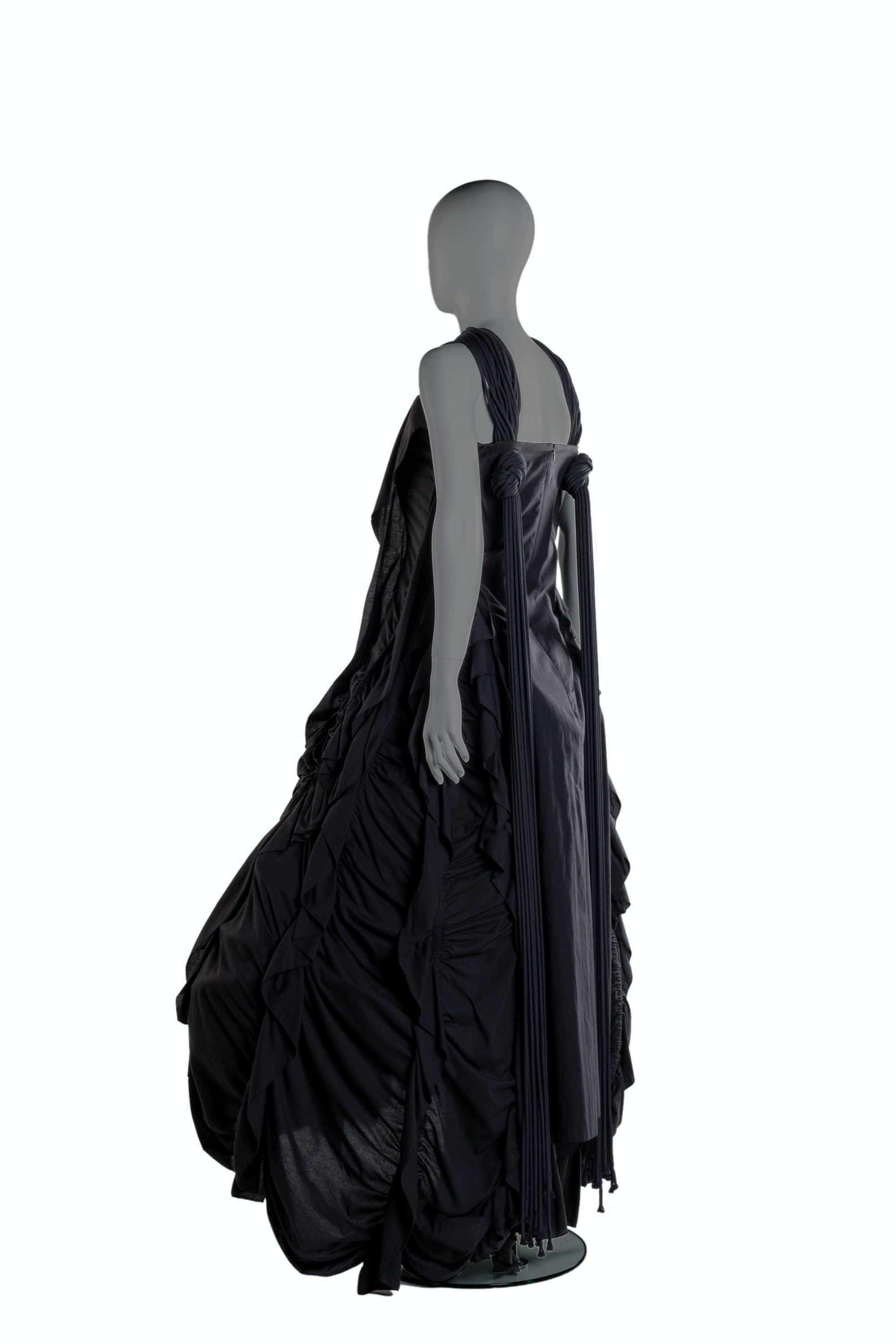
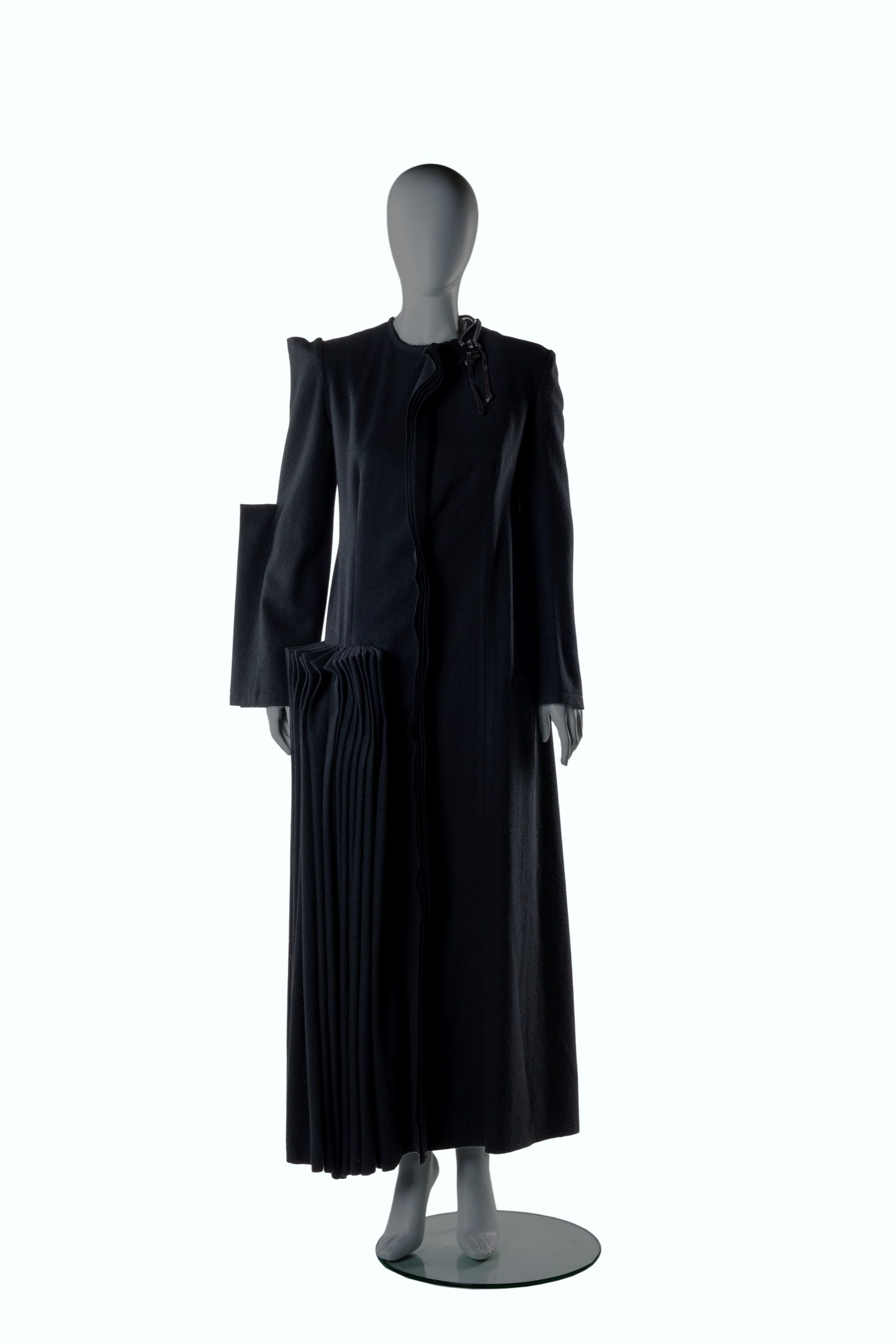
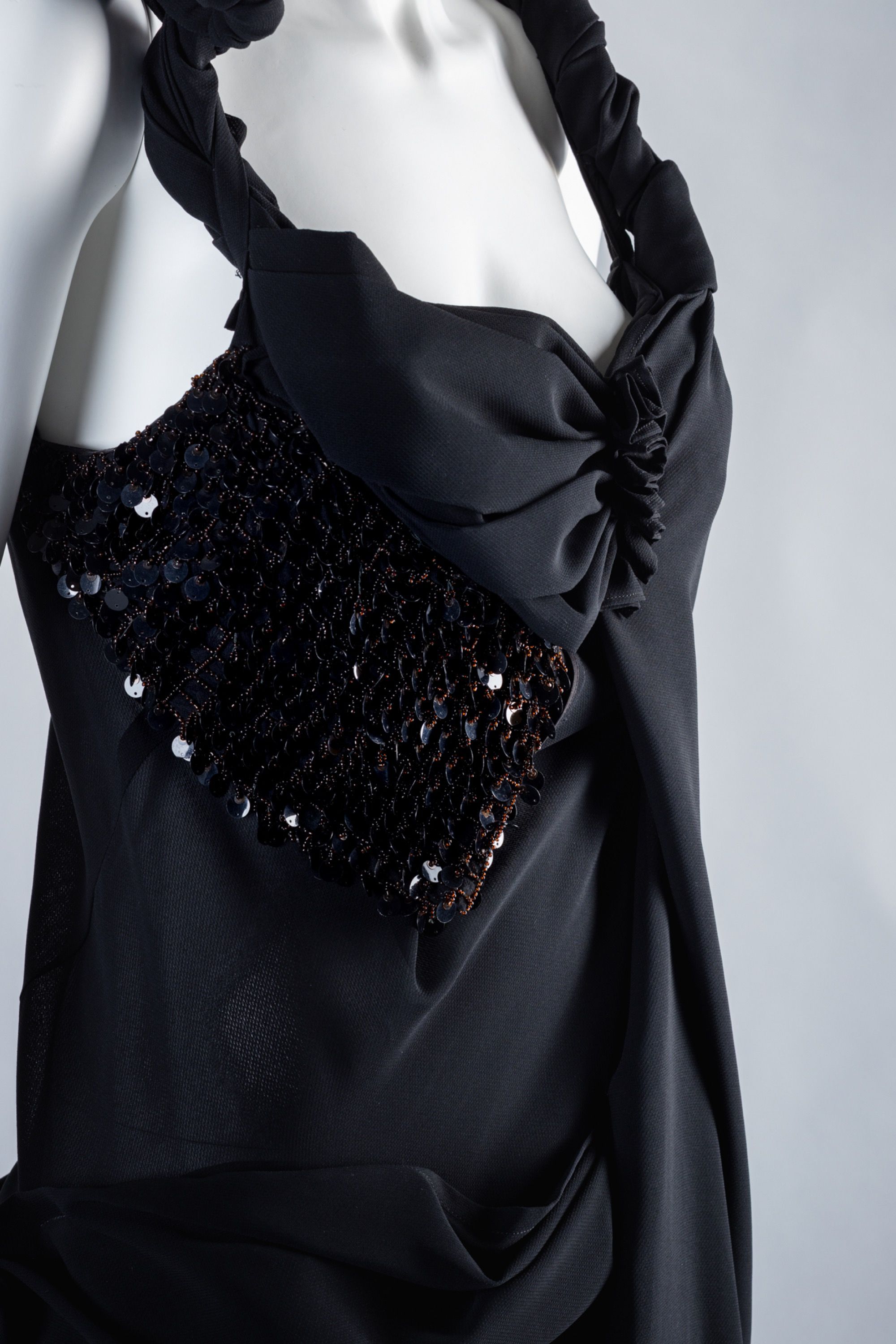
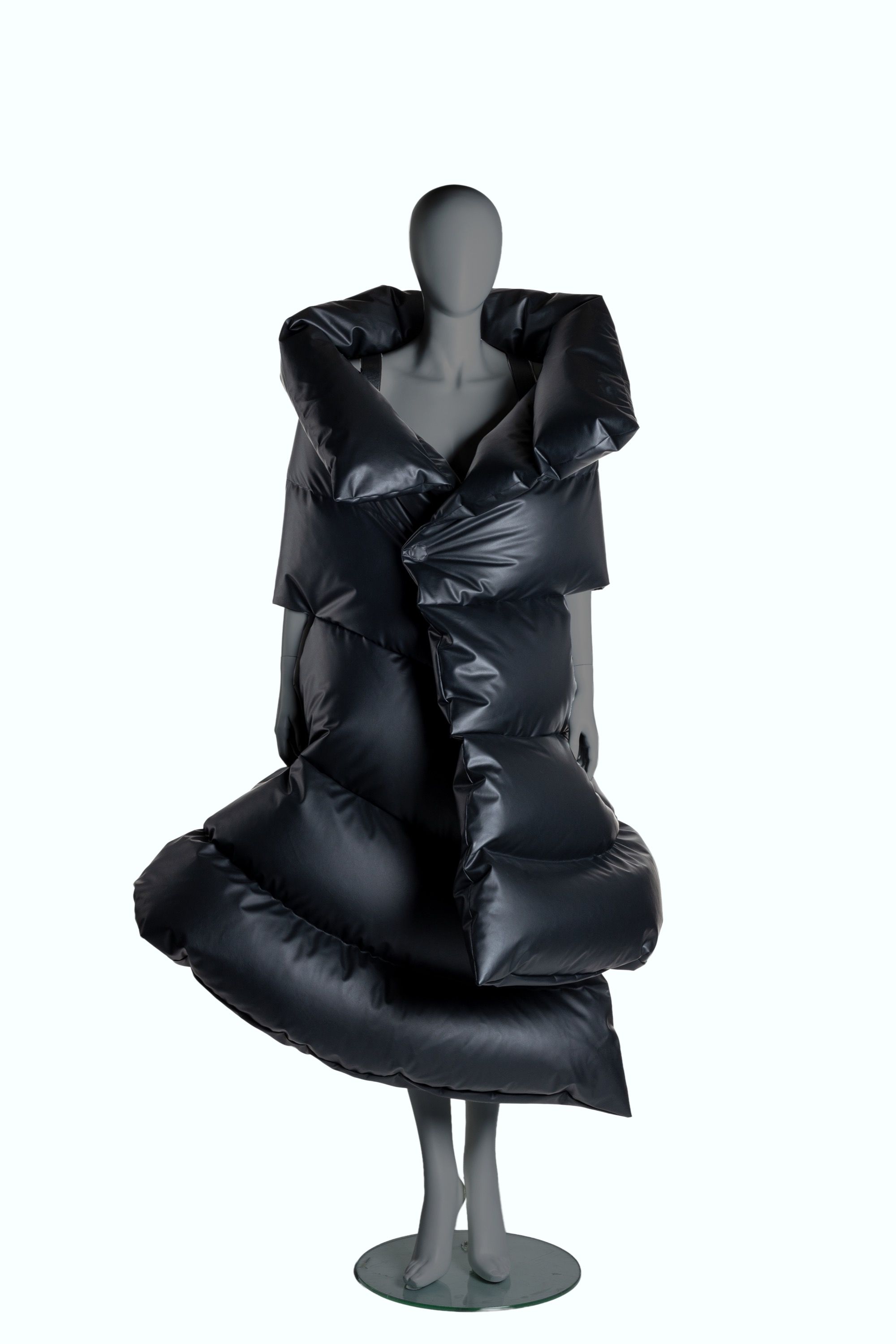
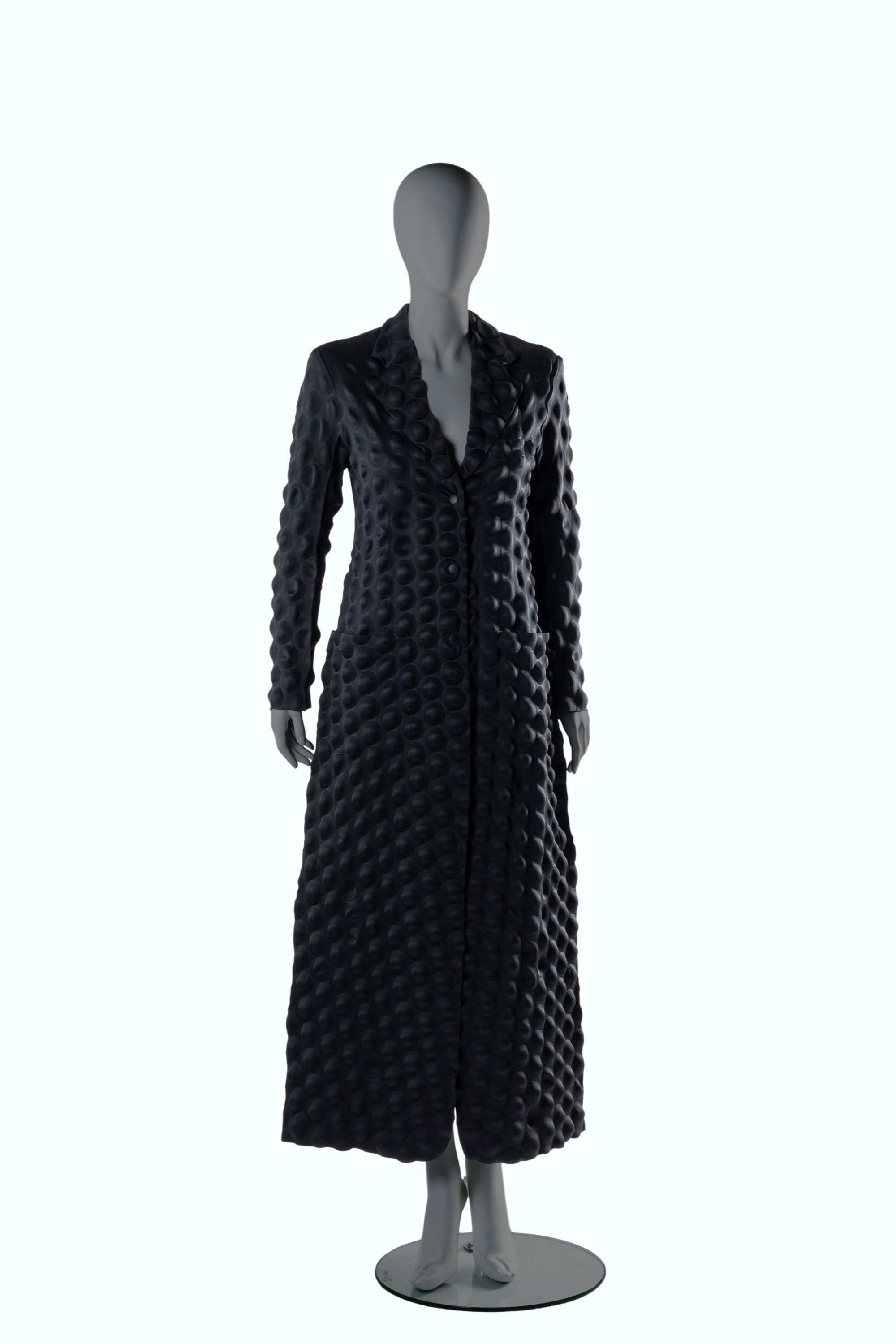
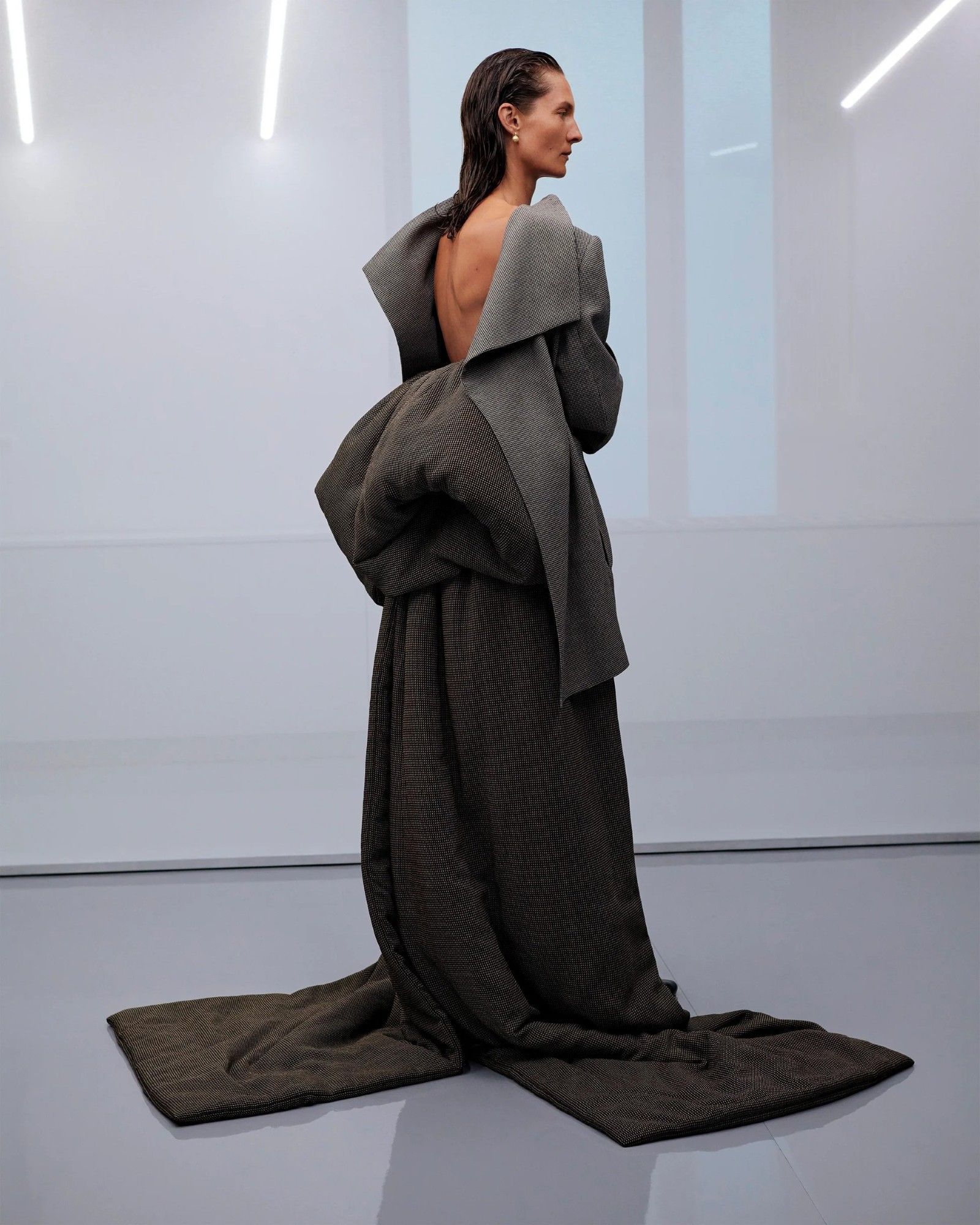
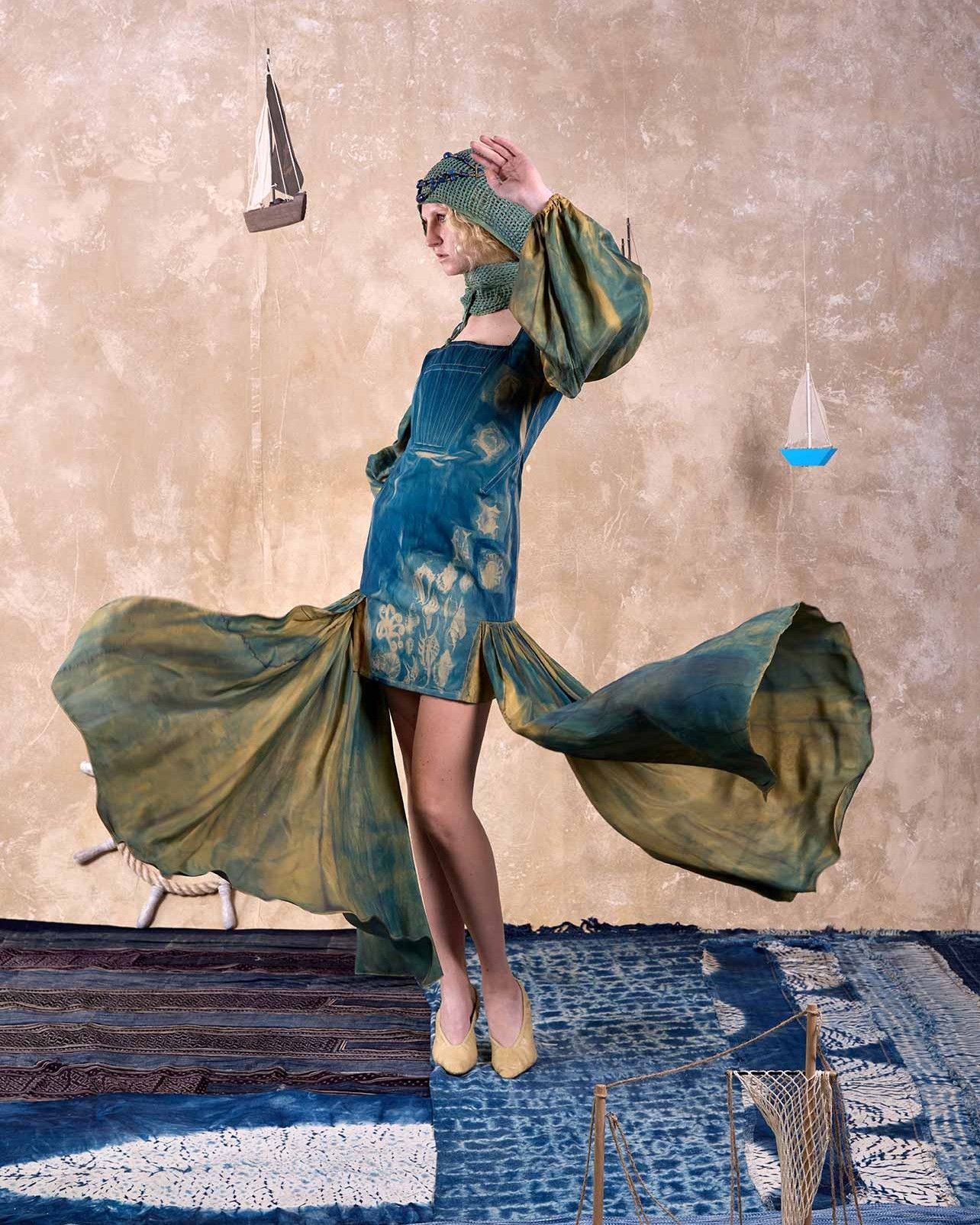
All these designers, in different ways, do the same thing Burri did: they work on the surface as if it were alive. They cut it, stitch it, transform it into something that narrates time, error, transformation. In Issey Miyake the discourse shifts to another level: technology and the body. His pleats and engineered fabrics transform black into something dynamic, almost liquid. No longer just wounded matter, but matter that moves, that breathes. The body is no longer contained within the garment but activates it. With Junya Watanabe, instead, we enter the territory of extreme construction. Patchwork, layering, technical materials: black becomes a field of continuous experimentation. The garment is an assemblage, an open system where each element dialogues with the others without ever closing into a definitive form. With Yohji Yamamoto, black becomes a rejection of closed form and a poetic statement: the garment does not define the body, it suspends it between presence and subtraction, opening a zone of perceptual ambiguity.
The poetics of black
Japanese black is never truly “black”. It is shadow, depth, infinite variation. As Jun’ichirō Tanizaki writes in his Book of Shadows, beauty does not lie in full light, but in chiaroscuro, in intermediate zones. That is where things happen. Translated into fashion, this means something precise: not showing everything. Suggesting, evoking, leaving space. Black thus becomes a silent language, almost anti-communicative, and fashion becomes a silent form of communication, an expressive language that does not require words. In a historical moment where everything is hyper-visible and shared, this exhibition arrives as a pause: an invitation to slow down, to look more carefully, to enter the folds of things. Because in the end, black here is never absence, but opens up to the concept of possibility with unprecedented expressive potential.
What to read next
Ploom* reinvents soft clubbing with T-Club
DJ sets, non-alcoholic drinks inspired by the new LYO* range, and exclusive gadgets

Burro Studio has turned eleven but still hates rules
For the anniversary, it created a special pizza together with Fradiavolo Milano

Kris Jenner Steps Behind the Camera for Ferragamo's New Holiday 2026 Campaign
With The Joy of Loving, the Maison celebrates love and family bonds through an exceptional cast