
























Why Chanel collaborations are called “conversations” A linguistic choice that reflects an entire philosophy
In fashion, Chanel is not a brand like the others. Revered and ancient, the brand emerges as an enormous monolith in a landscape of brands gathered into industrial groups, portfolios, shareholders. Crucially, Chanel is not a brand that does things like the others: from the special Métiers d'Art shows to the decision not to have an e-commerce, the brand has always followed its own path with stubbornness and confidence. Even when it comes to collaborations. During the celebrated debut of Blazy at the helm of the Maison, in fact, shirts co-created together with the legendary Parisian shirtmaker Charvet were presented. Shirts that, however, were not the fruit of a collaboration but of a “conversation”. But why was this term chosen to present them?
Chanel's is a deeply strategic linguistic act that cannot go unnoticed in an era of linguistic erosion. Blazy's idea is not that of a simple commercial collaboration, but a way to honor and reinterpret those deep codes of luxury and craftsmanship that constitute the history of the Maison. Fashion, however, is a language made of interpretations and luxury more than any other thrives precisely on what is not said. Those who cannot read are left out, not for lack of taste, but because they do not possess the tools to grasp its meaning.
Matthieu Blazy's Debut with Chanel
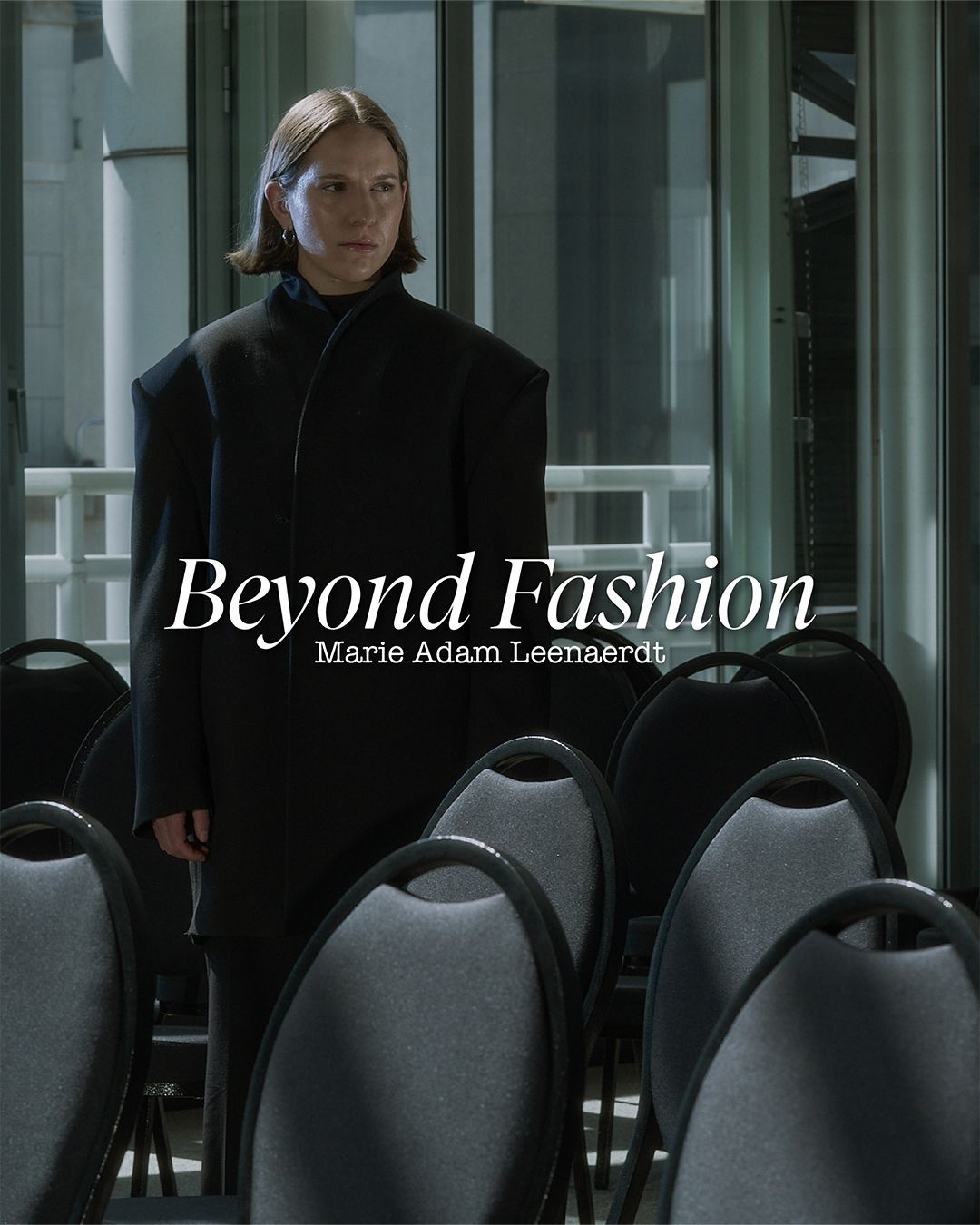
When Matthieu Blazy began working on his vision for Chanel, he found himself faced with an immense heritage: more than a hundred years of history, codes, and images that constitute the very essence of the brand. During his research, he discovered that Gabrielle loved to wear men's shirts, the same shirts belonging to Arthur “Boy” Capel, her great love, which she stole from his personal wardrobe.
Blazy understands the unsaid; this gesture full of meaning encapsulated Gabrielle's desire to appropriate her masculinity as a symbol of freedom. Matthieu translated it into a collection that does not merely evoke the past but reinterprets it in a contemporary key. During the latest Paris Fashion Week, those shirts came back to life on the runway, a symbol of masculine elegance and feminine freedom. Matthieu Blazy knew how to interpret. Others do collaborations. Chanel does not.
How Chanel and Charvet Define Luxury
@mrultrasensitive André Leon Talleys visit to Charvet in deleted scene of The September Issue #fyp #andreleontalley #theseptemberissue #karllagerfeld #annawintour #fashion original sound - mrultrasensitive
Charvet, the historic Parisian shirtmaker of Place Vendôme founded in 1838, is the emblem of bourgeois French masculine elegance: to this day, the brand produces exclusively shirts, ties, pocket squares, and house slippers. It is the place where cultured men choose to have custom shirts made. Charvet still represents the craft passed down from generation to generation, craftsmanship in the most authentic sense of the term. Its luxury is expressed through the concept of independence.
Today, almost all historic maisons have been acquired, integrated into conglomerates, or transformed into financial assets; Charvet remains a family-owned property. It does not answer to investors, does not chase the logics of modern visibility. It does what it has always done: custom shirts, with a discretion that is at the same time a declaration of power. Chanel interprets luxury through another dimension. For the Maison, luxury means understanding time, preserving identity while dialoguing with the contemporary. It is a language expressed through subtle and imperceptible details.
Charvet and Chanel thus represent two planets in the fashion universe, connected through the same vocation for excellence but different in purposes and ambitions. Charvet lives in the masculine world, anchored to tradition, which finds its strength in never changing. Chanel embodies femininity as evolution, as the ability to transform while remaining faithful to its own essence.
What Does Collaboration Mean?
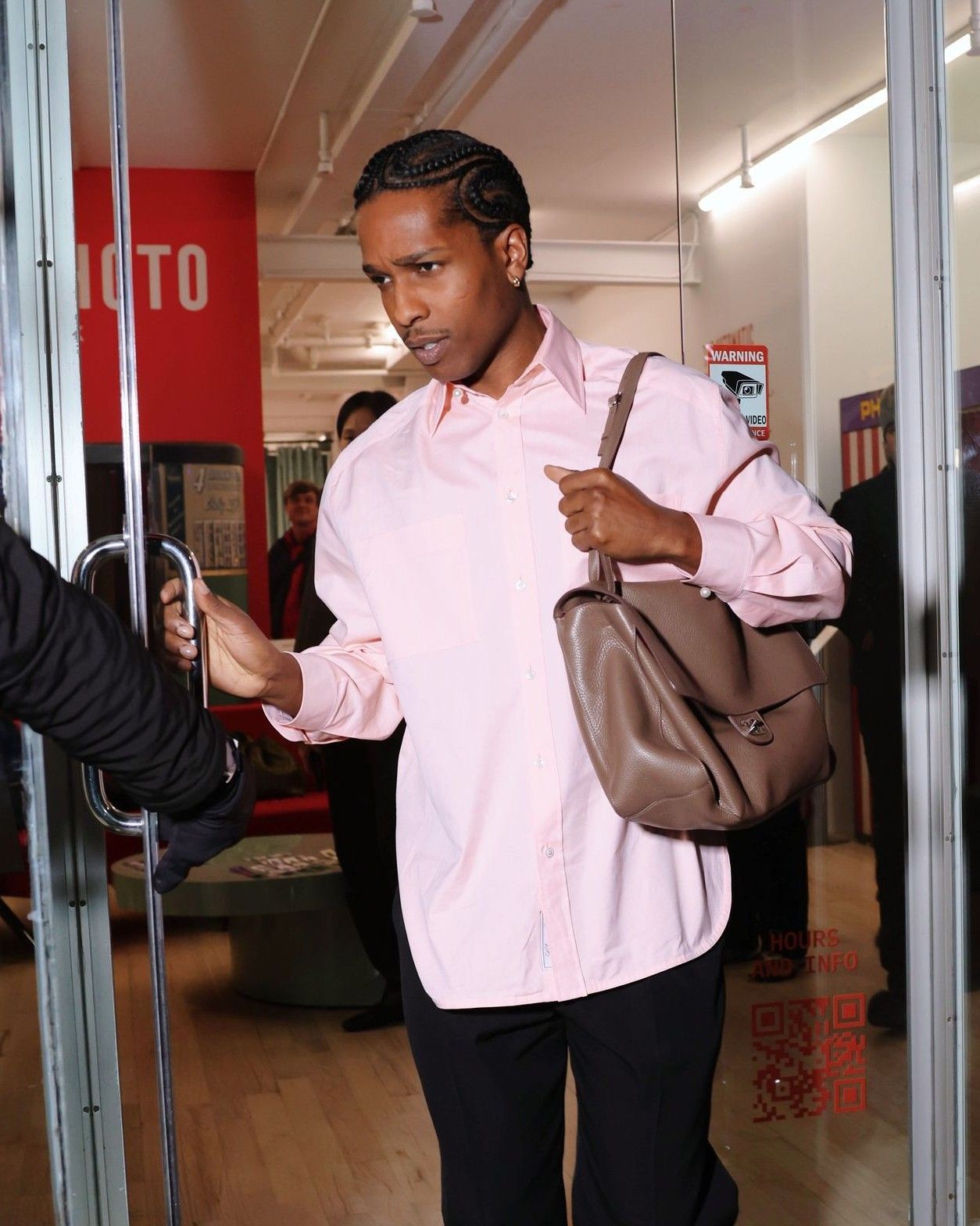
A$AP Rocky wearing Chanel x Charvet pic.twitter.com/mINl0uDfU8
— (@awgecentral) October 31, 2025
In contemporary language, “collaboration” is synonymous with commercial agreement. Two brands meet, add visibility, merge audiences, create a limited-edition product, generate expectation, hype, virality. But the word "collaboration" today is worn out by its usage. Streetwear culture, capsule collections, and “limited edition” partnerships have emptied it of meaning. It has become synonymous with superficial fusion, aesthetic contamination without depth. Today “collaborating” no longer means building a meaning together, but capitalizing on momentary attention. It is a matter of perception, and branding is based on this.
If Chanel had defined that with Charvet as a “collaboration,” the implicit message would have been profoundly different. It would have suggested that Charvet bends to market logics, accepting to contaminate its sartorial identity to adapt to the language of global fashion. And paradoxically, it would have lost precisely what it was seeking to access: Chanel's credibility as custodian of a luxury free from commercial logics.
So Why "Conversation"?
A conversation, by definition, requires two autonomous voices. In a genuine conversation, no one lowers their level, and both allow themselves to be changed by the confrontation. The image becomes even more powerful when these voices speak masculine and feminine, two languages that meet without annulling each other. When Blazy proposes a "conversation" with Charvet, he is seeking to reactivate a historical memory. It is a dialogue begun a century ago and which continues today through Blazy's vision.
In a conversation, Charvet remains Charvet. Chanel remains Chanel. What emerges from the dialogue is not a compromise between the two worlds; it is the meaning that arises from the symbolic conversation, a shirt that does not belong only to Charvet but becomes the vehicle through which Chanel tells its own love story, its own desire for freedom, its fidelity to an act of transgression. From a branding perspective, the conversation brings both brands closer to the territory of culture rather than that of business. If it had been a collaboration, the value would have been measured in commercial terms. A conversation, however, moves on a completely different register. Its value is not measured in sales, but in meaning.
When Chanel and Charvet converse, they are not doing business. They are participating in a cultural discourse on the nature of luxury, on memory, on femininity that dialogues with masculinity. Both brands emerge from this conversation not richer economically, but culturally ennobled, carrying with them the echo of the purest craftsmanship. The label “tissuet technique Charvet” is the symbol of Charvet's sartorial mastery and Chanel's search for exceptionalism without compromises. A detail that encapsulates tradition, technique, and makes tangible the dialogue between the two worlds.
Chanel's Linguistic Strategy
@chanelofficial This is a universe, the Universe of CHANEL. Beyond space and time, a conversation unfolds between CHANEL’s Artistic Director of Fashion Activities Matthieu Blazy and Gabrielle Chanel. An idea of the future from the past is found in the House’s fundamentals: tweed, jersey and silk; the architecture of the CHANEL suit laid bare; jewellery, so intrinsic to CHANEL, is loaded and treasured. Above all, there is an idea of freedom, of a silhouette in motion. The idea of not just one CHANEL woman, but rather, of CHANEL women. CHANEL Spring Summer 2026 collection. Matthieu Blazy for CHANEL. See more at chanel.com #CHANELSpringSummer #CHANELShow son original - ChanelOfficial
Chanel is extremely attentive to its own language and brand management. When the maison joins other entities, it privileges the term "conversation" or “dialogue,” and these occasions are almost always of a cultural or artistic nature (exhibitions, podcasts, themed shows) rather than commercial capsules. And it is not just semantics; while Arnault, Pinault, and Prada build proprietary museums (Fondation Louis Vuitton, Palazzo Grassi, Fondazione Prada), Chanel does the opposite. Since 2021, the Chanel Culture Fund has created partnerships with over 50 cultural institutions in 15 countries, without opening a single proprietary museum.
The maison has produced a series of podcasts titled Cambon Podcasts (from the name of the famous Rue Cambon where the maison resides) where it conducts "conversations" with authors, artists, and prominent cultural figures. Here too, the term used is "conversation"; it is a dialogue, an intellectual exchange, not a commercial collaboration. By using the word "conversation," Chanel is not simply rejecting the word "collaboration"; it is rejecting an entire model of relationship.