





























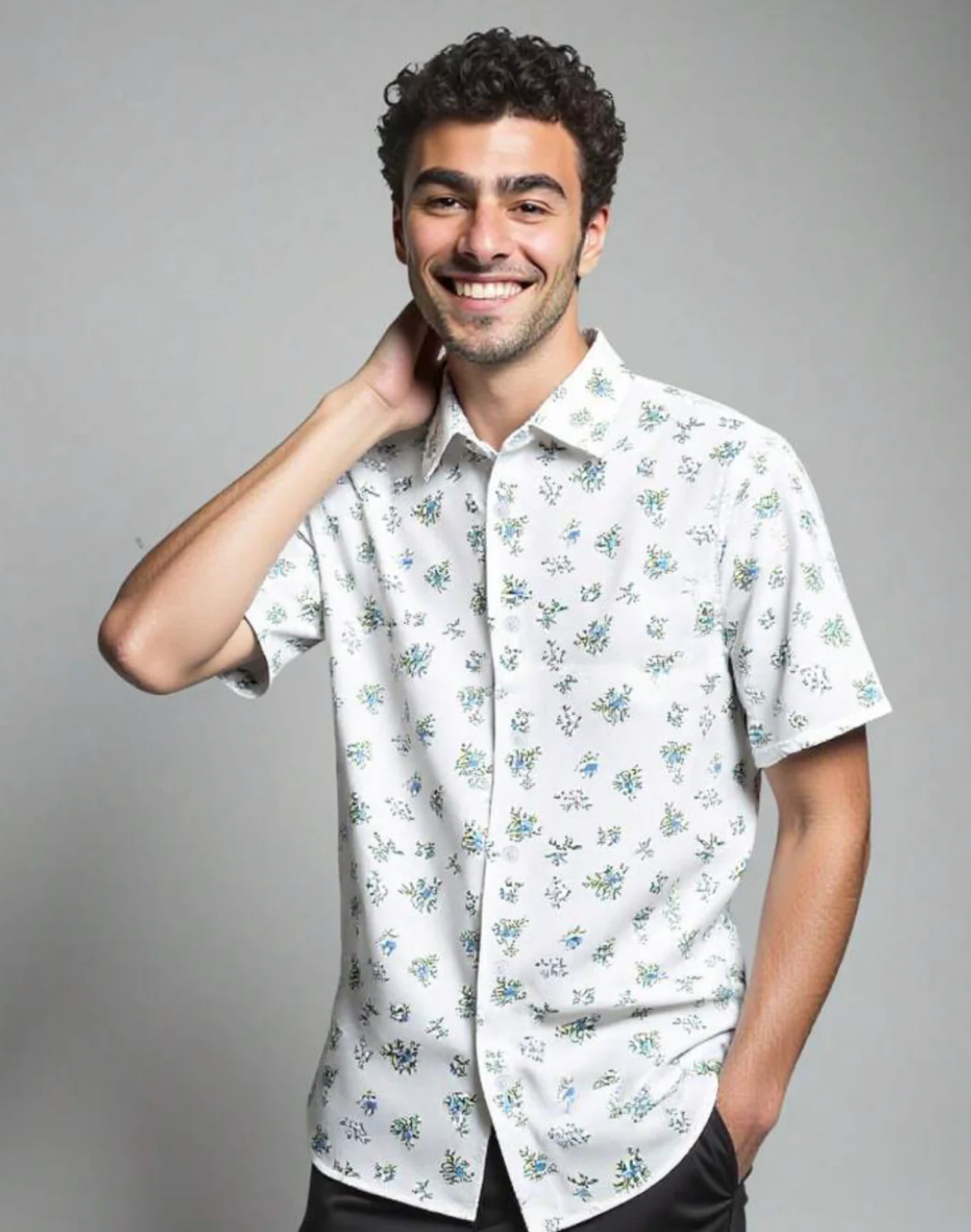
Luigi Mangione has become a model for Shein The face of Gen Z's favorite antihero has been used by the Chinese fast fashion giant
UPDATE 09/04/2025: Shein has released an official press statement regarding the image of Luigi Mangione: «The image was shared by a third-party seller and was promptly removed once identified. SHEIN applies strict criteria for all content on the platform. We are conducting a thorough review, further strengthening our control systems, and will take the necessary measures against the seller in accordance with our policies.»
Shein used the face of alleged murderer Luigi Mangione on an AI-generated model to sell a floral shirt. No, this isn’t a meme—it’s the perfect snapshot of what it means to live in 2025. In the middle of the night, a user on Reddit posted on the subreddit r/FauxMoi some screenshots from the Chinese retailer’s official website: listed at $9.54 was a white floral shirt, modeled by a figure whose face was identical to that of the 26-year-old Italian-American accused last December of killing the CEO of UnitedHealthcare, the American insurance giant. In less than six hours the post surpassed 3,000 upvotes and, once picked up by TMZ, the story quickly spread across social media. The American tabloid’s tweet nearly hit 300,000 views in just over seven hours. As several netizens pointed out, the situation felt like an episode of the cult series Black Mirror, once again underlining how life in 2025 increasingly resembles a dystopia.
Everything wrong with Luigi Mangione as Shein’s model
@nolakjl SHEIN is using Luigi Mangione to model their clothes #shein #model #luigimangione #foryou original sound - Nonal
The paradox is that it’s difficult to even identify the main issue. Is it the use of someone’s image without consent, made even more problematic by the fact that Mangione is in prison and therefore unable to voice any opinion? Or is it the contradiction of a man accused of murder—interpreted by some as an extreme act of rebellion against the capitalist system—who now unintentionally becomes a spokesperson for one of the most consumerist conglomerates on the planet? It’s not the first time Mangione’s face has appeared on a fast fashion e-commerce site, though until now these instances had been limited to “unofficial fan merch”. While internet users had previously welcomed those bursts of creativity with enthusiasm, this time the reactions online ranged between disbelief and disdain, all pointing to the same issue: the struggle to navigate a reality collapsing under the weight of its own contradictions.
“I really cannot handle this version of society anymore”, wrote user @jenny2x4 on X, encapsulating a feeling of collective exhaustion in response to a story that only adds to the growing backlash against artificial intelligence. Another user commented: “What stage of the end of the world is this”, pointing out how this incident isn’t seen as an isolated case but rather as yet another sign of a systemic and cultural collapse. User @evimachinery added: “What timeline are we in and how do we destroy it and start over”. At first glance these comments may seem ironic, but they are in fact the most telling part of the story: the way the public decodes such an absurd episode not with anger or mobilization, but with resignation.
AI ethics and Mangione’s legal case
luigi is dealing with unprecedented levels of unfairness in the eyes of the courts, media and public perception, and it makes me so sad
— (@odetoshady) September 3, 2025
the fact shein would use AI and his likeness to model one of their products is fucking DISGUSTING
In the end, should we really be so surprised? For months, outrage over the misuse of AI has been bouncing around social media, without translating into systemic change. That something like this would happen was only a matter of time; the issue isn’t just the lack of consent in using the image of Gen Z’s “anti-hero”, but yet another manifestation of the ethical fragility with which we are approaching artificial intelligence.
In 2025, we are immersed in a landscape where AI has shifted from being a futuristic tool to an everyday infrastructure, with increasingly advanced models regulating creative, productive, and professional processes. Today, there are no international conventions capable of uniformly regulating the development and application of AI. This regulatory vacuum not only breeds uncertainty but also legitimizes episodes like Shein’s, where the digital reproduction of a human face—further complicated by its ties to a criminal case—is treated as mere visual content, an anonymous resource to be monetized, a non-human. Making matters even more complex is Mangione’s ongoing trial: the young man risks the death penalty in a case where the entire jury already seems convinced of his guilt, even though, as the defense stresses, a definitive piece of evidence is still missing. What legal consequences will follow from Luigi Mangione as Shein’s model?