






















Pension plans for creative directors Is this the start of a new era?
In the same week, two of the historic brands of the Milanese fashion system announced the beginning of their third phase, retirement. In an interview with Harper’s Bazaar Italia, Patrizio Bertelli officially confirmed that in the coming years it will be his son Lorenzo who will take over the administrative reins of the Prada Group, with Andrea Guerra gradually stepping back from his role as CEO. And although no mention has been made regarding the possible successor to Miuccia Prada, either at Prada or at Miu Miu, Bertelli reiterated several times that the co-creative direction with Raf Simons has been, over the years, one of the group’s greatest strengths, both in fashion and in finance.
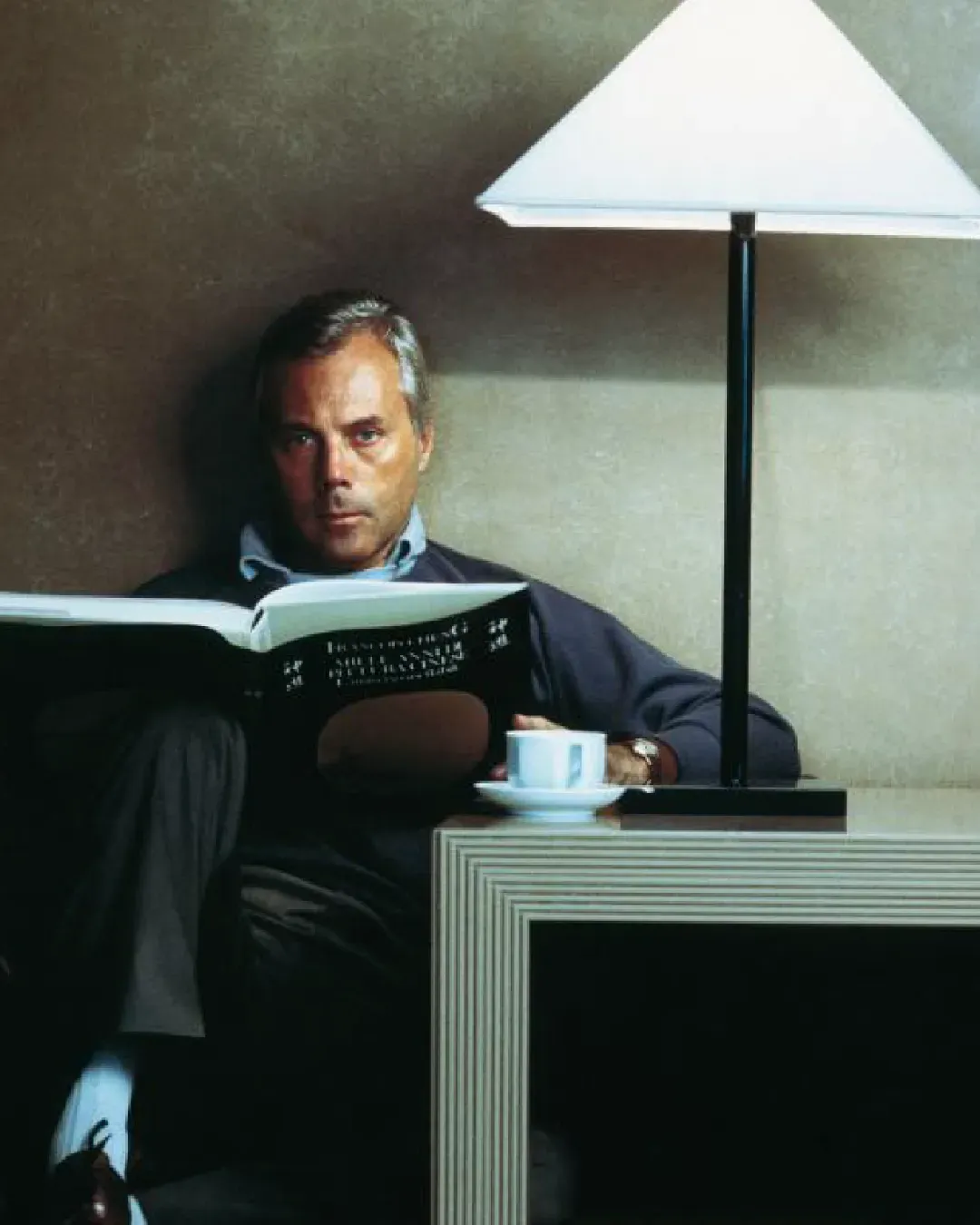
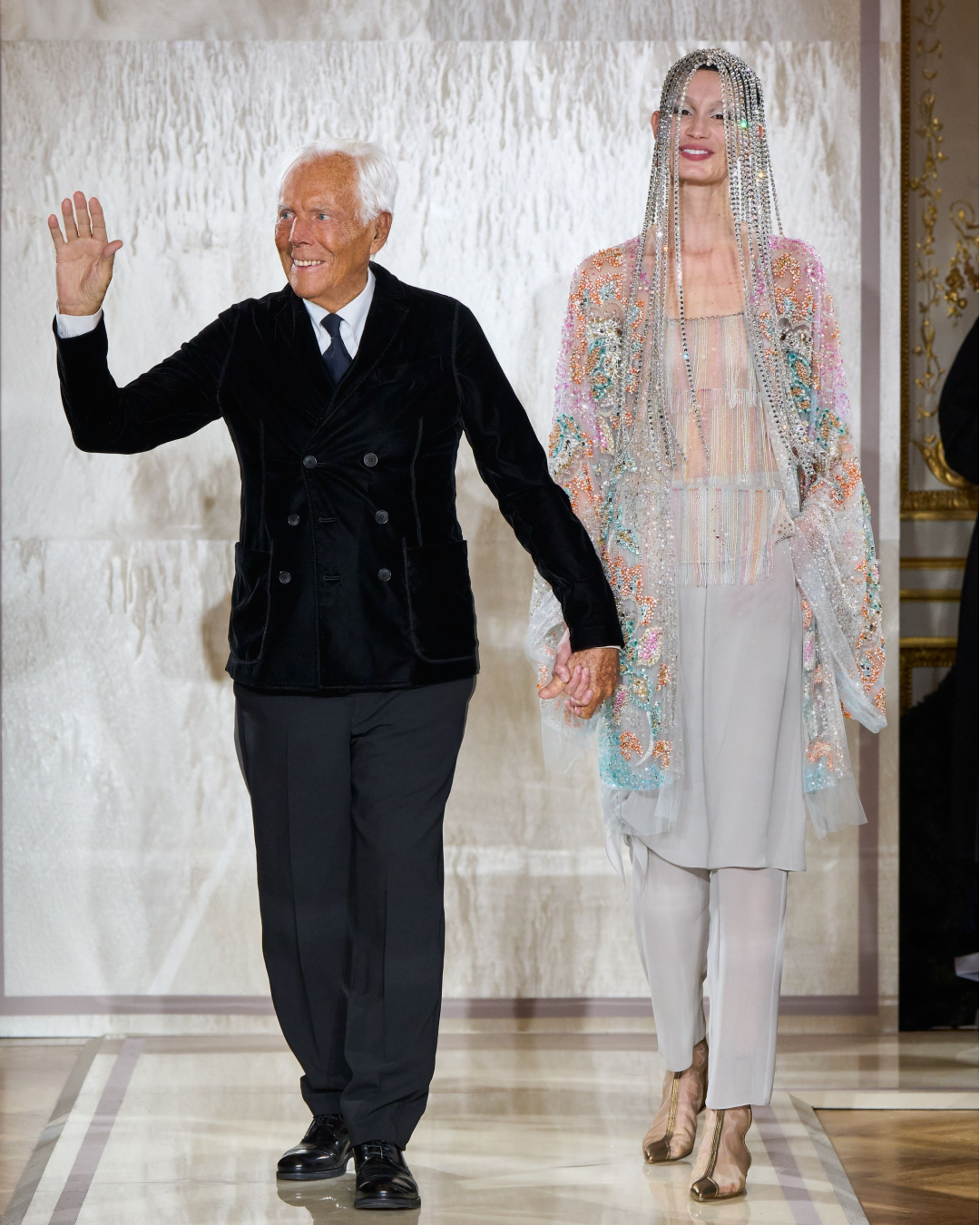
On the other side of Milan, Giorgio Armani confirmed that, at the venerable age of 91, the designer is ready to gradually step away from the scene, both as creative director and CEO of his namesake brand. «My plans for succession consist of a gradual transfer of the responsibilities that I have always managed to those closest to me, such as Leo Dell’Orco, my family members and the entire working team», he told the Financial Times, adding: «I would like the succession to be organic and not a moment of rupture.»
The legacy of the key figures of the fashion system
To date, cases of withdrawal from the fashion system due to age have been surprisingly few. Yves Saint Laurent, for example, decided to stop working only in 2002, just a few years before his death. The decision was not sudden, since as early as 1993 the Franco-Algerian couturier had sold control of the brand to Sanofi, which later resold it to Kering in 1998, effectively handing over the business legacy to external hands. The symbolic and cultural legacy, however, remained firmly in the hands of his partner and associate Pierre Bergé, who not only safeguarded Saint Laurent’s archive and creative memory but also actively worked to transform his myth into a museum and institutional heritage.
Similar, though less dramatic, was the trajectory of Valentino Garavani. Still alive and well, the designer stepped down as creative director of his brand in 2007, effectively retiring. But in reality, as early as 1998, Valentino was no longer the owner of his maison: Gianni Agnelli’s Holding di Partecipazioni Industriali had acquired a majority stake, paving the way for a series of transitions that would eventually bring the company under the control of Mayhoola and, more recently, of Kering. Creative continuity, however, had already been secured internally with Maria Grazia Chiuri and Pierpaolo Piccioli, then his right-hand partners in accessories and couture, making the transition as “natural” as possible.
In other cases, however, successions have been anything but linear. This is the case of Hermès, still largely controlled by the founding family. Nicolas Puech, the last direct descendant, owns 5.7% of the company, a stake alone worth around €10 billion, to which is added a substantial real estate portfolio, including a residence in La Fouly, Switzerland. However, as already emerged in 2023, Puech would in fact have chosen as heir not a family member or a foundation, but his Moroccan domestic worker, a 51-year-old man who has long assisted him in his daily life. The case has sparked heated legal and moral debate, although no questions have been raised about the octogenarian’s lucidity, judged perfectly able to make his own decisions.
And if Puech’s is a controversial succession, no less eccentric was that of Karl Lagerfeld. Upon his death in 2019, it emerged that part of his fortune, estimated at over $200 million, would be left to Choupette, his famous Birman cat. The decision did not surprise those familiar with the German designer’s private life, who had turned the pet into a celebrity of the fashion system, with appearances at Chanel shows, editorial collaborations and even a merchandise line.
The new Milan Fashion
From left to right: Laura Biagiotti, Mario Valentino, Gianni Versace, Krizia, Paola Fendi, Valentino Garavani, Gianfranco Ferrè, Mila Schön, Giorgio Armani, Ottavio Missoni, Franco Moschino, Luciano Soprani. Photo by Adriana Mulassano, 1985 pic.twitter.com/oHaehdSGeH
— akcam (@alessandrokoeh) September 25, 2019
The Italian fashion system, which sowed its first seeds between the late ’70s and early ’80s, now seems to be at a crucial point of transition. It is no longer just about the usual creative reshuffles, but about a pivotal generational shift, with new players ready to lead brands that have written the history of Milanese fashion. In the case of the Prada Group, leadership will remain within the family, with the “nepo-baby” set to inherit the managerial legacy of his parents, continuing a tradition that has always kept the Pradas at the center of their destiny. Giorgio Armani, on the other hand, is paving the way for a more complex succession, entrusted to a core group of long-time collaborators and family members, despite the various rumors linking Hedi Slimane (who has now disappeared from the scene for more than a year) to the Italian maison.
All these transitions mark the beginning of a new season for Milan Fashion. It is the end of the time of the founding fathers and the start of an era in which continuity is no longer guaranteed by a single name, but by an ecosystem made up of families, managers, collaborators and, increasingly, new global governance logics. A transition that will redefine not only the brands themselves, but also Milan’s role as a capital of international fashion. Could the dust and oldness of Milan Fashion Week in recent years soon become a distant memory?