.gif 2000w)


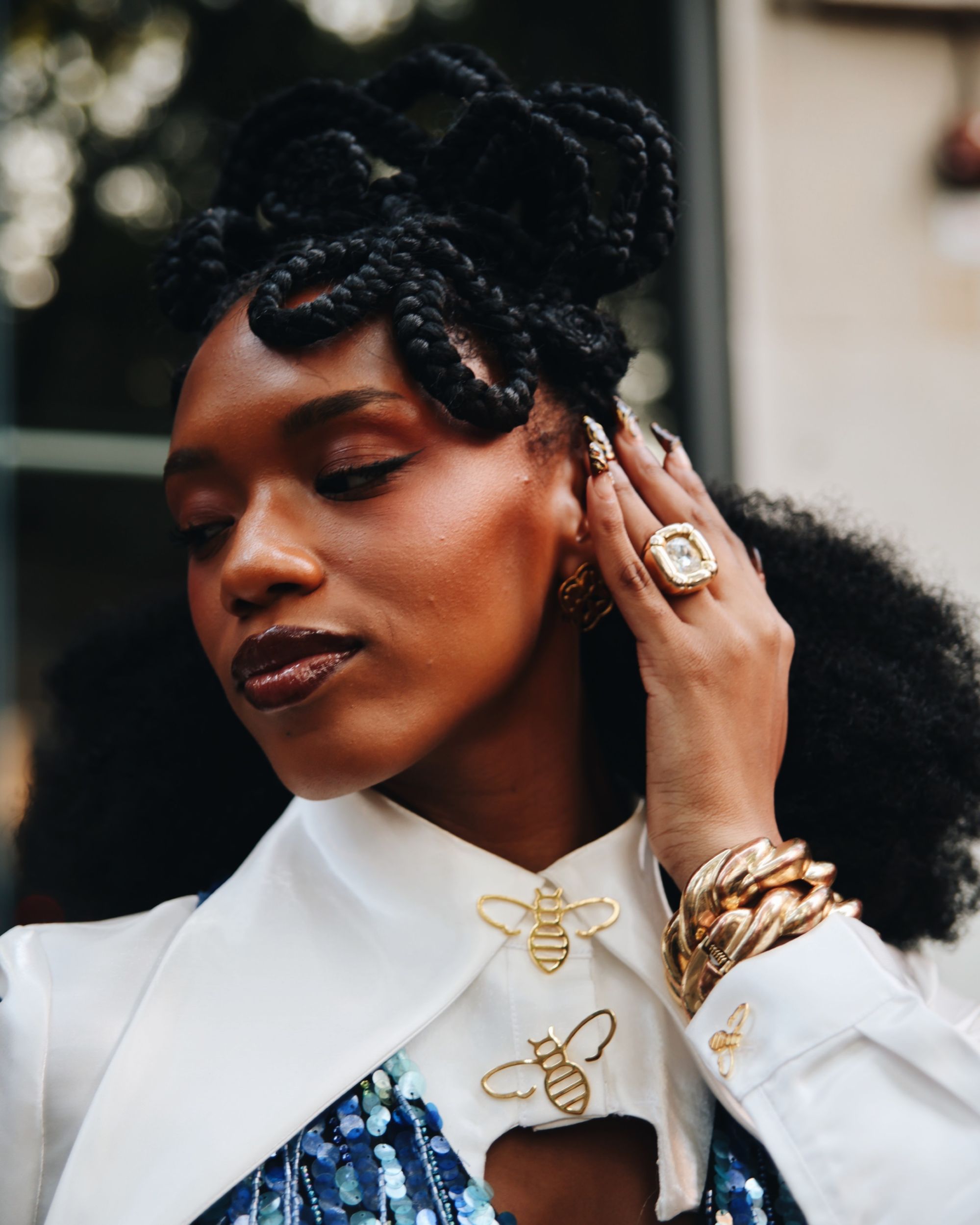
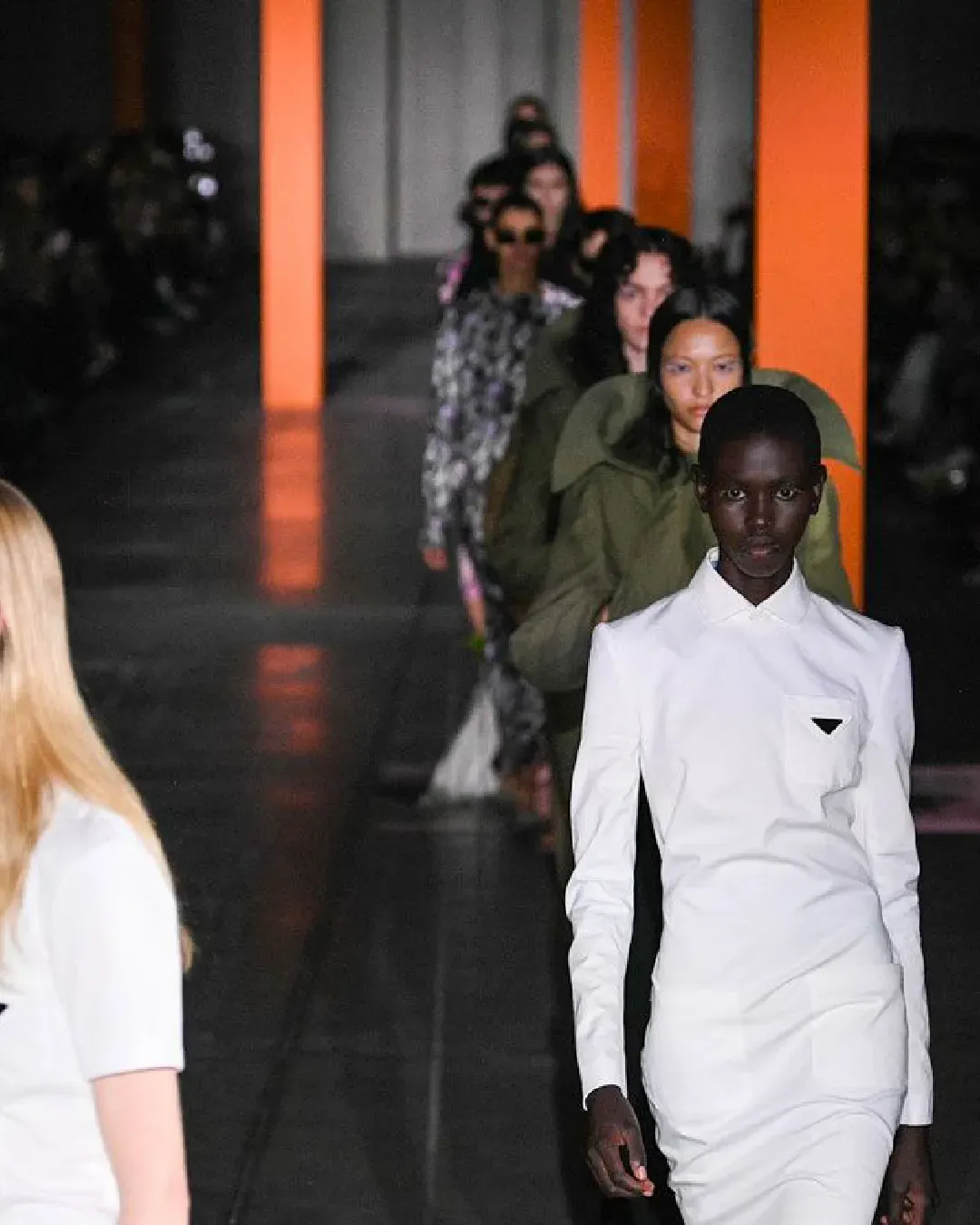
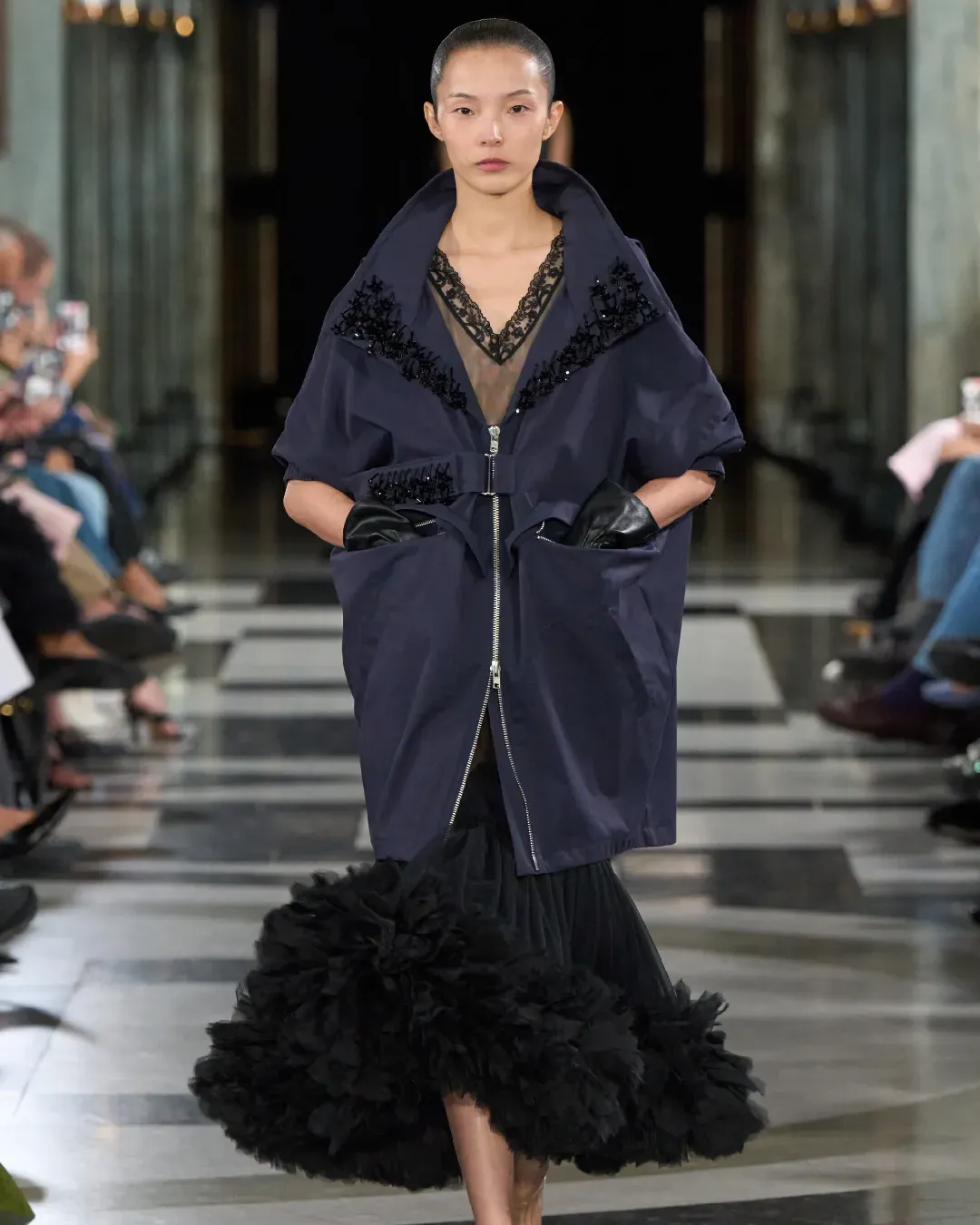
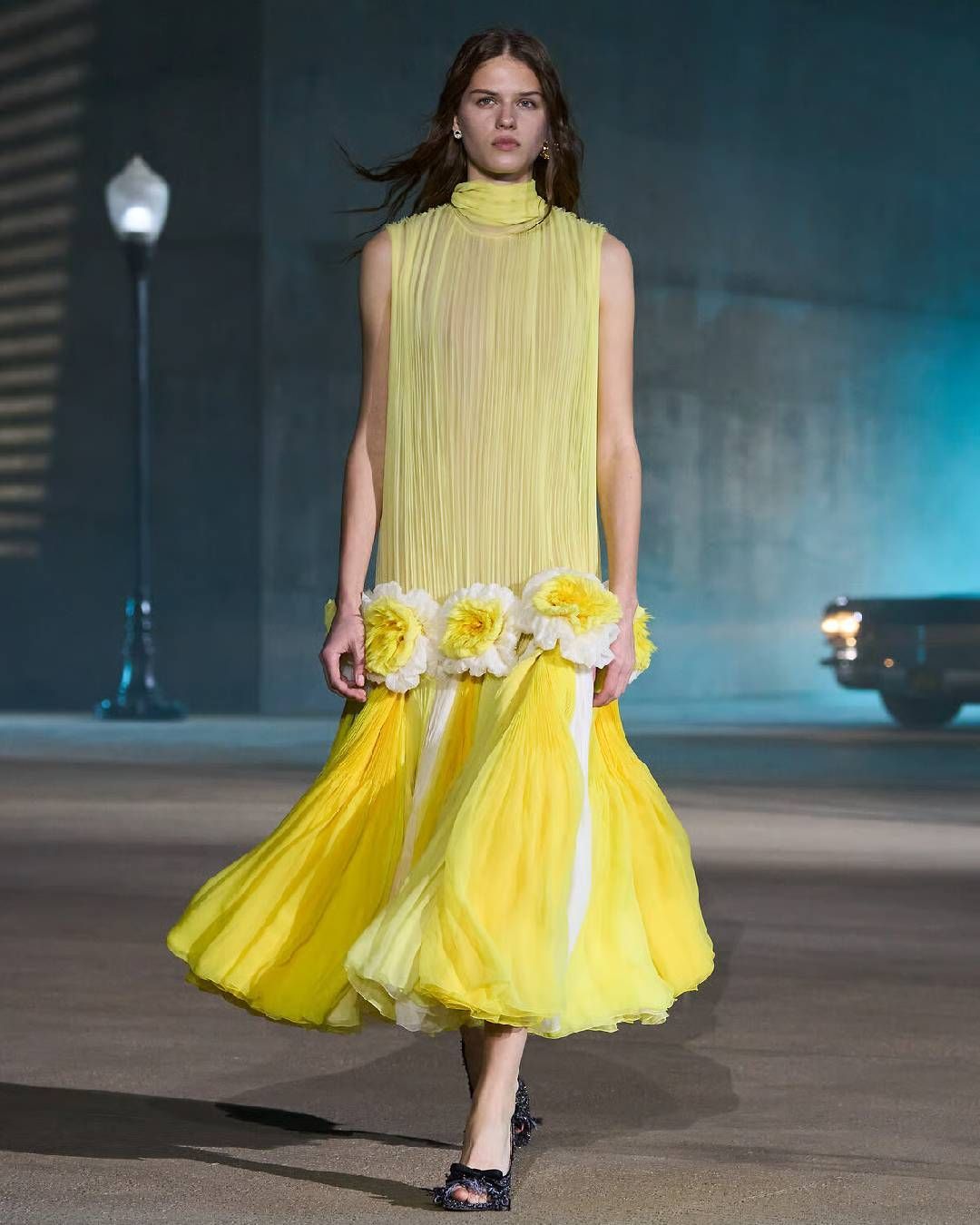
























What if Napoleon were this fall's fashion icon? Between trimmings, frog fastenings, and cuissardes
Can a historical figure be the protagonist of a trend? It is well known that fashion loves to look back, but sometimes designers, in revisiting the archives, resurrect the ghosts of history through garments. This is not just about nostalgic references but a selection and reinterpretation of the past that reveals a subtle dialogue with the present—in the case of the latest collections, the references are to the early 19th century, particularly the equestrian world and military uniforms of the Napoleonic Wars.
The style of Napoleon is certainly not new to fashion: Vivienne Westwood, Jean Paul Gaultier, and John Galliano have often drawn inspiration from the aesthetic codes of 19th-century French fashion. In the 1980s, Michael Jackson and Freddie Mercury made the imposing Napoleonic uniform their performance look, and in the early 2000s, Hedi Slimane and Christophe Decarnin transformed the "Napoleon Jacket" into a cult object and emblem of the indie sleaze style after it had become part of popular imagery as a circus ringmaster’s costume due to its retro air and flashy gold details. Thus, the return of a historical myth like Napoleon to the runways is not surprising but raises an inevitable question: why now?
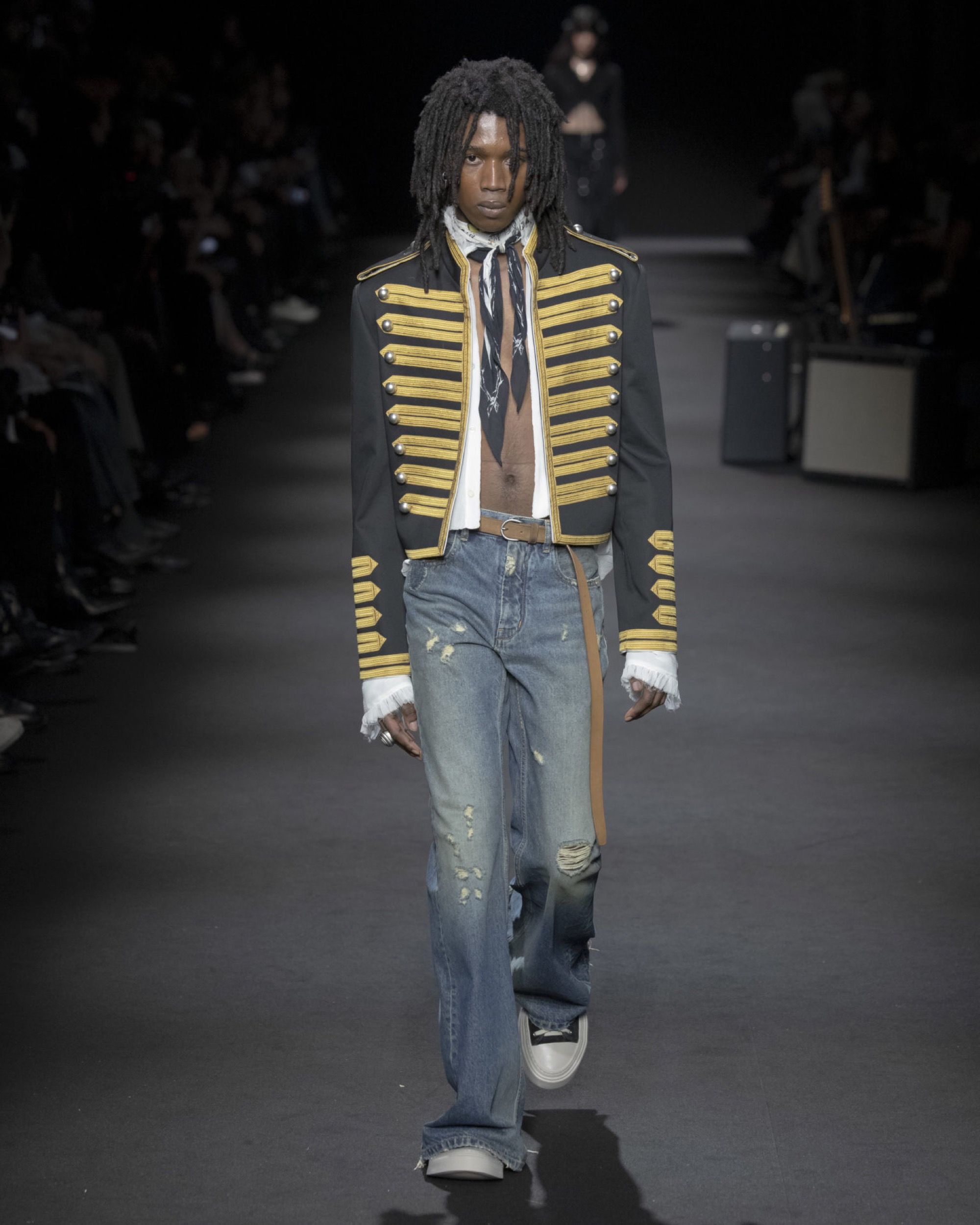
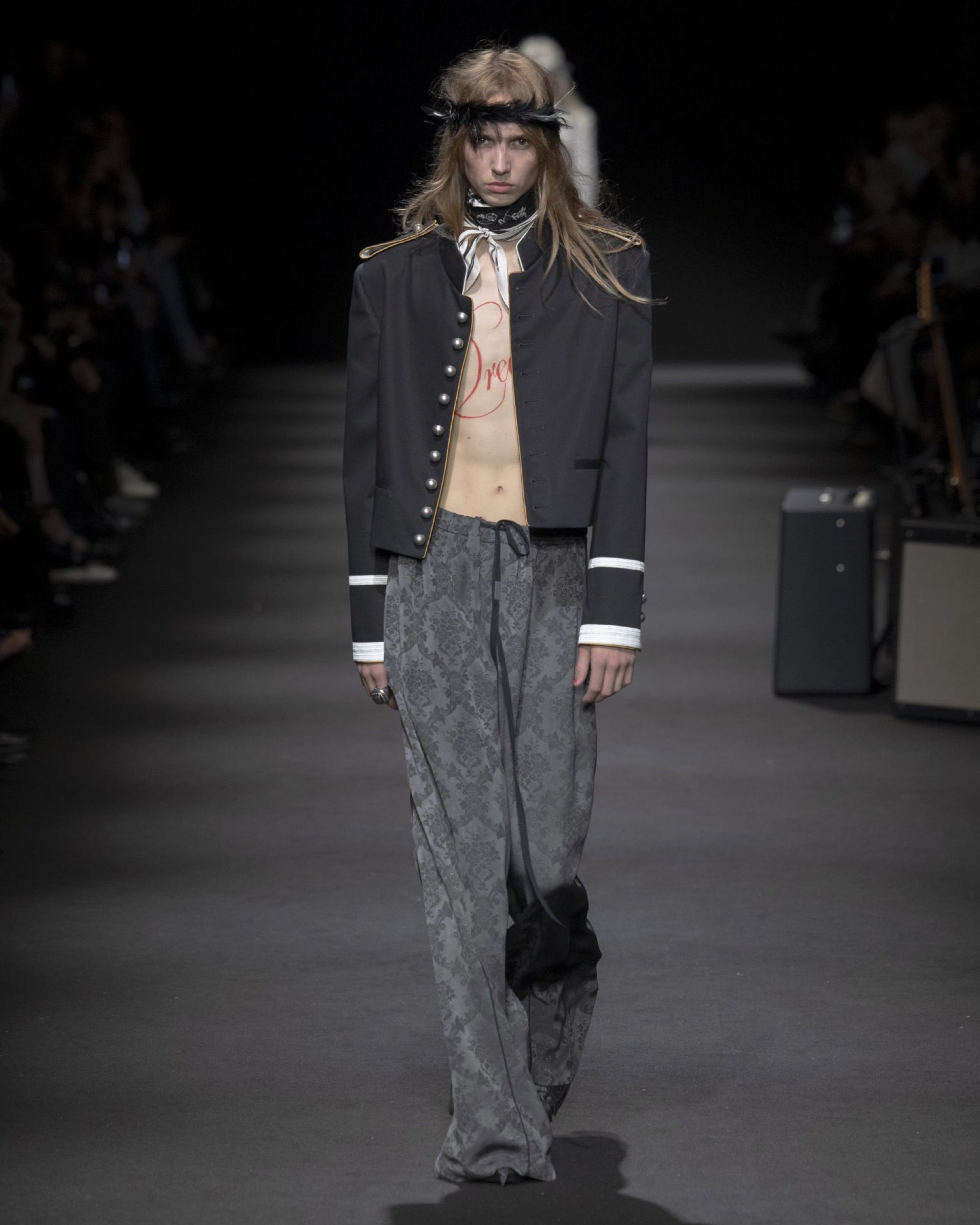
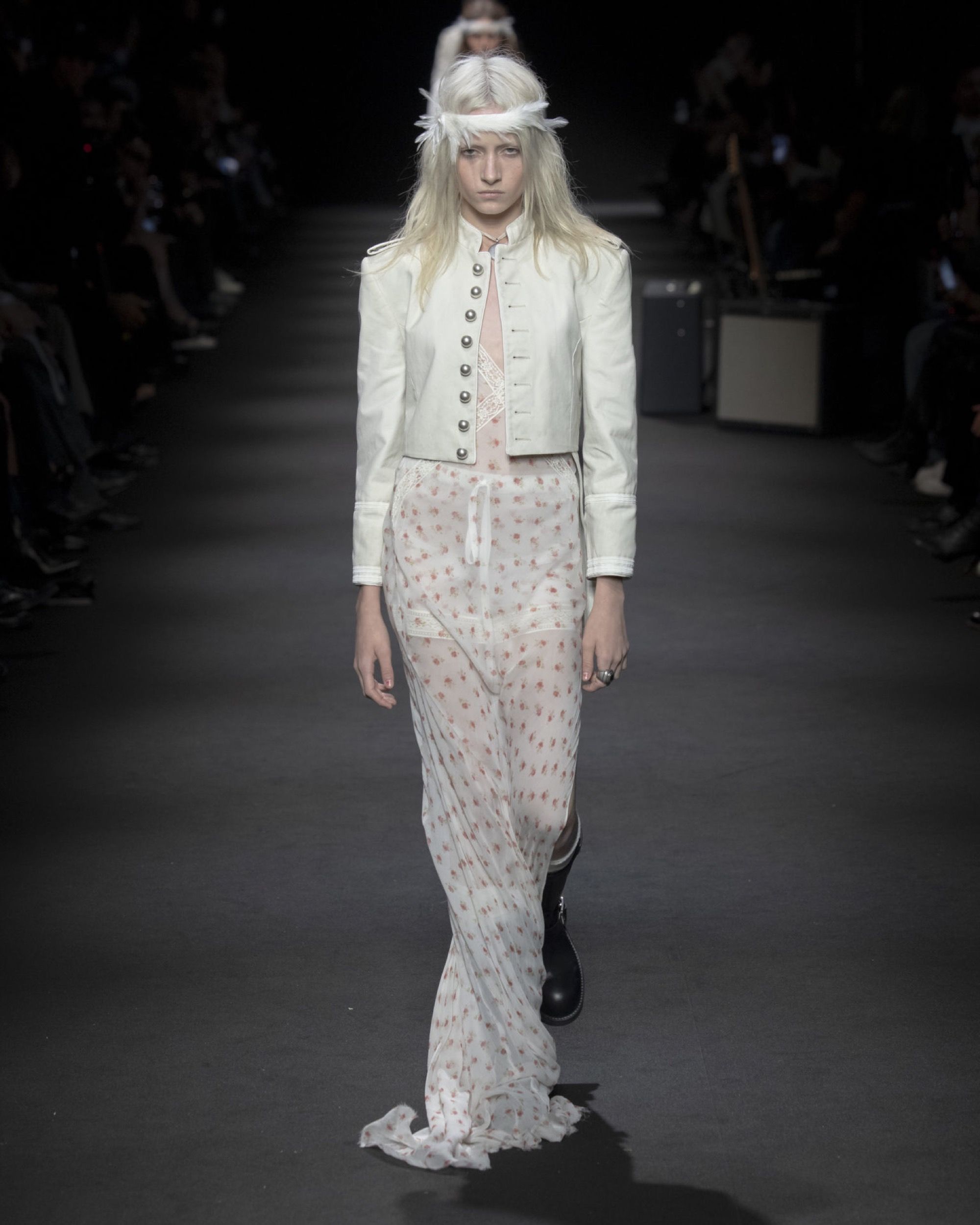
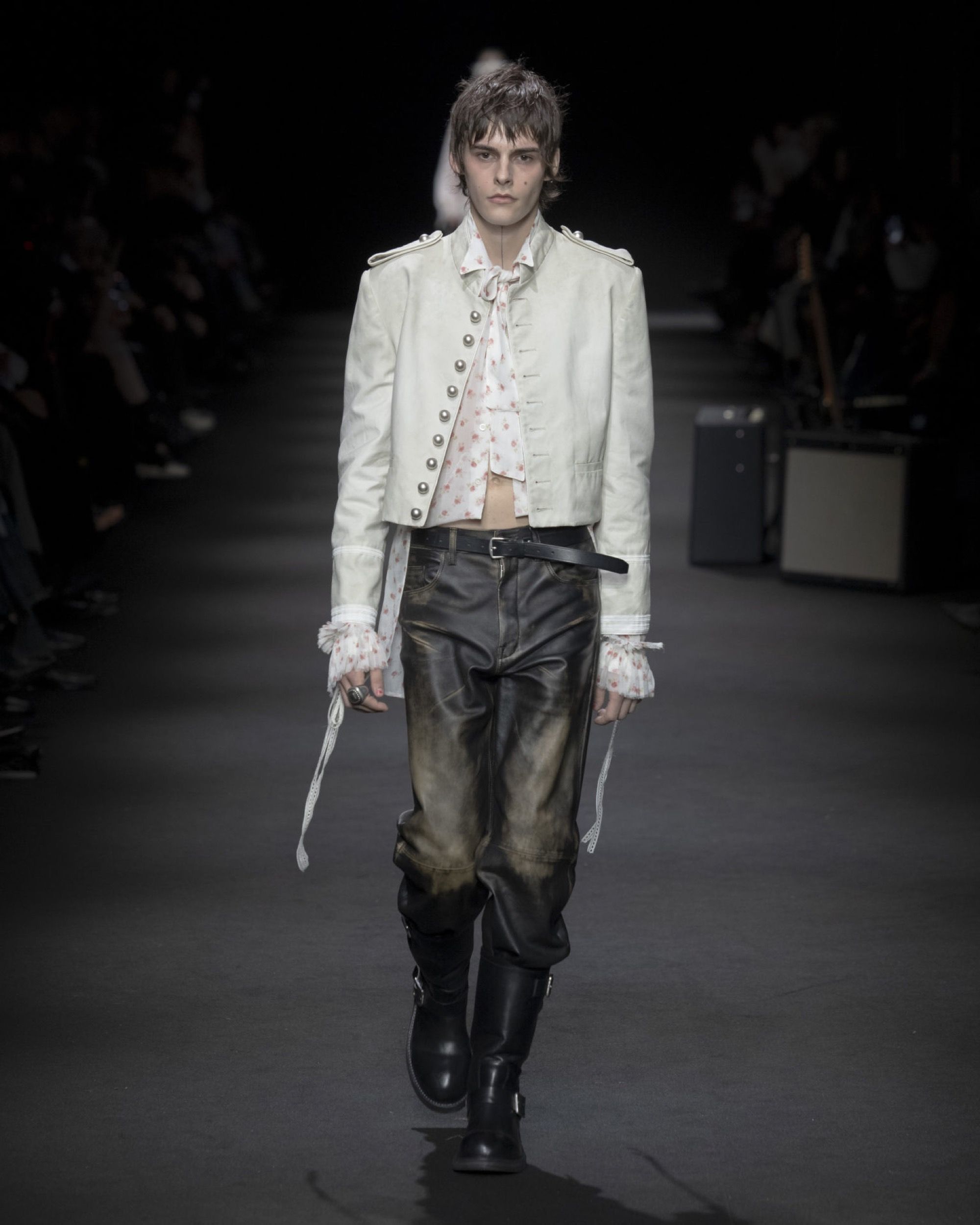
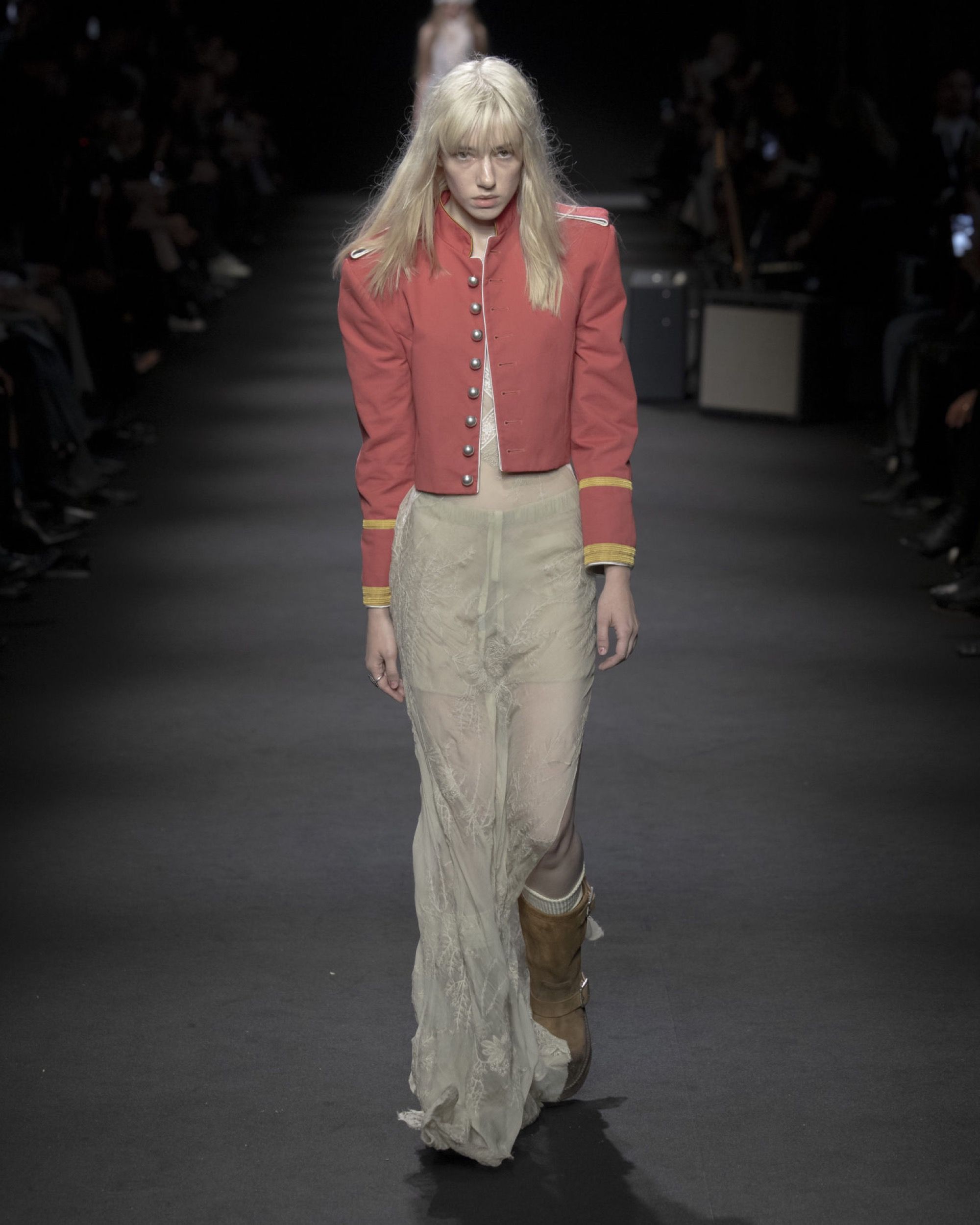
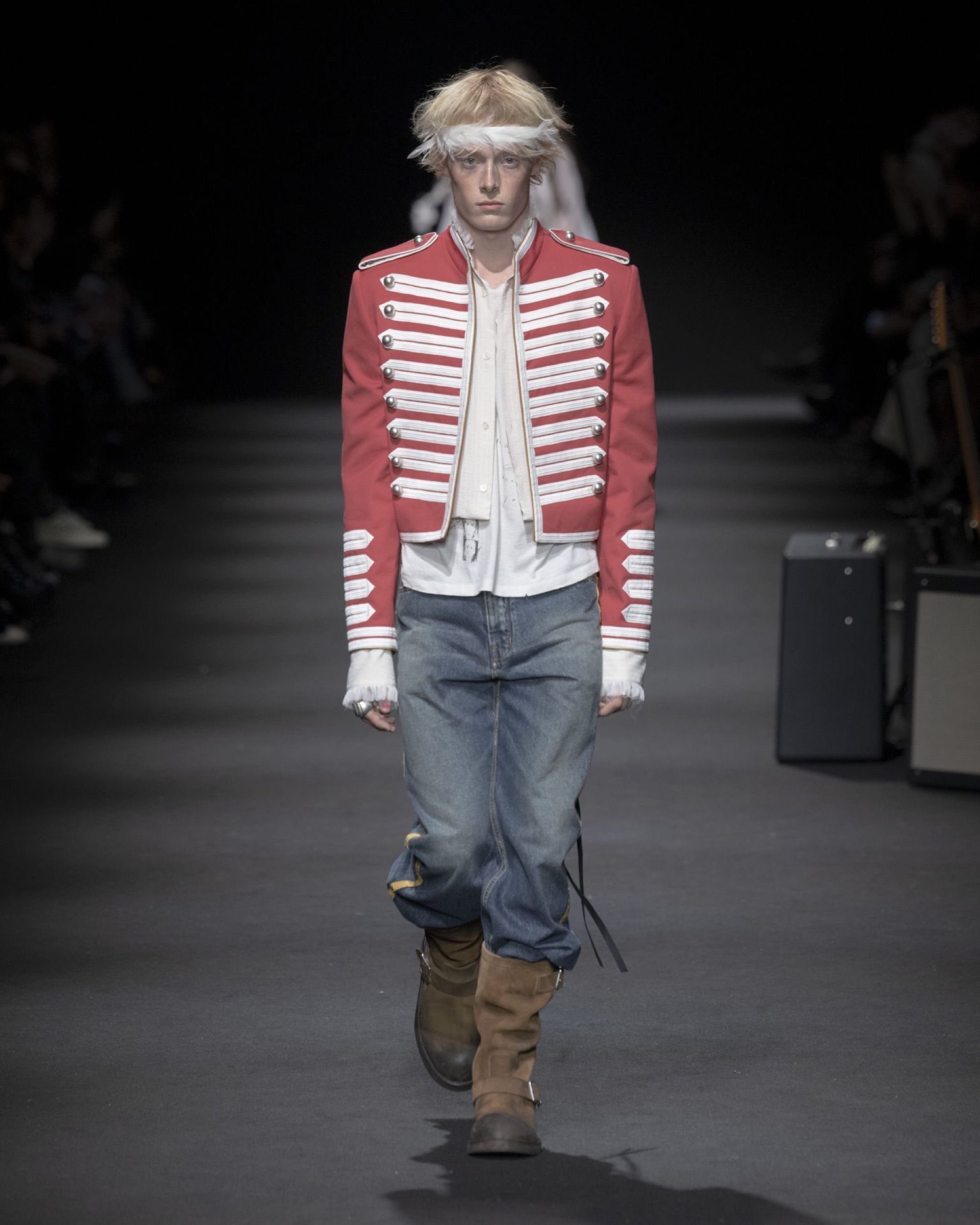
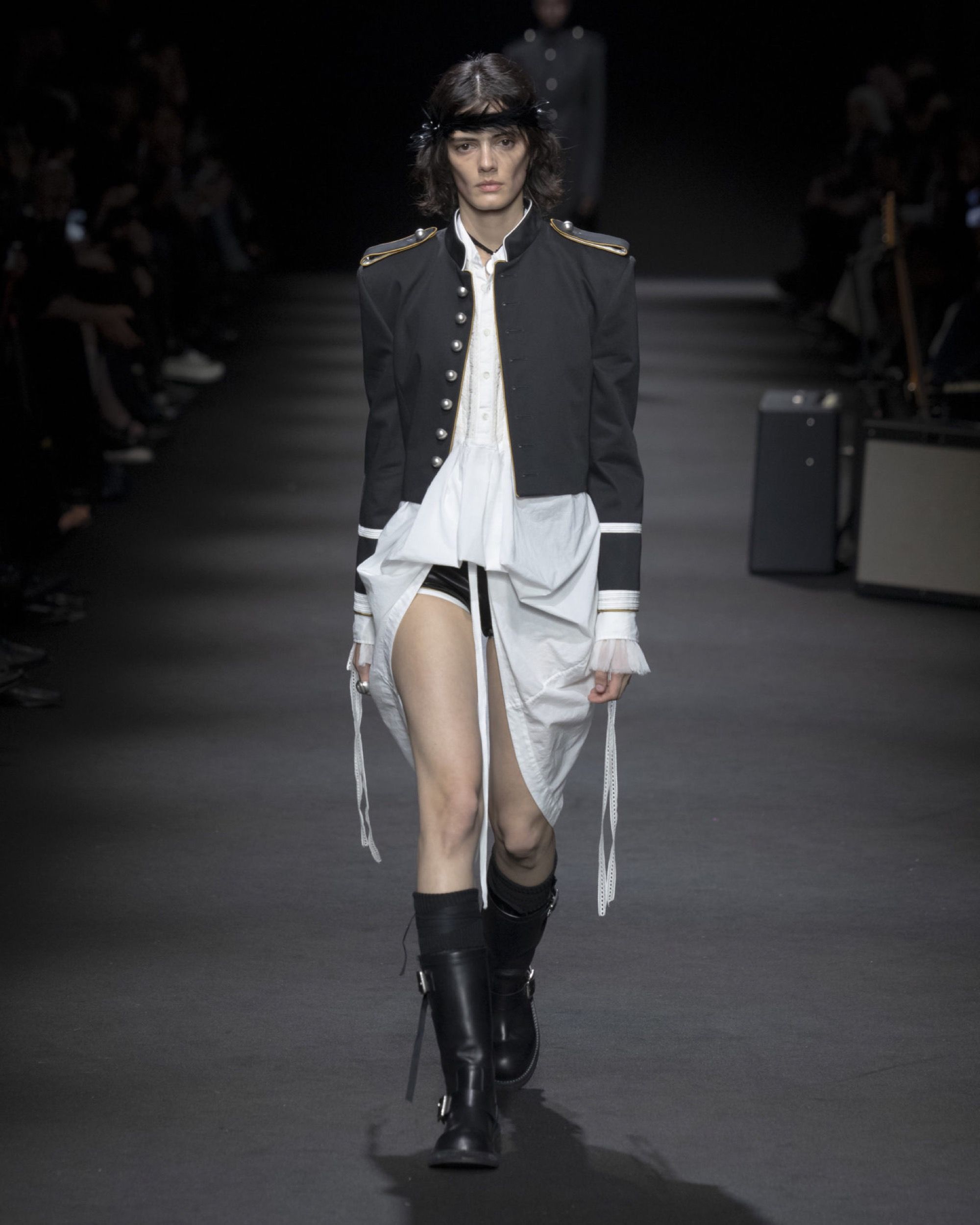
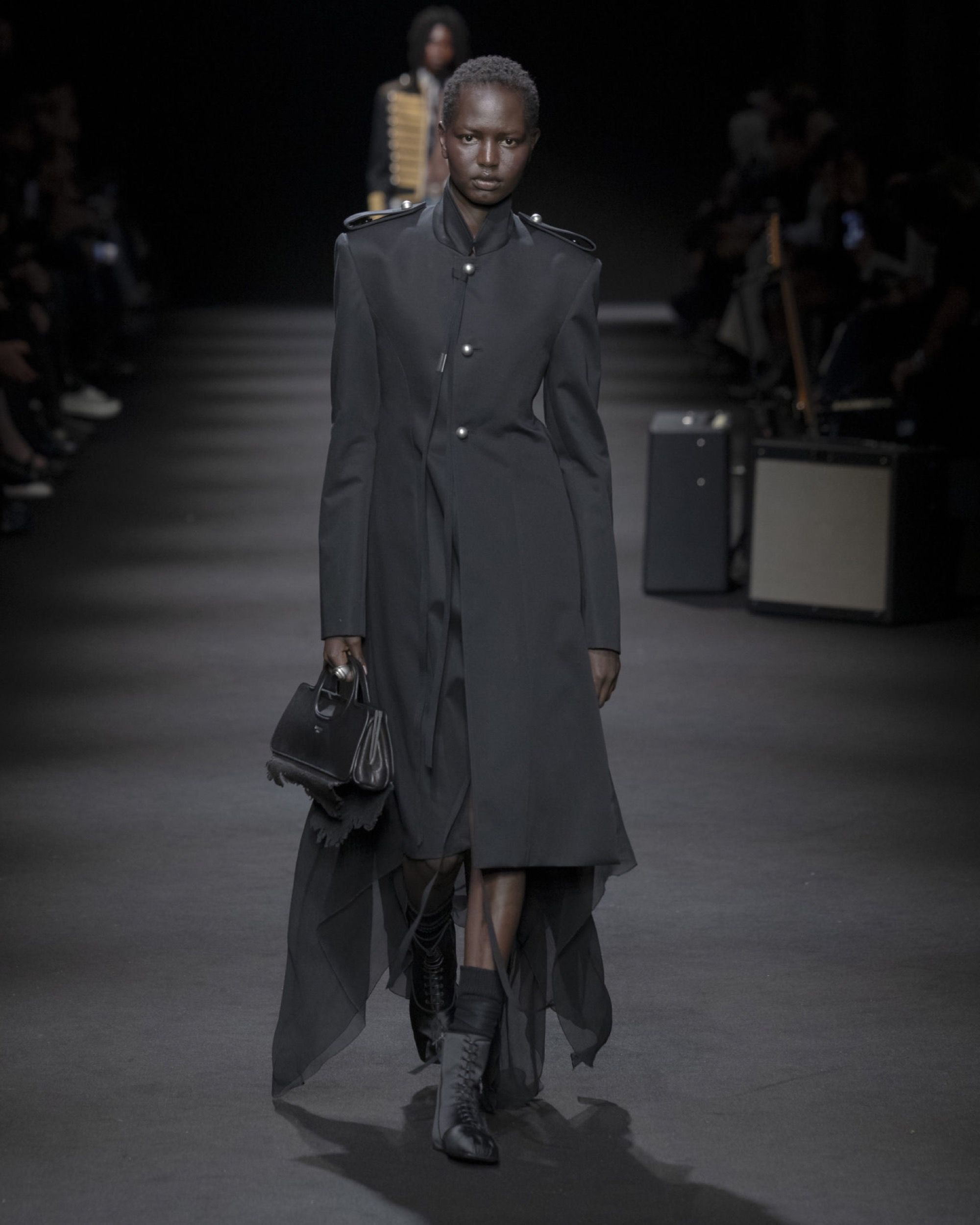
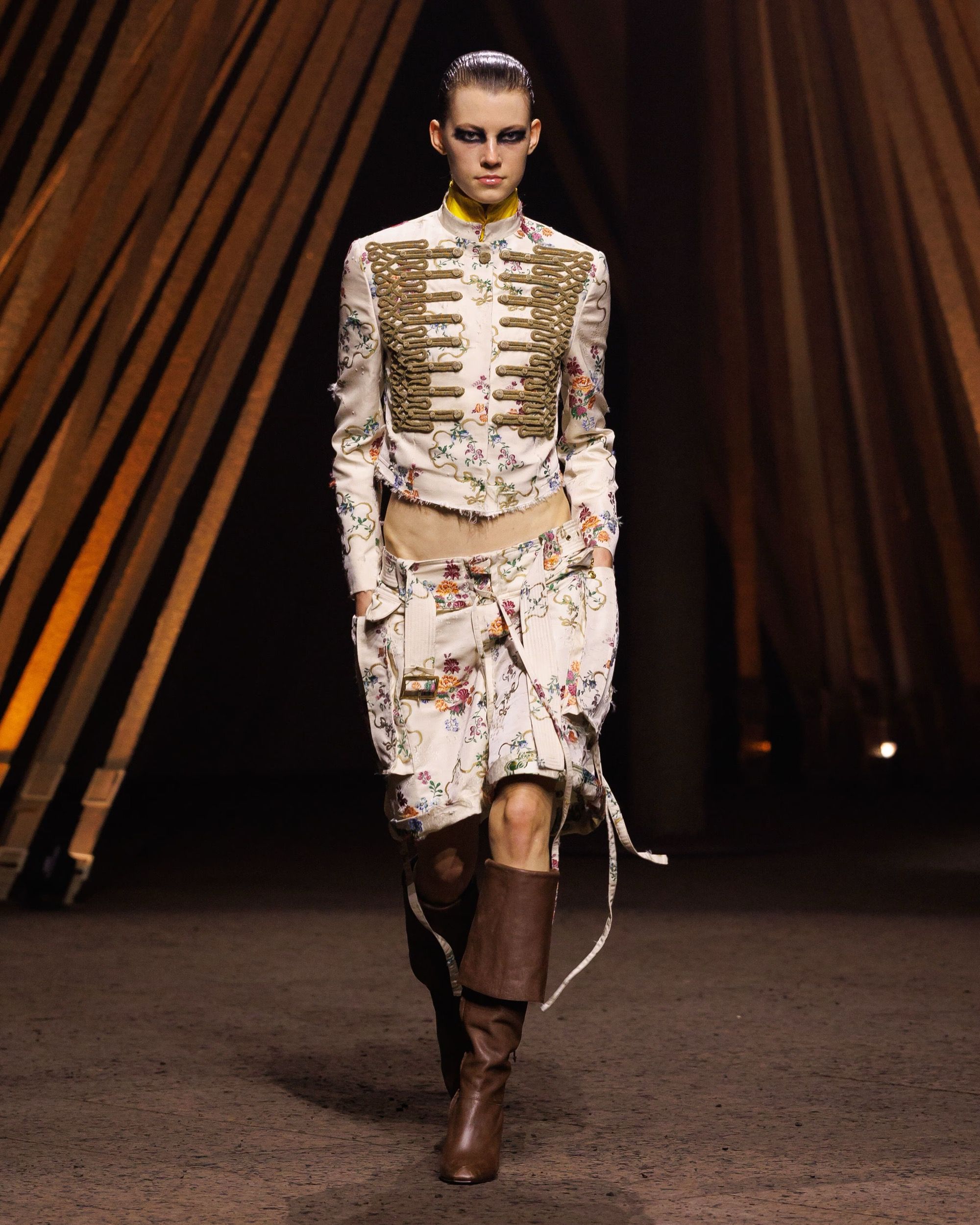
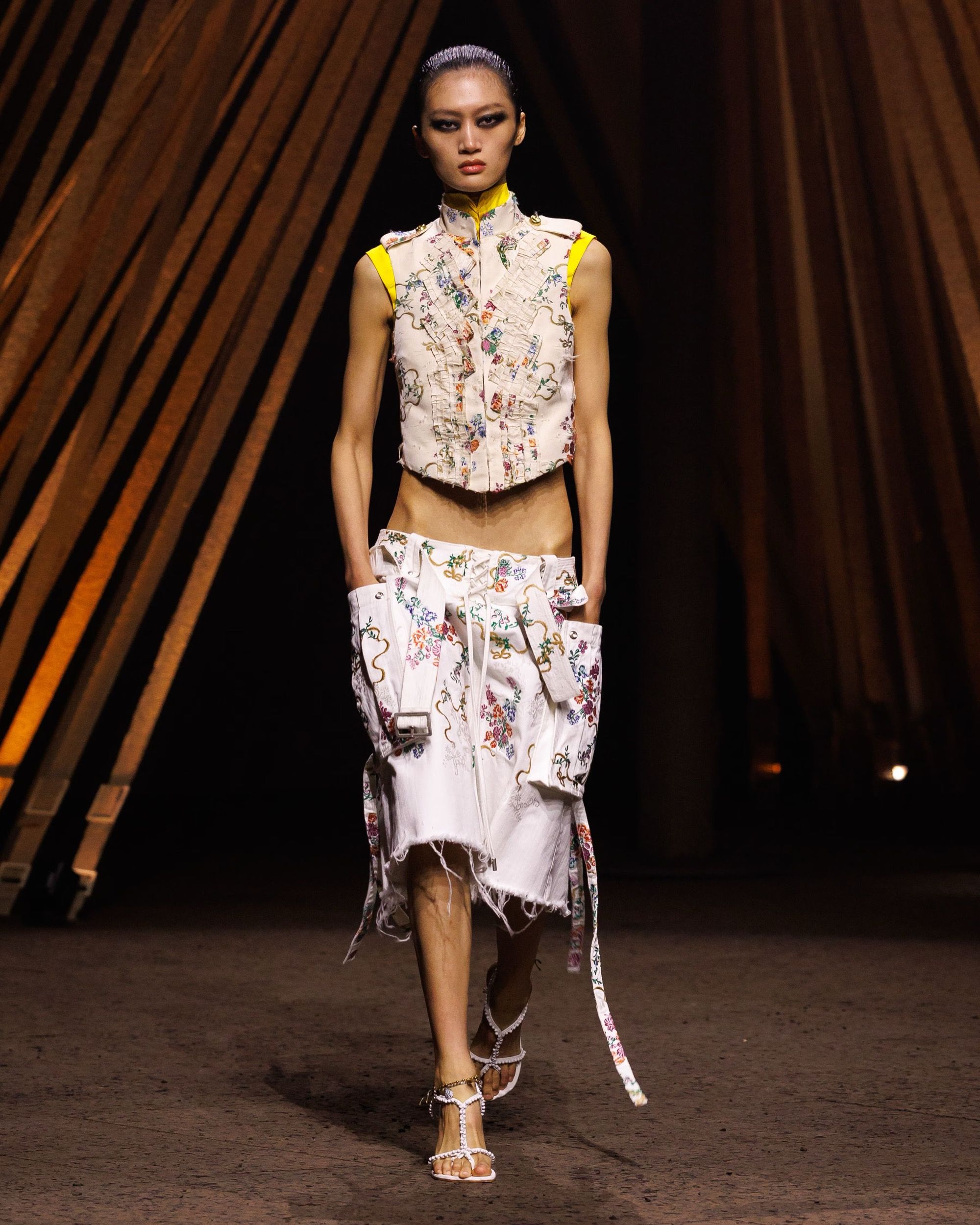
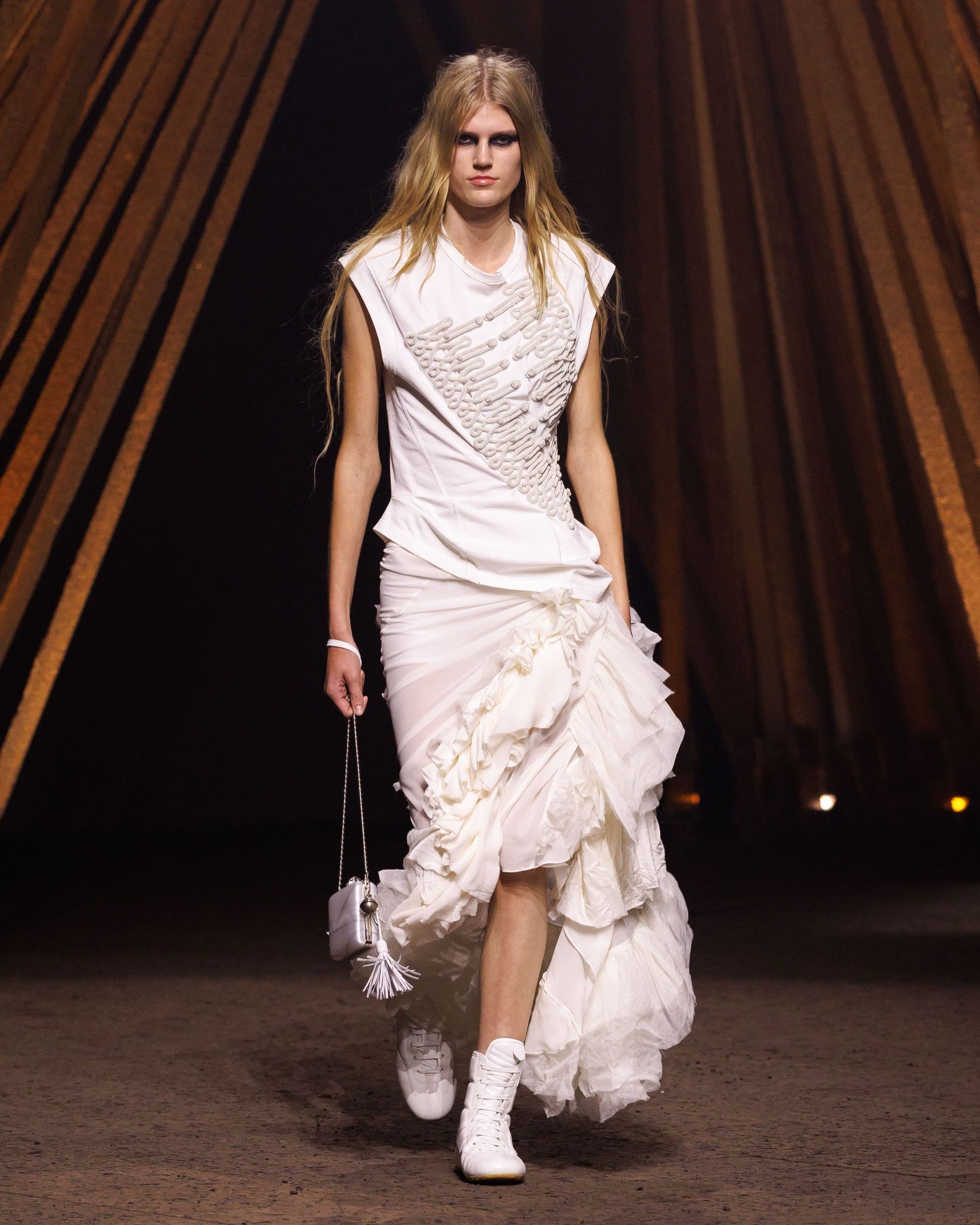
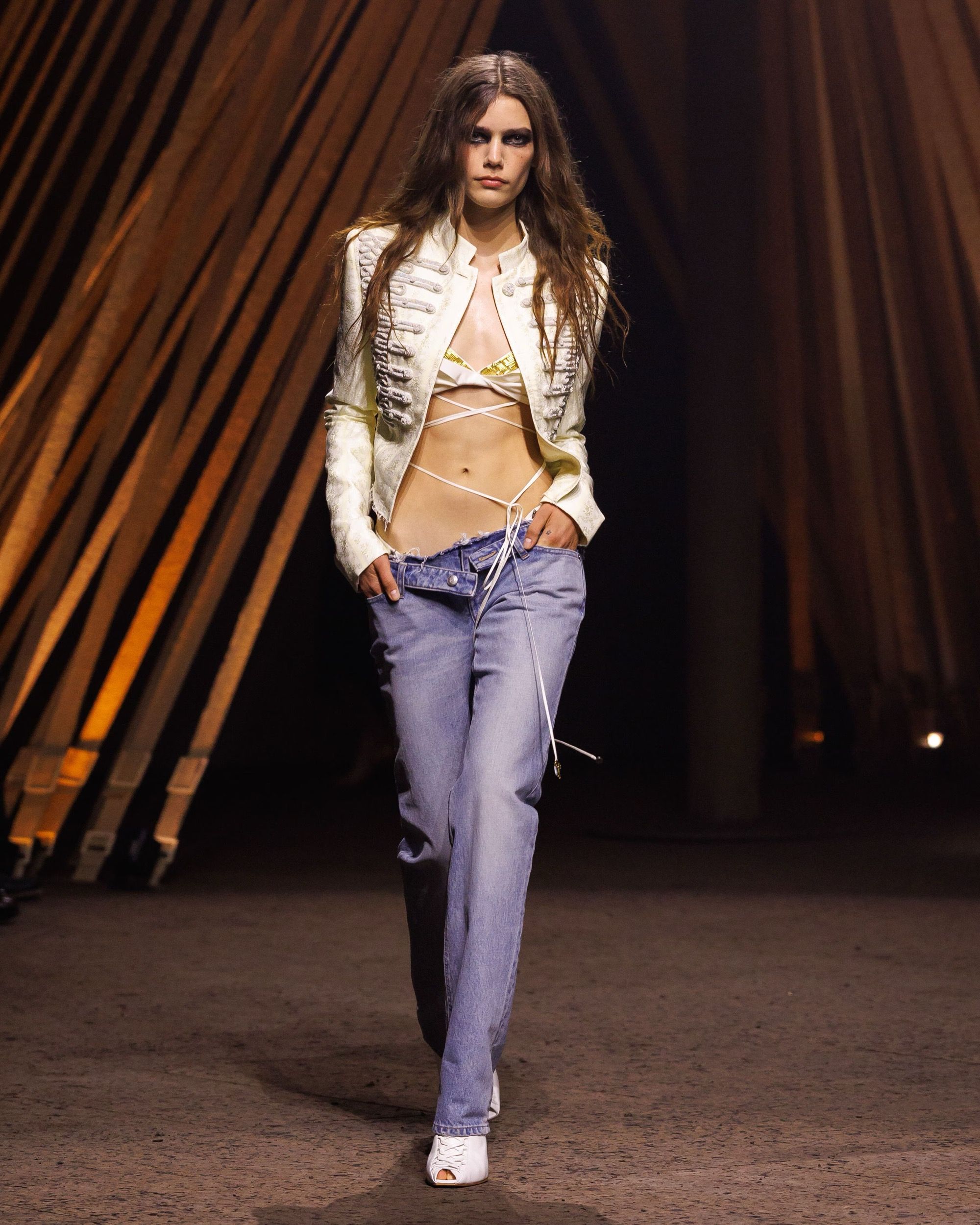
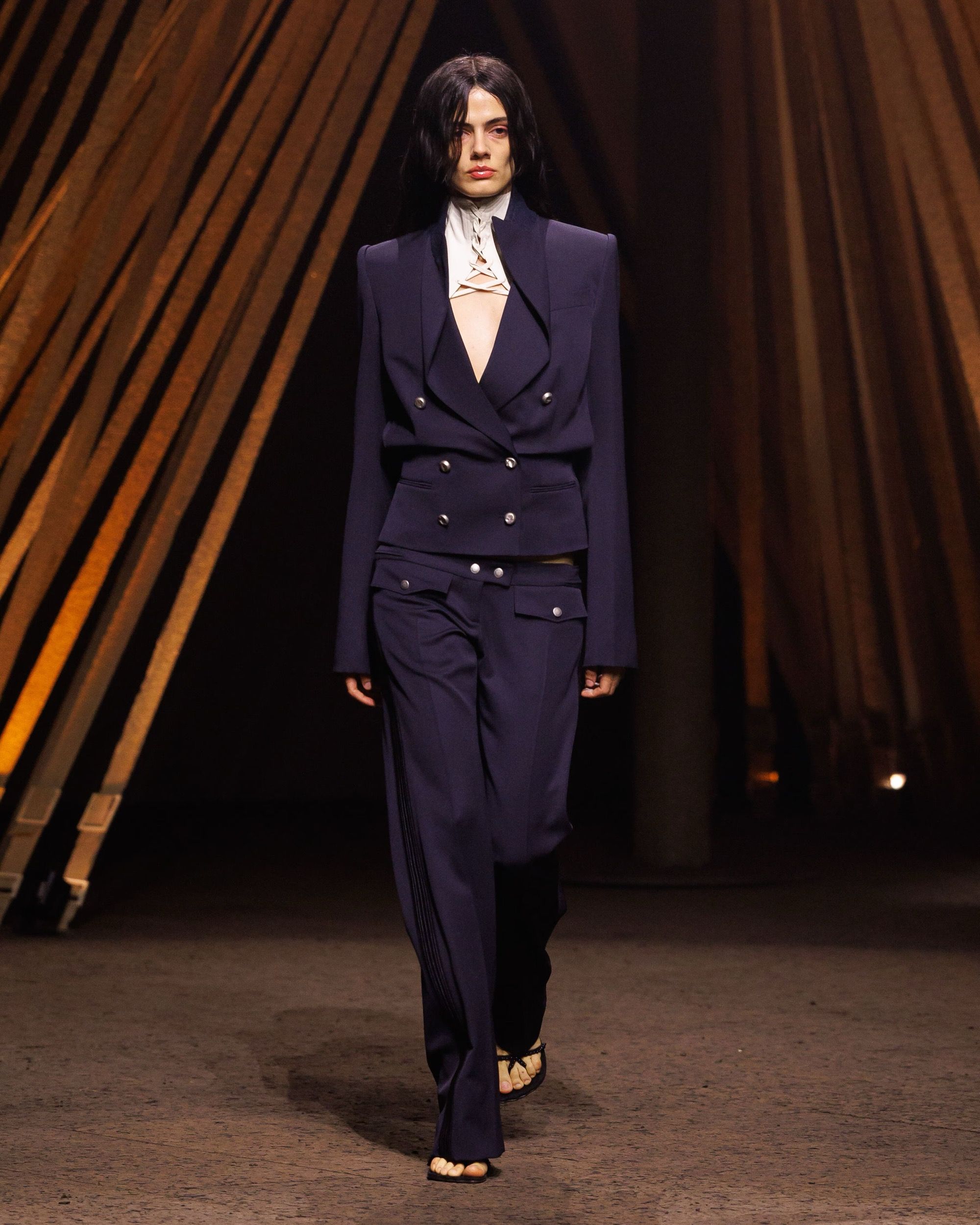
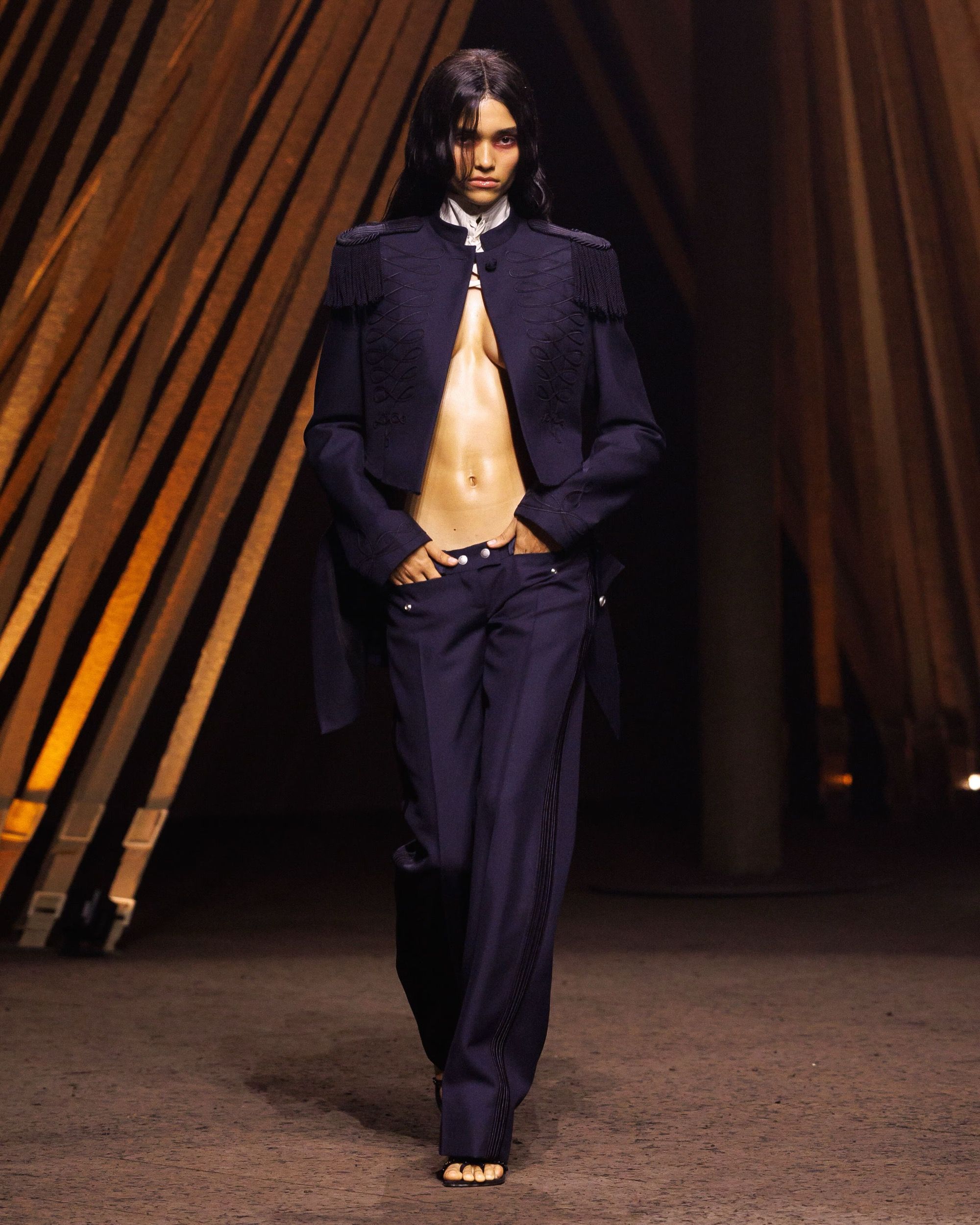
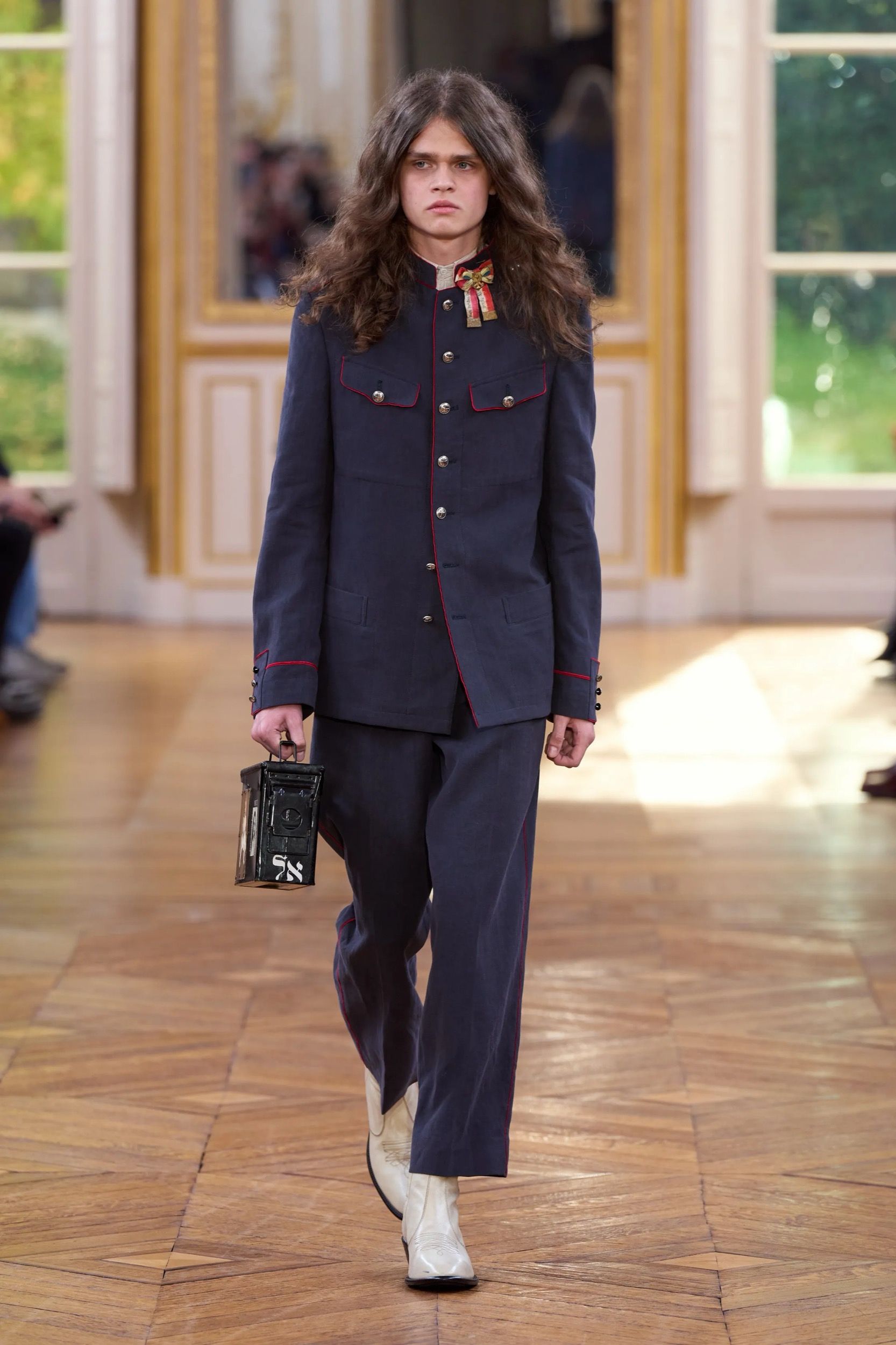
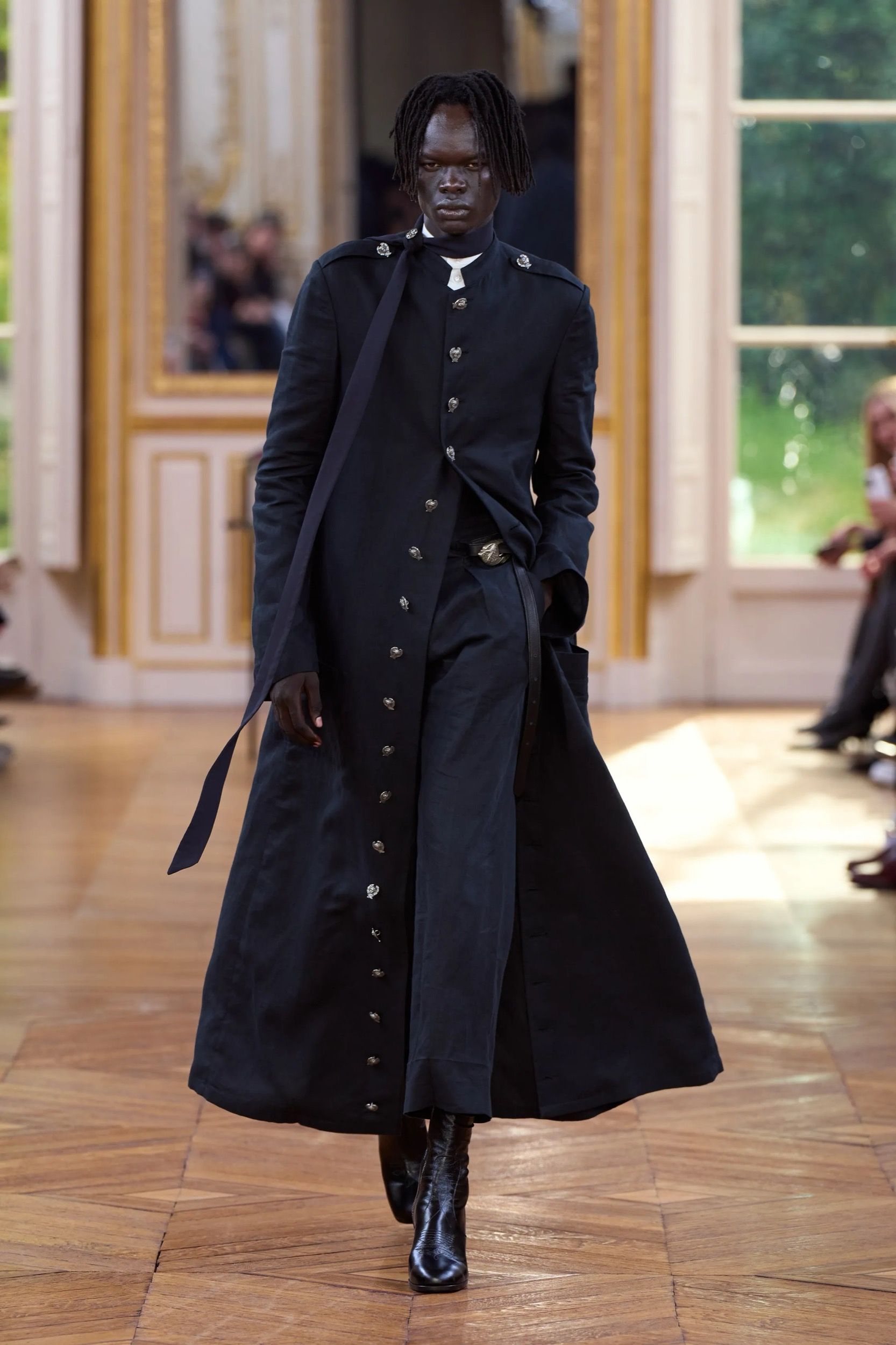
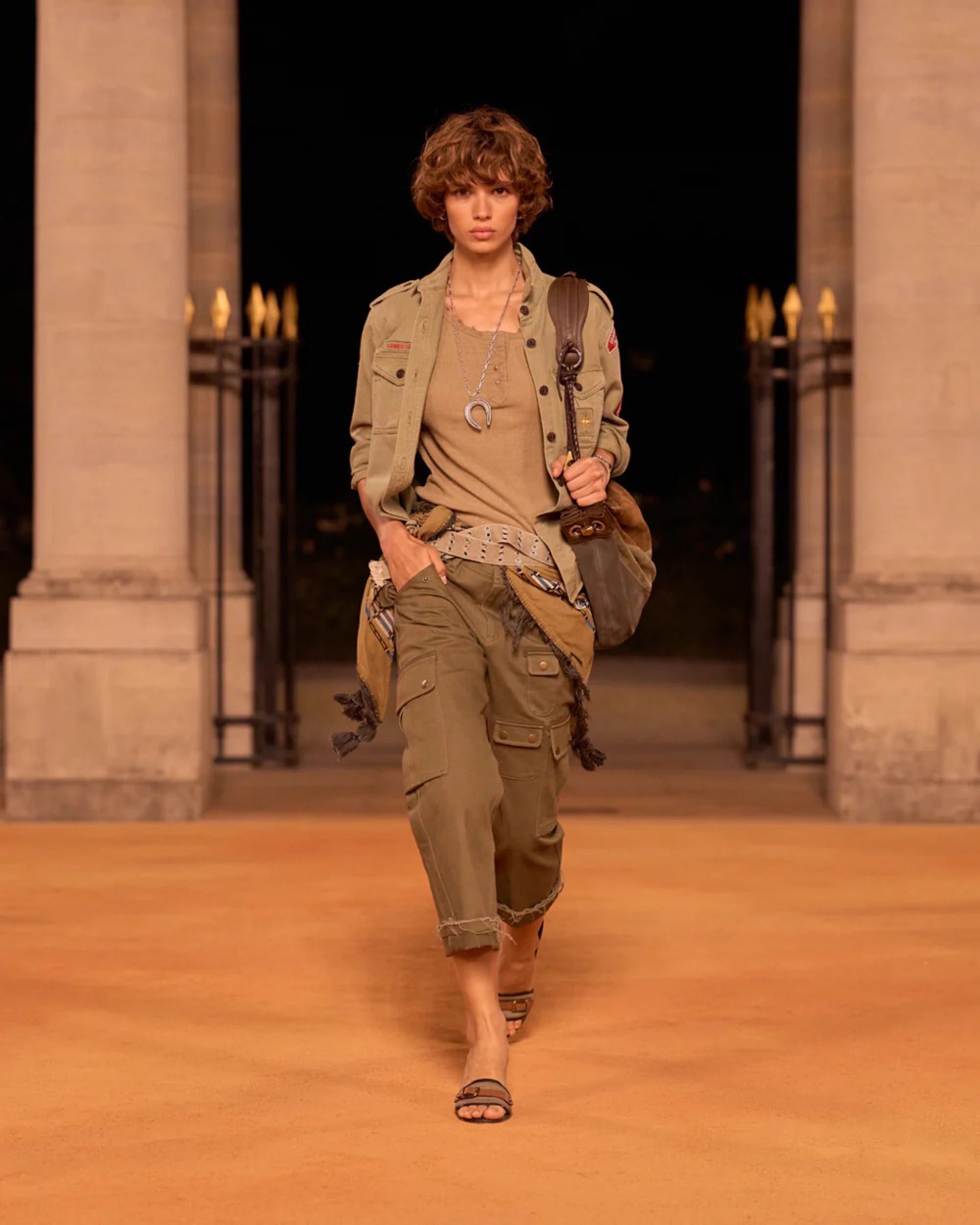
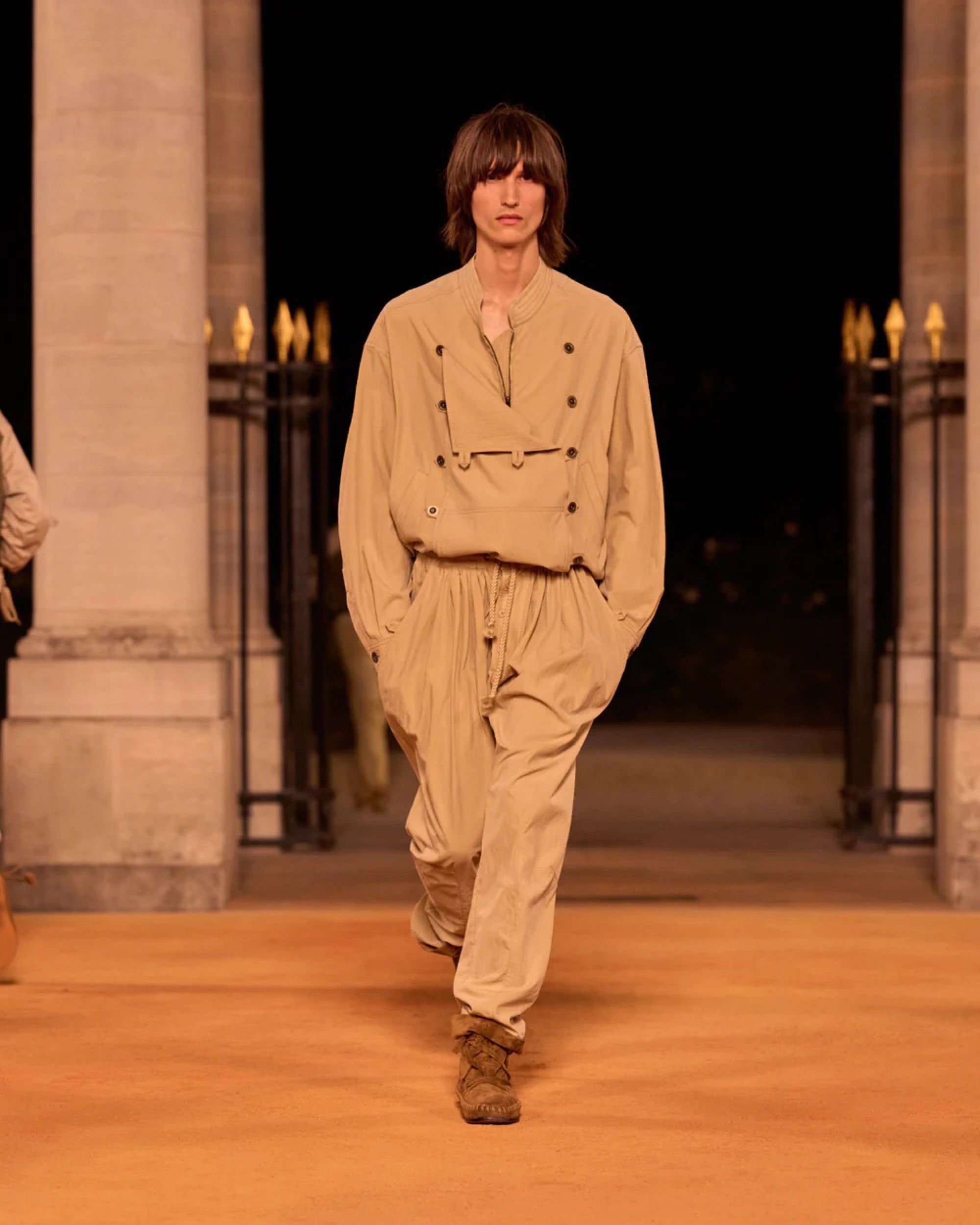
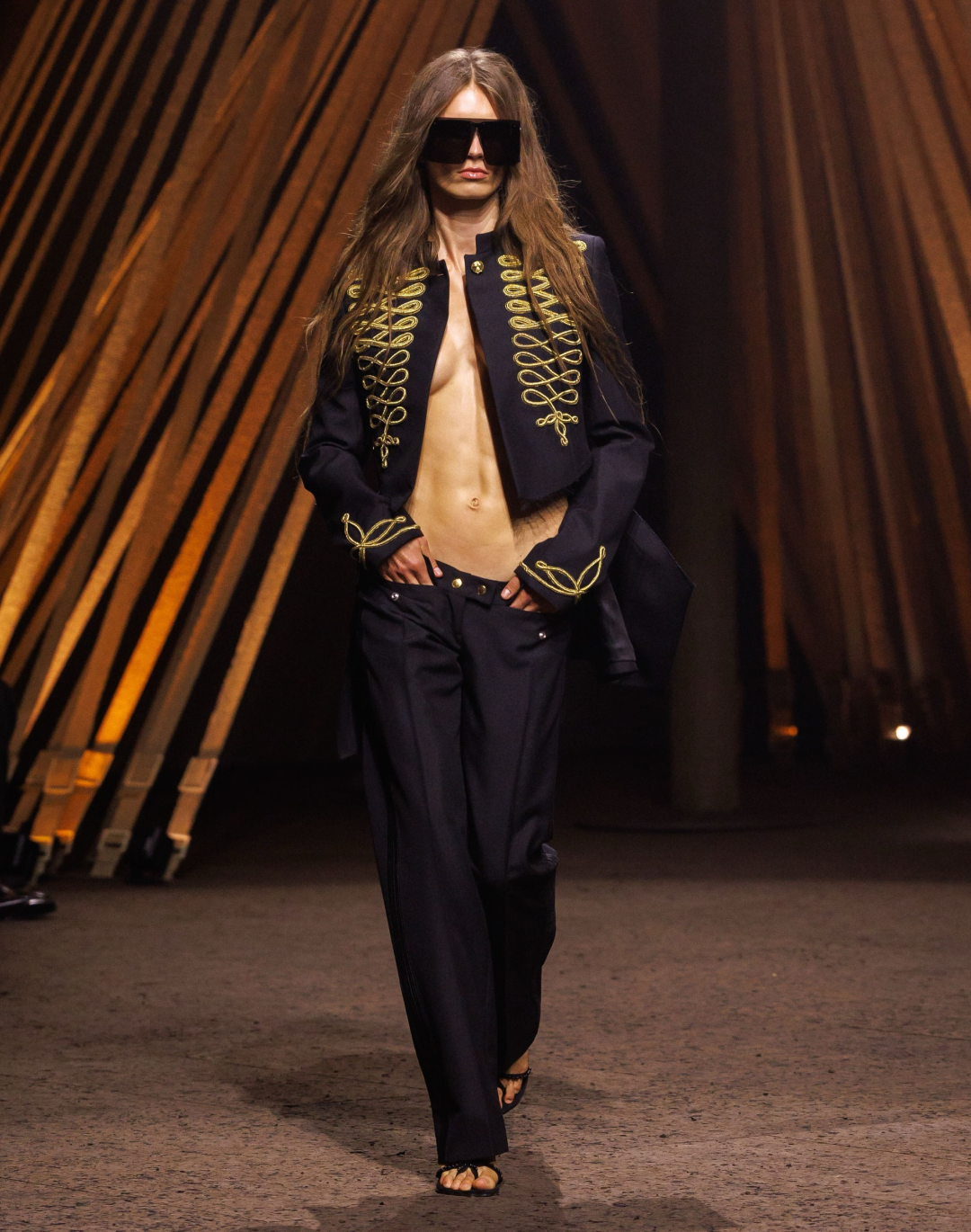
Although the SS26 fashion month is not yet over, several brands across the major fashion capitals have already proposed reinterpretations of the military jacket once beloved by the French emperor. First among them was Stefano Galici, who for the new Ann Demeulemeester collection presented versions in various colors and lengths, both for men and women. Also in Paris, Alexander McQueen’s woman joins the ranks in a perhaps more sensual and feminine way, with a multitude of cropped and, in some cases, deconstructed military jackets.
Alexander Levy of Enfants Riches Déprimés has momentarily set aside the brand’s renowned “cool kid” attitude and, for SS26, brought to the runway more rigid and mature silhouettes. In this case, the Napoleonic jacket becomes a coat, which shines through its jeweled button details. At the opposite end of the spectrum, Isabel Marant, the undisputed queen of boho-chic, has transformed the military jacket structure into an oversized, slouchy outerwear piece, closer to the aesthetics of Top Gun than to 19th-century France.
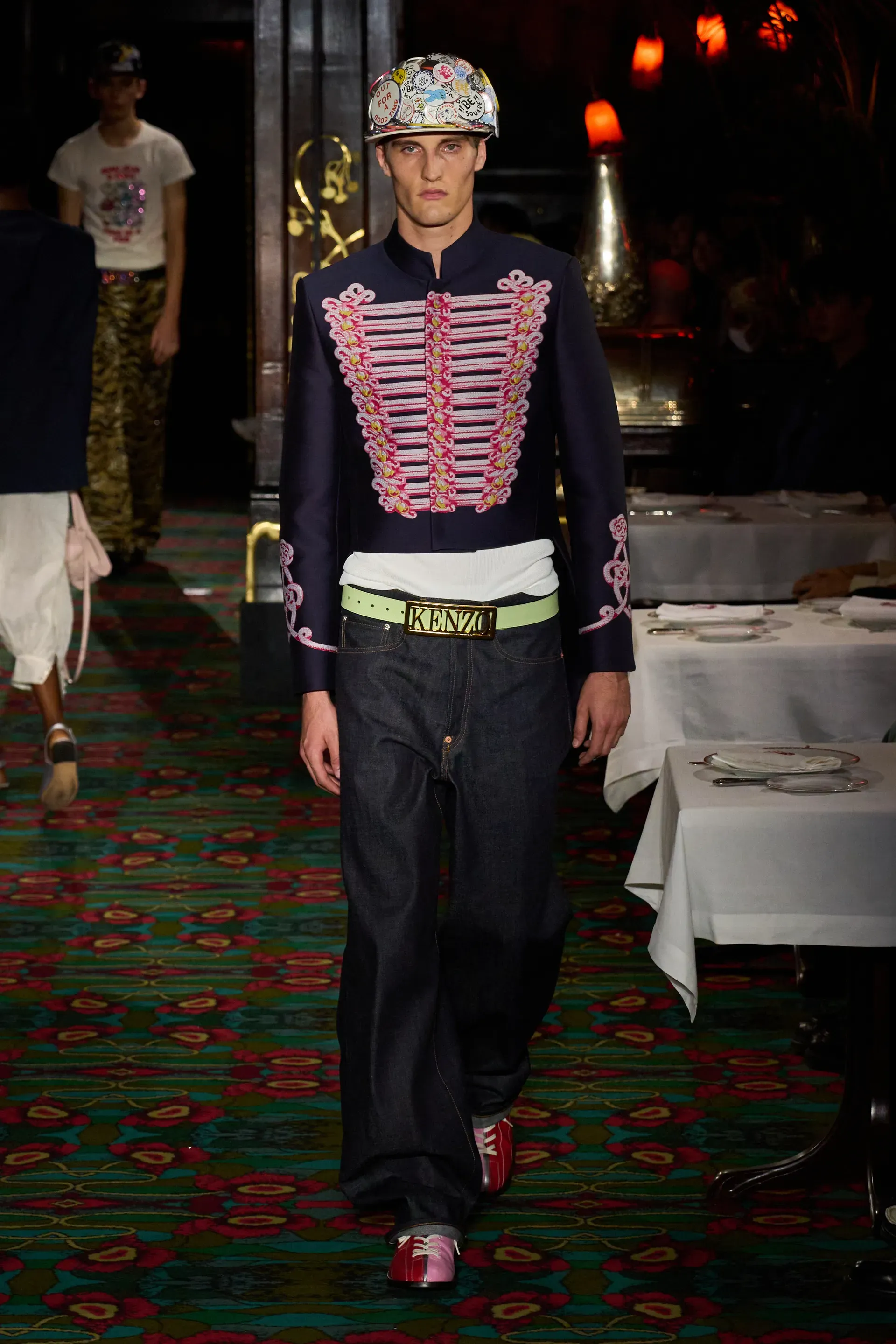
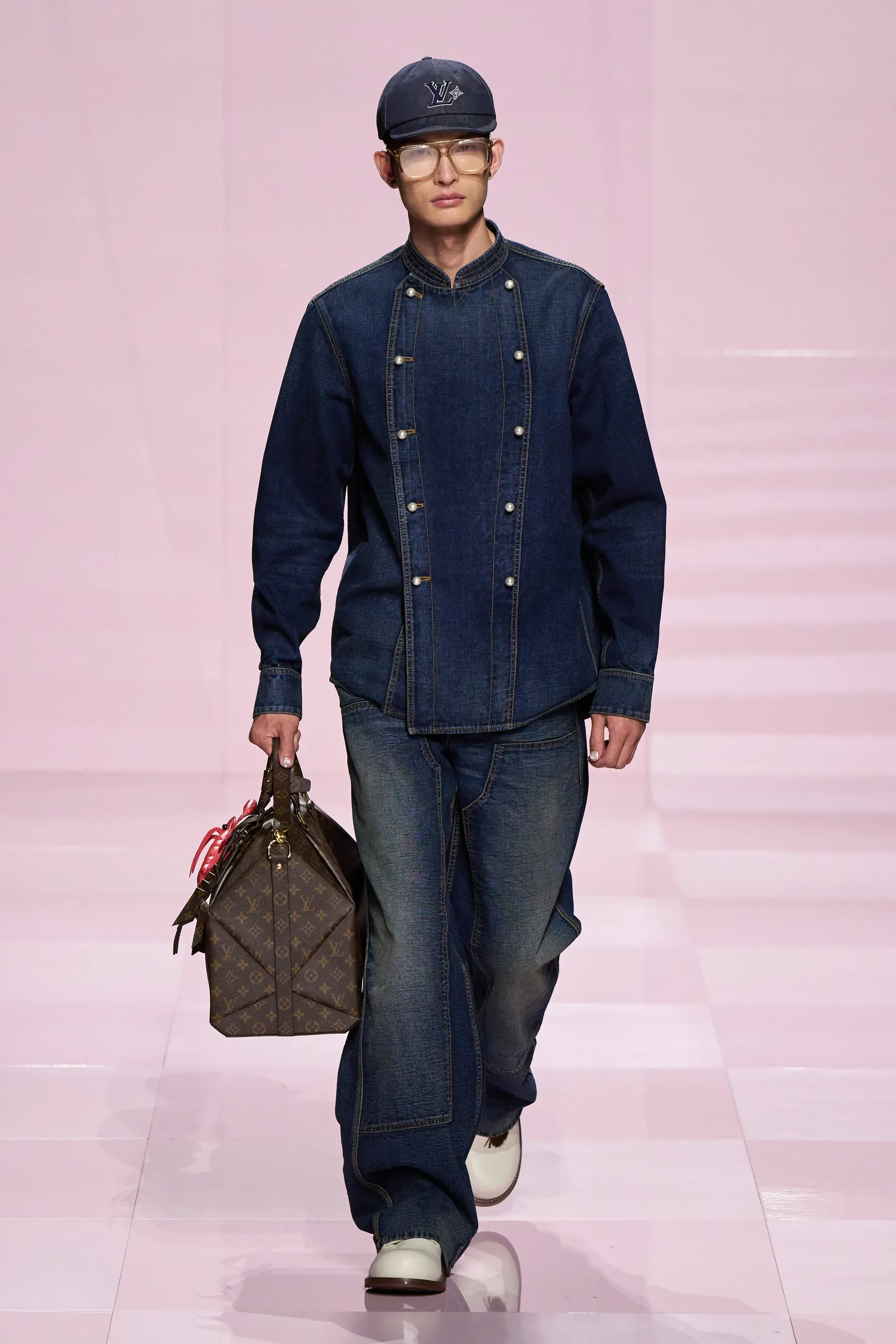
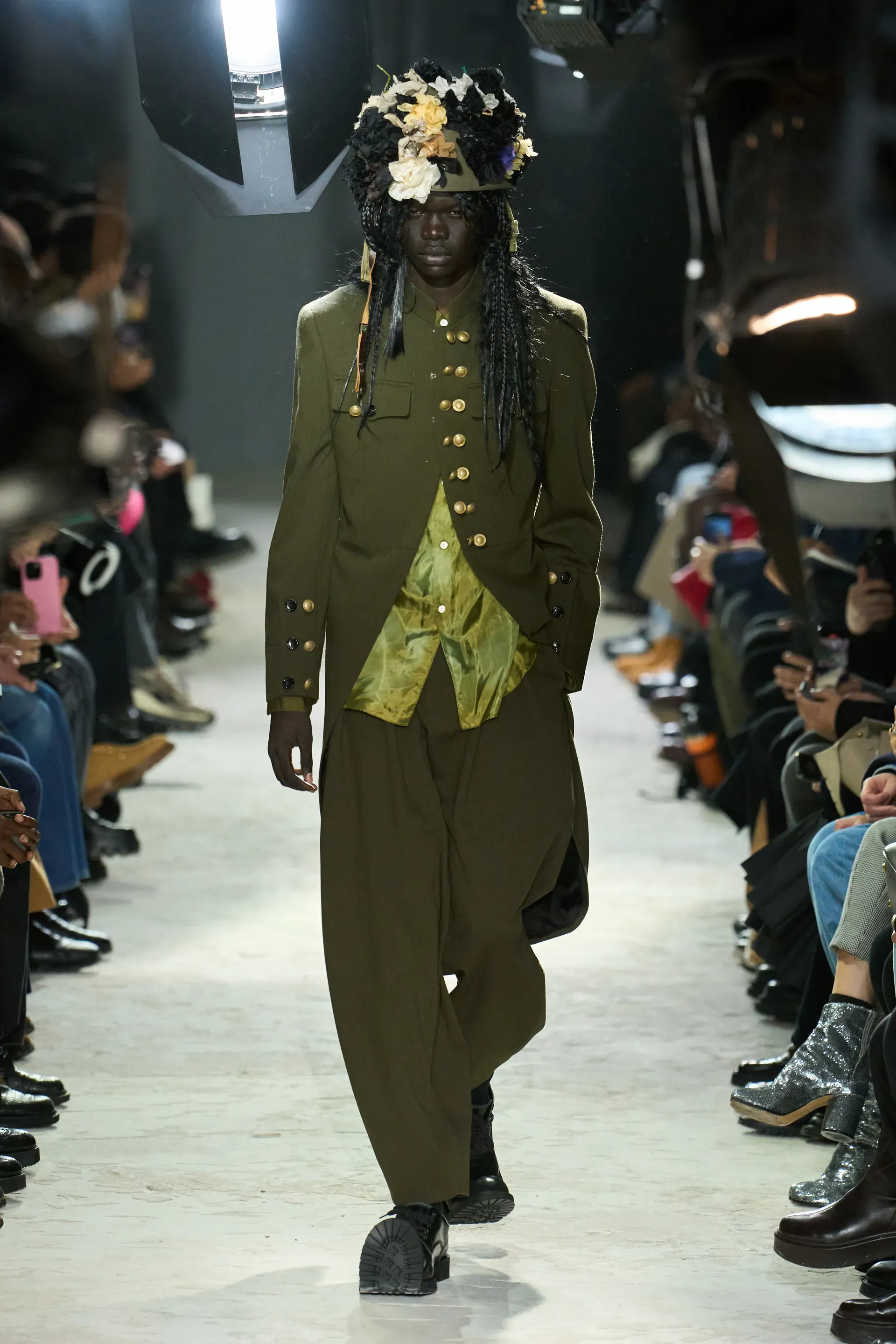
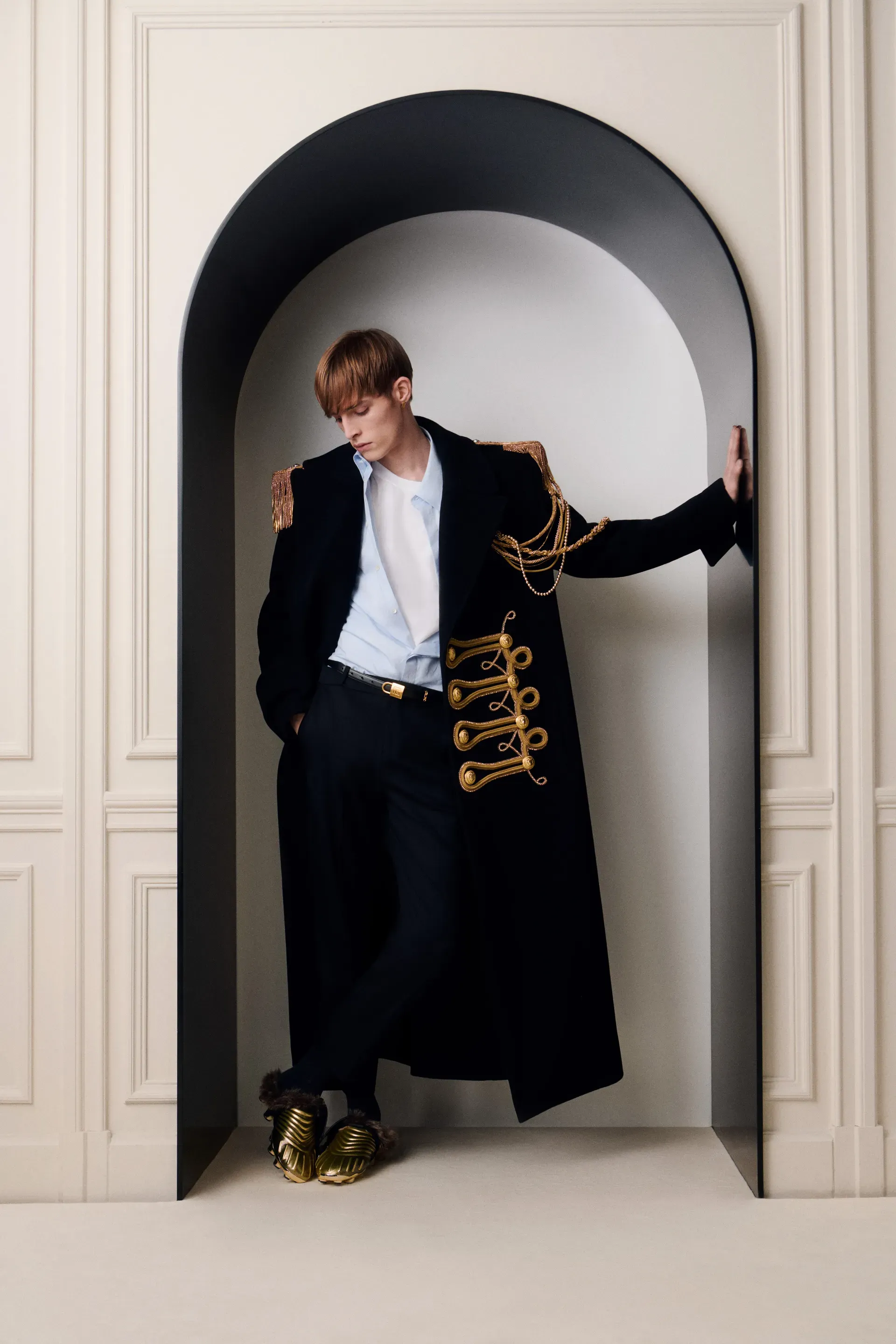
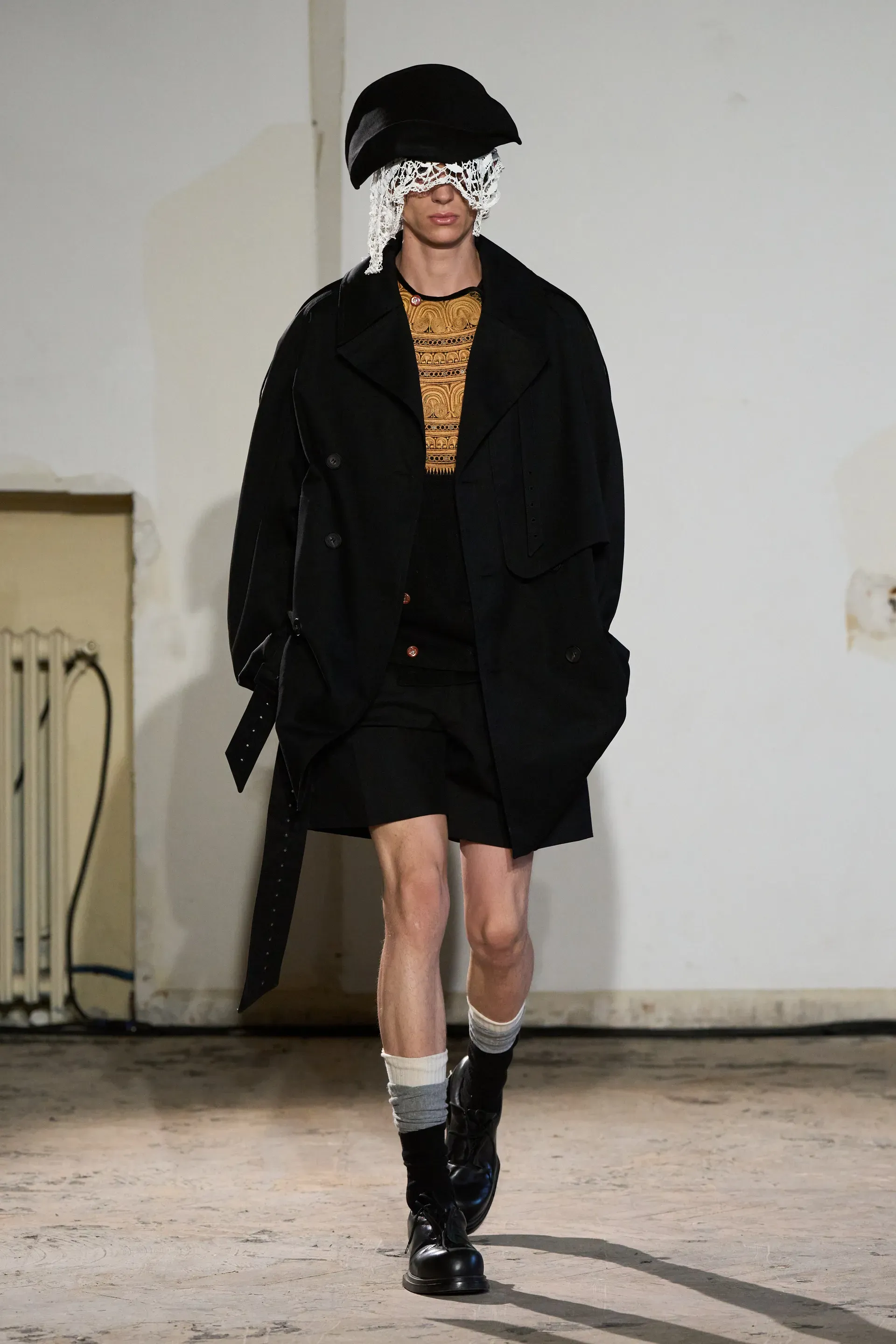
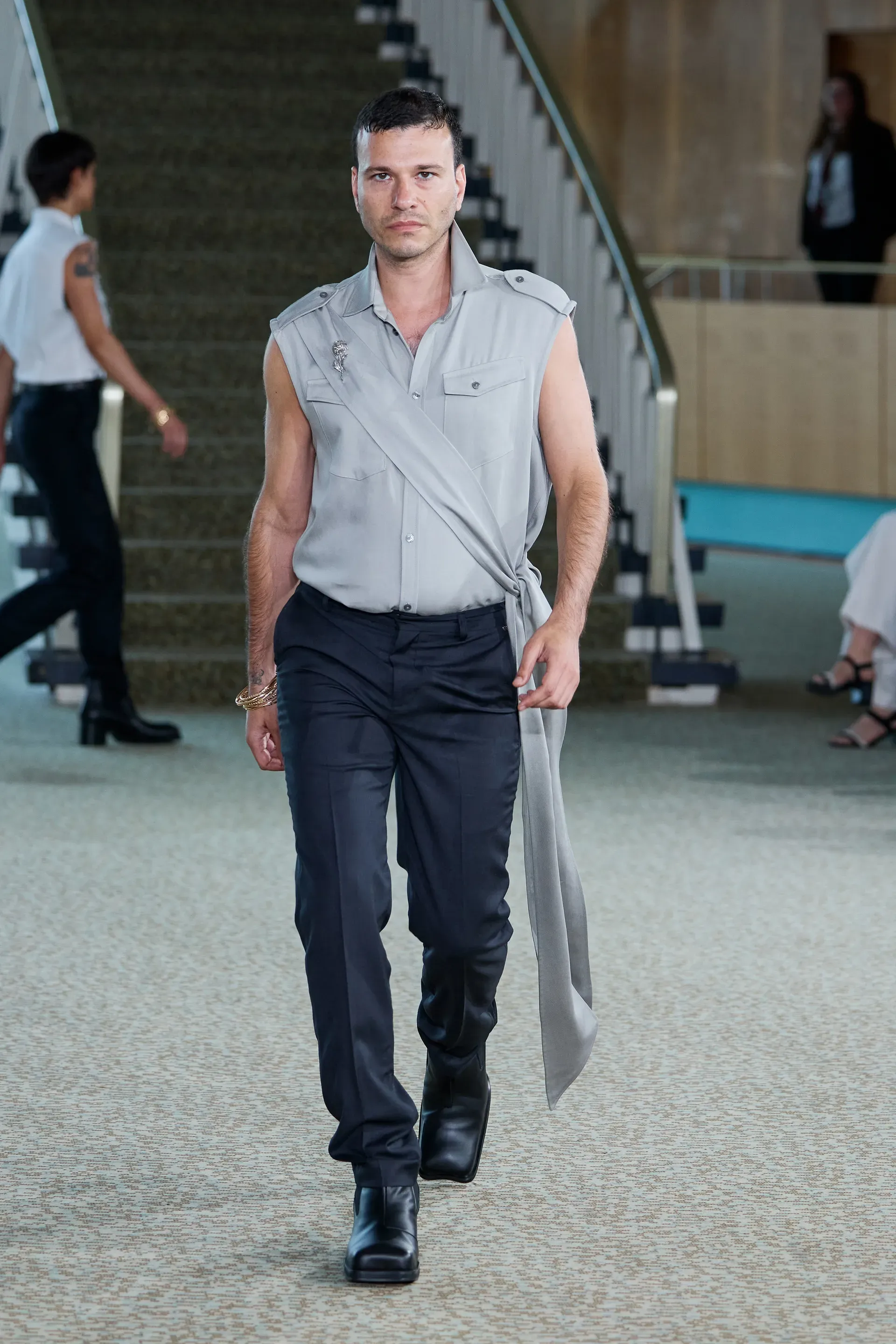
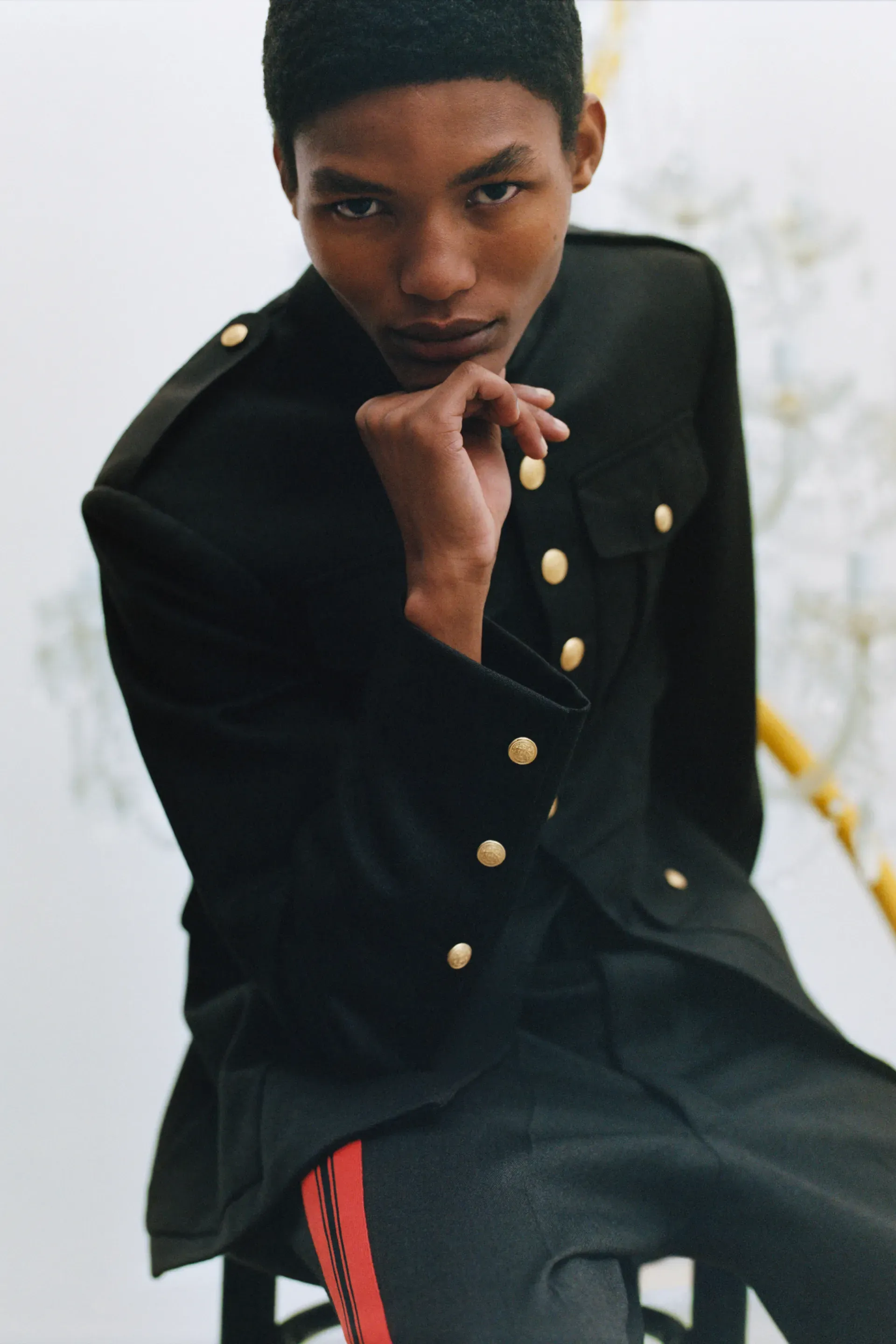
The hallmarks of Napoleonic fashion have been protagonists in the menswear presented on recent runways. In his latest summer collection for Kenzo, Nigo transforms the Napoleonic jacket into a streetwear piece, paying homage to the iconic cover of the Beatles’ album “Sgt. Pepper’s Lonely Hearts Club Band.” At Comme des Garçons Homme Plus, we find military jackets with double gold buttons, while Pharrell Williams proposes, in his latest winter collection for Louis Vuitton, the commander’s uniform in a denim version. Olivier Rousteing at Balmain dedicates the entire men’s winter collection to the Napoleonic style: there is no shortage of coats with braiding and applications of braided cords and tassels. The general’s jackets with fringes and the traditional aiguillette, a cord hanging from the shoulders, originally used to secure armor and later a symbol of prestige, are faithfully reproduced.
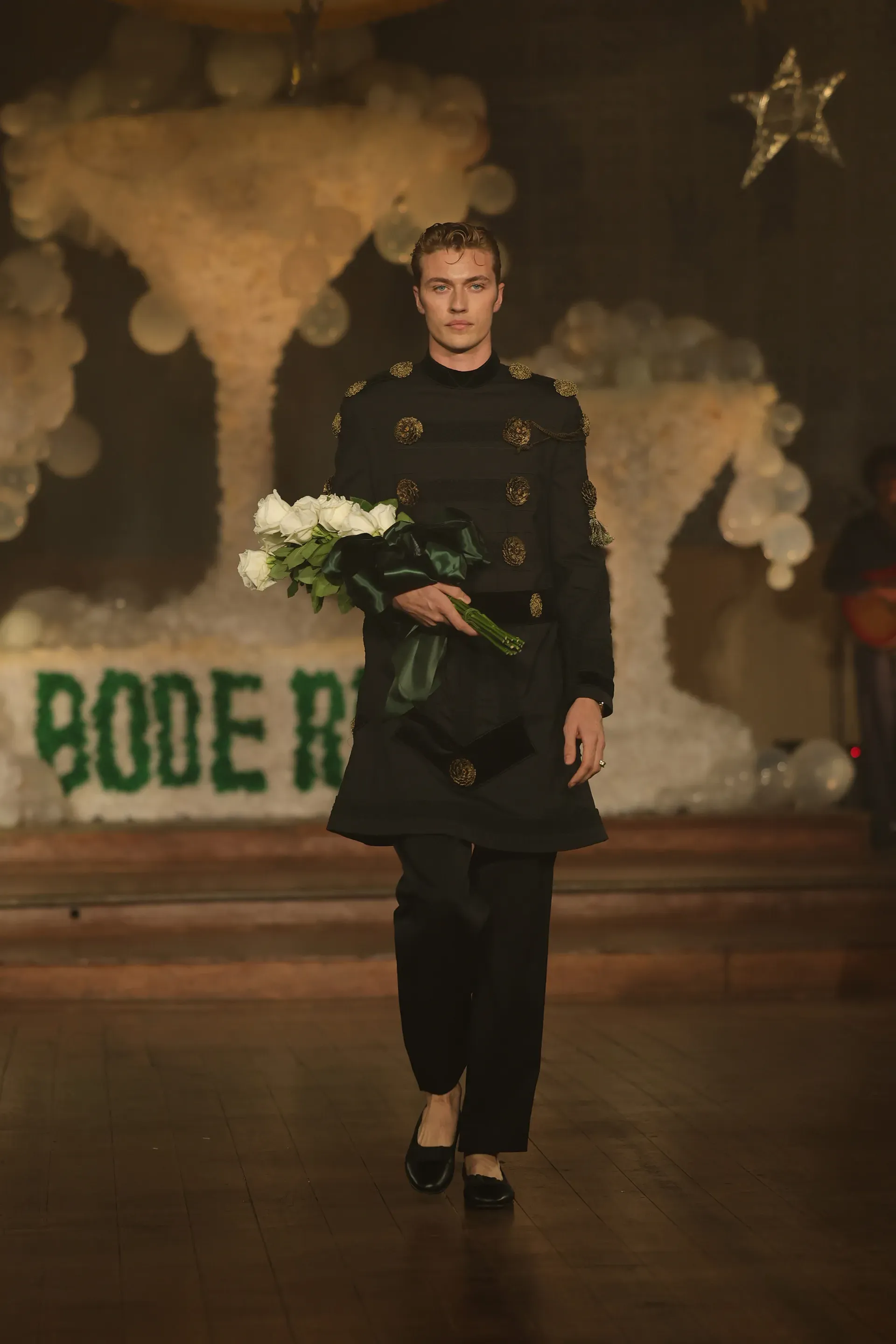
At Wales Bonner, references to imperial style intertwine with the codes of Black dandyism: recent menswear collections feature frock coats and uniforms with gold braiding alternated with berets that unmistakably recall the Black Panthers’ caps. Emily Bode’s new line, Bode Rec., tells the American interpretation of the Napoleonic jacket, which becomes a parade uniform often worn by school bands in the U.S. Even Jonathan Anderson’s debut collection for Dior Men is studded with references to the Napoleonic style: ruffled collars, redingotes, capes, and shirts with braiding intertwine with the codes of everyday wear.
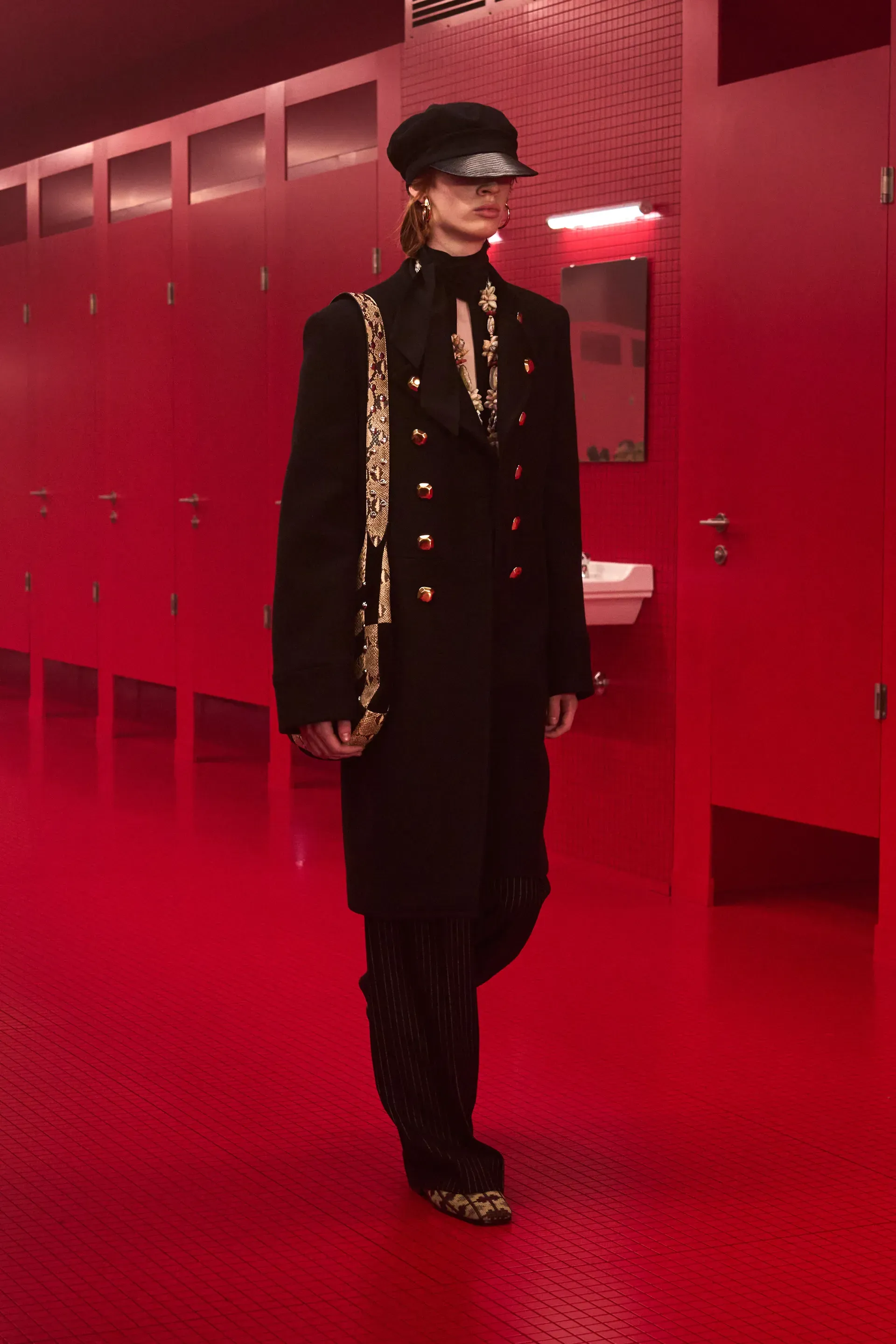
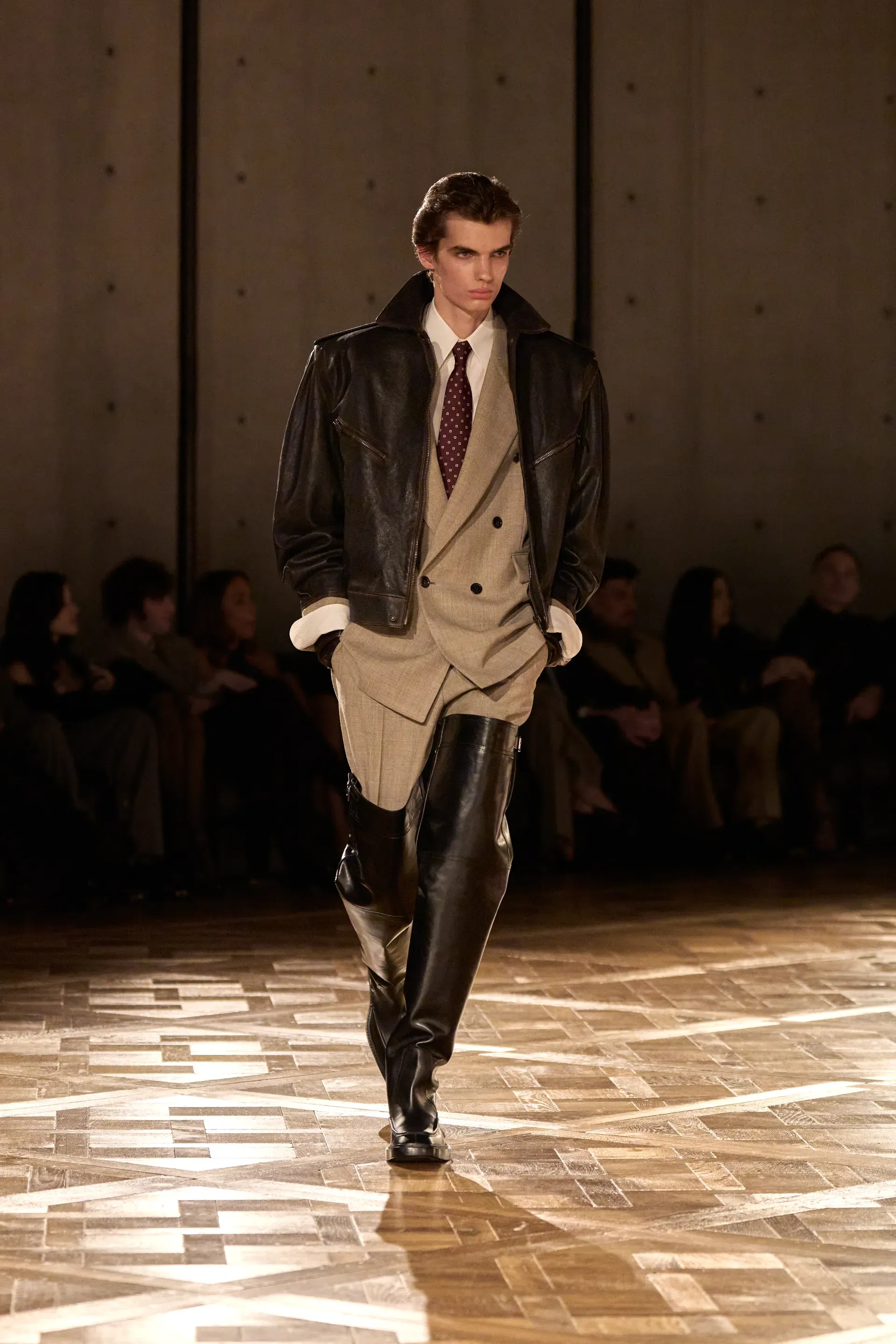
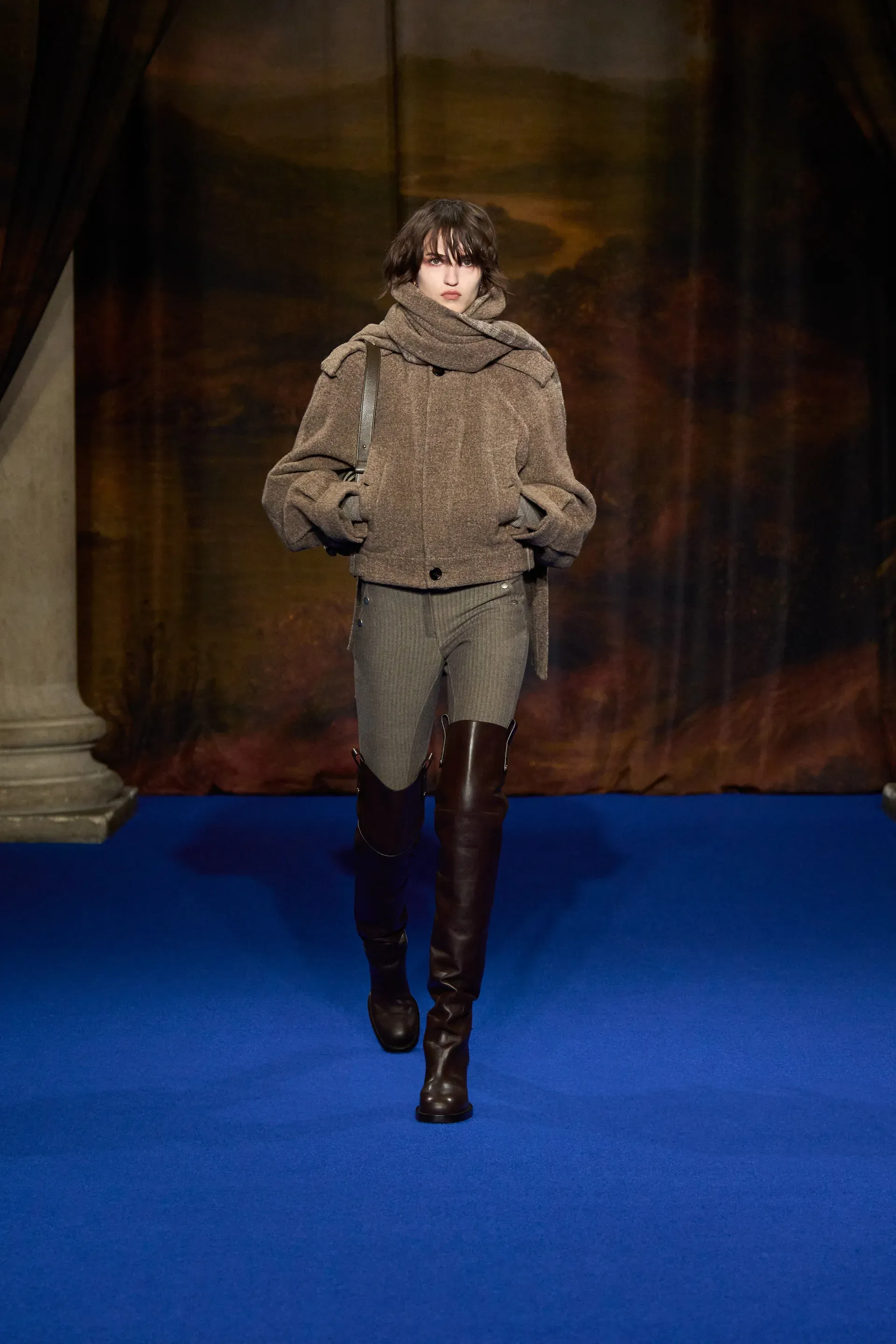
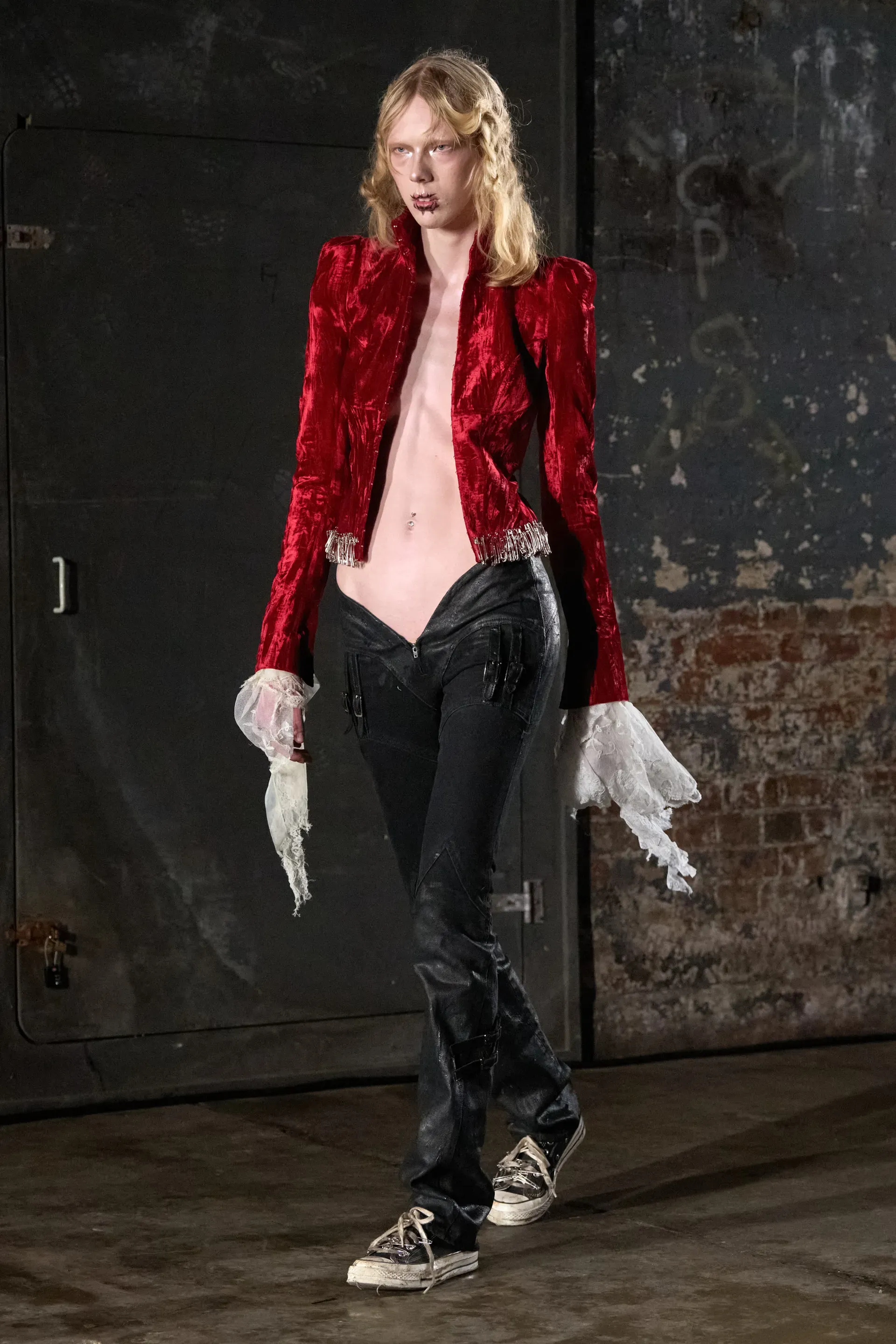
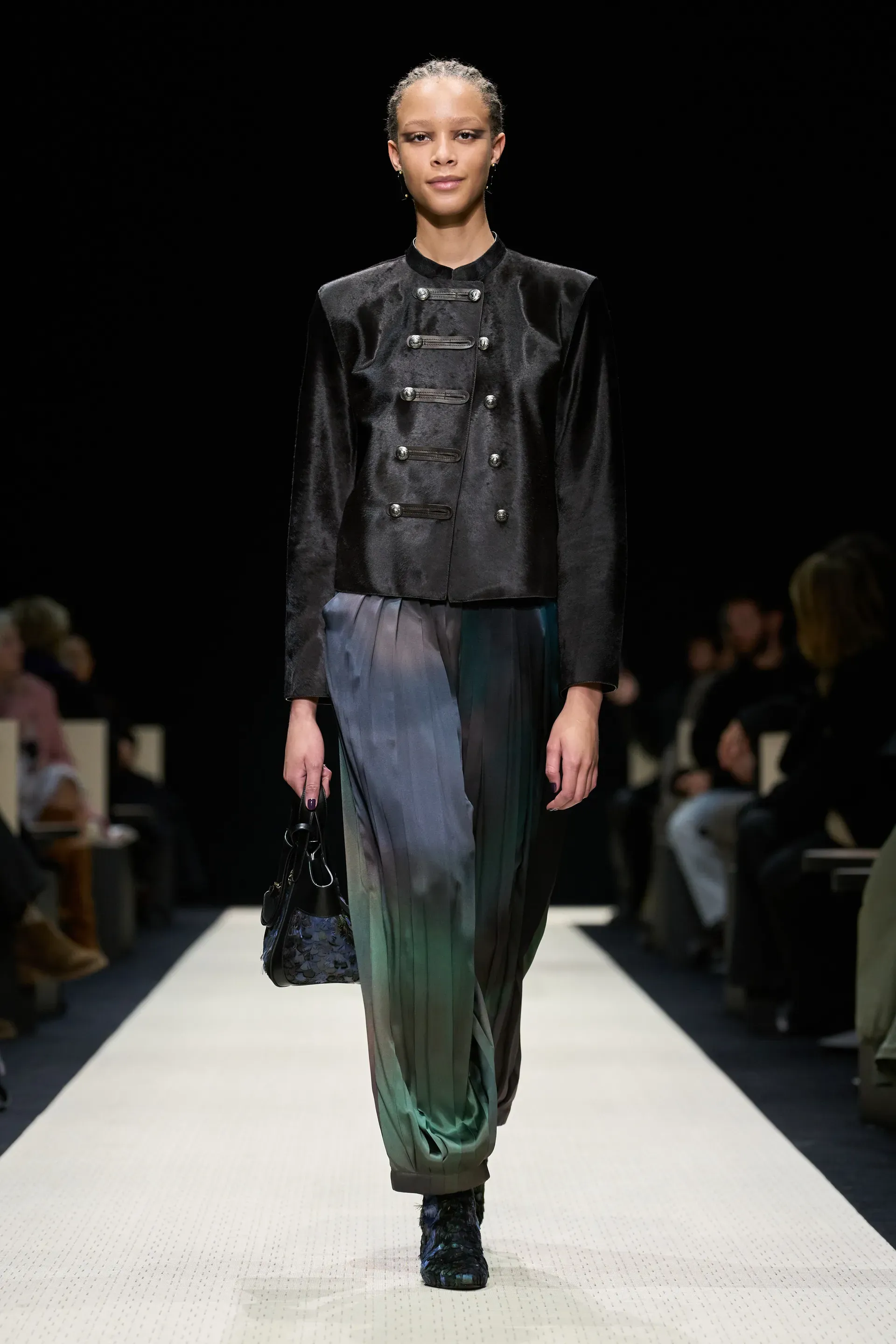
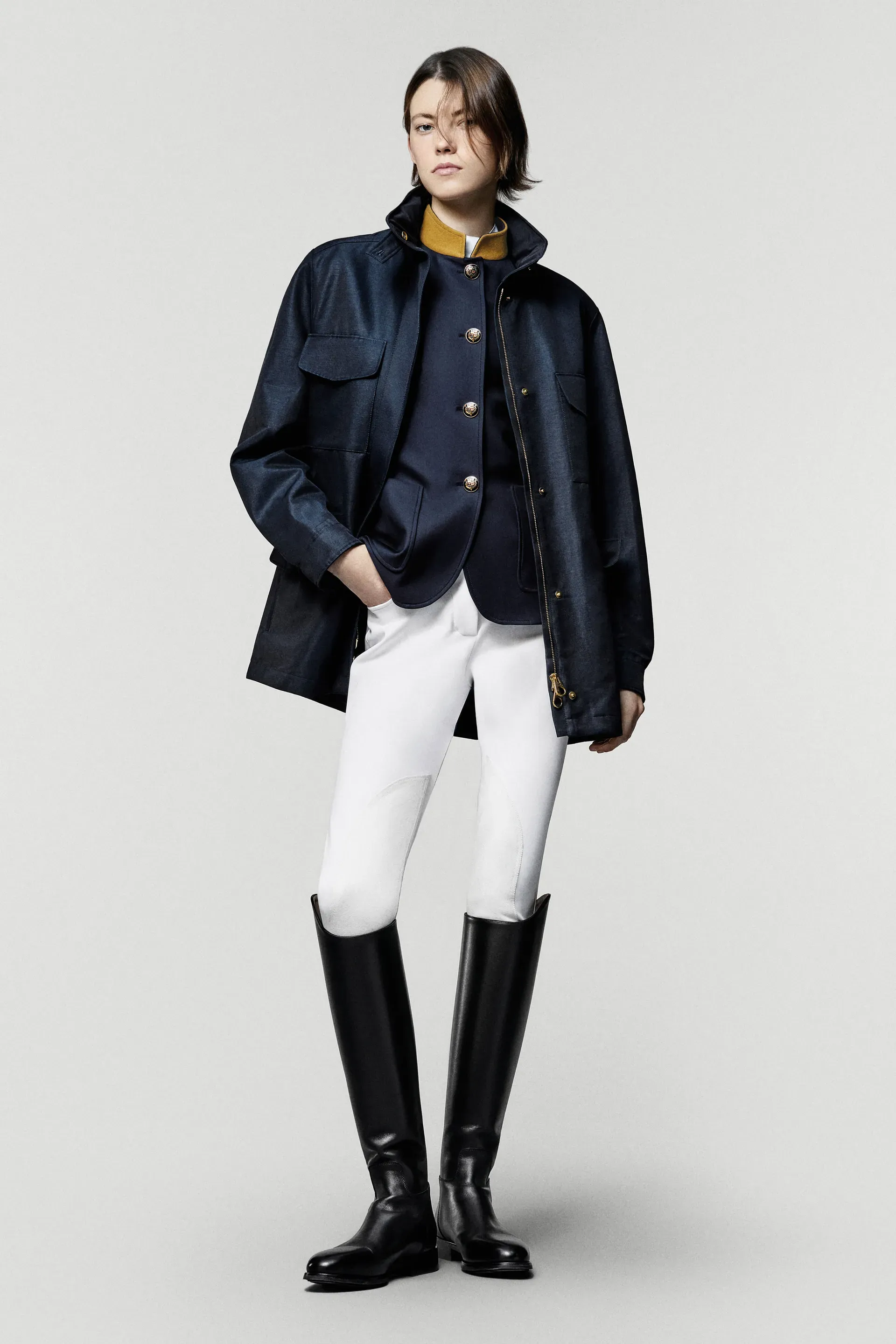
Womenswear has also been influenced by the Napoleoncore trend: Valentino and Armani in their recent collections propose sophisticated variants of the French general’s gold-buttoned jacket—the latter included in the winter show a blazer with its interpretation of the traditional plastron, a buttoned bib. Dilara Findikoglu offers a punk version of the velvet riding jacket decorated with safety pins. The spirit of Napoleonic fashion and the triumphant image of the commander on horseback are revived through the return of cuissards and riding jodhpurs brought back into vogue by Burberry, Loro Piana, and Saint Laurent.
At EgonLab, one of Napoleon’s distinctive signs, the bicorne hat, is reinterpreted, worn on the runway “en bataille” with the points on the sides, just as Bonaparte is often depicted in his self-portraits. The Berlin brand GmbH references the Napoleonic imagery by proposing structured shirts with buttoned epaulettes and decorative bands fixed with pins, reminiscent of the ceremonial uniforms of 19th-century French officers. Even Gen Z has embraced the Napoleonic look: just type “Napoleon Jacket” on TikTok to come across numerous videos of young people flaunting imperial jackets, often purchased on second-hand platforms or found in vintage markets.
@reliqviaproject все вкоро в продаже ! #hedislimane #saintlaurentparis #erd #archive #outfitinspo #fyp #archivefashion #diorhomme オリジナル楽曲 - sota_drumhero -
Behind the revival of Napoleon’s style lies more than a simple and superficial aesthetic fascination: there is a significant connection with the contemporary sociopolitical context. The period of Napoleonic restoration carries unsettling similarities with our present, marked by new, subtle forms of conservatism and political programs that, while preaching reassuring promises of stability, conceal plans for censorship and control. Confirming this historical parallel, Donald Trump, as early as May 2024, amid his legal battles, shared on Truth Social a phrase attributed to Napoleon: “Whoever saves their homeland violates no law.”
Western culture, now more than ever affected by selective historical amnesia, has long ignored Napoleon’s colonial side, favoring the myth of the builder of the modern state, often regarded, as observed, as a political and ideological model for international leaders. But history, like fashion, returns in a current global political context not so far removed from a past where imperialism disguised itself as progress, and the rhetoric of liberation justified new, authoritarian forms of domination.