.gif 2000w)




































Trump, Arnault and "Made in Texas" fashion True luxury will stay Italian - but who needs the glory if there's no gain?
The return of the specter of tariffs in transatlantic trade risks hitting the productive heart of Italy head-on: its exports. With the unilateral imposition by the Trump administration of 15% tariffs on all goods imported from the European Union, a new season of trade tensions is reopening, which could have devastating effects for made in Italy, especially in the fashion and luxury sectors, long-standing pillars of the national manufacturing identity. Of course, as noted by WWD, the agreement, perceived as a lesser evil compared to the initial prospect of 30% tariffs, is still in a preliminary phase, with only a 50% chance of being finalized. But while giants like LVMH are preparing by opening factories in the United States, Italian companies risk being crushed by geopolitical constraints, rising customs costs, and loss of international competitiveness. It’s no surprise that Bernard Arnault defended the agreement. “As the head of a global European company,” wrote Bernard Arnault in an op-ed in Les Echos, “I believe it was important to avoid a crisis. This agreement is an act of responsibility. In the current geopolitical and economic context, it is a good deal. [...] The Commission did not achieve a perfect agreement, but it achieved a necessary one. It protects essential interests, avoids open confrontation, and maintains a base of stability.” Tariffs are not just political theater: they hit key sectors of the continental economy and implicitly target the productive excellence of Southern Europe, with Italy among the hardest hit. From prêt-à-porter to haute couture collections, from leather goods to accessories, the entire Italian export system (which, according to the Italian Trade Agency ICE, is worth over 600 billion euros per year) is exposed. According to a Confindustria report, even a 10% tariff would have resulted in a loss of 20 billion euros and about 118,000 jobs. With the actual 15%, the cost rises well above 30 billion and approaches 180,000 fewer jobs. The “trade war that benefits no one,” as Giorgia Meloni described it months ago, is not a war: it was, in all respects, the capitulation of a Europe with fewer and fewer choices and levers of power in the face of U.S. imperialism. And the effects could be an earthquake for made in Italy and in particular for the clothing and luxury fashion sector, already in crisis and historically oriented toward exports to the United States.
Arnault and "Made in Texas" fashion
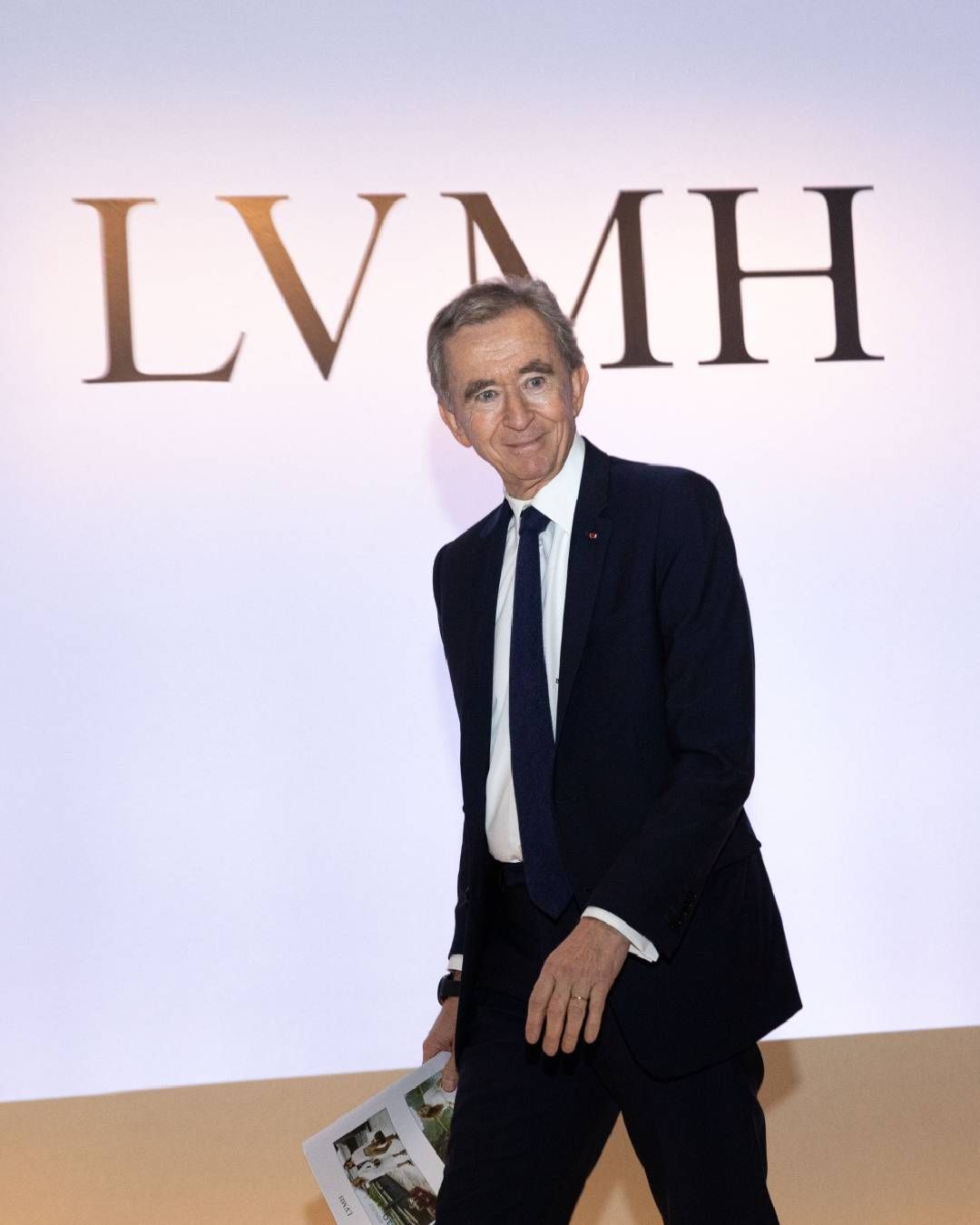
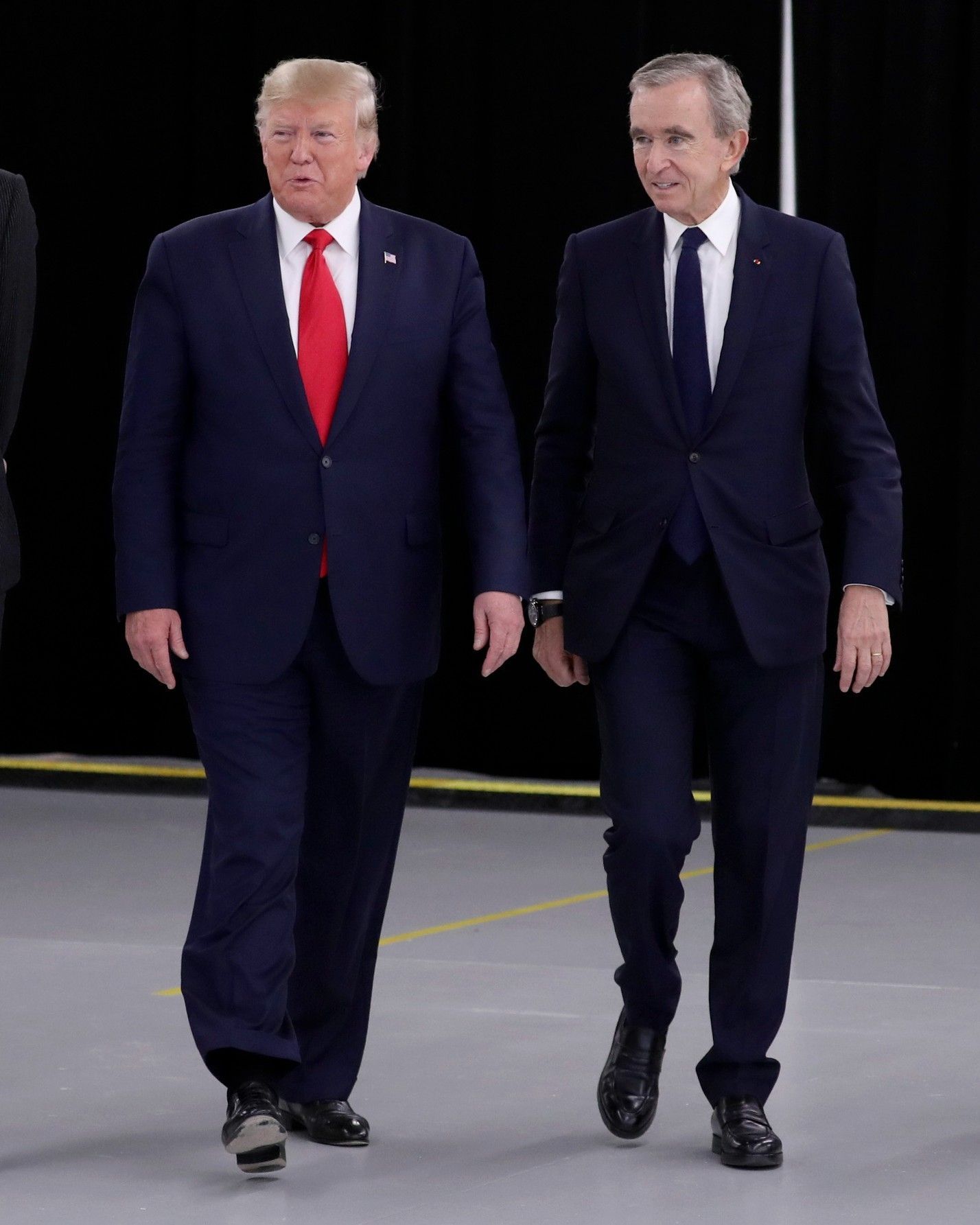
To understand what might happen, or at least which way the wind is blowing for Italian clothing and fashion production, the LVMH case is emblematic. Bernard Arnault, CEO of the French luxury giant, has chosen a pragmatic strategy to defend his interests: relocating part of the production to the United States. After the Louis Vuitton leather goods workshop inaugurated in Texas in 2019 in the presence of Donald Trump himself, in a recent interview with the WSJ, Arnault announced the opening of a second factory by 2027, again in Texas. The objective is clear: to bypass tariffs by ensuring manufacturing presence on U.S. soil, while maintaining European visual identity and pricing. And all this despite the fact that the first attempt to “Americanize” luxury production was, more or less, a half-disaster. Six years after its opening, Reuters reported last April that the factory was among LVMH’s worst-performing facilities in the world, with a leather waste rate of 40%, double the average for leather goods factories elsewhere, and only 300 employees — far below the 1000 initially projected by Arnault in 2019. Over the years, according to interviewees, things have slightly improved, although the brand’s international production director (which operates in France, Italy, and Spain) admitted that many of the workers arriving at the factory lack the attention to detail and thoroughness required by the brand. Furthermore, as early as 2017, LVMH had secured government-granted tax breaks, including a 75% cut on property tax for 10 years, resulting in estimated savings of $29 million.
LVMH opened a luxury bag factory in Texas six years ago, but has since found it to be the worst performing site for Louis Vuitton globally by a large margin. Turns out, you can just make high-end luxury bags overnight, otherwise every region would do it. pic.twitter.com/V5l38h6bcg
— derek guy (@dieworkwear) July 8, 2025
Despite these difficulties — including the pandemic and the global luxury crisis that caused the group’s net profits to fall by 22% in the first six months of the year — LVMH has continued its investments in Texas. The first American factory cost around 30 million dollars, while a second, completed in 2023, was valued at 23.5 million dollars. Meanwhile, one of the two Californian plants is expected to close by 2028, and workers have been asked to relocate to Texas or leave the company. In recent months, Arnault, aware of the delicacy of the moment, has launched a personal diplomatic campaign to push European governments to reach an agreement with Washington. He met with Meloni, Merz, and Macron, spoke several times with Trump, and also made public appearances, including at Trump’s inauguration, declaring his intentions in interviews such as the aforementioned WSJ. Despite the crisis, the Arnault clan continues to purchase its own shares on the market, a sign of the family's confidence in the business recovery. But this optimism is backed by very concrete defensive moves such as geographic diversification of production, constant lobbying, and cross-relations between the business and political worlds. Yet if Arnault — regardless of how one interprets his choices — moves forward as a private player, perhaps we should start asking why luxury production, especially in our country, is falling behind. Trump has already declared he wants to see more European factories in the United States, and the subtext is clear: either invest here, or pay full price.
What about Italy?
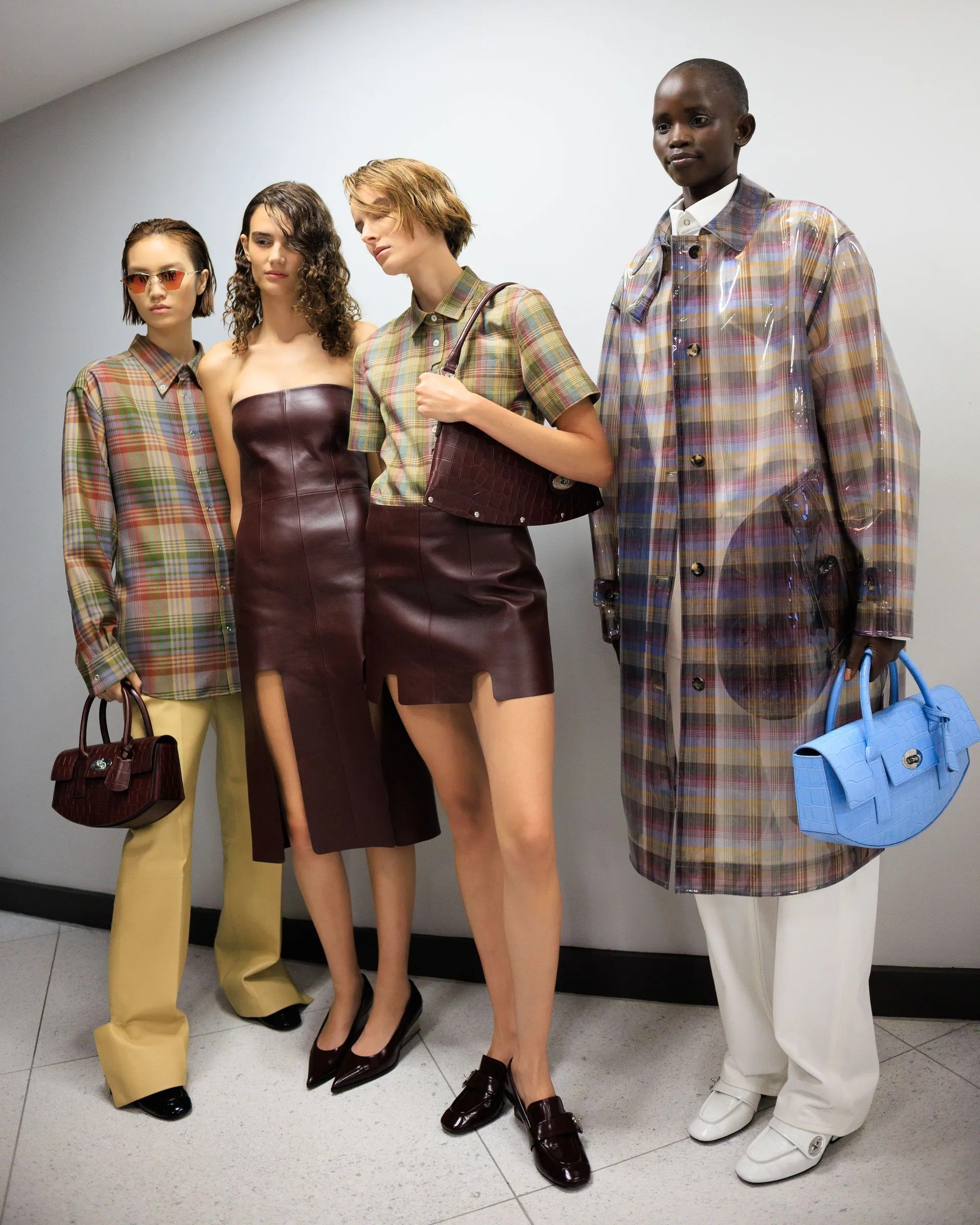
In Italy, between a generally bland institutional response and the marginalization of the issue in public debate, the real risk for the fashion sector is not material (it would be unthinkable to rewrite the routes of global supply chains, beyond the lack of infrastructure and artisans overseas) but one of positioning: the made in Italy may become, in the eyes of American and global consumers, less attractive and increasingly replaceable. This is not a problem for ultra-luxury brands, whose clients are so wealthy that price is never an issue, but for those whose exposure was in the aspirational market — and these are now precisely the brands suffering the most. According to BoF, the new 15% tariff will require an additional 2% price increase in the USA or 1% globally to maintain balance. But there are limits to how much prices can rise without losing customers: the sector lost 50 million clients in 2024, according to Bain, due to high-price fatigue and weak demand. Yet, a recent analysis by Gam published in MF Fashion suggests that American luxury consumers will spend 2% more on luxury goods in the coming months — and even more when traveling. According to the same analysis, buying luxury goods in Milan can save 30–35% compared to New York, and the savings exceed 40% if the tariffs are actually enforced.
@euronews.tv European Commissioner Maroš Šefčovič has defended the EU-US trade deal struck between Ursula von der Leyen and Donald Trump amid mounting criticism of its lopsided nature. "This is clearly the best deal we could get under very difficult circumstances," Šefčovič said on Monday. #deal #tariff #trade #EU #USA #Trump
son original - Euronews
Brunello Cucinelli, speaking to the Financial Times, blamed the large French groups for the unsustainable model of commercial fashion that is currently devouring the entire Made in Italy from within: «If you look at the financial statements of major Italian fashion houses 20 years ago, profits were all around 10%. Then the French groups arrived and the numbers skyrocketed. We are the only ones still making a 10% profit. Many other brands have doubled their net profits, which means revenues increased several times. And there’s no magic trick — this can only happen by increasing production and prices and cutting costs. And that is only possible by outsourcing production to Chinese companies that can produce thousands of bags and sell them for 50 euros each. But then the news hits the media and our wealthy clients feel deceived and stop buying… Can you blame them?» Speaking to MF Fashion, Flavio Cereda of Gam described a similar phenomenon: «Chinese consumers remain an affluent segment, with significant savings. The issue is when and where they will spend. There is no structural rethink underway, but there is a shift in demand. Economic uncertainty has redefined the perception of value, and for some brands the offering is simply no longer appealing».
The implicit risks
Cucinelli again, interviewed by Bloomberg in April, expressed a sense of calm — as the article's author notes, truly wealthy clients, the ones fashion is now targeting, are not afraid of recessions or trade wars. But having your customer base among the ultra-rich protects perhaps only a handful of brands. What about all the others? If access to the U.S. market became prohibitive or conditional on local production, could the very model of high-end European manufacturing falter? European luxury has always been based on exclusivity, territorial origin, intergenerational skills, and local know-how. Moving production lines means betraying that promise and risking the transformation of a desire-driven market into an industrial replica. On the other hand, though, the final price of Louis Vuitton “Texan” bags would not differ from European ones — something that might cause confusion when it comes time to set the price.
The balance is incredibly delicate, even though in the age of scams, the very concept of Made in Italy has been damaged by unscrupulous individuals who outsourced production to Chinese sweatshops within Italy, giving rise to the so-called “Made in Italy washing” that Roberto Saviano denounced in Gomorrah back in 2006. In the past six months, five companies in Italy have been placed under judicial administration for outsourcing the production of their expensive goods to Chinese sweatshops that made them for a fraction of their devastating retail prices — two of these brands were part of the LVMH group. The usual course of these cases leads nowhere: the brand saves face because it can legally claim it didn’t know what was happening in the “factories” and blame the contractor, shifting the responsibility. But the reports we have — from Gomorrah to a Il Sole24Ore investigation in 2019 and the 2025 cases — show that this practice is standard in a system which, in the name of profit, has betrayed not only the trust of consumers but the Made in Italy itself. Perhaps that’s why Arnault — for whom the official announcement of 15% tariffs surely came as no surprise — is betting on expansion in Texas, even while admitting the first production attempt showed clear issues. Other maisons are waiting on the sidelines to see whether the future of European luxury will truly pass through Texan factories. But the whole tariff affair is not just a problem for luxury giants: it is a litmus test for the resilience of the European manufacturing model. If Italian fashion is not protected by clear and courageous political decisions, the risk is losing its only true competitive edge: the ability to transform artisanal know-how into a global cultural identity. The real challenge is not to dodge tariffs, but to defend — culturally, economically, and politically — the very meaning of made in Italy, before nothing is left of it.