

The very long history of the buzzcut The men's cut that reliably comes back every September
September is, for many, the true New Year: the month of good intentions and new goals, the right time to sign up for the gym — but above all to get a haircut, or rather, to shave one's head. Among the post-summer rebirth rituals of the manosphere, shaving one's head has come back into fashion: in recent times, celebrities such as Erling Haaland, Ricky Martin, and Connor Storrie have sported their seasonal buzzcut, triggering an aesthetic change of direction. A full-blown vibe shift, as a recent article in The Independent pointed out, one that is spreading ever more widely across social media.
The expression buzzcut season is now trending on TikTok: in the feeds of gymbros, alongside motivational videos and ab circuit workouts, various creators are recommending shaving one's head as the best way to kick off the winter arc. But what are the sociocultural meanings that the shaved head has historically taken on, and what does the return of this trend say about contemporary masculinity?
The shaved head: from the sacred to the profane
@sammeengs Go get yourself a military fade bro #buzzcut #gym #gymrat #lifting #summer #shreddingseason original sound - sammeengs
Beneath the surface of a shaved head lies an ancient history, and above all a constellation of meanings both sacred and profane. In several religions — think of the practice of pravrajya in Buddhism, or monastic tonsure — the act of shaving one's head takes on a sacred quality. It symbolises a true rite of passage from worldly vanity to the purification of the soul. If in these rituals shaving is a radical act of devotion and surrender to the divine, in a military context it means aligning oneself with institutional authority.
Already among the Spartan hoplites and the Roman legions, soldiers' hair was cut to prevent epidemics in camps and to stop the enemy from grabbing it during combat. In the seventeenth century, shaving took on a strong political significance with the "Roundheads" of Oliver Cromwell who, during the bloody English Civil War, wore their hair extremely short precisely to distinguish themselves from the flowing locks and wigs of the Cavalier nobility.
This Puritan rigour has continued to define the imagery of the shaved head, remaining to this day the fundamental first rite of entry into military life. In the context of training, shaving one's head represents a true psychological reset: renouncing one's aesthetic vanity in order to forge the "docile body" of the recruit, ready to erase their individuality in order to conform to the discipline of the group.
From power to imprisonment
@ethancgaskill it’s buzzcut season anyway #buzzcut #buzzcutseason #hairtransplant original sound - Ethan Gaskill
Historically, however, shaving has taken on an ambivalent nature, particularly in the context of war: it belongs both to those who hold power and to those who are their prisoners. In both cases it amounts to a genuine deprivation of individual identity, experienced, however, with diametrically opposed meanings.
Throughout the centuries, forcibly depriving someone of their hair has meant stripping them of everything. Shaving thus became an instrument of violence that was simultaneously tangible and symbolic, capable of striking at identity before even touching the body. One example is the forced shaving of prisoners in Nazi-Fascist extermination camps: a methodical act designed to erase the name, the memory, and the very dignity of the Jewish people, reducing the person to an indistinguishable silhouette.
Forced shaving also remains, to this day, an informal sanction routinely used in various prison systems: consider the detention centre at Guantanamo, where the zero-grade cut is used as an enhanced interrogation technique; the Chinese re-education camps in Xinjiang; and certain penitentiary systems across the Middle East, where shaving the head and beard is frequently imposed on political prisoners.
The buzzcut in subcultures
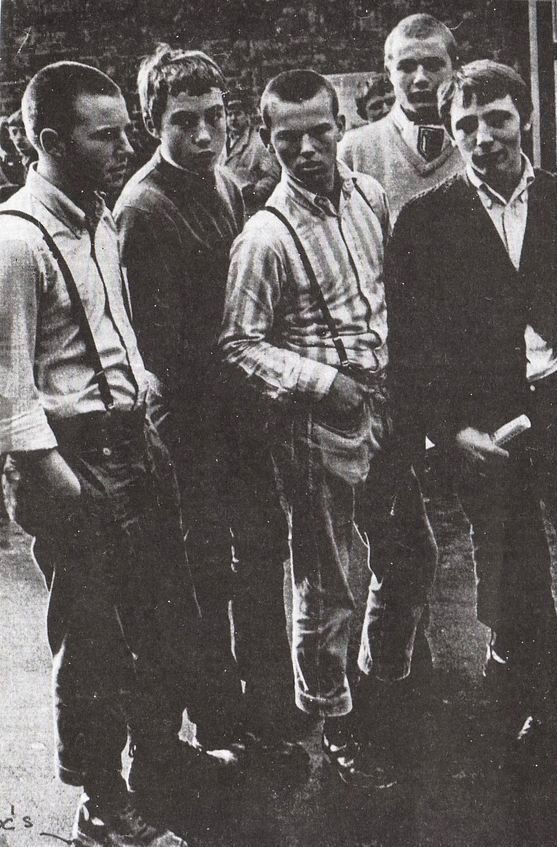
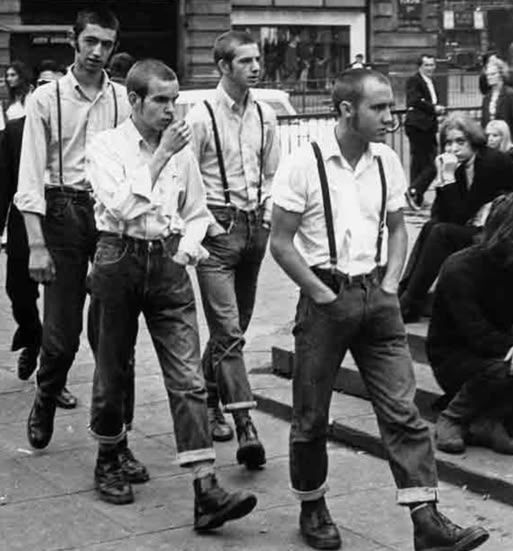
If for centuries wearing a shaved head was a mark tied almost exclusively to the rigour of religious life or the impositions of military hierarchies, over time various subcultures wrested the shaved head away from institutions, transforming it into the visceral visual manifesto of their own identity. The first sign of this subcultural revolution of the buzzcut came in the late 1960s in the United Kingdom with the birth of the skinhead movement. In open opposition to the dishevelled hair and floral clothing of the hippie aesthetic, young working-class English people chose the buzzcut as a sign of proletarian pride.
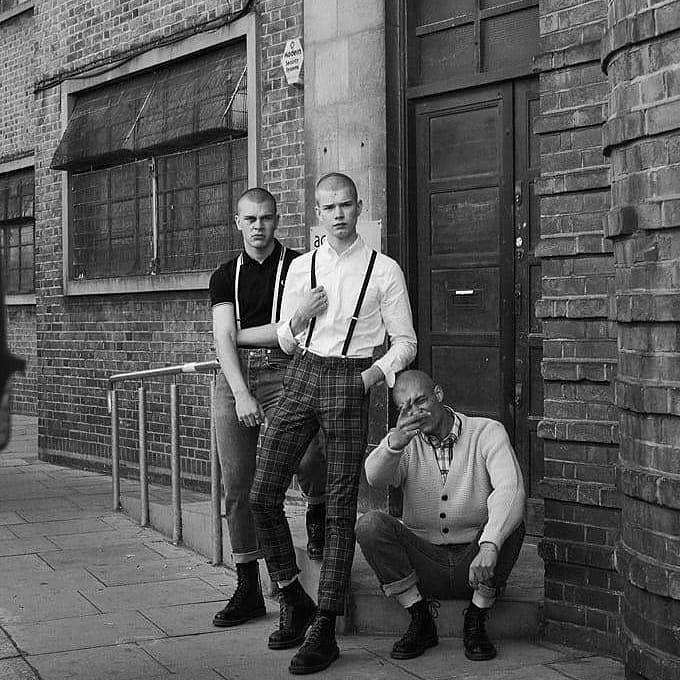
Shaving one's head to a zero responded to a practical necessity on building sites and in factories, but it was above all the expression of a virile, urban masculinity, built around steel-toed boots, thin braces, Fred Perry polo shirts, and US Air Force MA-1 bomber jackets. This subculture, however, underwent a profound political split from the early 1970s onwards: the British economic crisis, the explosion of unemployment, and the systematic propaganda of neo-fascist parties such as the National Front turned the most frustrated wing of the working class into a new generation of extremists.
Within the skinhead movement, the boneheads emerged, later known as Nazi skins: their cut, originally a short but neat crop, became radicalised into a total shave, conceived to inspire fear and project an image of paramilitary and squadrist violence. In this way, the skinhead aesthetic — which initially had no connection whatsoever to Nazism — became contaminated with swastikas and Celtic crosses.
The masculinities of the buzzcut
Between the late 1970s and the early 1980s, the buzzcut was completely reimagined, first by punk — where shaved heads were often decorated with geometric mohawks — and in parallel by the underground queer and BDSM culture. At a time when homosexuality was still being caged within caricatured stereotypes, the gay community took the aesthetic codes and power roles of heterosexual masculinity and reread them through a pornographic and subversive lens. Examples include the celebrated illustrations of Tom of Finland and, subsequently, the films and photographs of Bruce LaBruce.
In this context, the buzzcut became the symbol of a raw, explicit, and self-aware masculinity, erotically bound to the codes of dominance and submission. In the 1990s, the shaved head then found a new consecration within Hip-Hop culture, particularly African American Hip-Hop, evolving into the phenomenon of the fade — the millimetre-precise taper executed with artistry.
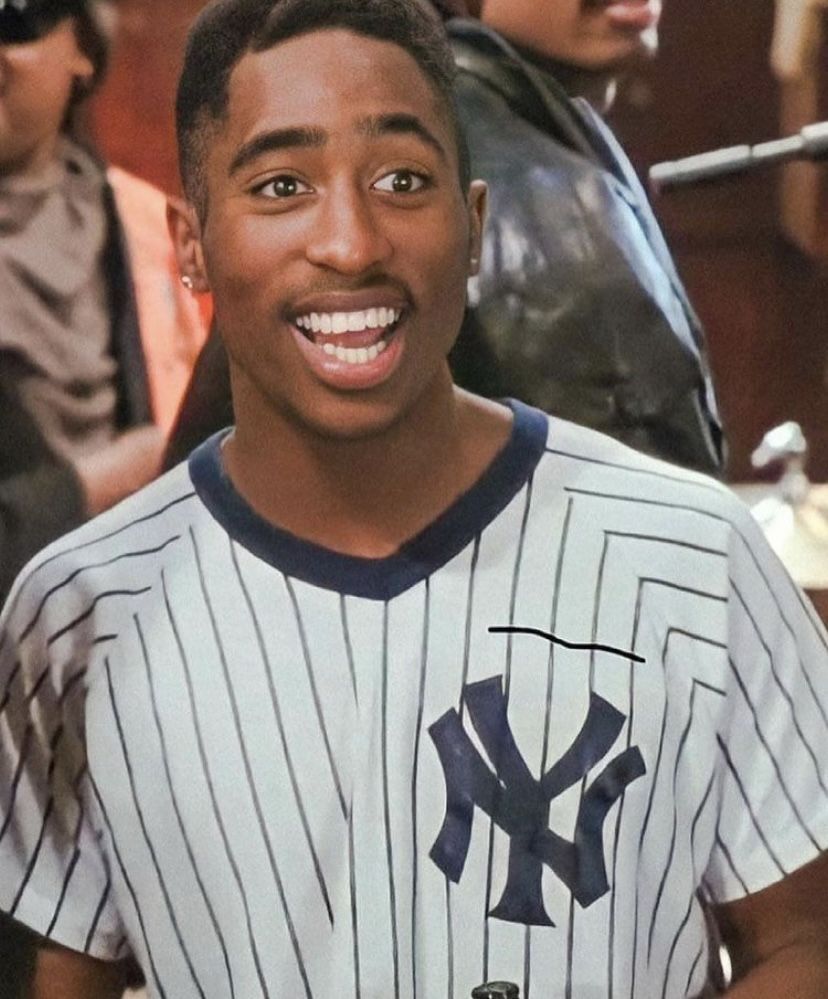
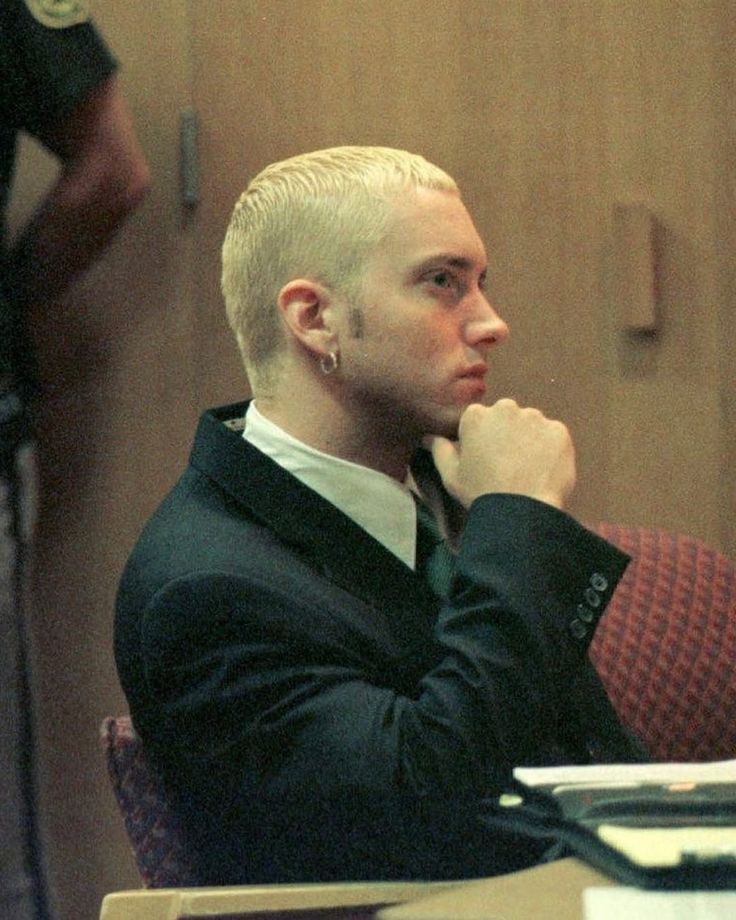
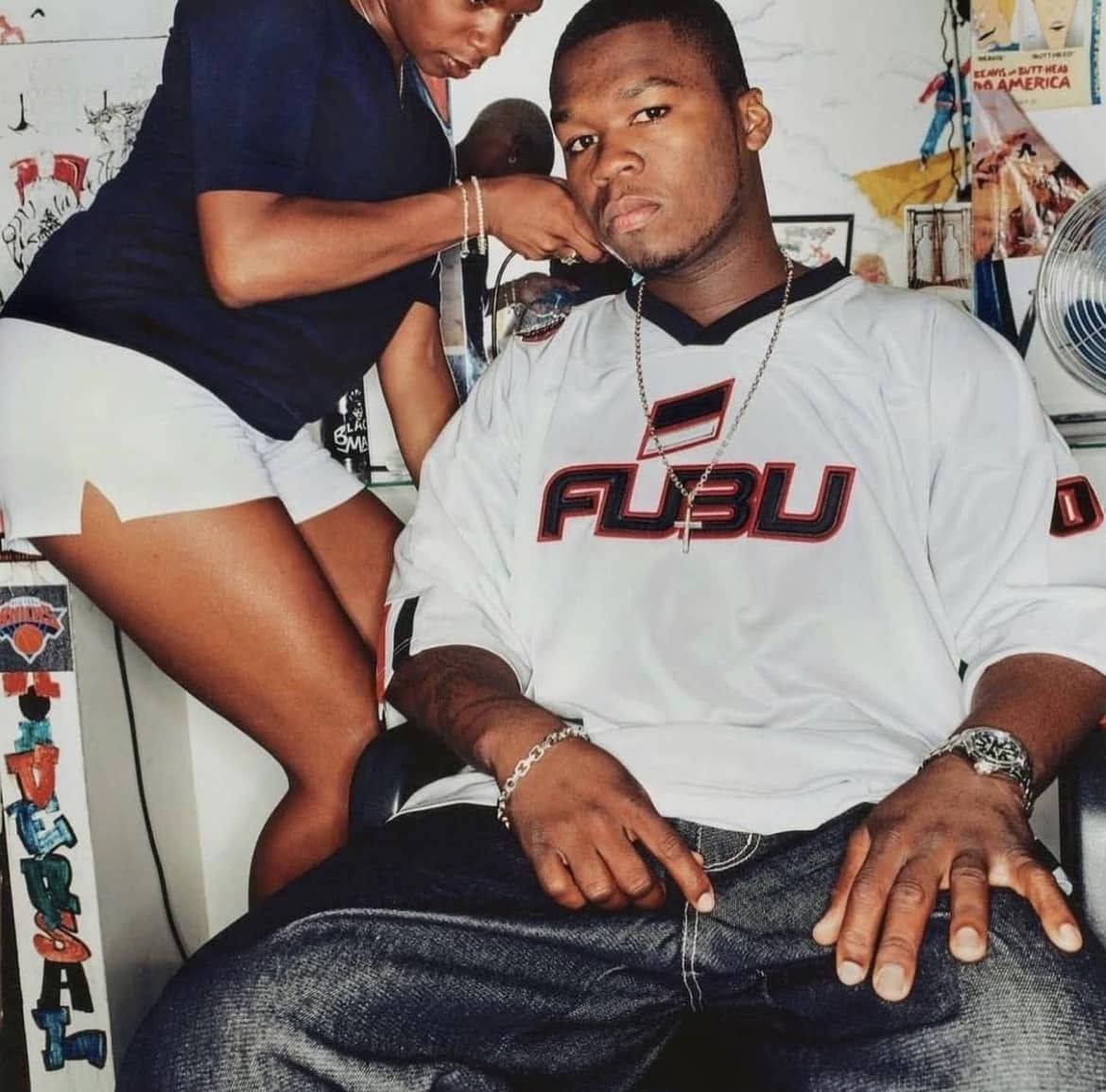
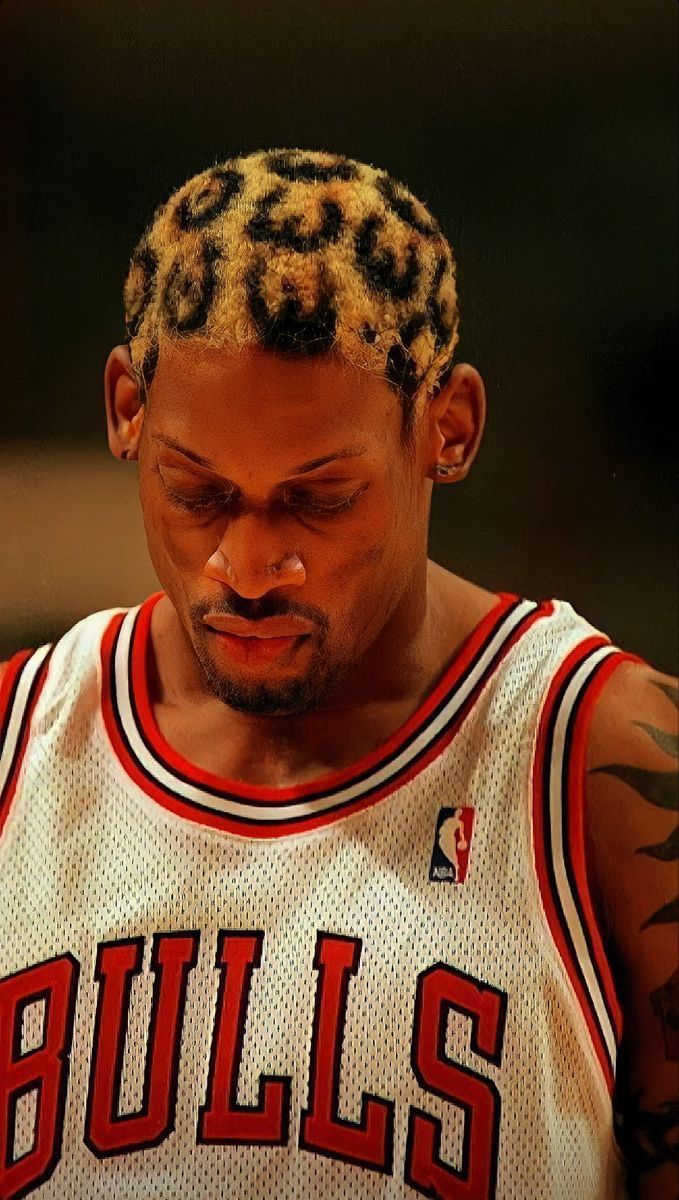
Here, shaving loses its primary meaning of cleanliness and rigour, becoming instead a self-care ritual: in music, Tupac, 50 Cent, and Eminem were pioneers of the faded and bleached buzzcut, while on the basketball court Dennis Rodman transformed his shaved head into a canvas painted with neon colours and animal prints. This reappropriation of the buzzcut, continued and amplified in recent years through the style of artists such as Frank Ocean, Pharrell Williams, and Jaden Smith, has contributed to definitively dismantling the cut's rigorous and coercive origins, opening it up to new, more fluid and eccentric forms of masculinity.
Subsequently, the shaved head re-established itself as the visual uniform of a harder, more angular, and more marginal masculinity. The buzzcut thus became a defining feature of the Gabber subculture — young Dutch people tied to the hardcore techno scene — but also of the imagery of peripheral criminality, from the racaille of the French banlieues to the gopniks, the young lumpenproletariat of Eastern European suburbs.
Is the buzzcut a political matter?
@zackfullmerlifting Buzz cut> #jackhanma #baki #gym #pump #physique #aesthetic #grind #lockedin #fyp Today, in the mechanical and superficial logic of the algorithm, the buzzcut is no longer an act of rebellion or rupture. It has lost its subcultural subversive charge and is establishing itself, particularly within gymtok, as a performative ritual of sovereignty over one's own body and as the manifesto of an increasingly conservative, rigid, and one-dimensional masculinity.
This act, often filmed by the creators themselves, communicates dedication, cleanliness, and self-control, conferring on those who perform it an immediate aura of social respectability. In academic circles, as far back as 2012, the study Shorn Scalps and Perceptions of Male Dominance conducted by Albert E. Mannes demonstrated, through a series of experiments, that men with shaved heads are perceived by observers as significantly more dominant, stronger, and possessed of greater leadership potential than those who sport a full or thinning head of hair.
Furthermore, more recently, the fact that the buzzcut has once again become entangled with its more controversial past — swept along by the wave of old and new Nazi-Fascist movements in Europe and America — fuels and lends credibility to an idea of the alpha male that we believed to be remote and defeated, but which today seems to be manifesting itself anew with all its complications. Perhaps the shaved head will turn out to be nothing more than a passing trend that we will soon forget — or perhaps it is yet another warning sign that lays bare an uncomfortable and insidious political question that remains entirely unresolved.