
























The big secret of "Company" is not enough to save it In competition at Venice83, Casey Affleck's film entrusts its plot to a twist that arrives too late
To speak well of Company, one would have to spoil the ending. Something we won't do in this article, but which makes it genuinely difficult to have any even remotely stimulating discussion about the film. Directed by Casey Affleck, who also co-wrote the screenplay alongside Ron Hansen, the picture truly comes alive at the exact moment its sustaining mystery is revealed. The revelation also arrives far too late in the story, making it effectively a plot twist that, at best, can be intriguing to try and figure out on your own while watching.
Three stories, one heart
What can be called interesting about the film, without revealing anything about the plot, is its macro-narrative structure. Three stories nested within one another, simultaneously advancing three tales with a single heart: in this doubled echo, the stories reverberate and resemble one another, blending together. The characters are half pawns within the stories and half narrators, and the moment of passing down legends or events from the past becomes instead a moment of sharing and conviviality.
This is the company echoed in the film's title, which accompanies the welcoming of friends or strangers. Opening one's door to those we don't know, or even to those we believe resemble us, searching in their gaze for something of ourselves. What cannot be forgiven of Company, however, is precisely this final secret of its. Not only does it keep the audience waiting, but it also demands their constant attention without offering in return the kind of suggestive imagery needed to justify it.
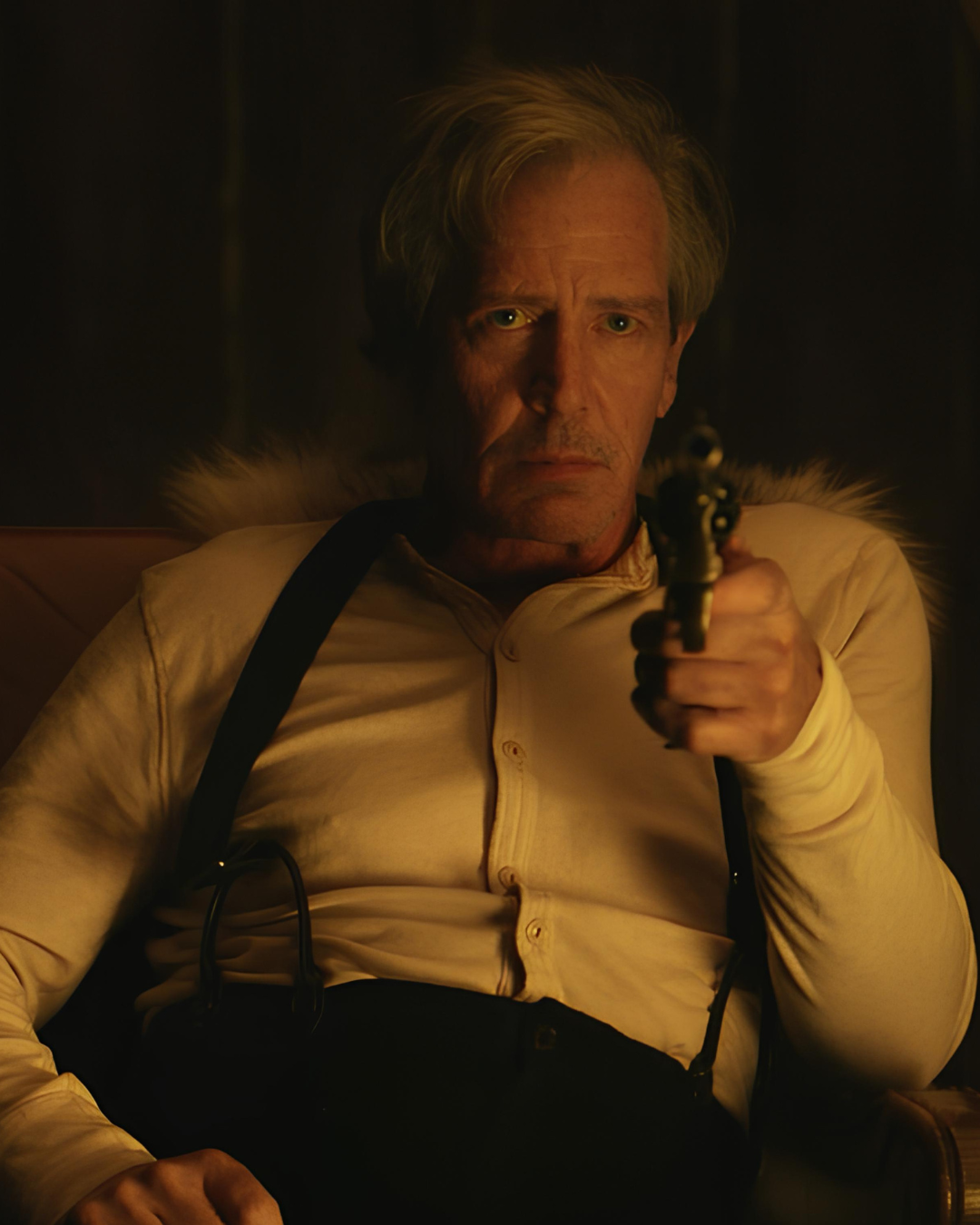
For while the narrative contains within itself a fascinating element, this is never reflected in the film's visual style. The imagery remains uninspiring in its chosen aesthetic, which flattens the landscapes, the dwellings, and even the costumes and appearance of the characters, who drain away the aura of mystery that hovers constantly over the film rather than enhancing it.
And just three minutes of applause
The casting choices follow the same direction. The faces and performances in Company fail to live up to expectations, despite the presence of some recognisable names: Nick Nolte plays an elderly recluse who entertains an unexpected visitor. Ben Mendelsohn we have seen appear in the Star Wars universe as well as in films such as Darkest Hour and Ready Player One. You may also have come across Scoot McNairy, one of those actors whose name is hard to remember but who is instantly recognisable the moment you see him, recently the lead in the well-received series Furious on Disney+.
Then there are the director's sons, Indiana and Atticus Affleck. Atticus's role is central to the plot, but suffers from the problem of bearing such a strong resemblance to Timothée Chalamet — and even acting in much the same way — that one gets the impression of watching an imitation rather than a spontaneous performance. The actor also resembles his father, who was effectively the adult version of Chalamet in Christopher Nolan's Interstellar.
Drawn-out and halting, Company lacks the allure it needed to sustain its mystery, which dissipates along with the film's grip on the viewer. The audience, much like the peripheral characters, will find themselves following the stories being told with mild curiosity, but certainly not with the same emotional investment. The film had its world premiere at Venice 83 and received the shortest applause of the festival for a film in competition (three minutes). It is nonetheless a title worth giving a chance — perhaps best enjoyed in company.
What to read next

adidas Originals opens a new store in Rome on Via del Babuino
Here's what went down at the opening event
«Club Kid is a once-in-a-lifetime opportunity», interview with Jordan Firstman
Everything about the directorial debut of the American actor and screenwriter
"Cambogia" teaches actors that you have to care about your own characters
Valerio Lundini's directorial debut premiered at the Rome Film Festival