






















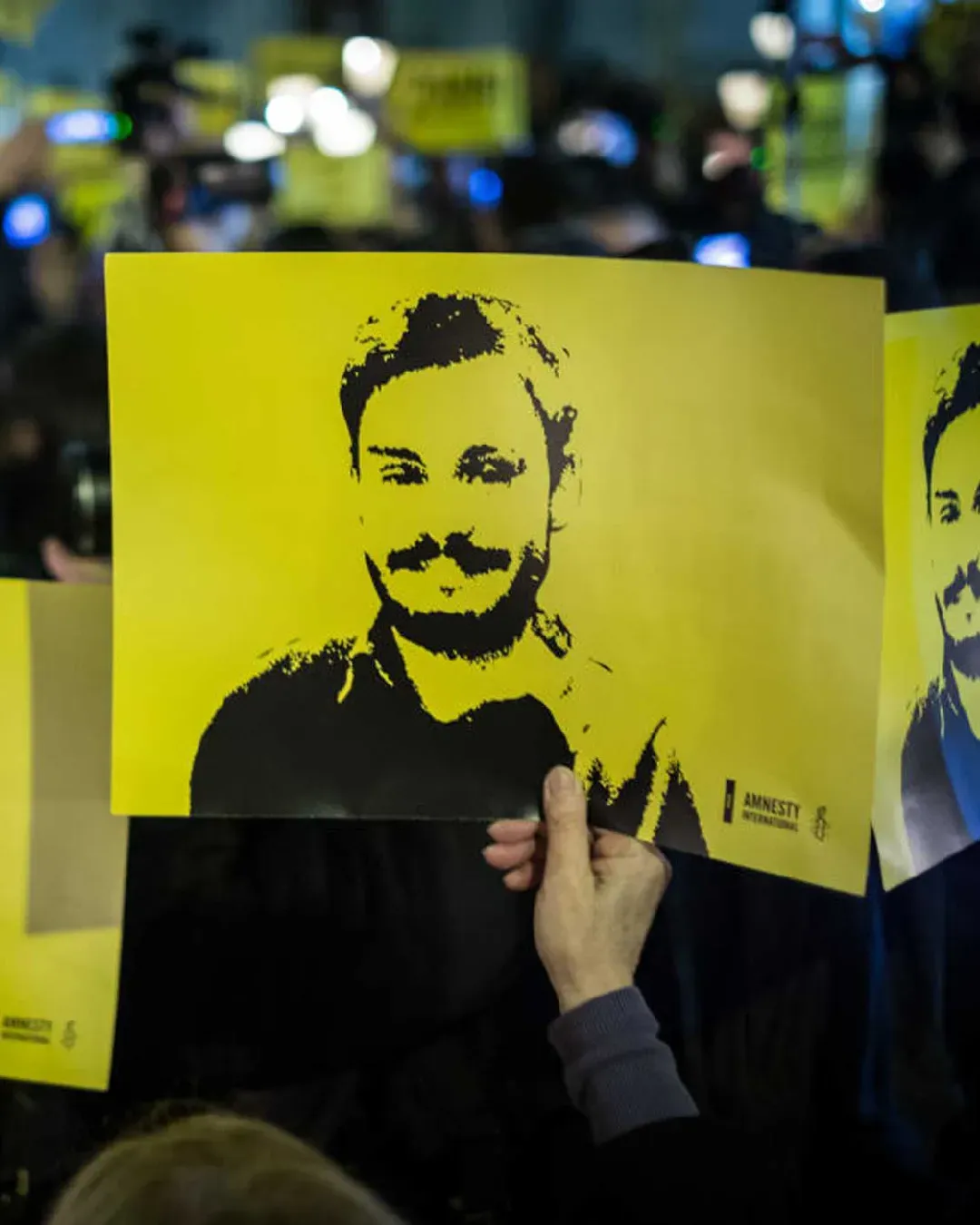
The case of the documentary on Giulio Regeni among rankings and ministerial interferences Is it really about art or politics?
There are two types of funding in Italian cinema: selective and automatic. The latter, as the name suggests, happens autonomously: after a calculation and analysis of a percentage of the points a project has with the ministry, it can receive a sum of money provided by public funds. Selective funding, on the other hand, involves a commission, a group of professionals who decide, based on a score, whether it is worth financing an audiovisual product, following listed criteria and assigning a score to each.
Two paths for two different directions: on one side, companies that, with years of productions behind them, can rely on their background and previously submitted titles (including directors, actors, etc.), and on the other, the possibility for first- and second-time works to see the light of day and support independent cinema.
Culture and politics, an ongoing clash in 2026
It was following the selective funding procedure that the documentary Giulio Regeni - All the Evil in the World did not make the ranking, being the first of the proposed titles excluded from receiving ministerial funding. A stance that a large part of Italian cinema has called yet another interference by a right-wing government that continues to insert itself into public affairs related to culture. Once again, Minister Alessandro Giuli was criticized, in an increasingly tense climate following new cuts to the Cinema and Audiovisual Fund, while political issues are brought into matters that should focus on cultural and artistic objectives.
While two commissioners resigned (critic Paolo Mereghetti and editorial consultant Massimo Galimberti, although they were part of different sections than the one evaluating the Giulio Regeni project), Giuli himself expressed his dismay over the lack of funding for a work, as stated to La Stampa, which has «intrinsic cultural, social, political, moral, and international value, regardless of the artistic quality of the specific documentary», which he notes he has not yet seen.
However, this is not enough to explain what appears to be a firm government position in audiovisual affairs, with the Democratic Party group in the Chamber submitting a question on the case to the Minister of Culture, who will respond during the question-time in the Chamber regarding the lack of recognition of public funding for the documentary.
The ranking became a media case
Vorrei capire le logiche che stanno dietro questa decisione del Ministero. Quella di Giulio Regeni non dovrebbe essere una battaglia di una sola parte, l’intervento di Domenico Procacci al TG3. pic.twitter.com/TjmCauYPEe
— Fandango (@fandangoweb) April 5, 2026
The public outrage around the rankings released on April 3, with the documentary directed by Simone Manetti released on February 2, 2026 (funds can also be provided after production and distribution), was fueled by the projects that did receive ministerial support.
Not all of them belonged to the same section of the fund for which the request was made (for example, the fiction film about the life of Gigi D’Alessio or the excluded Bernardo Bertolucci screenplay, The Echo Chamber). Therefore, they were not aligned with the logic used, or not used, to fund the work produced by Ganesh Produzioni and Fandango, which also distributed it in theaters. Producer Domenico Procacci stated that it is evident that this is in the midst of a political battle that should concern all Italians and not just a part, believing it impossible that the choice was made solely on merit.
The documentary’s score
The data and scores used to evaluate Giulio Regeni - All the Evil in the World were meticulously reported by Il Post (but are accessible to everyone on the ranking site for funding applicants). As shown, out of the seven evaluation criteria for awarding selective funding, where the minimum to receive money is 80 points, the documentary scored 66.
“Quality, innovation, and originality of the script and subject” is one of the criteria that assigns the highest score (63 points), while the documentary scored 36. The project, compared to works that reconstruct events with fiction parts, interviews, and complex cinematic language, adopted a much simpler approach, focusing on the trial phases of the events in which the Italian doctoral student was kidnapped in 2016 and later found dead near an Egyptian intelligence prison. This approach was presumably considered straightforward, neither particularly innovative nor original.
It is not the only category with a modest evaluation. Il Post continues: in “Director’s vision and style, proposed cinematic or audiovisual language” the project scored 10 out of 20, in “Quality of the contribution of the artistic and technical cast to the audiovisual work” 4 out of 7, in “Coherence between script and the economic, financial, and distribution aspects of the project” 5 out of 10, in “Gender equality” the maximum with 6 points, in “Production of the work in international co-production or international participation” no points out of ten because it was produced only in Italy, and in “Certification for the environmental sustainability of the work” 5 points, also the maximum. Overall, Giulio Regeni - All the Evil in the World did not reach the required score to access selective funding according to technical qualifications.
Is it really just an artistic question, or is there more?
So what does this score tell us? If we look at the distribution of points, where is the bottleneck? Perhaps one question is: can a commission really be technical or is it always a matter of taste (or political belief)? And if so, how should one proceed? Many find it hard to believe that the documentary was considered invalid, as it had also applied to the fund for «works about characters and events of Italian cultural identity» (there are in fact several funds with different purposes).
It is also true that this aspect is not scored, but in a climate of continuous government and ministerial hostility, the exclusion of the documentary seems a coincidence hard to believe. Producer Procacci said it once again: «I can understand if errors are made from an artistic point of view, due to lack of expertise. You can decide not to fund a film because you don’t know how it will turn out, and you think it’s not good work. But the documentary has been made, released, and has already won awards: rejecting it is not an artistic choice. It’s only political.»
Giulio Regeni - All the Evil in the World, after a special three-day release in February and with the support of Circuito Cinema, is back distributed across Italy in over sixty theaters.
What to read next
"Un tranquillo funerale di famiglia" is everything comedy should not be today
Massimiliano Bruno's film had its premiere at the Rome Film Festival
«Club Kid is a once-in-a-lifetime opportunity», interview with Jordan Firstman
Everything about the directorial debut of the American actor and screenwriter
"Cambogia" teaches actors that you have to care about your own characters
Valerio Lundini's directorial debut premiered at the Rome Film Festival