



















What will happen now that Disney has opened its doors to OpenIA? A three-year agreement worth one billion dollars
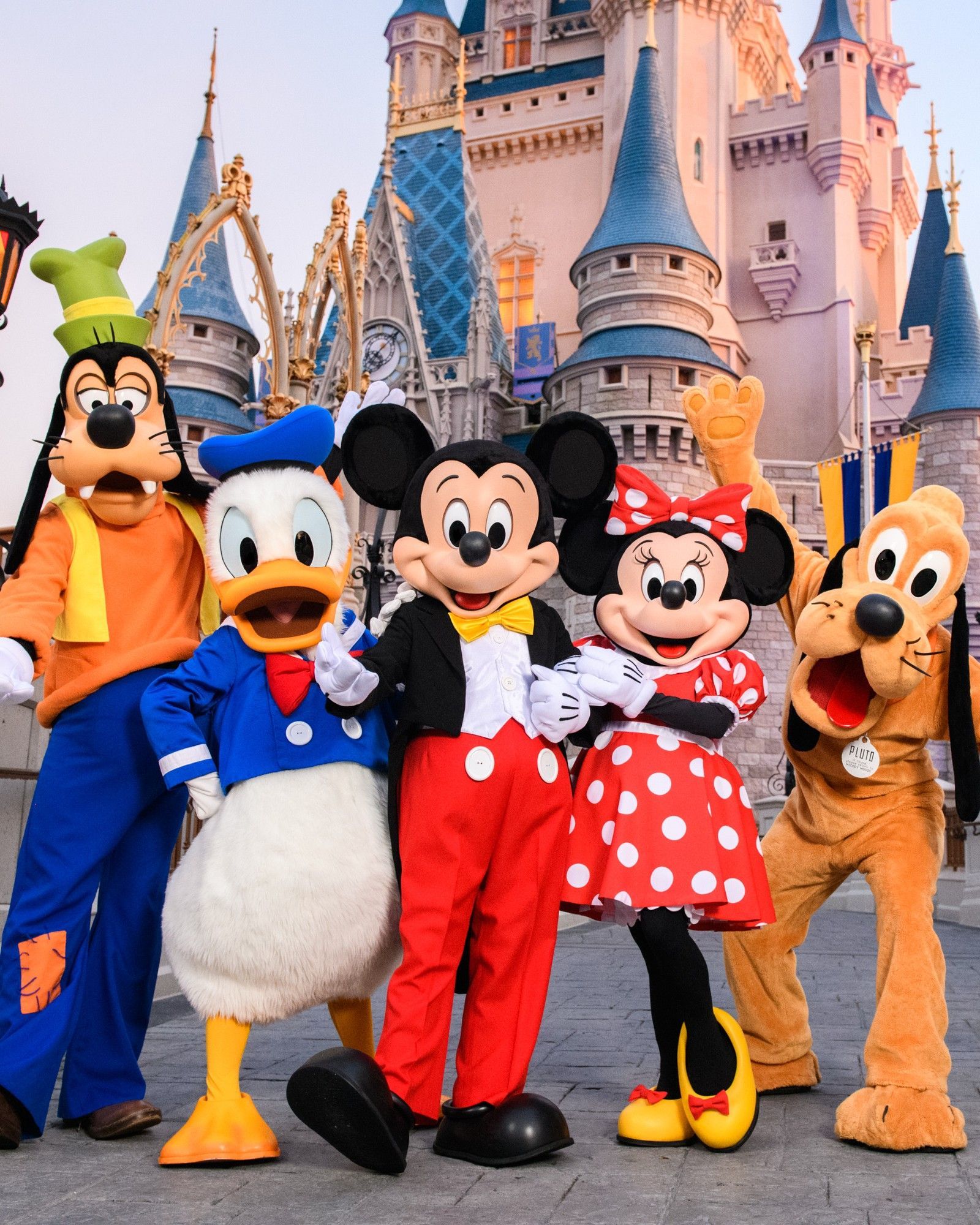
As if the possible acquisition of Warner Bros. Discovery by Netflix were not enough, just a few days later another piece of news arrived that runs counter to the safeguarding of the film industry. After a 2023 in which screenwriters and actors, together with their respective unions, fought to protect the sector and also took a stand on the use of artificial intelligence, delivering checkmate is none other than Disney, deciding to make its entire catalog fully available to OpenAI. An unprecedented deal sealed by one billion dollars that the House of Mouse has chosen to invest to allow Sora to generate content by exploiting all its characters, drawing from one of the richest catalogs in the entire entertainment landscape, which includes not only beloved animated protagonists but also the Jedi of Star Wars and Marvel superheroes.
Why are we surprised?
A deal that seemed impossible to foresee. In a world where creatives are openly fighting against the production of images generated through artificial intelligence, an agreement between Disney and OpenAI seems to legitimize everything artists continue to oppose. A stance that, among other things, was the same as that of the animation company until not long ago, which now appears to have acted out of a strategy to defend its intellectual property, a sort of regulation it can now directly control from within.
On several occasions, in fact, Disney had taken a stand against AI, even filing a lawsuit together with Universal over copyright infringement by Midjourney, a 2022 text-to-image artificial intelligence algorithm whose goal is to reinterpret and enable interaction between art and digital media. Tired, therefore, of fighting on multiple fronts, Disney has decided to embrace the parent company of ChatGPT and, precisely, Sora, in an attempt to control its future from the inside.
Also because the conflicts are not (immediately) over: dated just December 10 is a cease-and-desist letter sent by Disney to Google, ordering the company to immediately stop using its content without permission to train AI models. The accusation is large-scale copyright infringement, as happened with characters such as The Lion King, Deadpool, and The Simpsons.
The reasons behind the agreement
Disney has signed a deal with OpenAI & invested $1 billion into the company
— DiscussingFilm (@DiscussingFilm) December 11, 2025
Sora will now be able to AI generate videos based on animated, masked & creature characters from Disney, Marvel, Pixar & Star Wars
Curated selections of AI generated videos will be released on Disney+ pic.twitter.com/6pj6klVhDx
It appears that with this resolution, under a three-year contract, Disney may attempt to keep its intellectual properties under control, which in recent years have spread across the internet without permission, reducing the constant takedown notices and trying to avoid potential lawsuits. For Disney, this means tasking the company with selecting and monitoring the products generated with AI, making them traceable and potentially profitable for commercial purposes.
Some videos created with Sora will in fact be available on the Disney+ platform, with the aim of also reaching a younger audience, increasingly immersed in artificial intelligence—we are still surrounded, albeit much less so, by characters from the Italian “brain rot” phenomenon that emerged this summer and became popular mainly thanks to TikTok. In the mutually beneficial relationship between Disney and OpenAI there is also technological advancement, an area in which, strangely enough, the animation company has lagged behind, especially when compared to other competitors. While Netflix has been using AI systems for years to analyze its data in order to personalize and steer content offerings to users, Disney has remained outside these dynamics, now being able to refine its algorithms to increasingly profile its subscribers and suggest the best entertainment options to them.
The fact that there have been no reprisals from Disney employees is the most unpleasant and suspicious aspect of the agreement, but any attempt to oppose it or reason outside market dynamics would be not only useless but probably counterproductive for the workers involved themselves. Moreover, the deal should theoretically also bring benefits to employees through the expansion of work tools such as ChatGPT and other AI-based tools, integrating them into work processes and making them useful for both analytical and operational tasks.
Obviously, this is not a Good Samaritan situation: money is always the driving force behind such agreements, and the fact that Disney, through its investment, acquired a stake in OpenAI ahead of the company’s planned stock market listing is certainly tied more to economic than artistic motivations (OpenAI is valued at around $500 billion and could increase further with an IPO).
So what will happen now?
Some internal regulation has been established, however, but only to avoid future hassles. Despite having licensed all of its characters to OpenAI, the faces of the actors who portray them and the voices that dub them cannot be reproduced. A move to bypass union objections, but even with such limitations it will still be possible to draw from the largest pool of protagonists and magical universes ever created—and some of the most important character-actors currently owned by Disney, such as Darth Vader, wear a mask, making it possible to get around the problem.
The repercussions of the Disney–OpenAI partnership will only be revealed over the next three years. But it is striking how multinational corporations repeatedly demonstrate how little quality, the protection of their artists, and the human factor matter in the workplace. And although it can be said that such an operation could serve to protect precisely those intellectual properties that have continued to be plundered in recent years, it is difficult to see anything positive in third parties producing content that the company may choose to distribute even on Disney+, as if to diminish years and years of work that its employees have spent thinking, conceiving, and creating some of the most iconic characters in the history of cinema. It is on a note of bitterness that the entertainment industry closes 2025, with many questions for the future, to which no AI can provide answers.
Takeaways
What to read next
In "The Debut" Julianne Moore gives a masterclass in acting
The film, premiering at the Rome Film Fest, hits theaters on January 1, 2027
"Masterplan" is everything a heist movie shouldn't be
The film starring Stanley Tucci, Simona Tabasco and Victor Belmondo is available on Prime Video
"Fjord" is an impressive piece of writing
Cristian Mungiu's film, winner of the Palme d'Or at Cannes, arrives in cinemas on November 19