



















A guide to the most captivating works at Paris Photo 2025 From nature to the Turkish hammam through the streets of New York
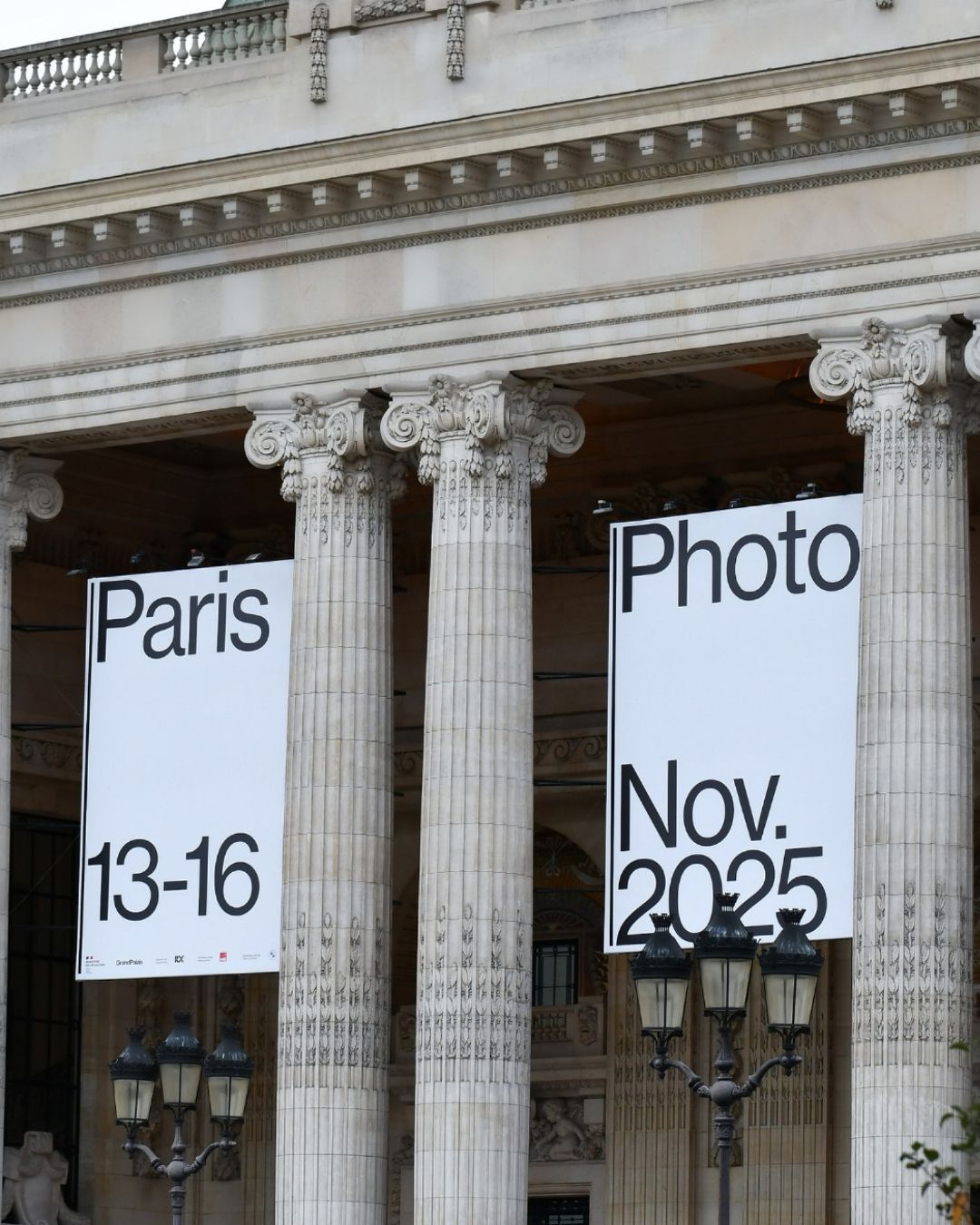
After a successful Art Basel 2025, the Grand Palais opens its doors to another major fair: Paris Photo. In its 28th year, the event is back this week with 220 exhibitors, spanning from 33 different countries. Beyond its Principal sector, formed by 139 participating galleries, the fair expands its offerings with several curated sections. Voices is dedicated to new curatorial perspectives and curated this year by Devika Singh and Nadine Wietlisbach, the Digital sector highlights 13 contemporary galleries championing artists who integrate new technologies into their practice, Emergence presents contemporary works through 20 monographic projects; and, lastly, Editions, which showcases the best in photobooks from 43 publishing houses and book dealers. Open to the public from November 13 to 16, Paris Photo once again gathered the best of image-based art. nss stopped by and here are some of our favorite discoveries.
The secret life of flowers by Julieta Tarraubella
Tarraubella merges nature and technology with La vida secreta de las flores, an ongoing work that started in 2018. Combining moving images with technology, the project realizes a cyborg garden that documents the life of flowers in time-lapse playback. In the exhibition notes by Kim Knoppers, she poignantly describes that “we see not only the flower, but the threshold of perception itself.” You can view the series at the Rolf Art & Tomas Redrado Art (Booth E28) as part of the Digital section.
Self-portraits by Mari Katayama
Japanese artist Mari Katayama likens her process to building a set. For her featured self-portraits, she told us that she began by creating and printing 88 A4-sized images, which she then collaged into a single “fabric.” This piece becomes a centerpiece in her two works, both shot in film, and both engaging in a dialogue on the body, intimacy, and the beauty found in everyday life. “I always start by sketching and drawing, then I build the stage. I use materials that are connected to everyday life, everything is DIY, everything comes from our lives. It’s not meant to be special, but about transforming the mundane into something open, an art everyone can connect to,” she says. Katayama’s self portraits are displayed at Galerie Suzanne Sieve (Booth C38).
Nora Alissa & Hafez Gallery debut
After presenting her work at the inaugural Islamic Arts Biennale in Saudi Arabia, Riyadh-based photographer Nora Alissa just made history as the first ever Saudi artist to be showcased at Paris Photo. This was made possible through Hafez Gallery (Booth C18), which also marks its inaugural participation at the fair. A showcase of Allisa’s series “Li’b” (“play”) is now on view at the fair. The series reflects the energy and rhythm of movements, as well as universal themes of aspirations, through poetic intentional blurs, light flares, and layered scenes. It narrates the rich heritage of Saudi folkloric dance, some of which are now recognized by UNESCO.
Father by Diana Markosian at Les Filles du calvaire
Markosian received the Madame Figaro Photo Award at the Rencontres d’Arles 2025 for her deeply personal project, Father. When she was a child, her mother took her and her siblings from Moscow to the United States, leaving their father behind without saying goodbye. Years later, Markosian reconnected with him. This reunion shaped this poignant body of work exploring the complex threads of familial relationships, estrangement, and reconnection. The series weaves together documentary photographs, vernacular family images, and a photobook. Discover her work at Les Filles du Calvaire’s booth (Booth C31).
This happened to you by Atong Atem
For MARS’ debut at Paris Photo, the Melbourne-based gallery presents This happened to you by Atong Atem, an Australia-based artist and writer originally from South Sudan. The series is the artist's ongoing exploration of family, relationships, and colonial myths, which she weaves together into intimate portraits, often combining photography and textile. Four works in particular from 2025 titled 3 of Cups, 10 of Swords, The Empress (Santa Monica), and the Hierophant are tarot-inspired, water-based digital images printed onto commercial-grade velvet, depicting layered scenes and migrant narratives in the African diaspora. All were printed in Australia. The works are displayed at MARS Gallery (Booth G02).
Happy Clouds by Rachel De Joode
It is the 15th year Galerie Christophe Gaillard (Booth C29) is participating at Paris Photo. For this occasion, gallerist Christophe Gaillard selected works to be specifically featured to mark the milestone. Among them are works of Dutch artist Rachel de Joode, who currently lives and works in Berlin. According to Gaillard, “I appreciate Rachel de Joode’s work for its ability to navigate between sculpture, photography, and installation.” For Middle happy cloud 2 (2022), it combines a digital painting mounted on aluminium, acrylic paint, and molding paste. As our lives become more digital, the artist reflects on what is tactile, which she brings into this work that mimics a collage and a sculpture into one piece.
Paraboles by Hida Baddou
Hiba Baddou is an artist from Rabat, Morocco with a sharp instinct for remixing cultural elements into retro-futuristic visual language. In Paraboles, she taps into the urban landscapes of Morocco, turning satellite dishes as antennas to the world, into something more poetic. She treats technology as a site of both rupture and reconnection, exploring how images and transmissions from afar shape our spiritual and cultural identities, and how the things we absorb from a distance end up influencing what we remember, what we believe, and how we place ourselves in the world.
Dear Past by Takahiro Kudo
Another Berlin-based artist, Takahiro Kudo, presents his series with Gallery Archiraar (Booth A12). In Dear Past, he explores questions of identity, collective history, and the evolving landscape of visibility. He uses post-war visuals and archival photographs, some from early gay publications such as Der Eigene, a magazine from Berlin that ran from 1896 to 1932, and is considered the world’s first ever gay journal. To create the works, he uses a unique sun-bleaching method to have the images emerge on wooden plates, which he then finishes with anti-UV varnish. It’s a layered process, with layered meanings, communicating the layered nature of our histories and our identities. Kudo notes: “Without exception, we are forced to question the standardization of our beings in this increasingly diversified society.”
Impositions #6 by Susa Templin
A modern photographic sculpture hangs at the Parrotta Contemporary (Booth A38) by artist Susa Templin. Combining photography and sculpture, the artist took inspiration from iron and glass structures of 19th-century palm gardens. Two elements come into play: she prints the architectural elements onto the steel and aluminum surface, and the elements of the plants on a clear sheet. She combines both metal and clear sheet into one sculptural design, a coming together of the organic and the inorganic, which she bent to mimic the gestures of a plant and its growth. She explained : “I never wanted to become a typical photographer. I wanted to create visuals that have painterly and sculptural aspects, combining painting, sculpture, and photography in my work.”
Hardened by Jeff Mermelstein
At Galerie Bene Taschen, visitors can view prints by Jeff Mermelstein from his book Hardened. Shot on an iPhone in the streets of New York from around 2016 to 2018, the images reveal how our everyday lives, our streets, and even commonplace devices like our mobile phones can produce boundary-pushing art.
The forest of Natalie Berhmer
Natalie Brehmer is a young artist, whose latest work captures the mysteries of a forest. A Bavarian forest to be exact. She told us that she does spend a lot of time in the forest, and most of her work is centered on nature. In Two Trees Make A Forest, she presents a haunting image of what they call in German a zweisel, which are two intergrown tree trunks coming together. The image is printed on aluminum Dibond and framed with forest-sourced Fürstensteiner granite. She also presents 19 ice-like sculptural works, displayed both on their own and featured in two photographs as a form of temporary land art.
Sabiha Çimen's Hammam
Themes of gender, faith, and identity appear in Turkish photographer Çimen’s work. At Paris Photo, you can view her work called Hammam (2020) at LOOCK (Booth A19). Taken for The New York Times, the images document scenes from the Cemberlitas hammam in Istanbul, showing women bathers relaxing near oranges, and men gathering around a navel stone. The photos offer a poetic window into something private, letting the viewer take part in something that is intimate and almost sacred. Born in 1986 in Istanbul, Cimen is a Magnum photographer.
Eve Arnold at Magnum
Eve Arnold is the very first woman to join Magnum Photos. Arnold is a legend in the photographic world, who has photographed Marilyn Monroe, Queen Elizabeth II, Jackie Kennedy, and Malcolm X to name a few. As part of the Elles x Paris Photo initiative, highlighting works of female artists, curator Devrim Bayar has chosen Arnold’s Bar girl in the red light district as one of this year’s highlights. Shot in Havana, Cuba, the image features a woman with her arms on the bar table in front of a bottle and a few glasses, almost in contemplation. It was shot during her assignments for Magnum in 1954, and remains one of the most recognizable and iconic images from the agency’s portfolio.