
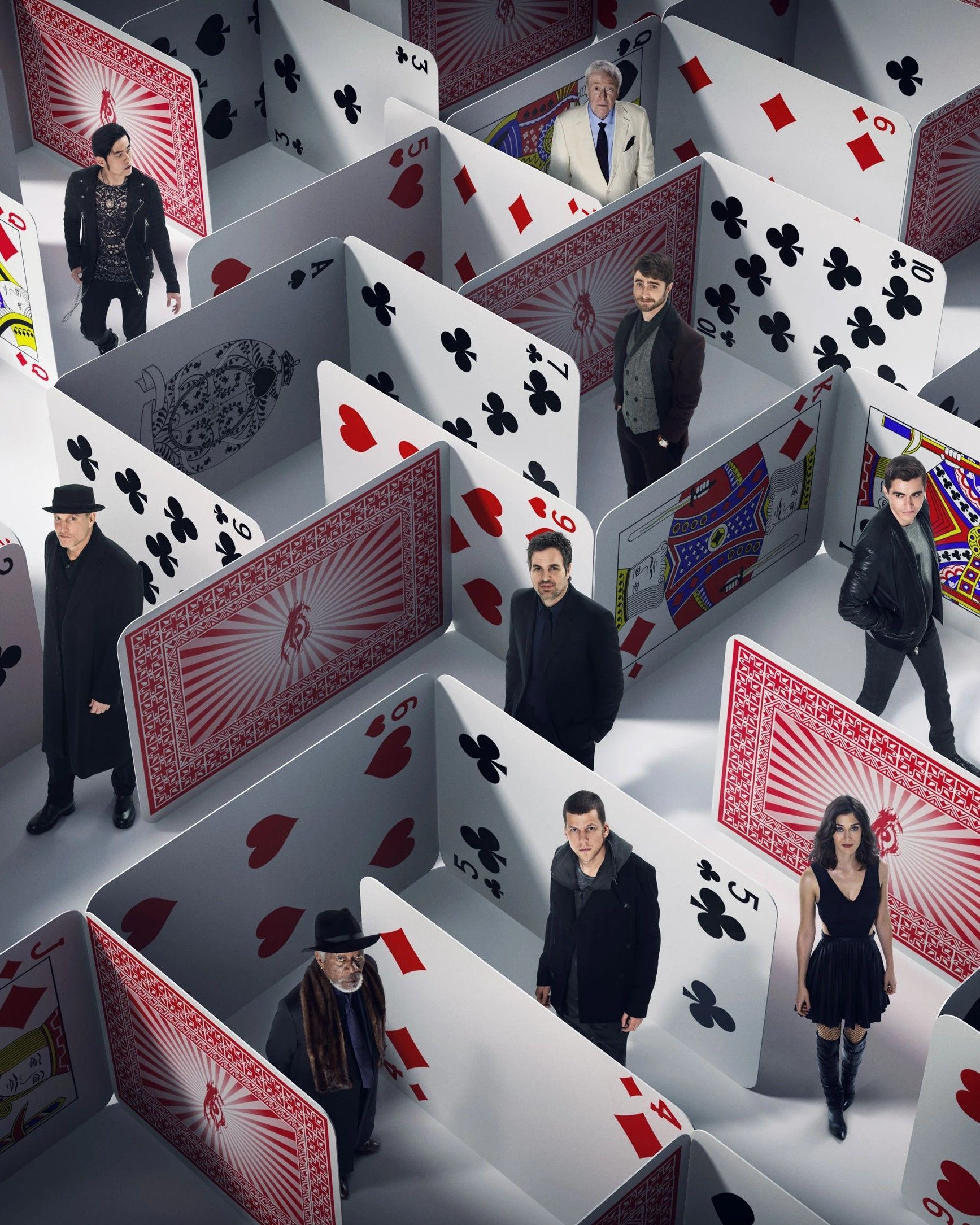
A brief history of magicians in cinema From George Méliès to the gang in “Now You See Me”
Cinema is magic. It's not a rhetorical figure. Cinema is literally magic. That's where it comes from. Second father of cinema after the Lumière brothers, Georges Méliès is born as an illusionist and then becomes a director and actor. Today he is considered the inventor of science fiction and fantasy cinema. He manages a theater, the Robert-Houdin, which refers to its predecessor who was also in turn a renowned magician, so much so that the most famous Harry Houdini takes his surname to make it his stage name. It is from his figure that begins the fascination that cinema has for magicians and magic as a spectacle.
George Méliès and the magic that deceives the eyes
It is Méliès who introduces the first magic tricks on the big screen. Tricks that, over time, came to be defined as editing techniques. Think of the possibility of the substitution trick: with the camera always fixed, Méliès shows us the disappearance of a woman under a cloth and her reappearance shortly after in the short Escamotage d'une dame chez Robert-Houdin. Nothing other than the cut and paste of an artist who had understood that cinema could repeat its magician's acts in the frame of a screen, taking advantage of it to become a cinematic magician and, thus, remain in memory.
Georges Méliès's experiments are an example of how cinema already possesses a marked component of illusionism within itself and of how we as spectators can take it for granted. And often, as happened later, revealing one's tricks in cinema is usually an important part of the magician's skills, as if one wanted to admit that there is always a logical explanation behind what arouses wonder, without thereby depowering the show that has just been witnessed.
Hugo Cabret pic.twitter.com/6TRyEhOKey
— Déborah (@dvorahfr) December 2, 2024
If we still think of Méliès, it is what also happens in his most moving and touching fictionalized biography: Hugo Cabret by Martin Scorsese. The one that does not bear his name in the title, but which is as if it hid it to reveal it decisively only at the end, with his rediscovery, as true magicians know how to do with their big finale. Scorsese's film tells of the world behind the tricks and that is just as fascinating as what can be brought onto a stage (or a screen). It is the story of a man who has always played with the impossible and made it real through the thing that is farthest from reality itself: magic.
Modern magicians
2006 was the year when, more than ever, cinema wanted to show its own tricks. There are two films that tell of illusionists and their talents, of how they use their abilities to the point of becoming obsessed with them. There is The Illusionist with Edward Norton, directed by Neil Burger, in which magic even becomes a weapon to maintain the order of things, to prevent empires from being overturned with Eisenheim, the protagonist, who uses a magic trick to ensure that the woman he loves can remain by his side.
The Prestige, on the other hand, is illusion at the service of Christopher Nolan and it is exactly what it means to wallow in the search for truth, with the film playing with it to the point of making discovering what hides behind the curtain an obsession. An obsession from which the work frees itself only in its own finale, with one of the most unexpected and impressive plot twists ever.
Nightmare Alley (1947) dir. Edmund Gouldingpic.twitter.com/dKaRqhtWiN
— cinesthetic. (@TheCinesthetic) February 5, 2023
Often, indeed, the secrets of magic shows are reserved for the end. Sometimes they are the very basis of an entire story. And just as often the thriller or psychological thriller film can lend itself as a stage for the tale. In the case of Nightmare Alley - La fiera delle illusioni, both from 1947 but especially with the 2021 remake written and directed by Guillermo Del Toro, it is the circus that is the tutelary home. Another space where deceiving has always been the purpose of its inhabitants and which in the film delves into the pettiness that can reside in the darkest places of the human.
In the work, the protagonist Stan, played by Bradley Cooper, knows he is a con artist. He knows that everything is a mystification and for man it is about making decipherable what, at first glance, seems to be the opposite. Here the secrets, on the contrary, would prefer to remain hidden. But it is not in the nature of cinema, which must necessarily unmask the deception, even when it was the seventh art itself that set it up.
The "Now You See Me" trilogy
One could also talk about con artists for the Now You See Me saga. Con artists, thieves, swindlers. What is most akin to the series of films dedicated to crime magicians is the heist movie genre, even where a plan is carried out with the precision (hopefully) of a Swiss watch and where all moves are studied in detail to not miss even a comma. What Now You See Me does is exactly this, but with magic in between.
If therefore the heist movie already has within it a spirit that follows directives of prestidigitation, the saga enhances it by adding the improbable shows of the group of protagonists. A band of magicians watched over by the supreme society of The Eye, whose task is to set up a fairer world, especially by going against billionaires and redistributing, at every show, their fortunes in a more correct manner.
Those of the Now You See Me saga are films based exclusively on magic tricks, their amazing the spectators and, the second after, showing without trickery and without deception how they were done. Their strength is, contrary to what a magician would do off the big screen, explaining what happened.
It is, as Méliès taught, the highest expression of the potentialities that cinema offers. Observing the long scenes of games and illusions in Now You See Me, from the first film in 2013 to the 2016 sequel and even to the return almost ten years later with the new 2025 chapter, it is evident how even the various passages of the protagonists seem unreal despite what they are trying to legitimize. But the power of illusion is incredibly high and not for how it is staged, but because we ourselves are the first to decide that the impossible, in that moment, can become more than possible.
It is as if the saga were explaining the laws of the seventh art. First of all, it exploits its resources. It makes people appear, levitates others, moves people and objects and everything is allowed because the means of cinema grant it. They can set up even the craziest plans, but they are not satisfied. They must tell you what is behind it, they must explain to you that magic is not abstract and it is not about superpowers, but that everything can be achieved with a bit of wit (and a not insignificant expenditure of money) especially, we would add, if you can filter it through a camera. And if the realization seems as fictional as the trick it is because it always makes part of the show.
It is this that most exalts about Now You See Me: the ability to push beyond any logic and then show you that, instead, each thing has its own resolution, which usually rhymes with “tools of cinema”. This allows the series of films to always go further, to attempt the unrealizable and do it by entertaining and amusing the public. And, as the colleagues in The Illusionist would say, "perhaps there is truth in this illusion". And the truth is that cinema is illusion.
What to read next

"Un tranquillo funerale di famiglia" is everything comedy should not be today
Massimiliano Bruno's film had its premiere at the Rome Film Festival
«Club Kid is a once-in-a-lifetime opportunity», interview with Jordan Firstman
Everything about the directorial debut of the American actor and screenwriter
"Cambogia" teaches actors that you have to care about your own characters
Valerio Lundini's directorial debut premiered at the Rome Film Festival