




























“Five Seconds” teaches us that we can always return to living Paolo Virzì directs Valerio Mastandrea in a story of loss and rebirth
It takes so little to change a life. Sometimes just Five seconds. That’s what happens to Adriano Sereni, the protagonist of Paolo Virzì’s film, played by Valerio Mastandrea, who watches his family, job, and peace of mind slip away because of a mistake that cost him everything. The man decides to live with the consequence of his actions, which ends up invading every corner of his existence — a life that stops being one, because every moment echoes what he has done.
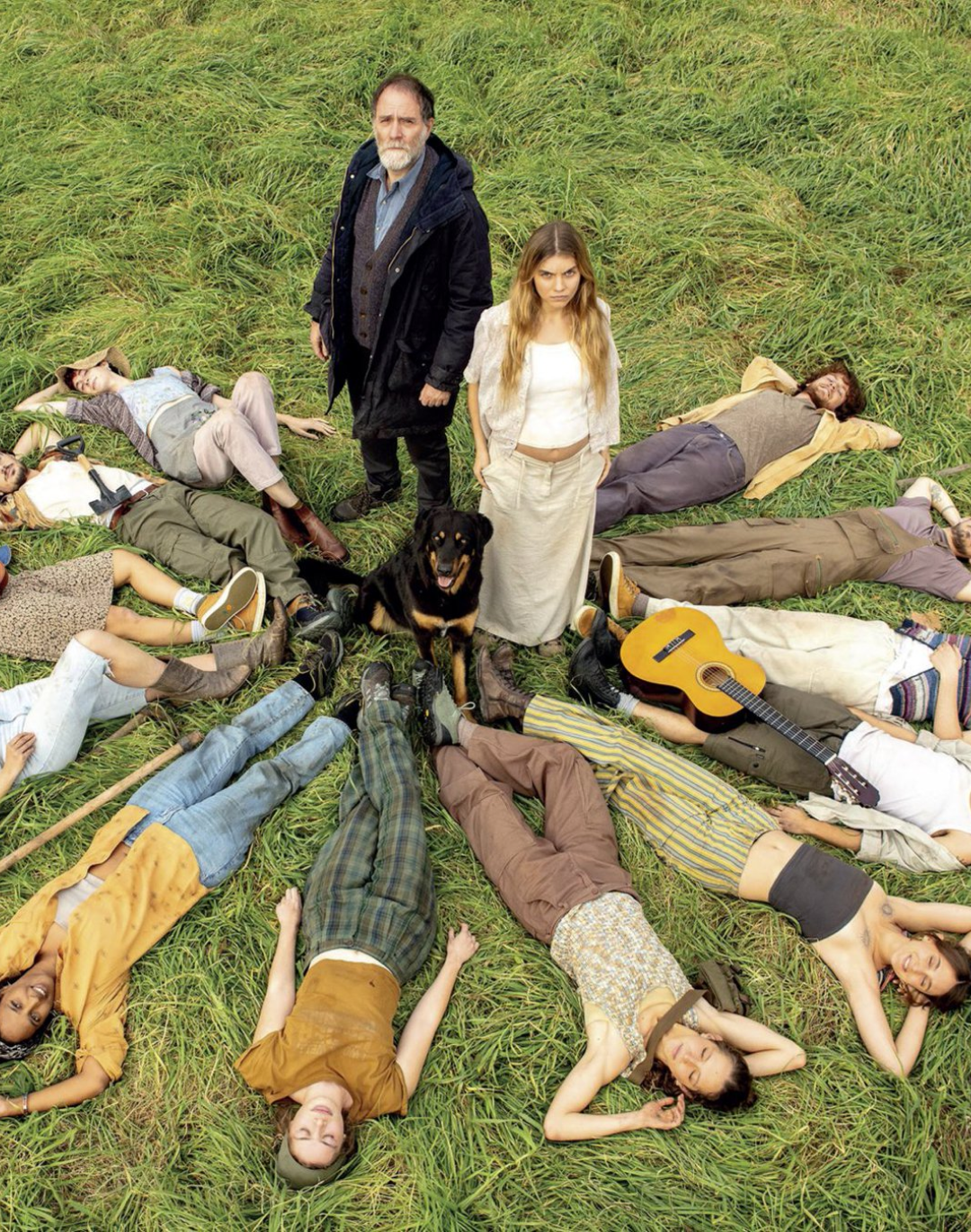
An accident that turns him into a loner, a hermit. It closes him off just as he is shut away inside the old stables of a renovated estate turned into a B&B, where Adriano plans to live, wallowing in his guilt and avoiding contact with anyone. Everything changes when, in his fortress far from the world, a group of young people determined to restore the villa’s vineyard breaks through his isolation, gradually bringing him back to life.
Five Seconds is a story built on a clash of perspectives — two worlds colliding, different yet blending together, offering contrasting views on life, parenthood, and what it means to exist. Adriano, portrayed by a Mastandrea who often channels his roughness into characters that are not exactly gentle or welcoming, will find his way back to something resembling a life thanks to a group of young people so different from him, who teach him that life is not meant to stop, even when everything seems to suggest otherwise.
Of course, the dichotomy between the protagonist and the young people is clear-cut, perhaps a bit too easy to trace. The writing tries to move away from clichés such as the idea that young people “don’t want to do anything,” showing instead that the commune is actually made up of scholars, academics, and scientists. Still, it’s evident that Virzì and his trusted collaborators, Francesco Bruni and Carlo Virzì, fall — though forgivably — into a certain paternalism. It’s neither pedantic nor irritating, likely born from the authors’ own background, and even so, they make an effort not to sound preachy. Their affection for these young and enterprising characters is palpable — as is the protagonist’s, eventually.
Among all the characters, however, the one most beloved — by both the cast and the audience — is the wild spark of Valeria Bruni Tedeschi, playing Adriano’s friend and colleague, a lawyer trying to pull him out of the den he’s locked himself in. Joyful and desperate as only she can be when portraying her beautifully messy women, Bruni Tedeschi shines. While Adriano prefers to be consumed by his own guilt, her Giuliana tries to drag him out, and in just a few scenes she conveys an entire world — of herself as an individual, but also as a planet orbiting around the protagonist. Confidante yet potential lover, enamored yet free and independent, her character steals the spotlight and infuses Five Seconds with a pulse of pain and tenderness, irresistible resilience, and fragility.
Just like the vineyard that begins to grow again under the care of the community, Five Seconds shows that alone, one is destined to wither and rot — but together, rebirth is possible, even after being touched by death. Simple and stripped to the essentials, marked by tragedy yet unable not to tell us that there is always a chance to find meaning again, Five Seconds is a film about learning and managing to breathe again. Even when it seems impossible, even when the will to live is gone.
What to read next
5 trends that Trainspotting anticipated Back in 1996
There is much more to the film than the famous Helmut Lang tank top
Andrew Scott gives the best performance of his career in "Elsinore"
Simon Stone's film tells the true story of actor Ian Charleson and his production of "Hamlet"
"Il rumore delle cose" by Paolo Genovese opens the 2026 Rome Film Festival
The film, adapted from Genovese's novel of the same name, is nonetheless the usual Italian drama