.gif 2000w)

































“Lighting Flowers” will be the rebirth of the former steelworks in Naples An example of how artistic lighting can illuminate not only structures, but also collective hopes
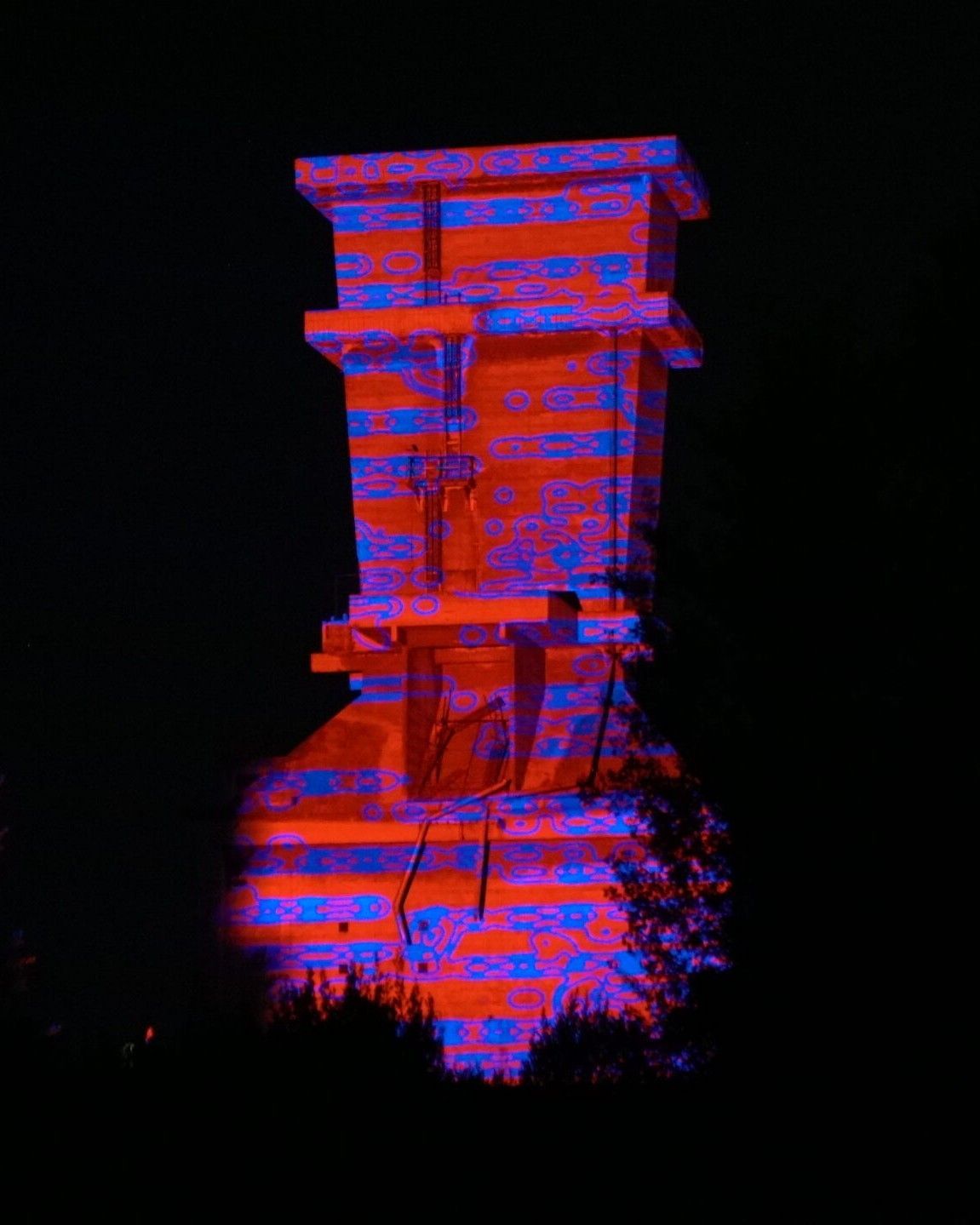
In the heart of Naples, where the industrial past intertwines with hopes for a renewed future, the former Bagnoli steelworks is undergoing a luminous transformation thanks to the Lighting Flowers project. Conceived by Neapolitan artist Franz Cerami, this urban regeneration initiative turns the shadows of abandoned structures into a vibrant landscape of color and vitality, metaphorically planting luminous flowers in the forgotten peripheries of the world. Born from the vision of illuminating marginal spaces with digital graffiti and video-mapping, the project has found its ideal stage in Bagnoli, an area that for decades symbolized post-industrial decline but now opens as an open-air museum, inviting the city to rediscover its roots through art. From September 12 to November 12, 2024, the former Italsider site in Bagnoli, once the beating heart of southern Italy’s industrialization with its steelworks and blast furnaces, comes alive each evening in a dialogue between memory and innovation. Promoted by Extraordinary Commissioner Gaetano Manfredi in close collaboration with Invitalia Spa, the initiative marks the concrete beginning of the reclamation and redevelopment process of the area, a territory that holds the working-class history of generations of Neapolitans.
The essence of Lighting Flowers Bagnoli lies in its goal of reviving industrial archaeology through light, weaving the weight of the past with the lightness of the future. Through these installations, art does not merely decorate but sparks a profound reflection on urban regeneration, placing creativity at the heart of a collective transformation. The eight large-scale installations, which bring to life eight iconic structures of the site, transform the mechanical workshop, cooling tower, steelworks, office building, water treatment plants one and two, blast furnace, and the triangular section of the blast furnace into vibrant surfaces. Each projection, accompanied by original music by Michele Chiavarini, engages with the historical and architectural context, evoking a blend of the hardness of metal and the softness of luminous petals, inviting visitors to envision a Bagnoli no longer as an open wound but as a space of shared possibilities.
The exhibition itself, hosted at the Auditorium Porta del Parco on Via Diocleziano 343, unfolds through a luminous journey that guides visitors across four immersive environments, offering a total immersion into the world of Lighting Flowers. In the first space, a historical projection traces the evolution of the installation through illuminated lightboxes, detailed explanatory panels, and backstage photographs that reveal Cerami’s meticulous creative process. The second environment features an exhibition of thirty photographic works, enriched with oil and graphite interventions. Finally, the third space screens a documentary on the global journey of Lighting Flowers, from installations in Brazil to European iterations, culminating in the Bagnoli projections that connect the local to the universal.