

























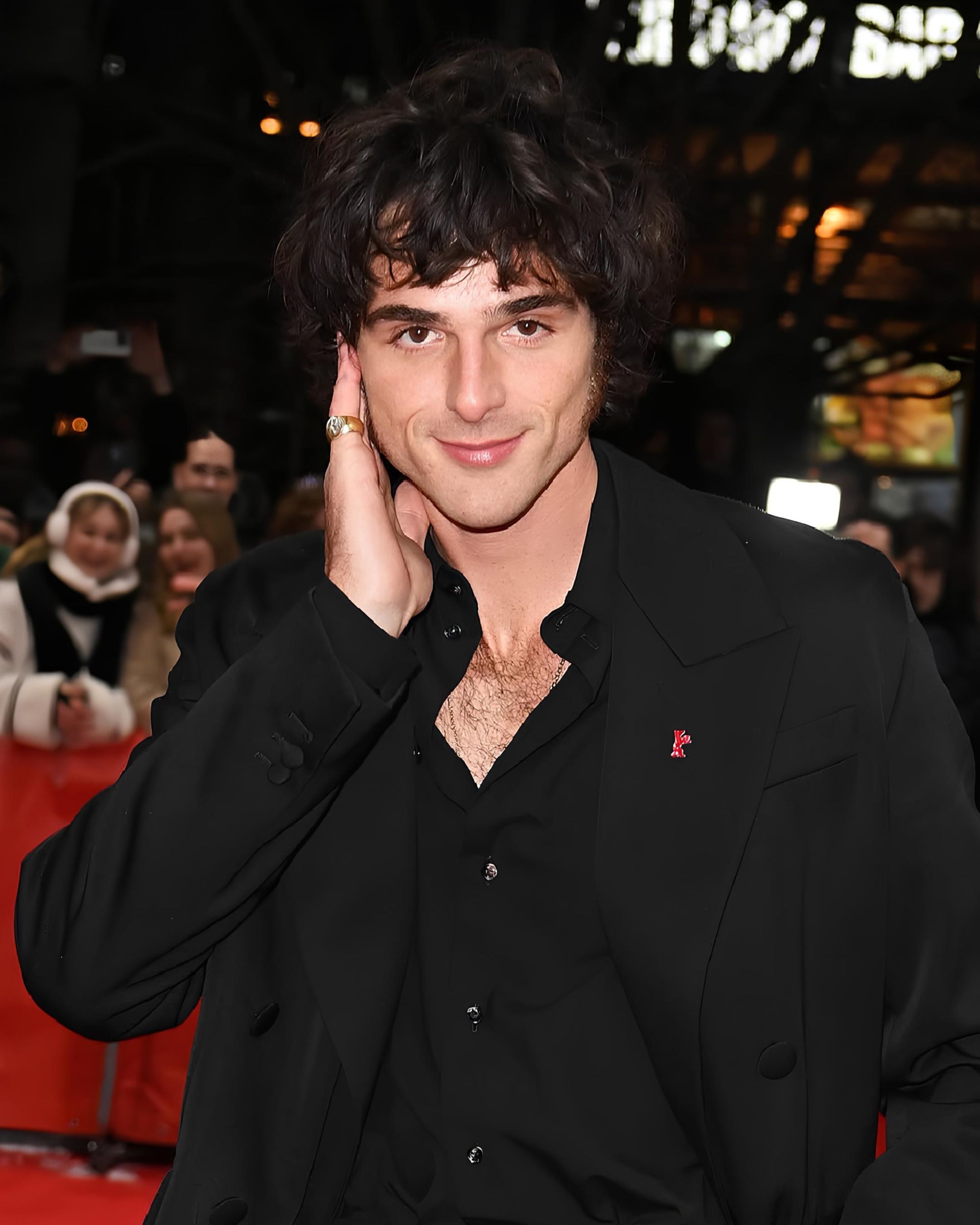
Emerald Fennell's "Wuthering Heights" has already sparked controversies From the wedding dress to the casting of Margot Robbie and Jacob Elordi
Emerald Fennell is no novice. Her next project, the adaptation of Wuthering Heights, is already the most talked-about film of the year, even though its release is not expected before 2025. The controversies surrounding the work, which is still in full production, began as soon as the cast bringing Emily Brontë’s book to life was announced. Playing the iconic characters of the novel, published in December 1847, are Margot Robbie and Jacob Elordi, who are not exactly the two actors most fitting the description given by the English writer. According to critics, choosing the actress from Greta Gerwig’s Barbie for the role of Catherine Earnshaw distances the protagonist from the image of the young brown-haired girl described in the pages of Wuthering Heights, in addition to the fact that the character is around 18 or 19 years old, while Robbie will be turning 35 this year. However, Fennell and Robbie already had a working relationship established off-camera, with the actress consistently backing the director and screenwriter’s projects through her production company, LuckyChap Entertainment, since the debut of Promising Young Woman (2020).
Catherine was like 18 or 19 when she died and they casted a 34 year old woman to play her , Heathcliff was always discriminated against because of his skin color and they casted a white man, that book is not destined to have a good adaptation I fear
— mimi (@blyfilms) March 23, 2025
The decision, therefore, could not have been taken lightly, as there was no need to alter the productive collaboration the two artists had established, with Emerald Fennell determined to bring to the screen her probably reimagined vision of Emily Brontë’s story. While Catherine’s hair color and age have sparked debate, the casting of co-star Jacob Elordi has been considered even more problematic. Although discussions about Heathcliff’s origins have been ongoing since the novel’s release, the only certainty from reading Wuthering Heights is that he is a BIPOC character. Heathcliff’s ethnic ambiguity is an integral part of the story—how he is perceived by others, his behavior, his sense of marginalization, and his ultimate rejection by Cathy despite his burning love. He is certainly not Caucasian, with various interpretations suggesting he has Romani, African, or South Asian heritage. Jacob, too, is Australian, and he has also previously worked with Fennell, first directed by her in Saltburn (2023).
First look at Margot Robbie on the set of Emerald Fennell’s ‘WUTHERING HEIGHTS’. pic.twitter.com/3Bxa2NjPUM
— Film Crave (@_filmcrave) March 23, 2025
The same criticism was raised in the case of Bridgerton, the Netflix series accused of colorblind casting for featuring non-white actors in the ranks of Britain’s Regency aristocracy. However, in that case, there was no adaptation to draw from, and the series did not aim to be historically accurate. Unlike Bridgerton, in Wuthering Heights, altering the character’s background would expose certain gaps in his personality and the story itself. Moreover, according to critics, choosing a Caucasian actor instead of a BIPOC lead would take away a representation and inclusion opportunity from a minority group. However, what is now shocking the audience (especially fans of the novel) has already happened: in the cinematic and television history of Wuthering Heights, Heathcliff has been played by Laurence Olivier, Ralph Fiennes, Tom Hardy, and Timothy Dalton. The character has only come closer to the novel’s depiction with Cliff Richard in a musical version that did not garner much praise. In Andrea Arnold’s 2011 film adaptation of Wuthering Heights, the male protagonist was portrayed by an Afro-Caribbean actor, James Howson, in a casting choice aimed at aligning more closely with the novel. The fact that, in Brontë’s book, Heathcliff is found by Mr. Earnshaw at the Liverpool docks during the slave trade and is described by housekeeper Nelly Dean as a “regular black,” supports the theory of his African descent.
What reignited the debate about the film was a recently leaked paparazzi photo from the set of Wuthering Heights, featuring protagonist Cathy in a historically inaccurate dress for the Victorian period in which the story is set. Everything seems wrong: the color, the aesthetics, the boat neckline, the translucent fabric—all inconsistent with the fashion of that era. Not to mention the inclusion of glitter, which was invented decades later. However, none of the early leaks from Wuthering Heights should alarm either fans or curious viewers of the adaptation. It seems quite clear that Emerald Fennell’s approach will be completely detached and independent from the literary classic. The director is choosing to take risks with her vision, perhaps deliberately clashing with what we already know from Brontë’s book. One can assume that the director will heavily emphasize the erotic tension between the characters, as suggested by the first image announcing the Wuthering Heights project—depicting two skeletons engaged (if one looks closely) in a sexual act, hinting at the adaptation’s intended atmosphere. Equally explicit is the first look revealing the film’s release date: a close-up of the protagonist’s mouth filled with fingers and grass. For now, the film is set to be released on February 14, 2026, just in time for a gothic, unpredictable, and likely sensual Valentine’s Day that, all in all, is sure to spark discussion.
What to read next
"Masterplan" is everything a heist movie shouldn't be
The film starring Stanley Tucci, Simona Tabasco and Victor Belmondo is available on Prime Video
"Fjord" is an impressive piece of writing
Cristian Mungiu's film, winner of the Palme d'Or at Cannes, arrives in cinemas on November 19

Clayface is the first truly horror superhero film
The lead is Tom Rhys Harries, and the story concept comes from Mike Flanagan of "The Haunting"