






















«A question of happiness» interview with Salvatore Giugliano of Mimì alla Ferrovia We met with the Neapolitan chef to ask him how to bring a centuries-old tradition into the future
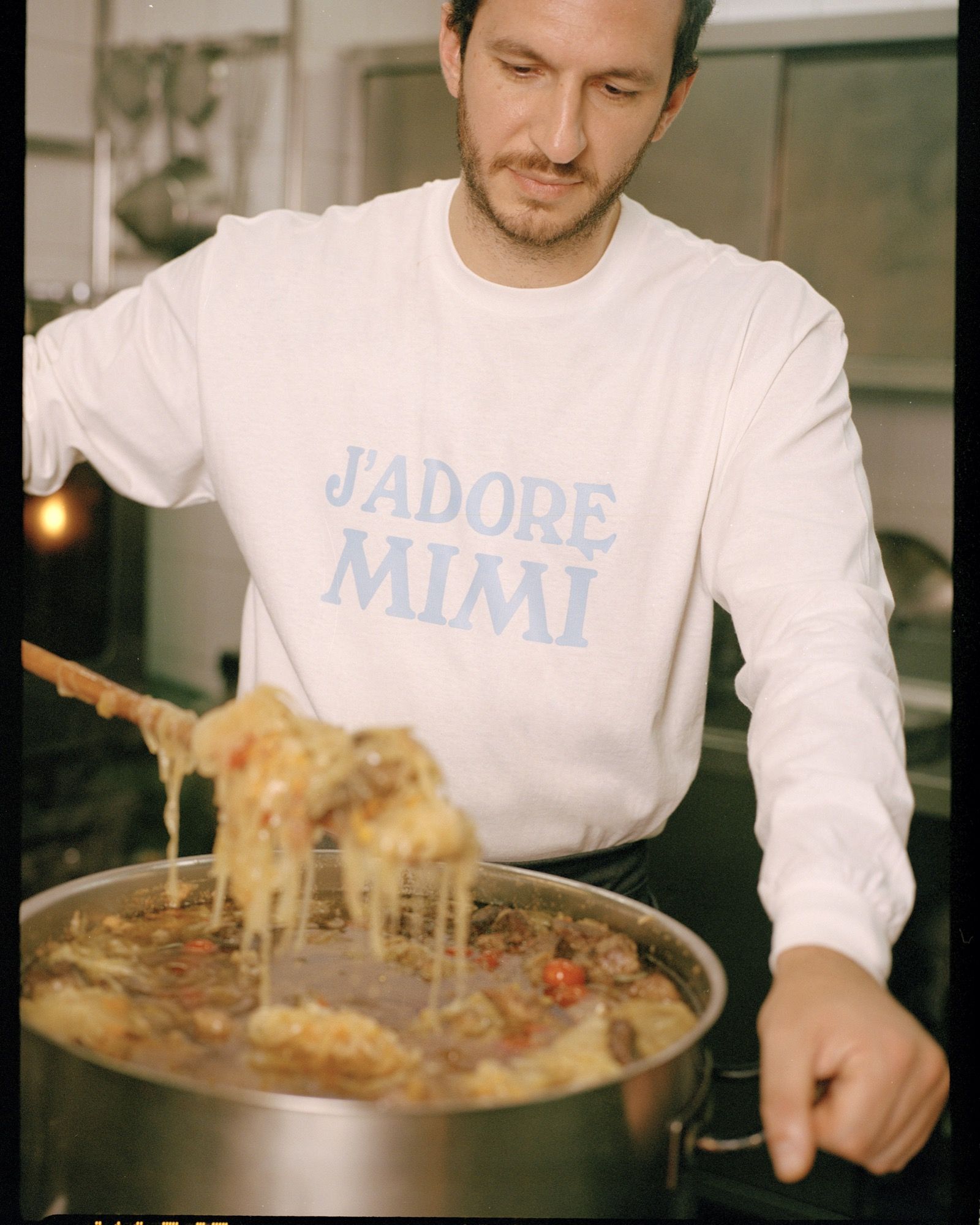
Salvatore Giugliano in brand napoli tee
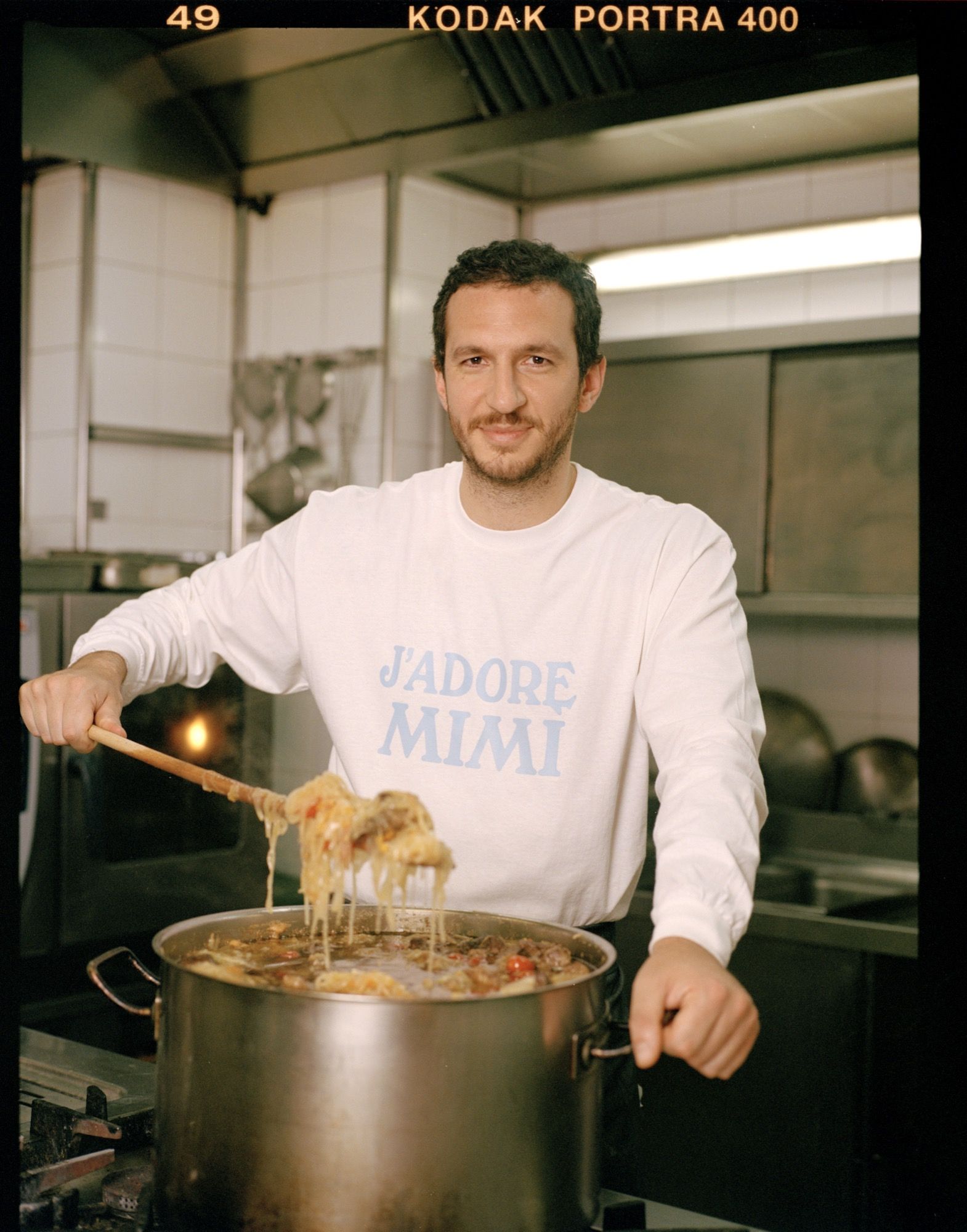
Salvatore Giugliano in brand napoli tee
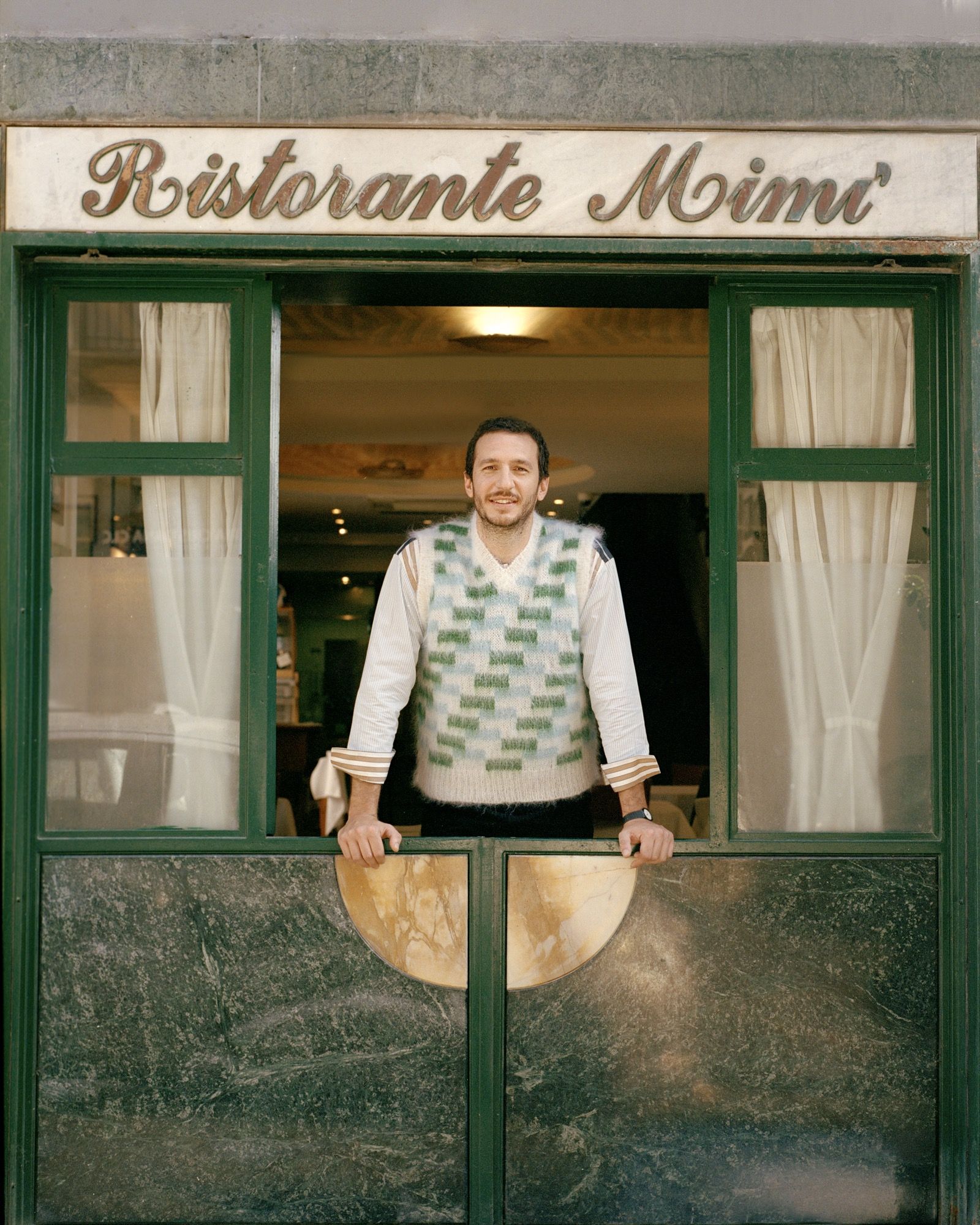
Shirt PAUL SMITH, trousers CARHARTT, gilet MARNI
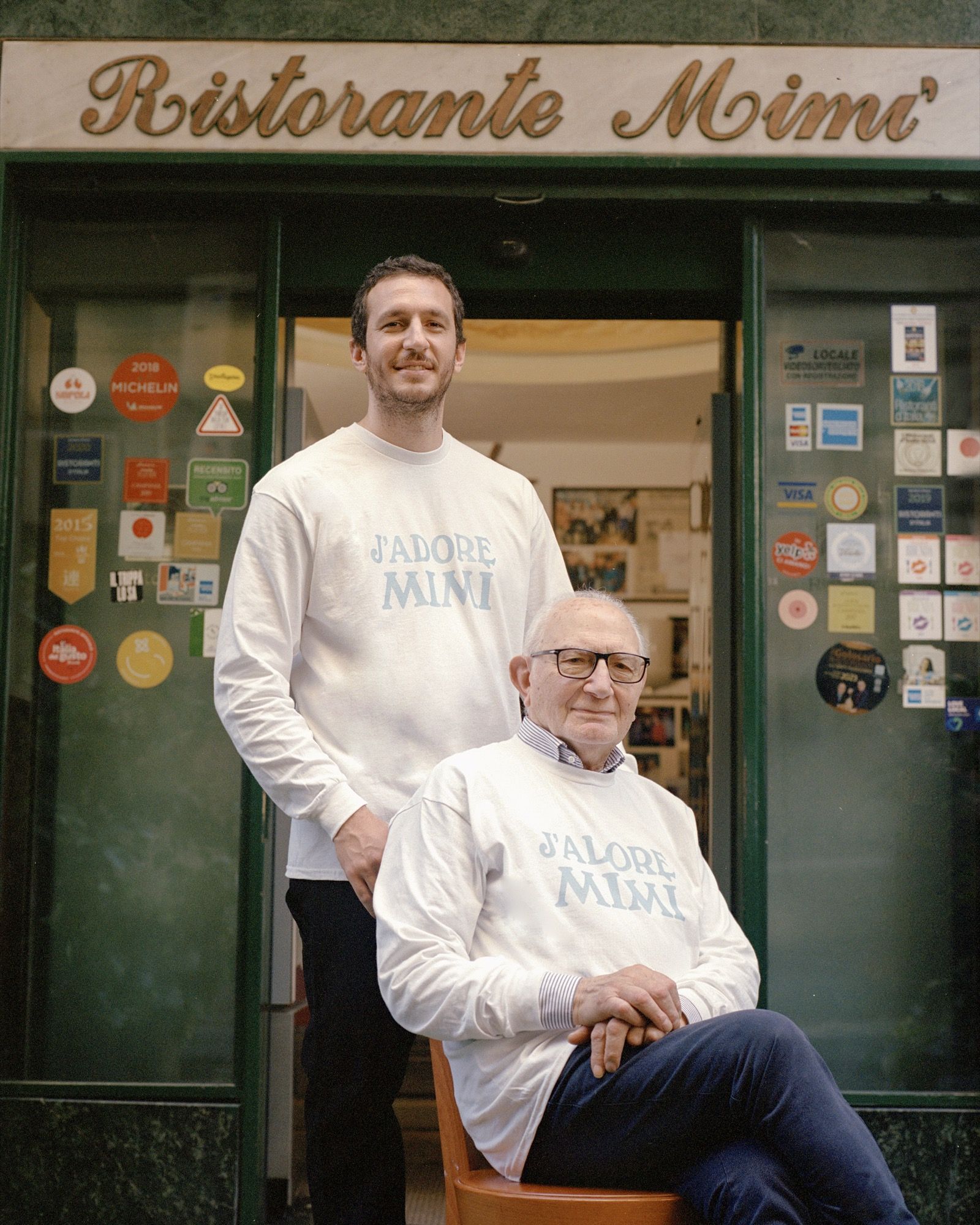
Michele and Salvatore Giugliano in brand napoli tee
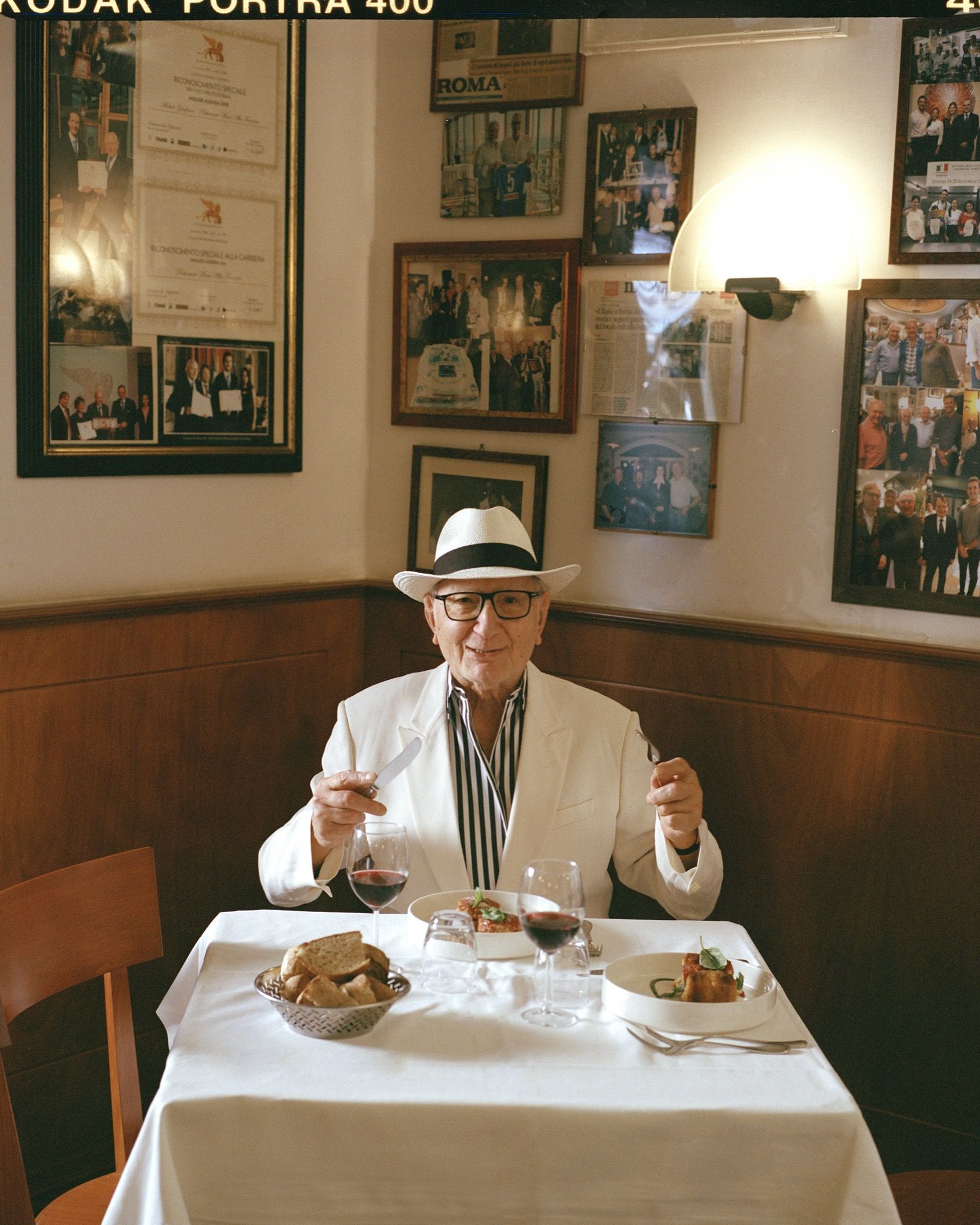
Michele Giugliano in shirt and jacket ASPESI, hat CAPPELLERIA MOCCIA
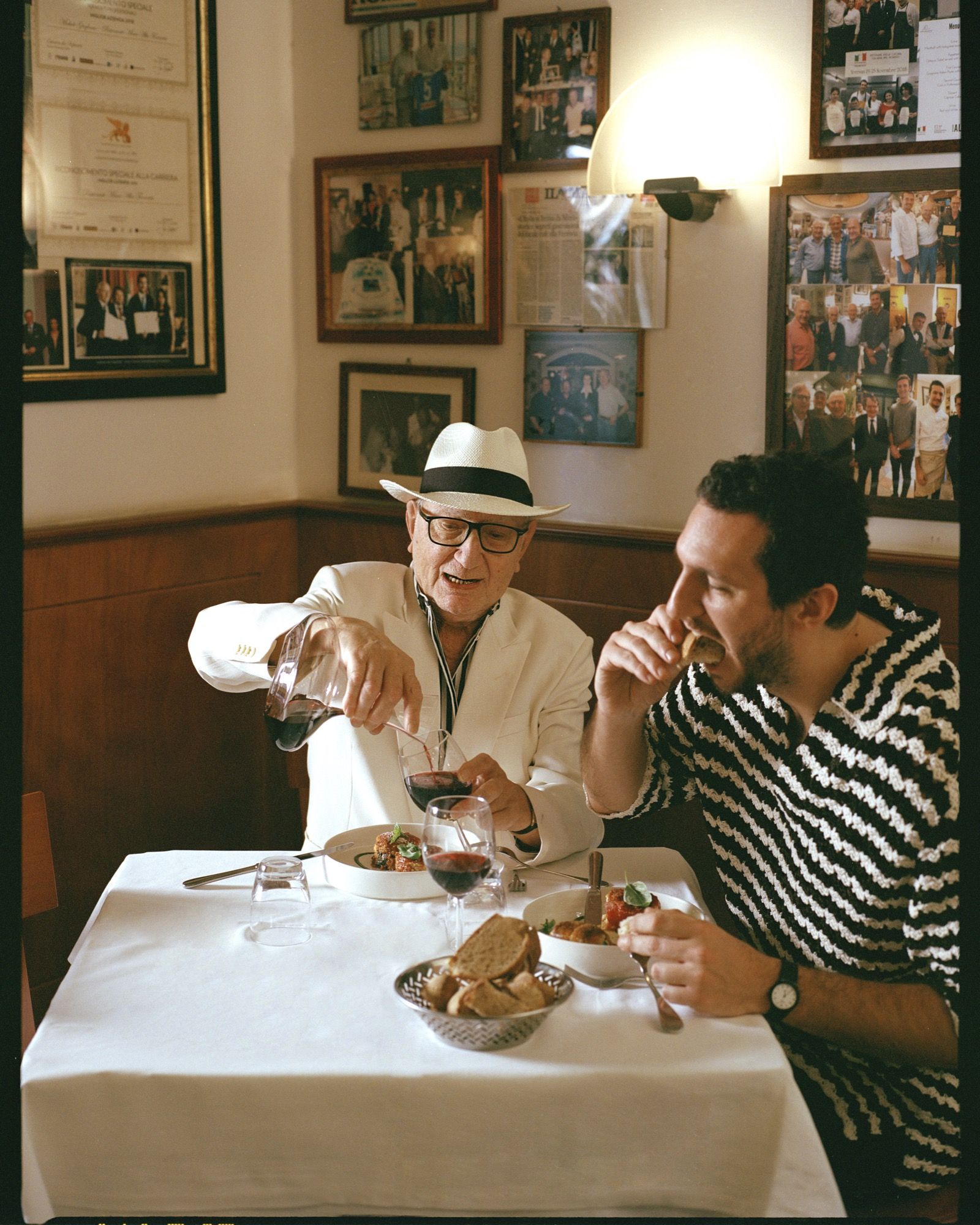
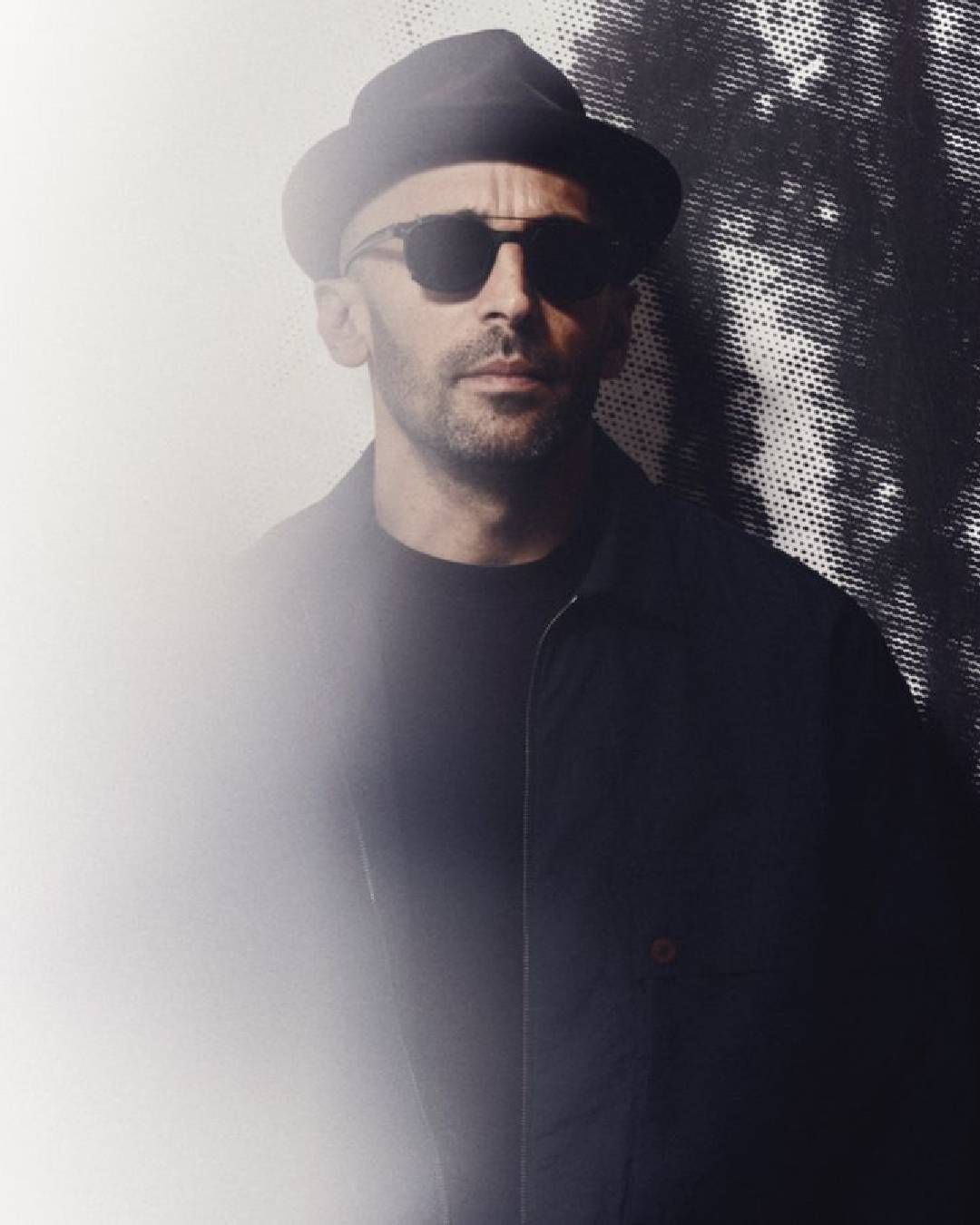
Salvatore Giugliano in sweater DOLCE&GABBANA. Michele Giugliano in shirt and jacket ASPESI, hat CAPPELLERIA MOCCIA
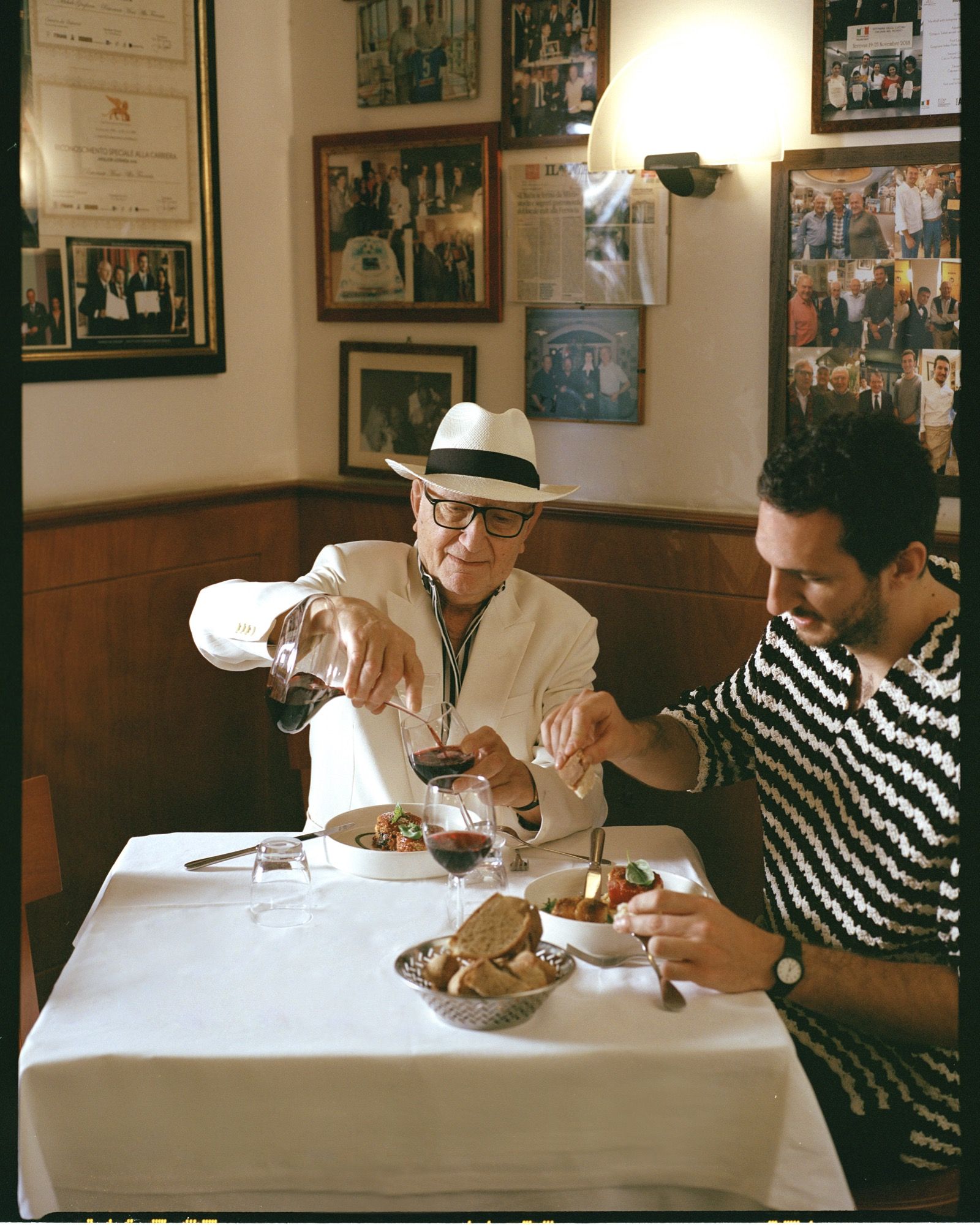
Salvatore Giugliano in sweater DOLCE&GABBANA. Michele Giugliano in shirt and jacket ASPESI, hat CAPPELLERIA MOCCIA
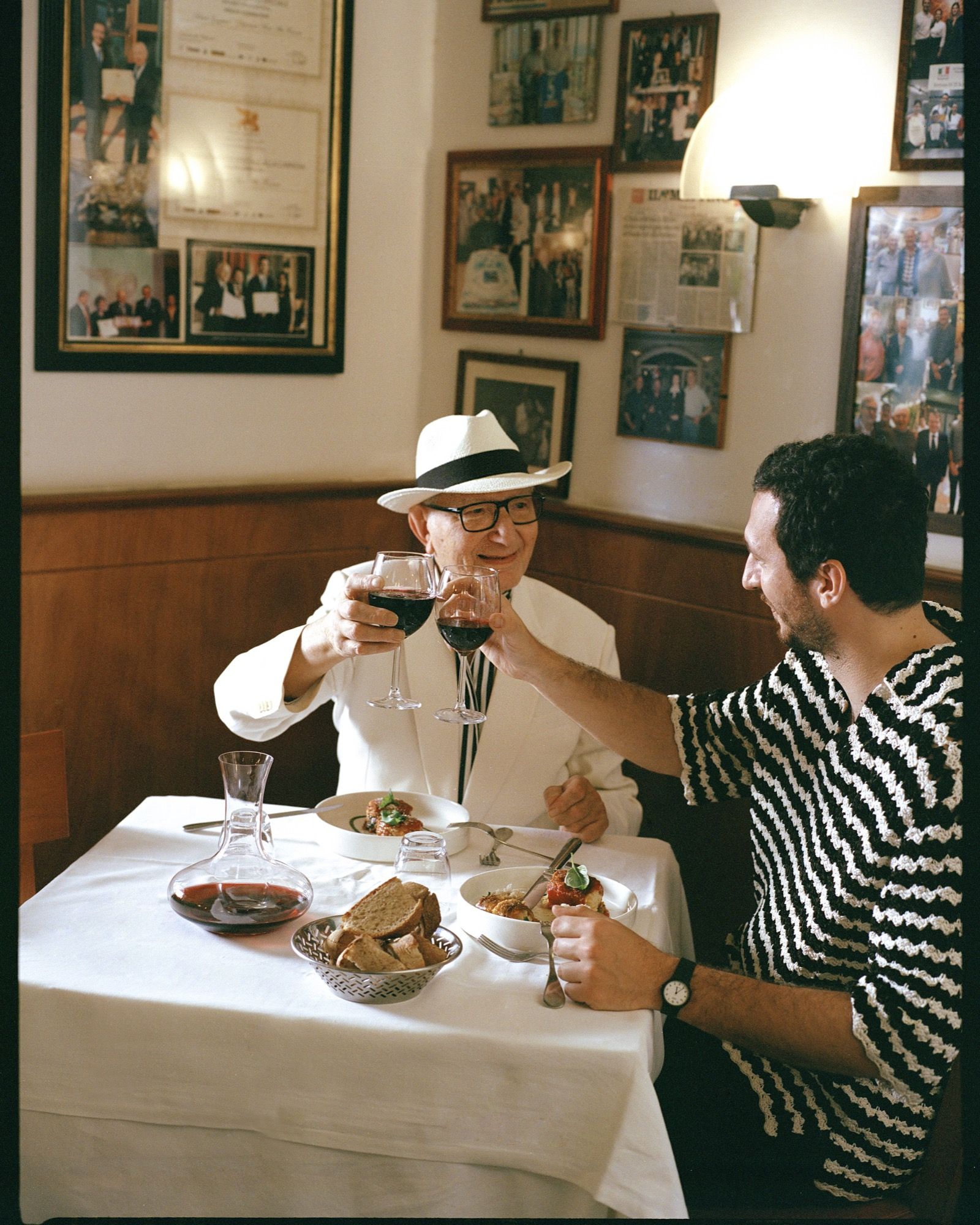
Salvatore Giugliano in sweater DOLCE&GABBANA. Michele Giugliano in shirt and jacket ASPESI, hat CAPPELLERIA MOCCIA
«Naples is the city where I was born» Salvatore Giugliano, chef at the legendary Mimì alla Ferrovia, begins bluntly, «I think it has been my best friend forever and ever. A lot has changed since many years ago - although I hope the city won't change that much. What must not change and what I hope never changes is the authenticity of the Neapolitan people, which is what makes us the coolest city in Europe». Words that come as no surprise, given that they come from the heir to a culinary institution that over many years has become a full part, more than part of the urban fabric of Naples, of its vast and intricate mythology. «It is an important responsibility, ours - Salvatore continues - when we serve at the table our task is to make culture, to be aware of what we are and to transmit this awareness, these stories of lived life and family. We are custodians of many secrets, many truths, and passing them on is a very, very important task». So what are the most emblematic dishes of such an ancient gastronomic tradition, so deeply rooted in the very family trees of families, like Salvatore's, that have been handing it down for generations? «Well, there is the dish we have had the longest, the "peperone 'mbuttunato", which in its simplicity is an icon for Mimì. But the one I prefer is the "genovese", perhaps because it is a dish that requires patience, made with an important gesture, that takes its time».
Salvatore Giugliano in brand napoli tee
Salvatore Giugliano in brand napoli tee
Shirt PAUL SMITH, trousers CARHARTT, gilet MARNI
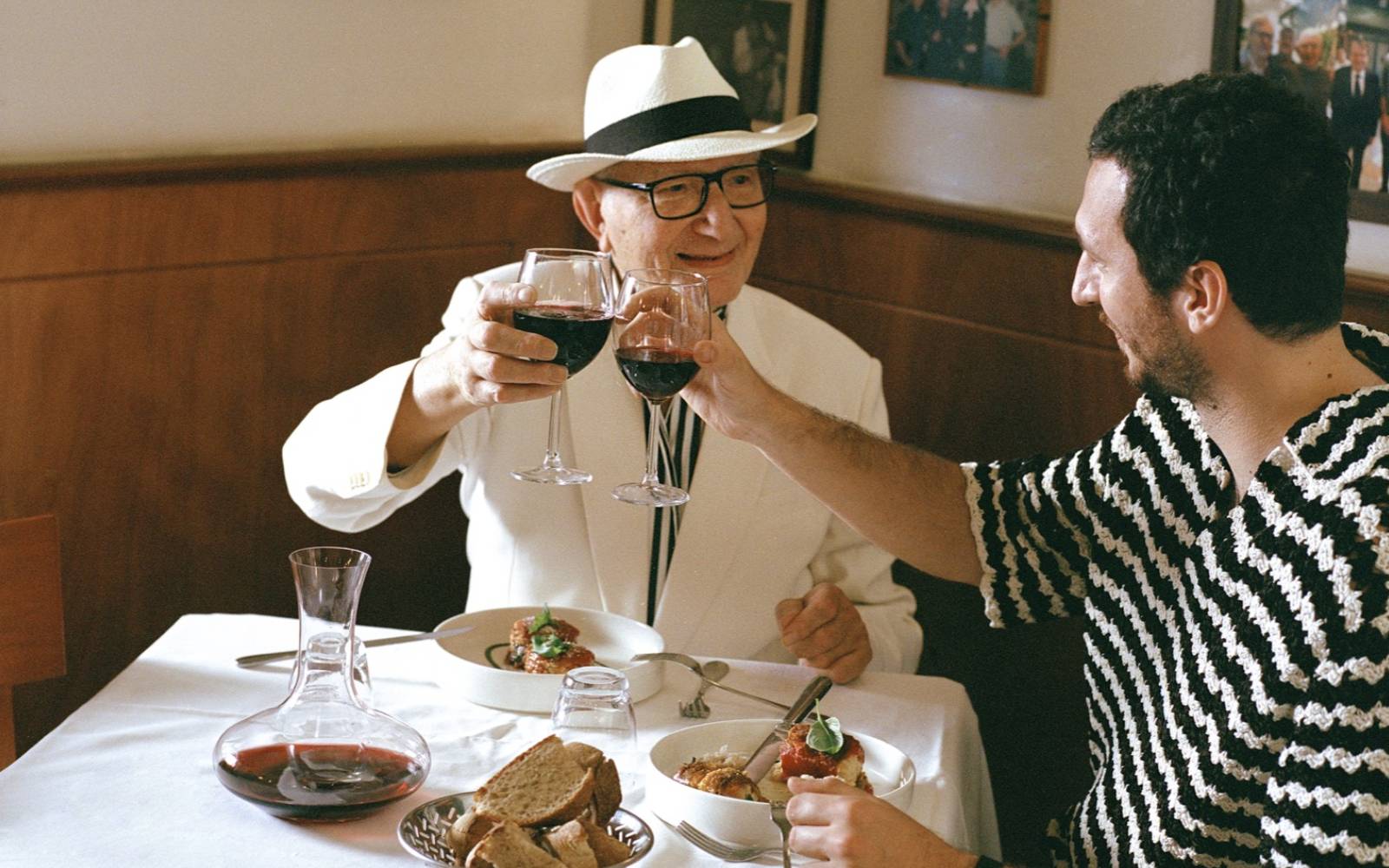
Michele and Salvatore Giugliano in brand napoli tee
It is precisely the classic genovese, which keeps being mentioned throughout the interview, that also represents the big change that Salvatore, having taken over the reins of the restaurant after a long peregrination among the kitchens of some of Asia's most famous restaurants, has brought to a menu that is very much in keeping with tradition. «We have reinterpreted the dish by putting some of the meat of the genovese in a steamed bun, served with an anchovy sauce that adds its flavour to the great taste of the genovese. It is a soft bite that makes you enjoy all of Naples». It remains obvious, however, that one must know the rules before changing them - a lesson that, like everything at Mimì's, runs in the family. «The education one has had as a child then reveals itself in the work. There is no teaching of the job, but there is a teaching of life, the education that comes from the street, the one we are used to and grew up in. Then living a lot in the restaurant, every day you deal with thousands of people and they also educate you, they teach you many things - for better or for worse. But surely what my parents taught me more than anything else is respect». A respect that is like a filter through which to interface with the world, from the abstract one of history and tradition to the concrete one of customers, colleagues, suppliers, raw materials. «Maybe we don't respect ourselves so much because we have a self-denial towards work and prefer to dedicate time to others and never to ourselves. But constancy is the other fundamental element of our work».
At this point a new question arises, namely, how come someone who is so attached to his homeland, so embedded in its dynamics, decides to leave? It is clear that, throughout his childhood, adolescence and studies, Salvatore's life and that of the restaurant ended up overlapping. «I always worked in the restaurant in some way. Wherever there was a need I would help out» a commitment that, after coming of age, took the form of a passion for cooking. "Putting on the apron" is the term Salvatore uses when referring to the restaurant with a familiar "da me", as if to signal that this is his real home. But «once I had had that experience here, as a kid, I felt a bit cramped, I only knew one vision, ours. So I decided to cut my teeth in other restaurants in Campania» says Salvatore, who rattles off the names of some of the most renowned chefs in the region, talking about his many mentors "of the highest calibre": Paolo Barrale, Nino di Costanzo, Pierfranco Ferrara... just a few of many, all excellent. After this apprenticeship, came the desire to move to Japan. «I had always been attached to this culture, which I had always seen from afar but dreamed of embracing up close. So, one day in January, I asked my father and uncle to give me this last experience before returning to the restaurant, knowing that there was a need for a permanent presence like mine within the company. Incredibly, they agreed».
Michele Giugliano in shirt and jacket ASPESI, hat CAPPELLERIA MOCCIA
Salvatore Giugliano in sweater DOLCE&GABBANA. Michele Giugliano in shirt and jacket ASPESI, hat CAPPELLERIA MOCCIA
Salvatore Giugliano in sweater DOLCE&GABBANA. Michele Giugliano in shirt and jacket ASPESI, hat CAPPELLERIA MOCCIA
Salvatore Giugliano in sweater DOLCE&GABBANA. Michele Giugliano in shirt and jacket ASPESI, hat CAPPELLERIA MOCCIA
The experience in Japan was "a dream" and during those "incredible days" Salvatore learned, in addition to technique, also "respect for the raw material", cooking it «not necessarily according to taste, but treating the ingredients in the best possible way' and this 'always because we have a customer on the table who chooses to spend time with us and since time is the most precious thing we must dedicate ours to him in the best possible way». After those formative months there was a return to Naples and the family kitchen - a return that marked a new chapter in the restaurant's very long history, one that made it even more famous, namely the incorporation of elements of Japanese cuisine with the heritage of Neapolitan gastronomy. «Coming back from those experiences around the world, I tried to show off my skills» explains Salvatore. «Mine was not a Japanese-Neapolitan cuisine, but wanted to be a contemporary one, in the sense of combining some fundamental elements of our cuisine with twists that could appeal to a younger clientele. Thus was born the Genoese sauce served in bao, the combination of anchovies and wasabi, octopus and potatoes combined with kimchi. The change in the menu did not only mark a generational change behind the cooker, but also that of the restaurant's clientele, and in the end 'even our historical customers felt encouraged to return, not only for the great tradition but also for dishes that were out of the norm». The transition, however, took place 'naturally' even if Salvatore himself acknowledges that the limit between innovation and iconoclasm remains "very thin". The secret, therefore, was to testify that these innovations remained within a tradition whose guarantor always remained the Giugliano family. «We are like that, we are a family tied to tradition, even with a slightly retro taste» explains Salvatore referring to the furnishings and the history of Mimì alla Ferrovia itself.
Everything changes so that everything stays the same - Mimì alla Ferrovia has entered the new millennium not only with a new menu, a new chef and a new clientele, but also with a new reputation on social media, a new cultural ecosystem in which the restaurant is enjoying great success with an even larger and younger audience. "We owe it all to the excellent work of my cousin Ida, who takes care of the administration and communications» Salvatore explains. «But we stay true to ourselves, also in the social area, we do not devalue our idea to go along with trendy ideas. We try to communicate our simplicity in a certain way and even show with a certain pride the celebrities who walk through these walls. I still believe that word of mouth is the best advertising». Salvatore reminds us, however, that 'before we are in Mimì alla Ferrovia, we are in Naples'. He stresses that the restaurant's success on social media and its newfound fame are also linked to the moment that Naples is experiencing today and is in the spotlight more than ever, or, in his words, «the driving force of this city has been art. Those who come to Naples for the first time may have chosen the city because they saw it in a film or a series on TV, but there is a really significant artistic and cultural heritage behind it». Part of that heritage is also the value of hospitality, of empathy with the customer: for me, sitting among the tables after the service and getting to know people is like oxygen. But the welcome is only the most visible part of a philosophy that, for Salvatore and his family, is based on patient, daily work, carried out with love. As Salvatore concludes: «Only with perseverance and hard work can you achieve results and reach goals that are not just economic. For us, it is also a matter of happiness to build something important because someone believes in it».
Photographer Carmine Romano
Stylist Roberta Astarita
MUAH Emanuela Farano
Photographer Assistants Luca Tarricone, Matteo Sagliocco
Stylist Assistant Beatrice Pretto
Interview Lorenzo Salamone
Special thanks to Mimì alla Ferrovia
What to read next

6 events not to miss at MUBI Fest Naples
From the Villa Floridiana venue to unique DJ sets, here are some events to mark on your calendar
Visione Vesuvio presents the third edition of “Il Cinema Fuorisala”
Open-air cinema is back in Naples, between the Quartiere Intelligente and the MUBI Fest at the Floridiana