



















Why was Maduro wearing Nike Tech Fleece? After the photos of the arrested dictator, the boss sold out across America
2026 is shaping up to be both a very serious and highly unserious year. Just look at the first major political and military event of January: the military operation for the capture of Venezuelan dictator Maduro, carried out in the night of January 3 and ending with the arrest of the authoritarian Venezuelan president, who was transported to New York aboard the USS Iwo Jima along with his wife.
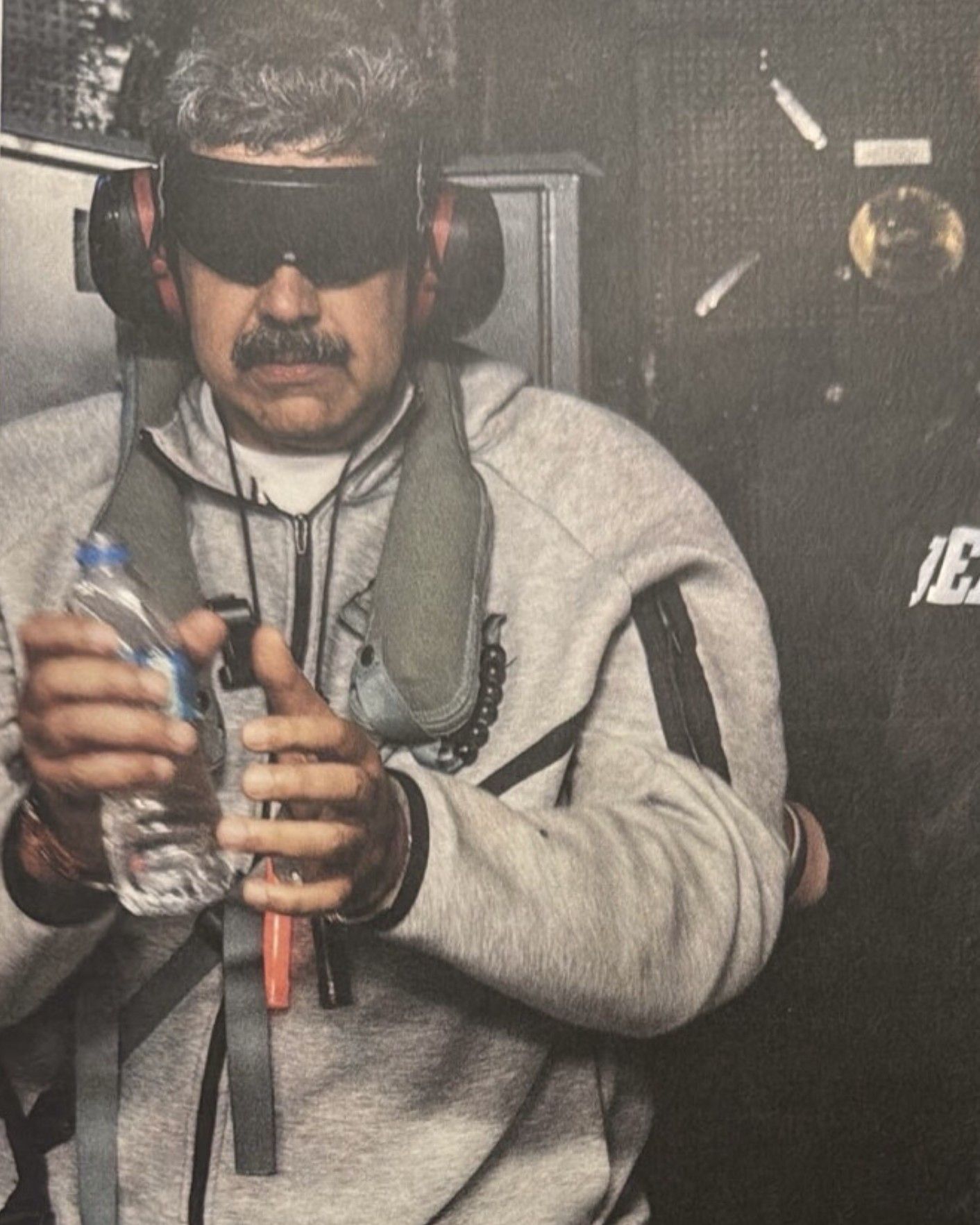
While the operation itself sparked global debates on sovereignty and geopolitics, it was Maduro's unexpected post-capture outfit that captured the imagination of the internet: Donald Trump shared a photo of the detained leader wearing an oversized Nike Tech tracksuit, a black mask over his eyes resembling oversized Tom Ford or Rick Owens sunglasses, and noise-canceling headphones that looked like classic Beats by Dre—plus the handcuffs. Shortly afterward, the Nike Tech suits on the brand's site completely sold out.
Oddly enough, it was a look that was both utterly inappropriate for the grave situation and perfectly fitting: the proportions, the headphones, the black mask, and even the dictator's mustache made him seem like a character halfway between Giorgio Moroder and Haider Ackermann on a day off. The internet audience greatly appreciated both the outfit itself and its relative extravagance, but beyond the humor, some observers speculated that the choice of clothing carried subtle political connotations. But what exactly?
What Was Maduro Wearing?
Nicolas Maduro rocking that casual gray Nike tech fleece fit while getting captured, you already know that man got 40 women left on read. pic.twitter.com/D41pWwb9Kc
— wave (@404xwavey) January 3, 2026
The initial images from Maduro's detention showed him in clothing far removed from the formal suits or military uniforms he often wore as head of state. At the center of the whole affair was a grey Nike Tech fleece tracksuit that, according to some, was quite oversized, fitting loosely even on the dictator, consisting of a full-zip hoodie and matching joggers.
Later images from his arrival in New York revealed a new (yet no less popular) outfit that included a light blue hoodie from the American brand Origin, based in Maine. According to reports, this hoodie was provided by a DEA agent, and it is precisely this piece that raised questions about possible political symbolism in these detainee looks—much like Luigi Mangione's orange jumpsuit during his arrival at the New York prison where Maduro is now held, alongside P. Diddy.
Was There a Hidden Meaning?
If we try to find the deeper meaning behind the release of these images (given the level of U.S. propaganda, there's no need to imagine anything overly sophisticated, honestly), the choice to present Maduro in these outfits becomes interesting in light of the dictator's long-standing anti-American rhetoric, through which he has always positioned himself as a fierce opponent of U.S. imperialism.
Being captured and shown to the world while wearing hyper-American brands like Nike and Origin—a global capitalist mega-giant and a workwear brand entirely made in America whose identity is deeply tied to patriotic and traditionalist U.S. values—carries a certain weight. It's also possible that the photos were intended to generate global free advertising for two American brands in the context of the return to American Made in everyday consumption, a key point of the Trump administration's agenda.
The brand's founder, in an Instagram video yesterday, joked that they put the hoodie on him to let him feel «the fabric of freedom on American soil». The same founder noted that the hoodie in question, whose color is called Patriot Blue, is designed to cool rather than warm, so making him wear it on the freezing New York tarmac might have been meant to make him feel «comfortable or a little uncomfortable».
The episode echoes historical precedents, such as that of the late Cuban dictator Fidel Castro, who in his later years often wore Adidas and Nike tracksuits, another Western athletic brand, despite his communist ideology and criticism of American influence. Castro's shift from military uniforms to sportswear was seen by some as a softening of his image, but in Maduro's case, the American labels could be interpreted as a targeted jab, highlighting the dominance of U.S. culture even in moments of defeat.
Finally, there could be an element of humiliation in denying Maduro more dignified or formal clothing. Instead of allowing him to appear in a suit or official attire that might preserve an appearance of authority, the casual, everyday outfits reduce him to the level of an ordinary detainee, stripped of his political role. A classic psychological tactic that diminishes the figure of a dictator in the public's eyes, while amplifying the narrative of swift and unceremonious justice.
Then there's the Nike Tech, which is perhaps the single item today most associated with street dealers and criminals, and it might serve the purpose of painting the political enemy as a seedy criminal. Whether it was all planned in advance or happened by chance, Maduro's viral outfits have turned a geopolitical crisis into a cultural meme, blending fashion, politics, and schadenfreude in the digital age.
Takeaways
- 2026 opens with a major political-military event: the capture of Venezuelan President Nicolás Maduro by U.S. forces, carried out in the night of January 3 and concluding with his transfer to New York.
- While the operation sparked international debates on sovereignty and geopolitics, what went viral was Maduro's casual post-arrest attire: an oversized grey Nike Tech Fleece tracksuit, a black mask over his eyes, and noise-canceling headphones—a look that led to the immediate sell-out of the model on Nike's website.
- Subsequent photos show him wearing a light blue “Patriot Blue” hoodie from the American brand Origin, provided by a DEA agent, fueling speculation about possible political meanings tied to Maduro's anti-American rhetoric.
- The choice of casual clothing and U.S. brands could indeed represent intentional humiliation, a way to reduce him to an ordinary detainee, portray him as a street criminal, and simultaneously provide free advertising for “American Made” brands, in line with the Trump administration's agenda.