




























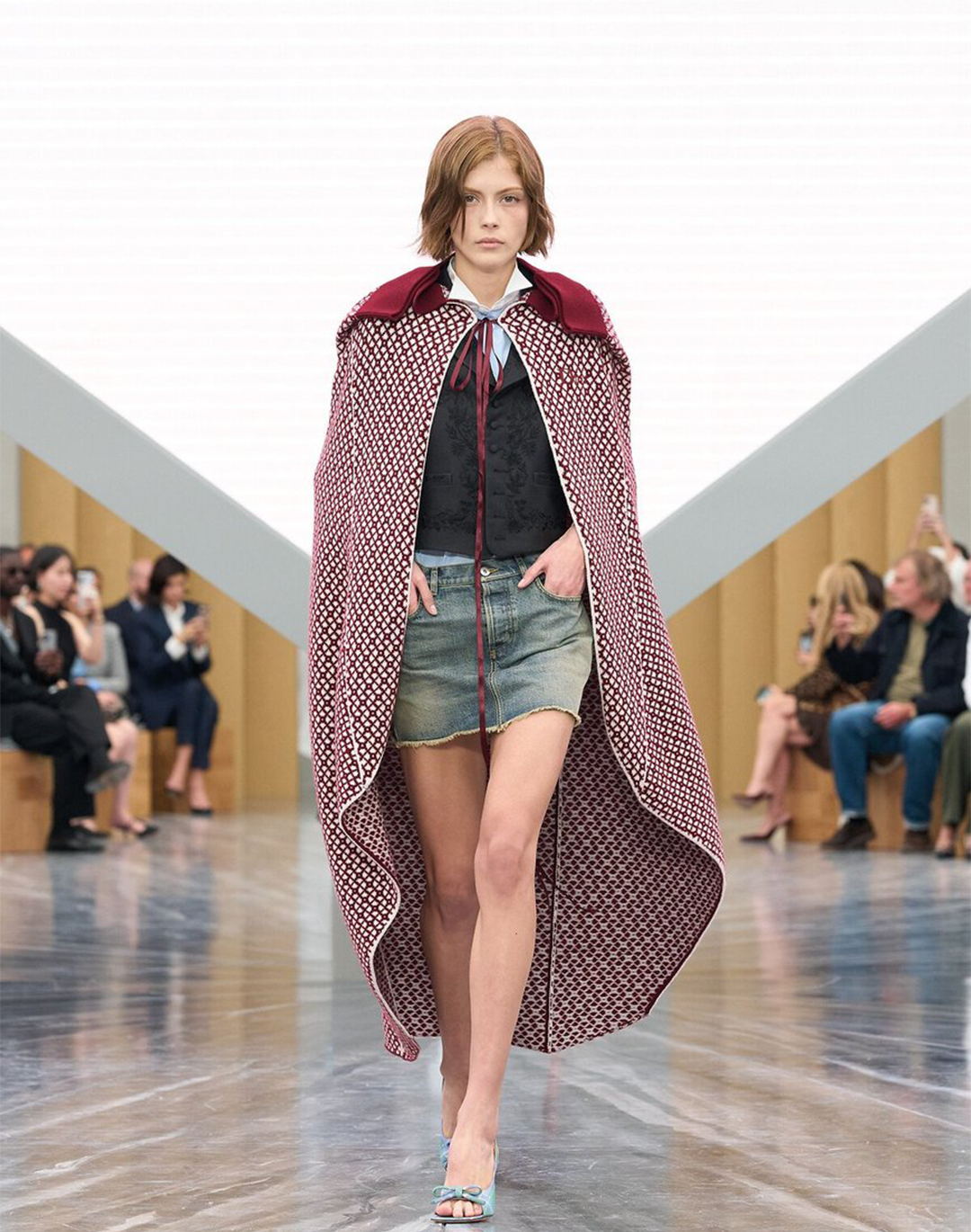
This winter’s power coat is the cape The cape is back on the runway and it’s no longer just a costume piece
After years of being regarded exclusively as a theatrical costume or a historical garment, worn only on special occasions such as couture shows and red carpets, this piece — especially through contemporary reinterpretations of its historic variants — seems to have returned to recent ready-to-wear runways, relaunched by brands as a far more impactful and original alternative to a classic coat or an ordinary puffer jacket. With which stylistic narratives have the designers of the fashion system translated the aesthetic codes of the cape in order to make it appealing once again for the contemporary market?
From tradition to the runway


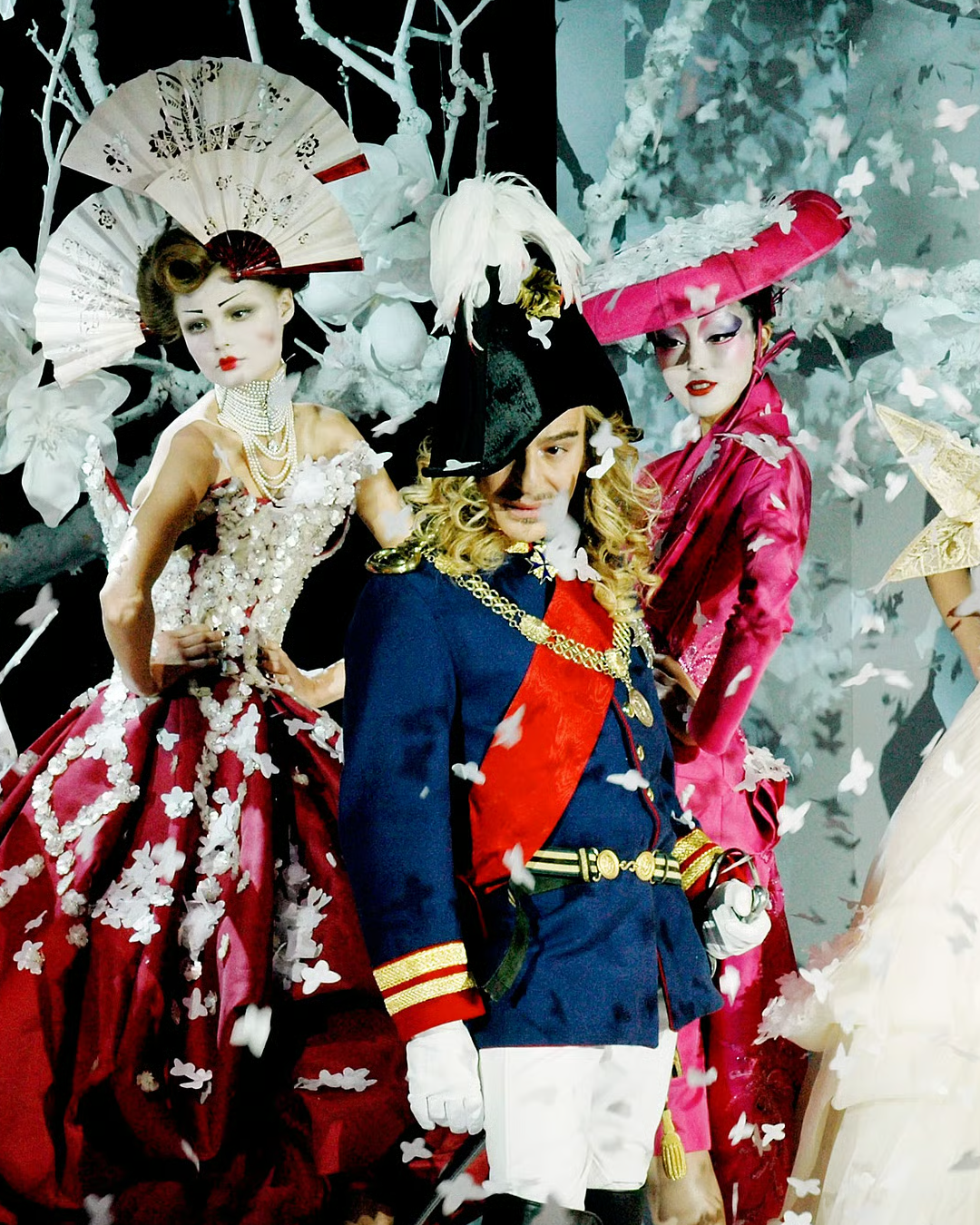
Some designers have drawn directly from the cape’s historical legacy. Jonathan Anderson, for example, in his debut collections for Christian Dior’s womenswear and menswear, seems to have taken inspiration from the dandy and romantic essence of the garment: we find large meadow-green wool coats and true capes that chromatically recall those worn by fairytale princes, yet at the same time possess the imposing theatricality of those donned by Dracula.
Seán McGirr, on the other hand, in his latest winter collection for McQueen pays tribute to the elegance of the flâneurs depicted in Oscar Wilde’s novels, sending down the runway Victorian redingotes with long trains. Meanwhile Nicolas Ghesquière, among the “veterans” of the trend, references the medieval imaginary tied to the cape. In his most recent resort collection for Louis Vuitton, the designer creates coats with trapezoidal silhouettes decorated with prints and embellishments that evoke the spires of Gothic cathedrals.
A ground for experimentation


The revival of the cappa marks a focal moment in the trend’s evolution: the sleeveless cape, originating from the sword-bearing nobility and the sacred clothing of the clergy during the Middle Ages, appears in several collections. Alessandro Michele resurrects the piece from the archives of the Roman maison, presenting it in the iconic Valentino red, halfway between a cardinal’s “cappa magna” and a 70s-inspired reinterpretation of Little Red Riding Hood’s cloak. Yet Michele is not the only one to explore this silhouette: in Coach’s Resort 2026 collection the cappa comes with an animalier print paired with furry cat ears, while Nili Lotan proposes a military-chic version with a sort of carabiner fastening the cape.
In some cases the cappa becomes a space for experimentation: at Sacai, design engineering transforms it from a deconstructed trouser reassembled into a cape; Pierpaolo Piccioli, in his debut for Balenciaga, draws on the maison’s fluid silhouettes to craft his own leather blouse-cape; meanwhile Niccolò Pasqualetti, in his SS26 menswear, sends down the runway a hybrid outerwear piece halfway between a trench and a sleeveless cape, completed with shoulder cuts. Pieter Mulier at Alaïa creates instead a symbolic and conceptual dimension around the garment: the Belgian designer merges the geometry of the kimono with the amplitude of the cape to draw garments of dramatic magnitude which, as he himself says, seem almost like “clothes that cry.”
The cape trench coat


Another type of cape that has dominated the runways is undoubtedly the cape trench coat, a typically British model that integrates the cape by stitching it onto the shoulders of the classic trench. This coat owes its fame to the silver screen and in particular to noir films of the early sixties, where it became the uniform of detectives and secret agents. The cape trench coat — a perfect combination of functionality and mysterious allure — appears in the new collections of TWP, Uma Wang, and MM6 Maison Margiela, while Burberry celebrates it as an iconic model of the brand in its most recent fall/winter campaigns. For those who love the rain but don’t want to give up coolness, there is the storm cape. This military-origin waterproof cape with hood is presented in leather and latex in Alexander Wang’s SS26 collection, while at Yaku the garment resembles a sort of dragon costume.
From Greco-Roman origins through the Renaissance, the cape has represented a symbol of noble status and economic power, and it is precisely this idea of wealth evoked by the garment that inspires several maisons — especially in proposals for the women’s wardrobe, whether that of a mob wife, a first lady, or a businesswoman. It’s no coincidence that we find this piece as a protagonist in the most recent collections of Hermès and The Row, which presented cashmere ponchos, shearling capes, and coats with integrated capes.
Cape-core and its identities


Continuing with brands emblematic of old money and quiet luxury, both Celine and Bottega Veneta have embraced the trend: in the former, Michael Rider sends out dresses with capes tied at the neck like refined scarves, while Louise Trotter, playing with unusual textures, creates a sort of poncho entirely covered in fringes.
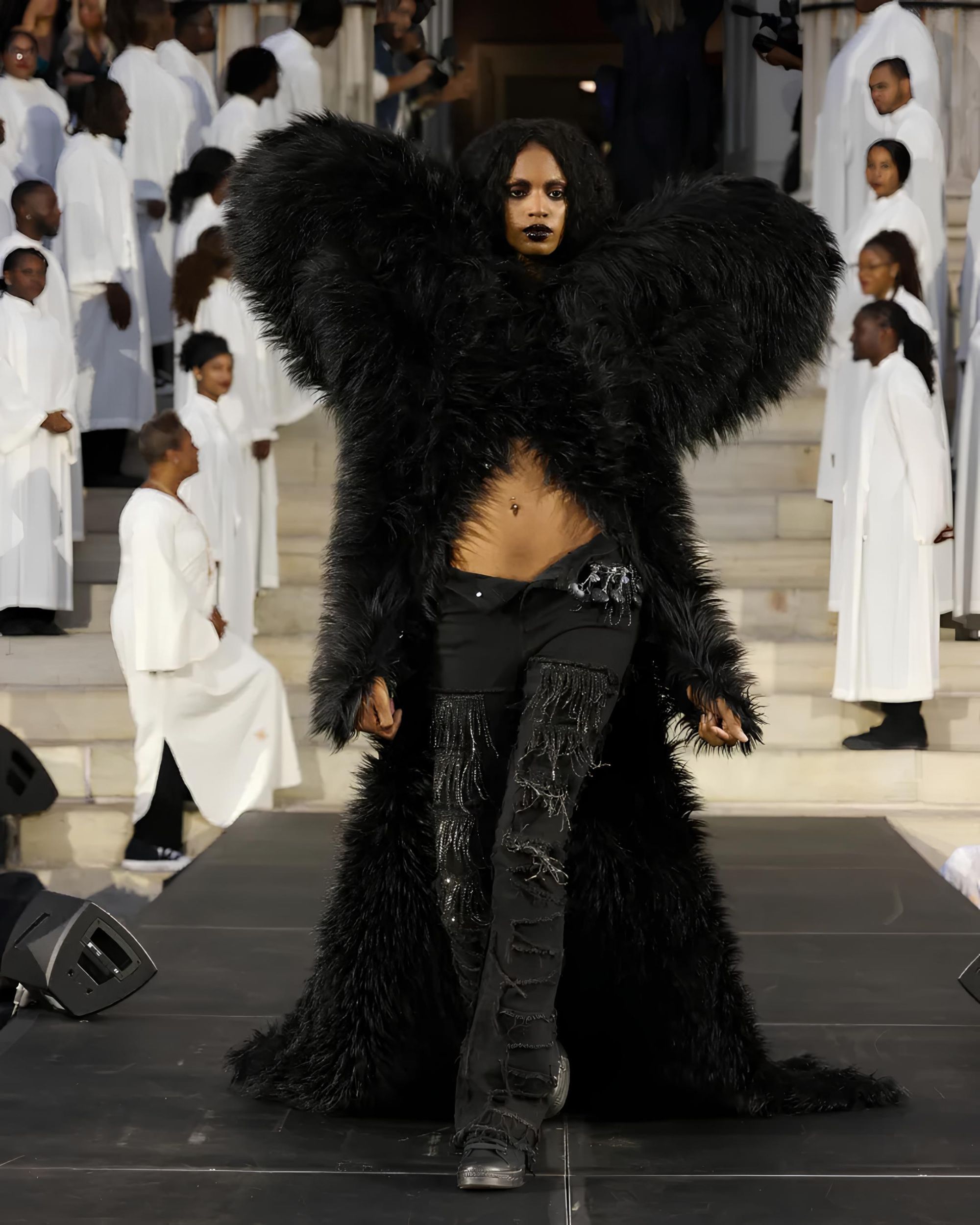
At the same time, the cape has been consecrated as a true evening gown: David Koma, for instance, completes some SS26 Blumarine looks with a fairy-like spirit by adding light chiffon drapings; Demna Gvasalia, in his debut for Gucci, proposes a feathered monogram cape — the perfect look for a Hollywood “Prima Donna”; while for Haider Ackermann, the cape becomes the epitome of eroticism: in Tom Ford’s Resort 2026 collection we find a sort of open sheer caftan that unmistakably recalls certain Halston designs worn by his muses on the dancefloors of Studio 54.
A contemporary dualism


It is Matthieu Blazy who closes the circle of cape-core: in his first Métiers d'art collection for Chanel, the designer stages a voluminous black silk cape in a typical New York subway, fastened in the front with a large bow — a look that has cyclically returned to the brand’s runways under previous creative directions, but which here is reimagined as a kind of “urban costume” for a metropolitan superheroine or more likely destined for a wealthy Upper East Side lady on her way to the Opera.
Perhaps it is precisely in this dualism that the meaning of the cape resides: functional and protective against the cold, yet at the same time scenographic and powerful enough to make us feel invincible, like our favorite heroes or villains.