























Goodbye to Marina Yee Who was she and what wasa her impact on fashion?
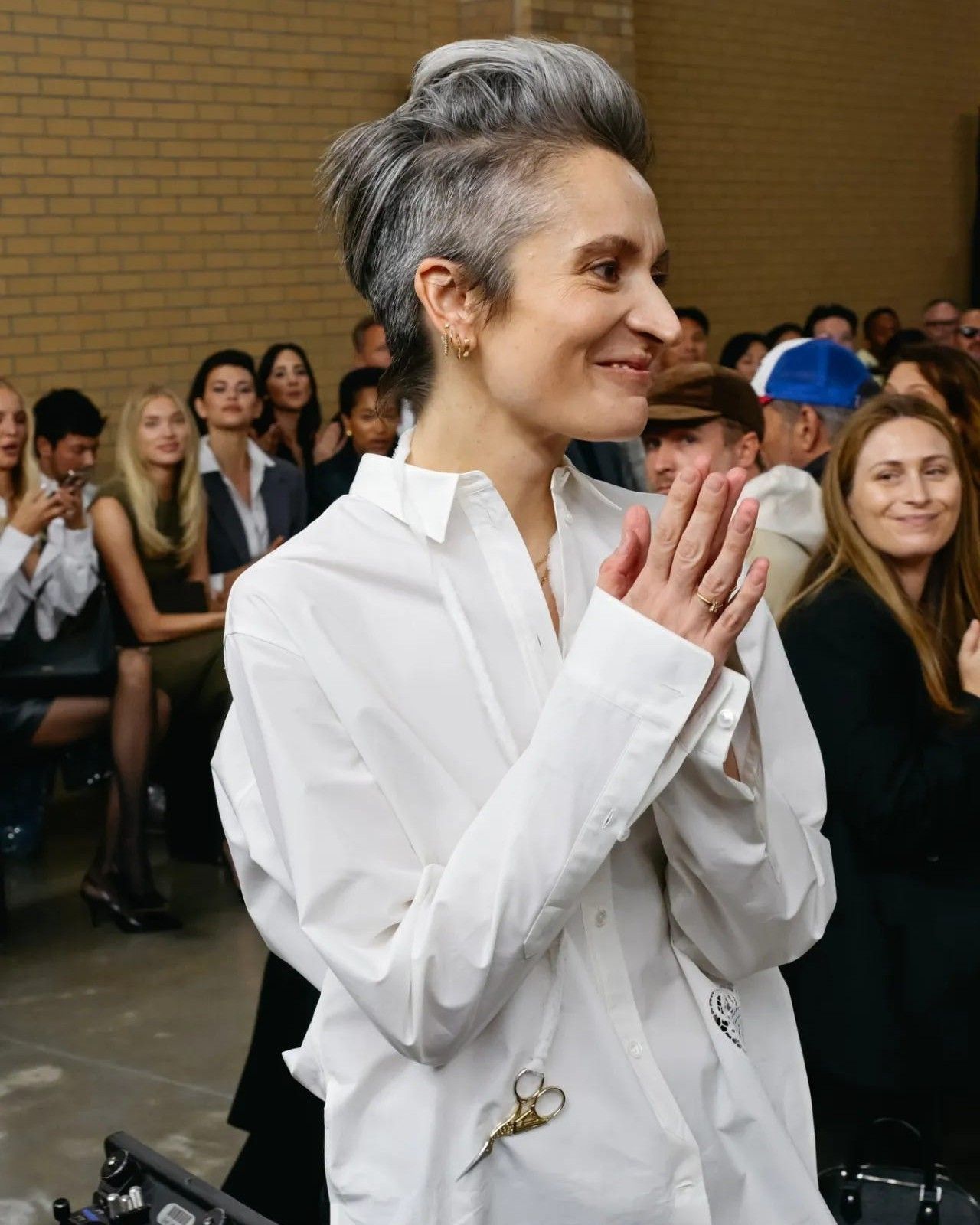
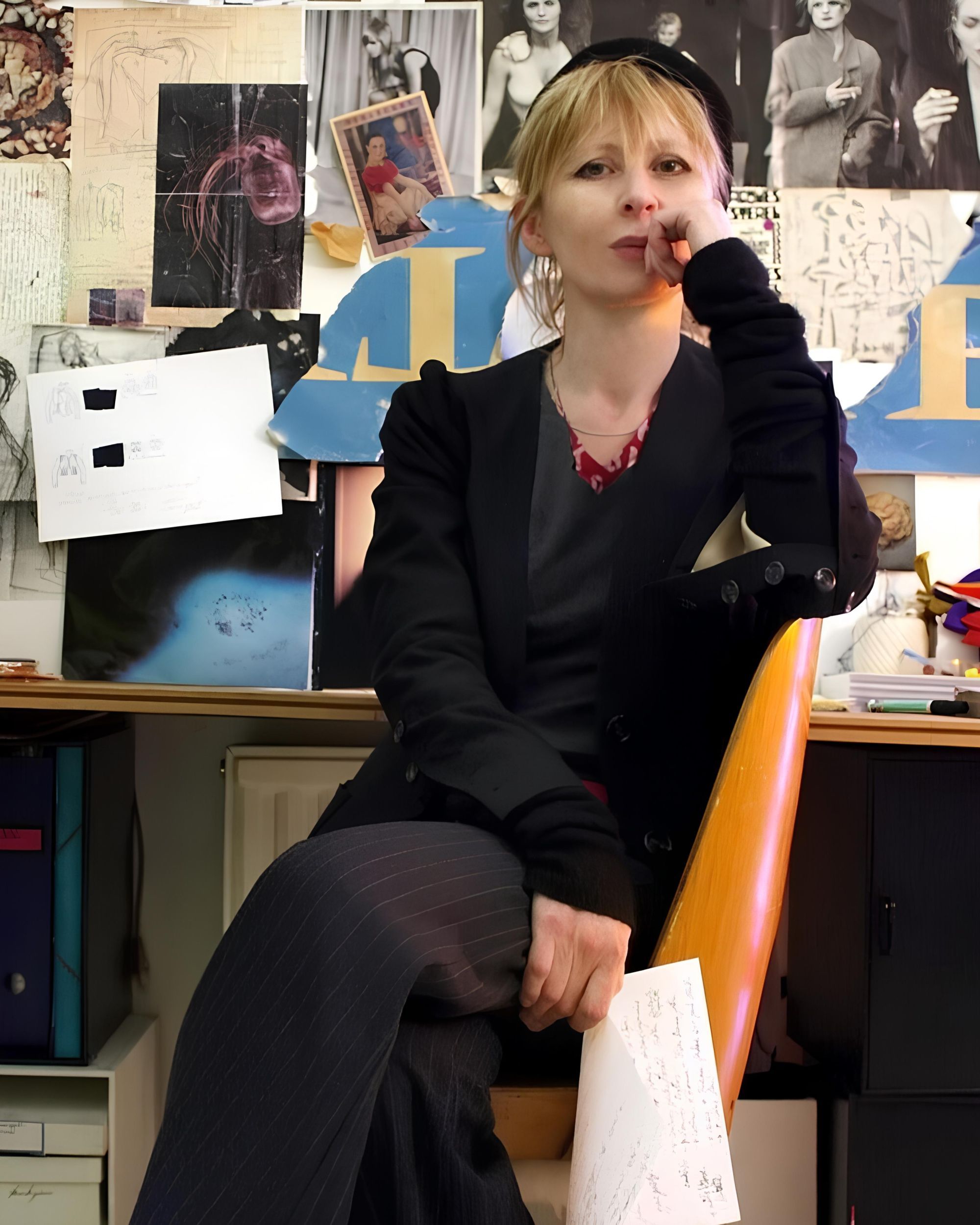
Marina Yee, iconic Belgian designer and member of the legendary "Antwerp Six" group, passed away on November 1st at the age of 67, after a courageous battle against cancer. The news was announced by the MoMu Antwerp Fashion Museum, whose director Kaat Debo described her as «an extraordinarily authentic voice in Belgian fashion», whose work was «radically honest, poetic and always rooted in respect for people and materials».
Throughout a career spent away from the spotlight, Yee represented a bridge between conceptual art and fashion design, challenging the conventions of the 1980s with creations that celebrated simplicity, patchwork and that deconstructivist approach typical of Antwerp fashion. Her early retirement from the fashion world in the 1990s then allowed her to explore other creative fields, although later, in 2021, Yee returned to fashion with upcycled collections that recaptured the international spotlight. But who was Marina Yee?
The Life of Marina Yee
@jeremiah.officall Marina Yee / / / #highfashion #marinayee #antwerpsix #fashionnews Originalton - JEREMIAH.
Marina Yee was born in 1958 in Antwerp, Belgium. She entered the Royal Academy of Fine Arts in Antwerp in the late 1970s, just when punk burst into the city and across Europe. She graduated in 1981, studying fashion alongside a revolutionary generation that included Ann Demeulemeester, Dries Van Noten, Walter Van Beirendonck, Dirk Van Saene and Dirk Bikkembergs, forming the legendary Antwerp Six. In 1986, Yee participated in the British Designer Show in London, an event that catapulted the group onto the international map.
She initially worked for Belgian brands like Gruno & Chardin and Bassetti, honing her skills after graduating in 1981, before founding the Marie brand in 1986, focused on experimental creations with patchwork and dissonant graphics. In 1990, however, at the height of success, she abandoned fashion to dedicate herself to theater costumes, interior design and art. This choice was linked to her relationship with Martin Margiela, who saw her as a muse, as recounted by Eugene Rabkin on BoF; he was so inspired by her for his 1989 debut show that it led her to stop her own work in fashion: «I wanted to be my own inspiration and not inspire someone else», she said.
In the following years, she started a family, opened a café in Brussels and turned to teaching: she began at the École Supérieure des Arts Saint-Luc de Tournai, then at the Koninklijke Academie voor Schone Kunsten (KASK) in Ghent and the Royal Academy of Art (KABK) in The Hague. In 2021, Yee returned to the runway with the "M.Y. Collection", a capsule of designs revisited from vintage pieces. The brand, focused on upcycling and couture, relaunched in 2022, reaching stockists like SSENSE, Farfetch and The Broken Arm. This return to the scene was nonetheless temporary, and Yee remained away from the spotlight for the rest of her career.
Marina Yee's Impact on Fashion
Marina Yee's impact on fashion has been profound but transversal: as a member of the Antwerp Six, she subverted the superficial glamour of the 1980s with a more cerebral and ethical approach, redefining the modern fashion landscape. Her aesthetic rooted in classical references and the hidden details of historical garments has always prioritized craftsmanship over consumerism. An approach common to all the “Six”. Moreover, Yee directly influenced key fashion figures: ex-girlfriend of Martin Margiela, she was muse for his first 1989 runway show, inspiring asymmetrical cuts and overlays. She was also instrumental in launching Dirk Bikkembergs' womenswear, for which she worked for three full years, as explained by De Tijd.
Her philosophy encapsulated in the motto, also cited by Eugene Rabkin on BoF: «I like simplicity, because it is difficult to achieve; one must eliminate all superfluous elements», has permeated both her teaching and her design. Through "Marie" and "M.Y. Collection", she anticipated sustainable trends and, as a teacher, trained generations, instilling respect for the inside of the garment and for experimenting with fashion languages, approached more as the embodiment of a philosophy than a merely commercial product.
What to read next
5 trends that Trainspotting anticipated Back in 1996
There is much more to the film than the famous Helmut Lang tank top
Why young people choose counterfeit fashion
«Consumers will increasingly decide for themselves when it's worth paying for an authentic item»