







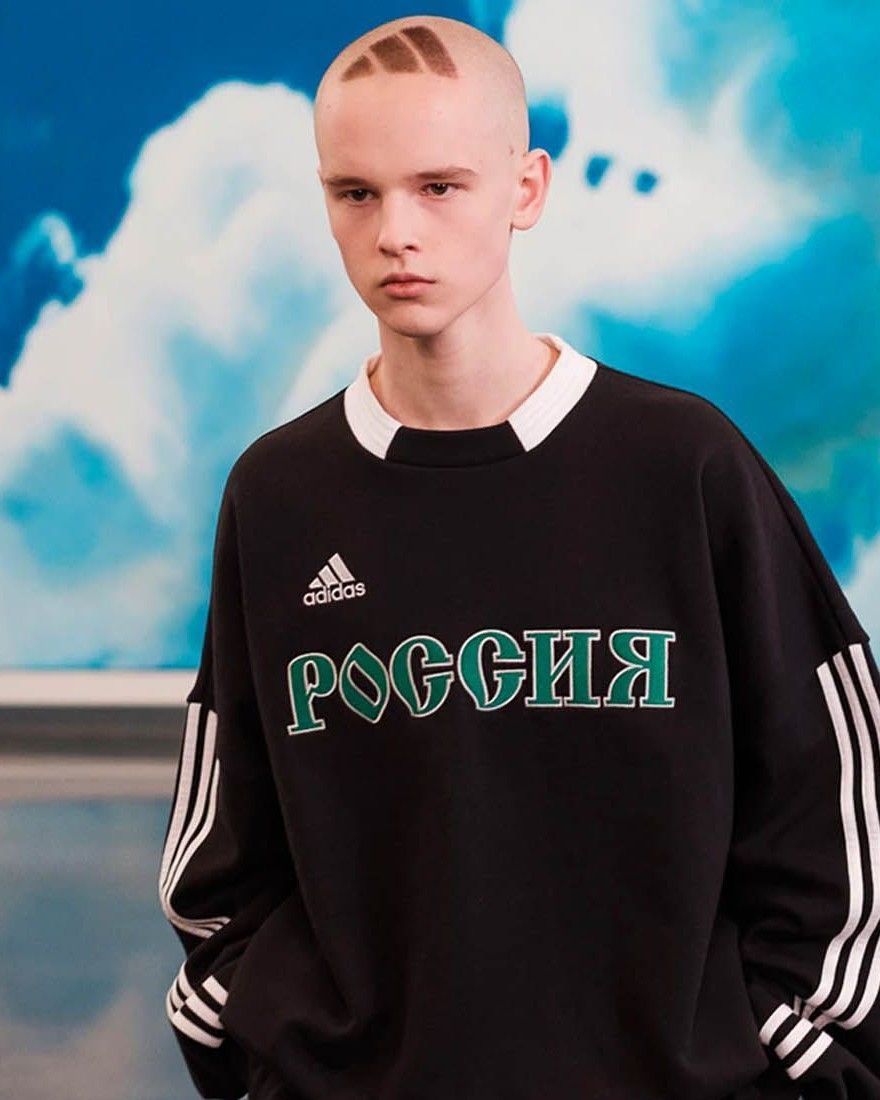
Did the world need Gosha Rubchinskiy to come back? Responding wisely is not as easy as it seems
Gosha Rubchinskiy, the Russian designer who dominated the fashion scene in the 2010s with his post-Soviet-inspired streetwear, has relaunched his brand. For those who may not recall, he had shut it down in 2018, months after screenshots of Instagram chats surfaced in which the designer allegedly requested photos from a minor for a supposed casting. At the time, in the midst of cancel culture, these were enough to obliterate his brand in a matter of days, though the designer retained supporters, including Dover Street Market mogul Adrian Joffe and Kanye West, from whom Rubchinskiy later distanced himself following the rapper’s pro-Nazi statements that led to his fall from grace. A few days ago, in an interview with BoF, Rubchinskiy expressed his determination to start anew, describing this moment as an opportunity to rebuild from the ground up. But why does this comeback feel so problematic?
Why Was Rubchinskiy Canceled?
@delugesourcing Gosha Rubchinskiy Was CANCELLED After This Shocking Scandal #streetwear #outfitinspo #russia original sound - delugesourcing
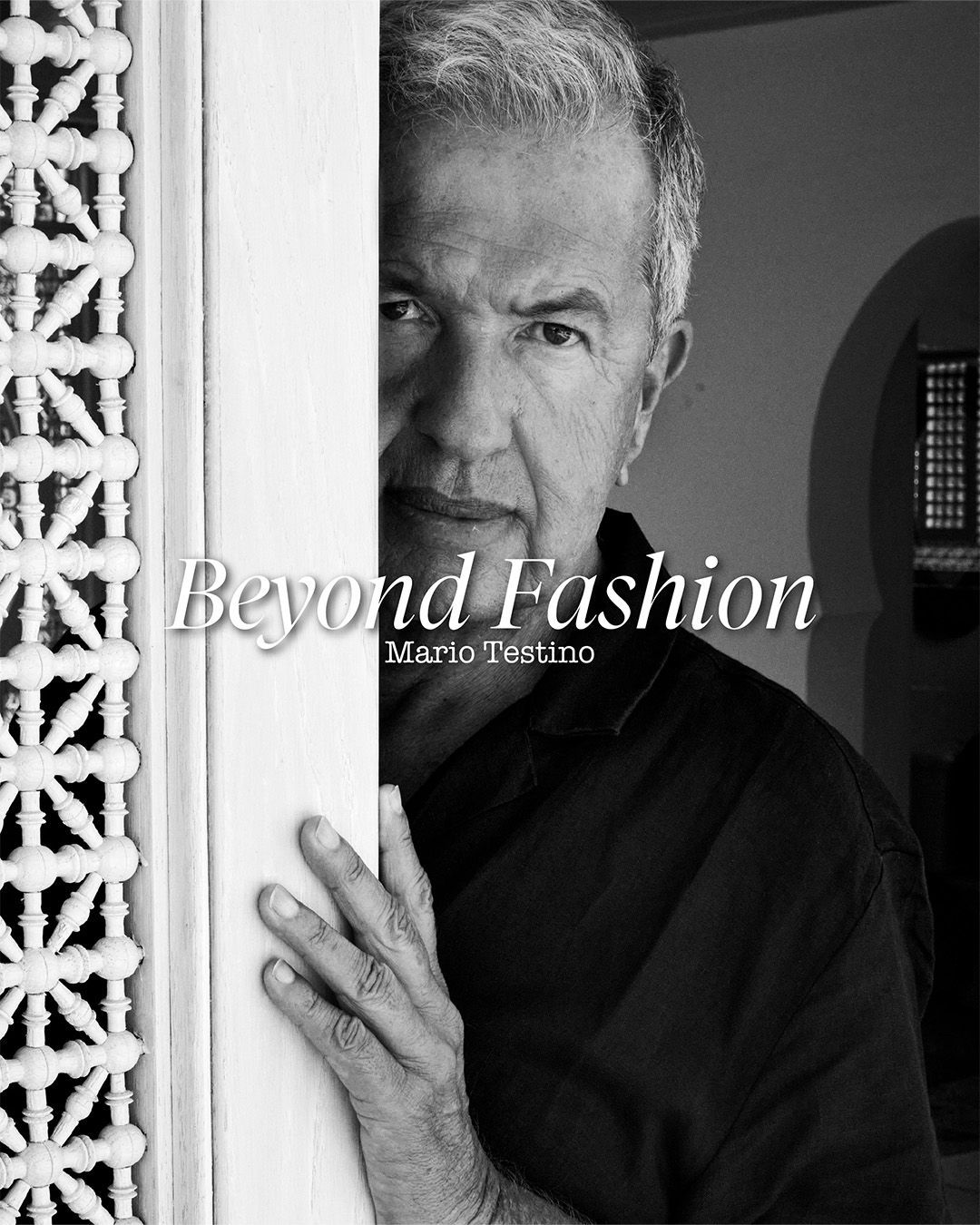
As early as April 2018, Rubchinskiy had announced the temporary closure of his brand and the discontinuation of seasonal collections as part of a business restructuring. Months later, a 16-year-old named Jan Silfverling posted screenshots of private Instagram and WhatsApp conversations online, accusing the designer of soliciting explicit or provocative photos, even suggesting he take them in the bathroom to avoid his parents. The news, breaking in the peak of cancel culture, sparked an immediate debate about the safety of street casting non-professional models across the fashion industry. This was the era when heavy accusations were emerging against giants of fashion photography like Terry Richardson, Mario Testino, Bruce Weber, and the late Patrick Demarchelier.
So Gosha Rubchinskiy Is dirty pedofile asking kids for pics and videos online @HYPEBEAST @highsnobiety #gosha #rowa this what the fashion Industry fully of absolutely nonces #gosharubchinskiy pic.twitter.com/it2bGr05FE
— DrillInsider (@DrillInsider) December 8, 2018
Shortly after, a second similar accusation surfaced from another unidentified individual who shared a screenshot of a comparable exchange from the previous October. Rubchinskiy responded immediately through his team, categorically denying any inappropriate behavior. He stated that the exchange was part of a standard “street casting” process for a lookbook: the boy had contacted the brand first to apply, and the photo request was merely to file among other candidates, following a FaceTime video call. The team added that the messages had been “altered and taken out of context,” and that the boy, after being blocked for persistent contact, had acted out of revenge.
An Accusation Without Proof
Objectively, the accusations have never been formally confirmed or debunked through legal proceedings or official investigations. There are no records of criminal complaints, civil lawsuits, or judicial proceedings against Rubchinskiy related to this incident, either in Russia or elsewhere. Adidas, a partner of the designer at the time, launched an internal investigation in December 2018 but did not publish public findings, and the collaboration continued until 2022, when Rubchinskiy left for other reasons. In industry press, the episode remains defined as an “unproven accusation” due to the lack of concrete evidence beyond the screenshots. No legal verdicts confirm or refute them, nor have independent investigations clarified the matter.
This creates a dilemma: on one hand, formally speaking, Rubchinskiy is not guilty of anything; on the other, a cloud of suspicion surrounds him, and his reputation is undoubtedly tarnished. Playing devil’s advocate, in the case of the #MeToo photographers or Alexander Wang, there were numerous accusers and lawyers involved, as well as actual lawsuits that, while not resulting in convictions, likely ended in extrajudicial settlements where accusers were financially compensated on the condition of dropping the matter permanently. This could indirectly, albeit inconclusively, suggest something occurred. In Rubchinskiy’s case, however, the accusations are extremely vague and isolated, and did not even involve physical harassment, given that the accusers of the photographers and Wang numbered in the dozens, while little or nothing is officially known about those against Gosha.
The decision on Gosha’s guilt, in short, rests on the conscience of each member of the public. Although the accusations are deeply troubling, nothing has been proven. And surely, one could not expect Rubchinskiy to abandon everything and go work in a factory or till the land over an unproven accusation. His return, nonetheless, remains problematic because merely discussing or writing about it while trying to maintain objectivity gives the uneasy feeling of attempting to justify a guilty party through convoluted reasoning. But that’s the crux: those who believe Rubchinskiy is guilty will continue to do so; those who believe in due process will consider him innocent. Is it fair that, in the meantime, for a serious but unproven accusation—effectively a rumor—an ordinary person should give up their life forever? Oddly, it’s more a matter of vibes than legality. Perhaps the focus should shift to another, more pressing issue: Rubchinskiy is Russian.
Is There Still Room for Soviet-Core in 2025?
Attention, European Union!
— Anton Gerashchenko (@Gerashchenko_en) July 10, 2025
Russian propagandists keep threatening Europe with nuclear weapons, saying that no one would need "an outskirt of Eurasia with high levels of radiation," adding that the EU's place is "by a sh*thole." pic.twitter.com/OUuSou0VZo
Rubchinskiy’s aesthetic has always been rooted in the style of Russian youth after the collapse of the Soviet Union. Adidas tracksuits, near-military haircuts, vaguely criminal tattoos, Cyrillic script, smoking cigarettes in a Slavic squat amid a hellish landscape of snow, mud, and decaying gray apartment blocks. A full-on cosplay of hardcore post-Soviet youth that felt authentic, fascinating, and unexplored before 2020. Of course, the so-called Soviet-core is not exclusively Russian but belongs to all the countries of the former USSR, so much so that the Georgian Demna was one of its most important proponents. This does not negate the Russian influences on this aesthetic, nor the fact that Rubchinskiy is, to all intents and purposes, Russian. And today, three and a half years after the Russian invasion of Ukraine, with Putin sending drones to violate Polish airspace and hinting at threats to Finland and Poland; with Russian bots and hackers flooding the internet with disinformation, and party activists like Vladimir Solovyov evoking the specter of nuclear strikes on Germany, things have definitely changed.
While expressing sympathy for Russian citizens who are not directly responsible for this geopolitical situation, it must be said that fashion in 2025, however creatively stagnant, flawed, outdated, or problematic, has little room to finance a brand whose vision is tied to a nation that poses a concrete threat to Europe. After 2022, the brand also severed ties with the Comme des Garçons group, and after the relaunch, it has been described as a “collective venture” funded by personal capital and friends. There are no public details on a new corporate registration, but the official website does not specify legal addresses—for all we know, the brand could be a fully Russian company. With this ambiguity in mind, we ask: which European citizen in 2025 would be willing to associate, even just aesthetically, with a nation openly hostile?