


























Will hype save the Catholic Church? Right now, it seems so
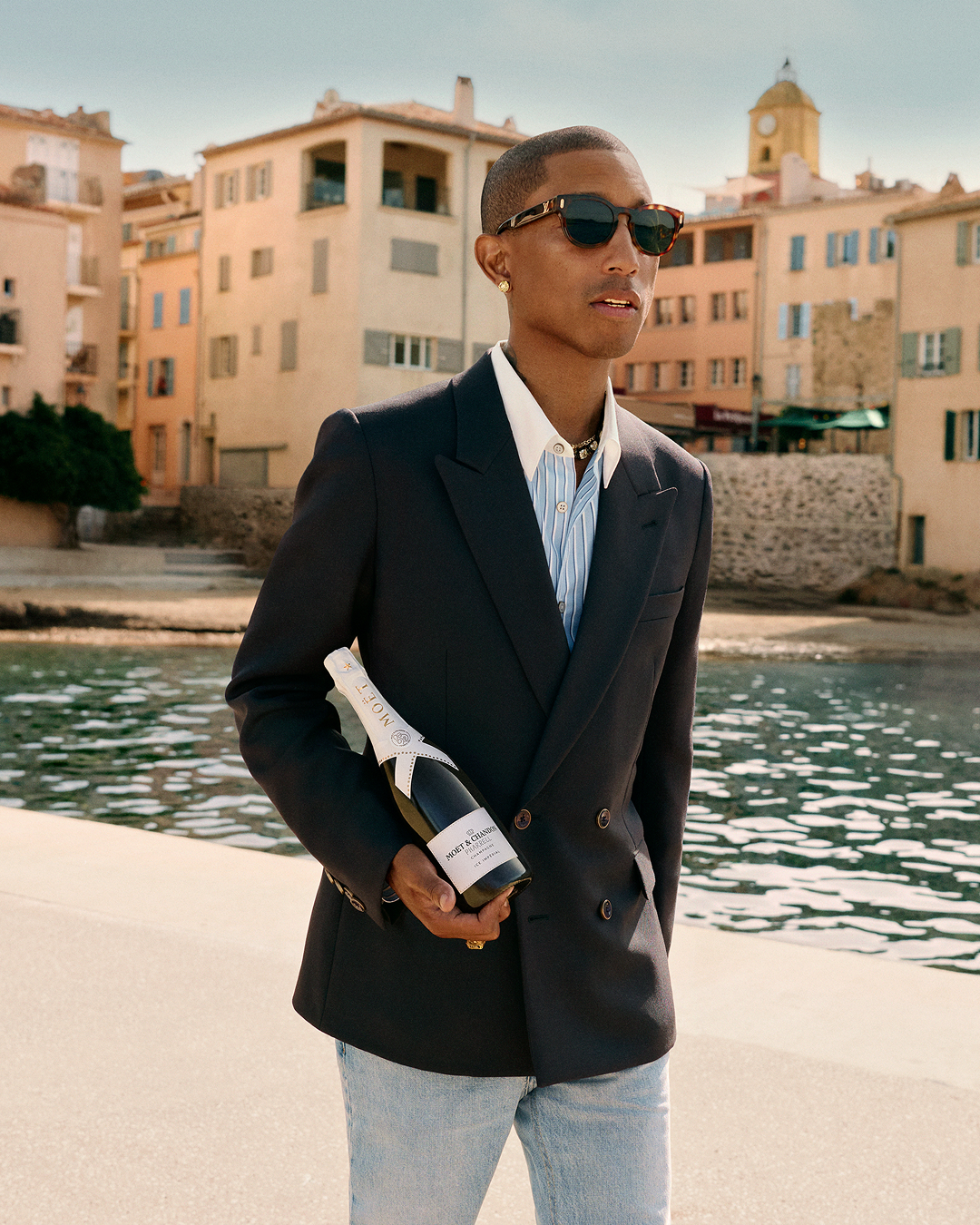
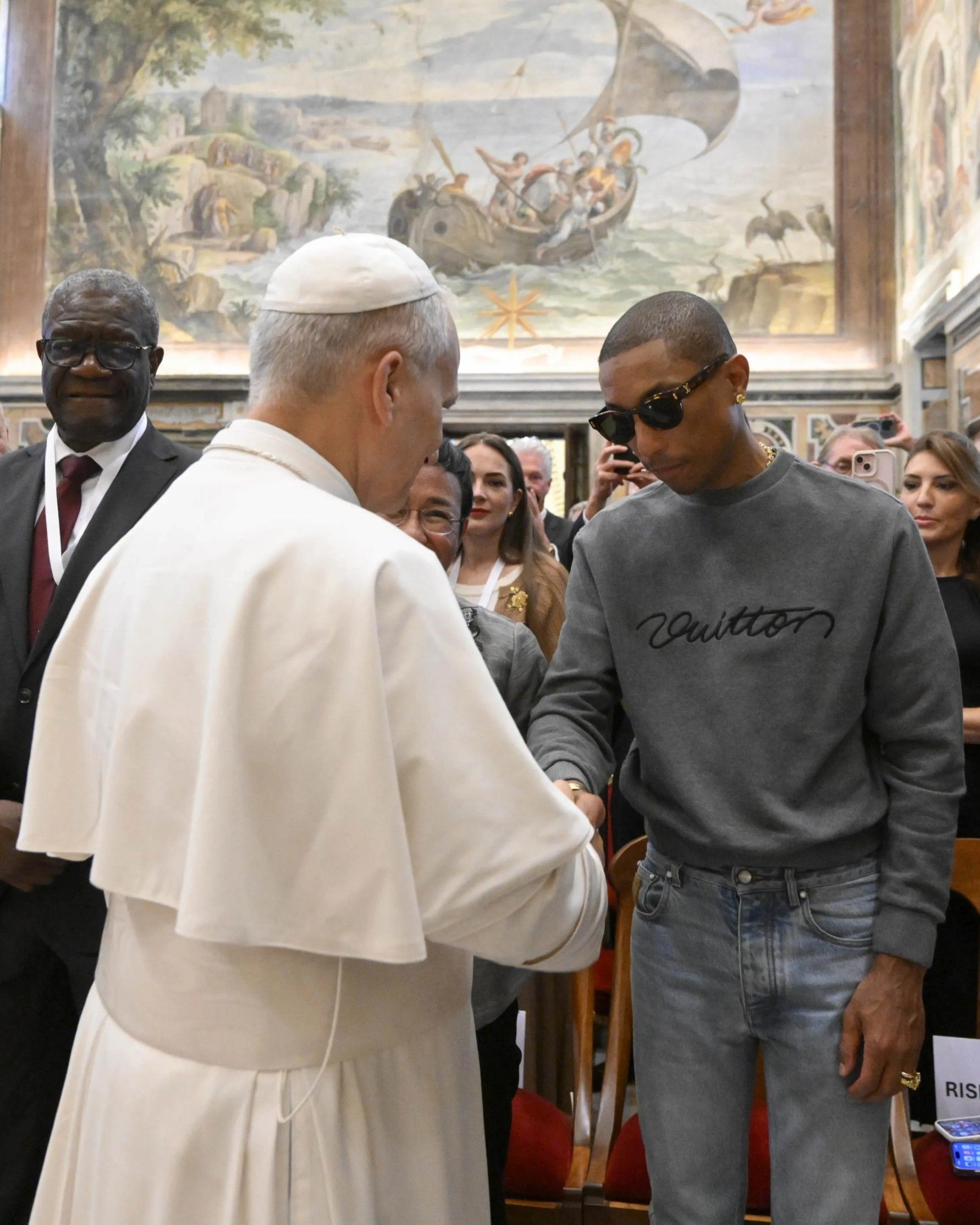
In recent days, images of the drone show held at the Vatican following the "Grace for the World" concert last Saturday in St. Peter’s Square have been circulating worldwide. A truly monumental spectacle that generated an extraordinary social media impact in the first 48 hours: a global stream with between 5 and 7 million views and peaks of over 500,000 simultaneous viewers; on X, the hashtag #GraceForTheWorld appeared in about 150,000 posts with 1.2 million interactions including likes, reposts, and replies, with the most viral posts, such as those by Pharrell and BamBam, surpassing 20,000 likes each, and the buzz around Clipse and the drones generating over 300,000 impressions. On Instagram and TikTok, the event reached between 3 and 4 million views, with Pharrell and Louis Vuitton stories hitting over 500,000 views and drone show reels on TikTok accumulating 2 million aggregate views, making the hashtag #GraceForTheWorld trend in over 50 countries. And this doesn’t even account for the estimated 80,000 people present in the square.
The concert in St. Peter’s Square wasn’t even the only occasion in 2025 when we talked about the Church, the Vatican, and the Pope—rather, there have been many. This year, Church-centric topics and events have periodically dominated the “Trending” column on numerous social media platforms, especially X. There was the Conclave, of course, with the death and funeral of Pope Francis and the election of Leo XIV; there was the Youth Jubilee, the canonization of Carlo Acutis, the rise in visibility of numerous Catholic influencers, and the endeavors of Cardinal Pizzaballa in Gaza and the transformation of the uncompromising Cardinal Sarah into a conservative icon first and then an ironic meme—things that the social media crowd followed with interest. A significant shift compared to when the Church and its followers made news for statements and faux pas or unfortunate remarks, often ridiculed, like when Pope Francis lamented the excessive “faggotness” of seminarians or when an elderly nun in Naples interrupted a sapphic kiss between two models for an advertisement, thinking they were a lesbian couple. This leads us to wonder: Is the Catholic Church undergoing a rebranding?
It All Began with the Conclave
@sanctamecclesiam The Conclave of 2025 was a breathtaking spectacle, watched in awe by souls across the globe. It was a moment of such beauty, it felt like the world held its breath in wonder #catholicism #foryou #conclave #CapCut Golden brown by the stranglers - rosyapple2
The enormous social media buzz surrounding the Church began during the Conclave last May. Following the immense popularity of the film of the same name, Conclave, which with all its gravitas had created a huge number of memes and a cult following online, the real Conclave became a sort of digital reality show. The social media numbers are staggering: 2.5 million posts on X; 150-200 million aggregate views on Instagram and TikTok; 50 million live-streaming views, with 5 million simultaneous views at the moment of the white smoke, are just some of the figures. Cardinals like Zuppi and Sarah became online celebrities, and the highly followed account @PopeCrave, a parody of @PopCrave, emerged, turning the ritual into a phenomenon that was not only followed but also the subject of memes and political instrumentalizations.
On X, about 35-45% of the 2.5 million posts with #Conclave2025 were user-generated (unofficial, including parodies and POVs on cardinals like Tagle or Pizzaballa), according to estimates from Know Your Meme and Dazed, which cataloged hundreds of viral memes like “Conclave Smoke Signal Parodies” and Chicago stereotypes about Pope Leo XIV. Even a seagull caught in the frame became the subject of ironic memes and online articles. The humor was rarely anti-clerical, so it could be considered positive exposure—nonetheless, in this vast mass of numbers and users, one must wonder how much of this popularity translates, pardon the pun, into actual conversions or whether we should simply settle for its less hostile tones and increased brand awareness.
The Church in the World of Social Media
Since Leo XIV was elected Supreme Pontiff, there has been a noticeable shift in the news we hear about the Church. Beyond the concert, last July there were extraordinary images (along with protests from residents and the amusing news of a surge in Grindr activity during the event) of the Youth Jubilee, whose climax, a vigil with the Pope at Tor Vergata, saw over one million faithful gathered, including an epic photo of the Pope sitting in a helicopter, still in flight, contemplating the human tide below him. Also during the Jubilee, in late July, the Pope met hundreds of Catholic influencers in St. Peter’s Square, calling them “agents of communion.” This was a continuation of the meeting that, in 2023, Pope Francis had already held with “digital missionaries” in Lisbon, described by the Vatican as a “starting point” for building a structured international network of online evangelization.
These initiatives, in essence, had already begun in the final days of Francis’s pontificate, and for some time, an ecosystem of “saints with jeans, saints with backpacks, joyful saints” has been developing, to quote the Holy Father’s own words. For a while now, on TikTok and Instagram, the profile of a priest, Don Alberto Ravagnani, has become very popular. Far from resembling the stereotypical elderly Catholic priest, he is young, handsome, witty, and posts videos of himself dancing, having fun, running, and training—all while discussing the Church and young people’s relationship with it. The message to his 269,000 Instagram followers and 132,000 TikTok followers is clear: Catholicism is not for losers. Then there’s Benedetta Palella, a 25-year-old from Puglia whose TikTok channel with 112,000 followers covers various aspects of Christian devotion. Hers is just the most visible of numerous online personalities, both young and old (other notable names include, in no particular order, Nicola Camporiondo, Barbara Marchica, and Michael Mattarucco), who portray a different side of Catholicism: joyful, youthful, and serene.
This is why initiatives to modernize without altering the Church’s image will be numerous in the coming months: the Artists’ Jubilee in November with concerts, theatrical performances, and light installations in St. Peter’s Square and at the Auditorium Conciliazione; the Volunteers’ Jubilee in December, which will include, among other things, another major evening concert; and also interactive exhibitions on the Holy Doors and Jubilee pilgrimages with projections and drones along Rome’s routes. But even for next year, a Papal Mass for youth in Chicago has been confirmed for June 28, 2026, at Rate Field, where the Pope will appear via video to speak about inclusion and the Church’s future, tying into his American background. Specifically, the focus on the United States aims to counter the decline in youth participation in the Catholic Church, using social media and viral events for global engagement. According to the Pew Research Center, 58% of adult Catholics in the USA are over 50 years old.
A Saint for Millennials
@centralcarloacutis 4 anos da beatificação de Carlo Acutis! #carlo #carloscutis #beato #igreja #catolicos #catolico som original - Central Carlo Acutis
Another moment when Church-related news circulated widely online was the canonization of Carlo Acutis on September 7. In this case, as with the Jubilee, the process had been initiated by Pope Francis in 2020. But the canonization, held during the Jubilee and presided over by Pope Leo XIV in St. Peter’s Square, had about 80,000 faithful present—a record number for an event dedicated to a young saint. Devotion to Acutis has become a phenomenon: from 2020 to 2025, visits to his tomb in Assisi, where his incorrupt body has been preserved since 2019, have increased by 300%, rising from 50,000 to over 200,000 annually, with peaks post-canonization (already +50% in the first two weeks of September 2025).
We can think of holiness as something abstract & inaccessible, but we see in modern saints how we can be holy in our ordinary life. Bl. Chiara Badano failed math & Bl. Carlo Acutis's Playstation controller is a relic. #HomilyTweet
— Fr Matthew P. Schneider, LC (@FrMatthewLC) November 1, 2020
On social media, the hashtag #CarloAcutis has surpassed 5 million posts since 2020, with a +40% increase after September 7, including viral TikTok reels portraying him as the “influencer of God.” In Brazil, where his first miracle occurred, there are over 100 prayer groups dedicated to him, and a Catholic publishing house has released comics and biographies that sold 50,000 copies in 2025. Just last week, there was even the theft of an Acutis relic in Venezuela, which led to a local investigation and increased media attention. Overall, his canonization has inspired a 25% increase in registrations to Catholic youth groups in Europe and Latin America, according to estimates from the Dicastery for the Laity.
The media buzz around Acutis has been significant, and not all of it positive. In recent days on Reddit, a perhaps innocent question became one of those meme-news stories reposted worldwide: Could Acutis’s PlayStation 2 be considered a relic? A formally legitimate question (theoretically, the answer is yes) but shared by many users with more irreverent than “sacred” tones. Similarly, there have been conspiracy theories discussing the dynamics behind Acutis’s canonization, spreading false claims about connections his family allegedly had with the Vatican—none verified. In short, when you expose yourself, you do so for better or worse, and it’s well known that conspiracy theorists worldwide love to dig into murky waters.
Old Church, New Problems: The Far Right and the LGBTQ+ World
Ieri sera Grindr stava scoppiando a Tor Vergata e dintorni.
— santiago (@fab_brink) August 3, 2025
E, sinceramente, fanno benissimo a divertirsi a dispetto delle regole bigotte di chi li ha convocati lì.
During one of these recent events, a potential problem emerged for the Church venturing into the world of social media. Outside the bubble of strictly Catholic media, the two news stories that circulated on social media regarding the Youth Jubilee concerned the LGBTQ+ world and social media political propaganda. The first, initially reported anecdotally by Il Foglio, and thus without concrete verification, was about a surge in Grindr activity in Tor Vergata during the mega-gathering of young faithful—a report to be taken with a grain of salt but indicative of the fact that in the community of young people the Church is now targeting, the percentages of LGBTQ+ individuals are very high and certainly much less repressed and fearful than in the past. And even though the Church today is far more tolerant than before, it’s clear that a balance must be found between upholding Catholic doctrine and inclusion of what is no longer perhaps an invisible minority but certainly not imperceptible within the Church, among clergy and faithful alike.
The second issue to address is political instrumentalization on social media, which, in the case of the Youth Jubilee, took the form of numerous accounts denouncing and often insulting pilgrims; but in general, on the internet, it increasingly associates Christianity as a whole with the most extremist political right. The phenomenon, especially in the American context, which includes evangelicals, Methodists, Presbyterians, and Lutherans among others, heavily uses Christian iconography for political purposes, given the historic link between the Church and the political right worldwide. For example, according to Grok, X/Twitter’s AI, the term “crusade” has grown by 50% in the last year on the platform, and in many cases with more or less veiled nationalistic and xenophobic implications, ranging from memes about “guys who just want the Crusades” to blatant propaganda.
@reportrai3 Elezioni del nuovo Papa. Secondo Benjamin Harnwell, all’interno del Conclave, ci sono stati più o meno dodici cardinali allineati alla visione politica e cattolica di Bannon, che insieme a molte altre organizzazioni ultraconservatrici americane ha provato a condizionare dall’esterno l’esito del voto per il nuovo Papa.
suono originale - Report Rai3
Already during the conclave, X was flooded with posts, memes, and misinformation promoting “conservative” cardinals as papal candidates, often from MAGA and right-wing Catholic accounts. The increase in mentions was 40-60% compared to normal periods, with about 2.5 million total posts on #Conclave2025, of which 30-40% were user-generated with memes (e.g., parodies on “Deus Vult” or cardinals as “anti-woke warriors”). Viral posts pushed figures like Cardinal Péter Erdő, Raymond Leo Burke, or Timothy Dolan, with hashtags like #ConservativePope or #MAGAConclave. A Daily Beast post reported that conservative U.S. Catholics offered donations to cardinals to favor a conservative, while Trump joked about Dolan as a candidate, fueling speculation. After the election, some MAGA extremists (like Laura Loomer) attacked him as “anti-Trump, anti-MAGA, and pro-open borders,” accusing the Vatican of a leftward shift, and the context of the Faith Office created by Trump last February, led by a classic American televangelist, established, if not an alignment, at least an affinity between the Church and U.S. conservatism.
In general, at the moment, the U.S. Republican Party and the U.S. government itself are incorporating a lot of religious faith into their political plans. From tradwives to the White House Faith Office; through videos of government officials praying and asking for blessings for Trump, and surreal moments like the live-painting by the artist Vanessa Horabuena, who, at an event known as the Liberty Ball, sang religious hymns while painting the president’s portrait. An episode that Republicans may have welcomed with enthusiasm but which sparked some hilarity worldwide. A scene that, in any case, shows that as the Church ventures into the digital world, the many views and attention it is garnering will require very astute stances to be converted into actual faithful, to avoid losing touch with young communities due to the most intolerant fringes and not falling victim to the inevitable political instrumentalizations that, in the era of engagement-driven politics, lurk around every corner.