






















The meaning of Dandyism for Italian Black Dandies The interview with Ikongo Roland and Victor Reginald Bob Abbey-Hart
The 2025 Met Gala was not just a parade of celebrities in spectacular outfits, but a historic moment where Black elegance took center stage on the global cultural scene. Setting the tone for the evening was a powerful and meaningful opening: a gospel choir directed by award-winning Tasha Cobbs Leonard transformed the steps of the Metropolitan Museum into a sacred space. A symbolic and spiritual introduction that foreshadowed the true heart of the event—not the red carpet, but the exhibition that inspired it. The new Costume Institute exhibition, Superfine: Tailoring Black Style, set up in the Cantor Exhibition Hall, goes beyond aesthetics to become narrative, archive, and affirmation. Curated by scholar Monica L. Miller along with Andrew Bolton, director of the Costume Institute, this exhibition traces a diasporic sartorial history made of style, resistance, and vision. From the suits of Southern Baptist ministers to the aesthetic codes of Congolese Sapeurs, and the conceptual creations of contemporary designers like Wales Bonner, Martine Rose, Thebe Magugu, Kenneth Ize, and Mowalola, the exhibition reflects on the Black body as a vehicle of expression and subversion.
Lewis Hamilton’s Met Gala ensemble by Wales Bonner an ancestral tribute of purity and status via ivory shells and amulets. Styled by Eric J. McNeal pic.twitter.com/RhoGAQSCsQ
— ѕαlσмe (@NIYMUSE) May 6, 2025
Some guests on the red carpet fully embraced and interpreted this spirit. Colman Domingo in Valentino, wearing a clerical-inspired suit paying tribute to André Leon Talley; Usher, in a gothic look by Ralph Lauren; Zendaya, in two outfits styled by Law Roach; Janelle Monáe wore a custom Thom Browne dress in collaboration with Paul Tazewell, featuring a trompe-l'œil design representing a "suit within a suit," completed with accessories like a bowler hat and monocle, epitomizing avant-garde dandyism; Teyana Taylor wore a zoot suit-inspired ensemble, consisting of a burgundy suit with accentuated shoulders, a wide-brimmed hat, and a cane, paying homage to 1940s African-American aesthetics. The collaboration with Oscar-winning costume designer Ruth E. Carter added historical depth to the look, recalling pride and cultural resistance—each outfit carrying a deep narrative rooted in the history and mythology of the African diaspora. Behind these looks, there is not just aesthetics: there is an entire Black cultural and creative ecosystem. Stylists like Kollin Carter, Jason Bolden, Shiona Turini, and costume designers like Oscar-winner Ruth E. Carter, and diasporic designers collaborating with major maisons (from Telfar x Dior to Bianca Saunders for Bottega Veneta) are redefining the rules of global fashion, rejecting assimilation and asserting a new centrality.
Yet, despite this wave of conscious creativity, something got lost along the way. Many other guests, although dressed in spectacular outfits, reduced everything to a matter of a well-executed “look.” When Black dandyism becomes merely a pose—and not a language, a genealogy, an aesthetic-political act—there is a risk of emptying it of meaning. What does Black dandyism really mean today? Is it an aesthetic? A philosophy? A subversive gesture? In mainstream language, every elegantly dressed Black man is automatically labeled a “dandy.” But true Black dandyism is much more: it is awareness, style, resistance, irony, depth. It is a cultural code built between diaspora and modernity, between identity affirmation and personal pleasure. To move beyond simplifications, we asked two Black Italian dandies—graduates, professionals active in fashion and beyond—to tell us what dandyism means to them. A journey through elegance, memory, and the politics of style.
Who Are the Black Italian Dandies
Who are you and what do you do?
IR: My name is Ikongo Roland, born in Gabon and currently living in Turin. I hold a degree in political science and international relations, studied in Siena before moving to Turin for work. Alongside my academic and professional career, I have a true passion for fashion. I place great importance on elegance, love colors, details, and standing out with my style. I speak several languages: Nzébi, which is my mother tongue in Gabon, as well as French, English, Italian, and Korean. I also have a strong passion for travel, which inspires me both culturally and personally. A sports enthusiast, I regularly play soccer and tennis, two disciplines that help me maintain a healthy balance in my life.
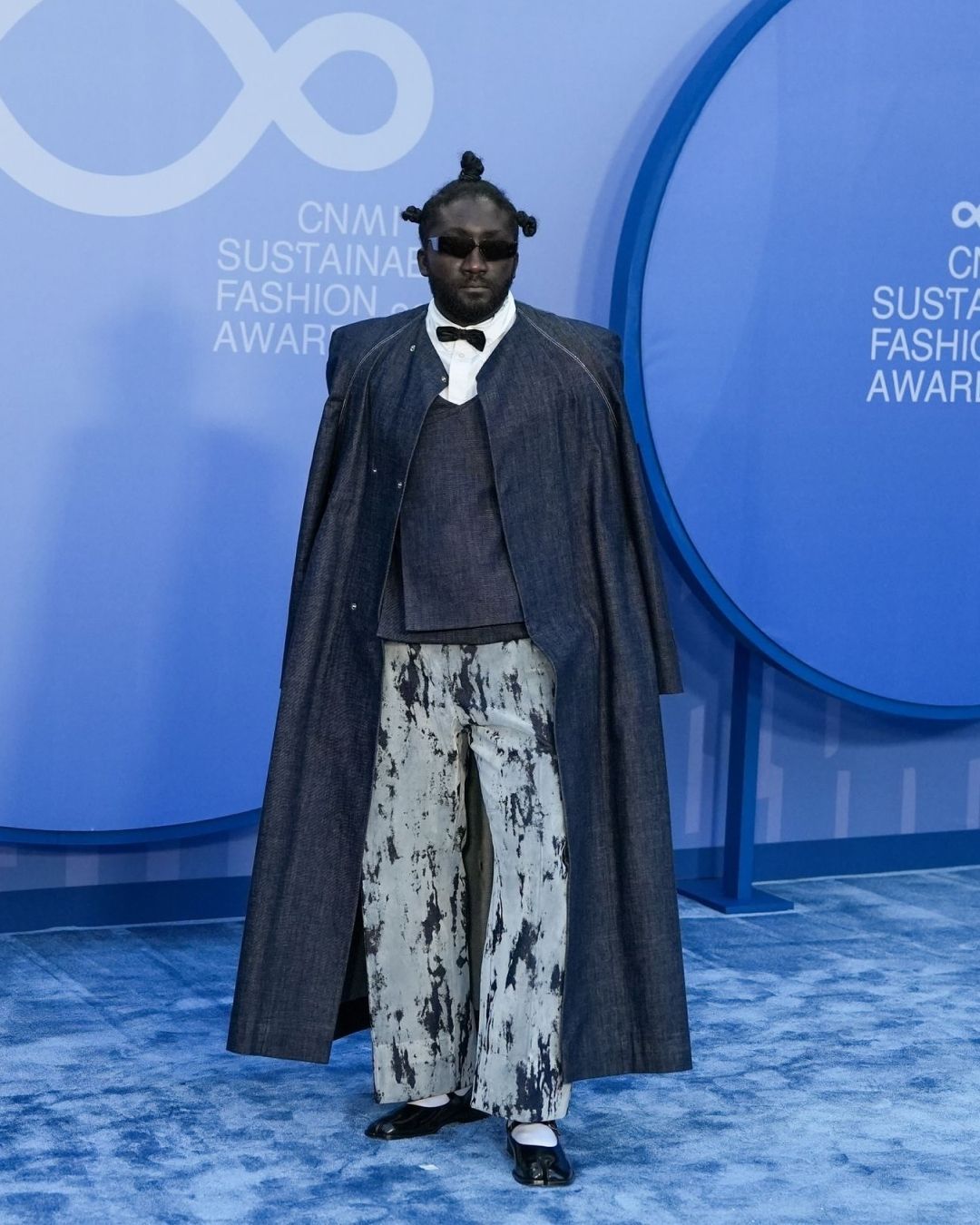
VBRH: I am Victor Reginald Bob Abbey-Hart, born in Ghana and living in Bologna. I am a sculptor, consultant, cool hunter, and fashion designer specializing in denim, with a clothing brand called Victor-Hart™, currently a finalist for the Camera Moda Fashion Trust award. I pay special attention to tailoring, as I grew up in a family where sartorial elegance was paramount—my grandmother and my mother were both seamstresses.
How would you define dandyism?
IR: For me, it is a visual code. The way you walk, how you look, what you choose to show. It is not just how you dress: it is what you narrate without words. Dandyism is an aesthetic and existential posture in which the individual shapes their identity as a work of art, affirming their uniqueness through elegance, detachment, and provocation. It embodies a subtle resistance to social and political norms, cultivating form as an act of rebellion.
VRBH: For me, dandyism is the possession and expression of interest in one’s appearance, in taste, and also expressing emotions through colors, textures, materials, and innovating one's language in fashion. It’s about casting beyond ethnicities and cultures intertwining to bring out new aesthetic and communal possibilities. It is a language. A form of stylistic self-awareness that originates from afar—from plantations, Harlem clubs, Dakar streets, and Congolese sapeur traditions, all the way to Europe through diasporic aesthetics.
What does it mean to be a Black dandy in Italy?
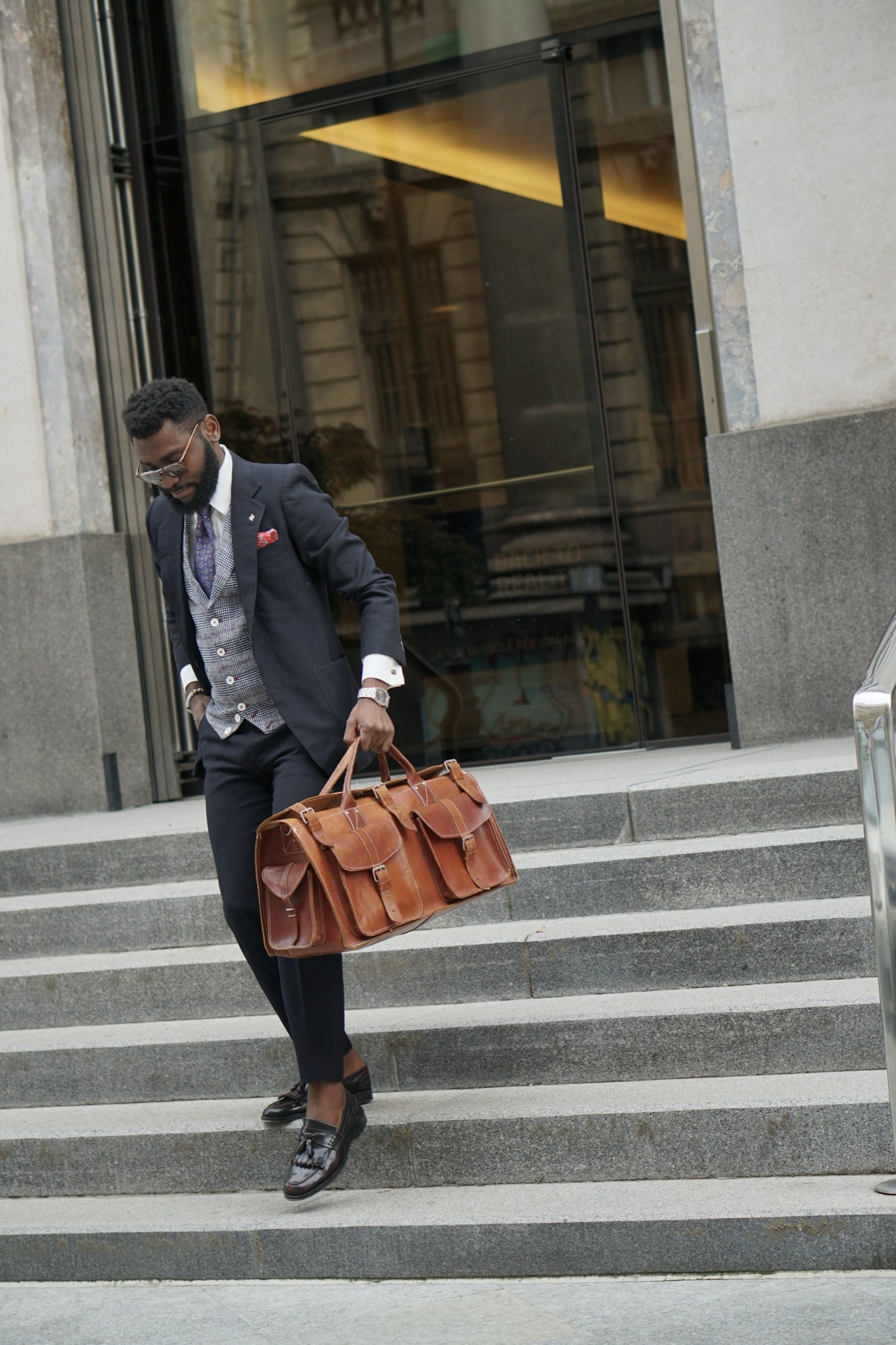
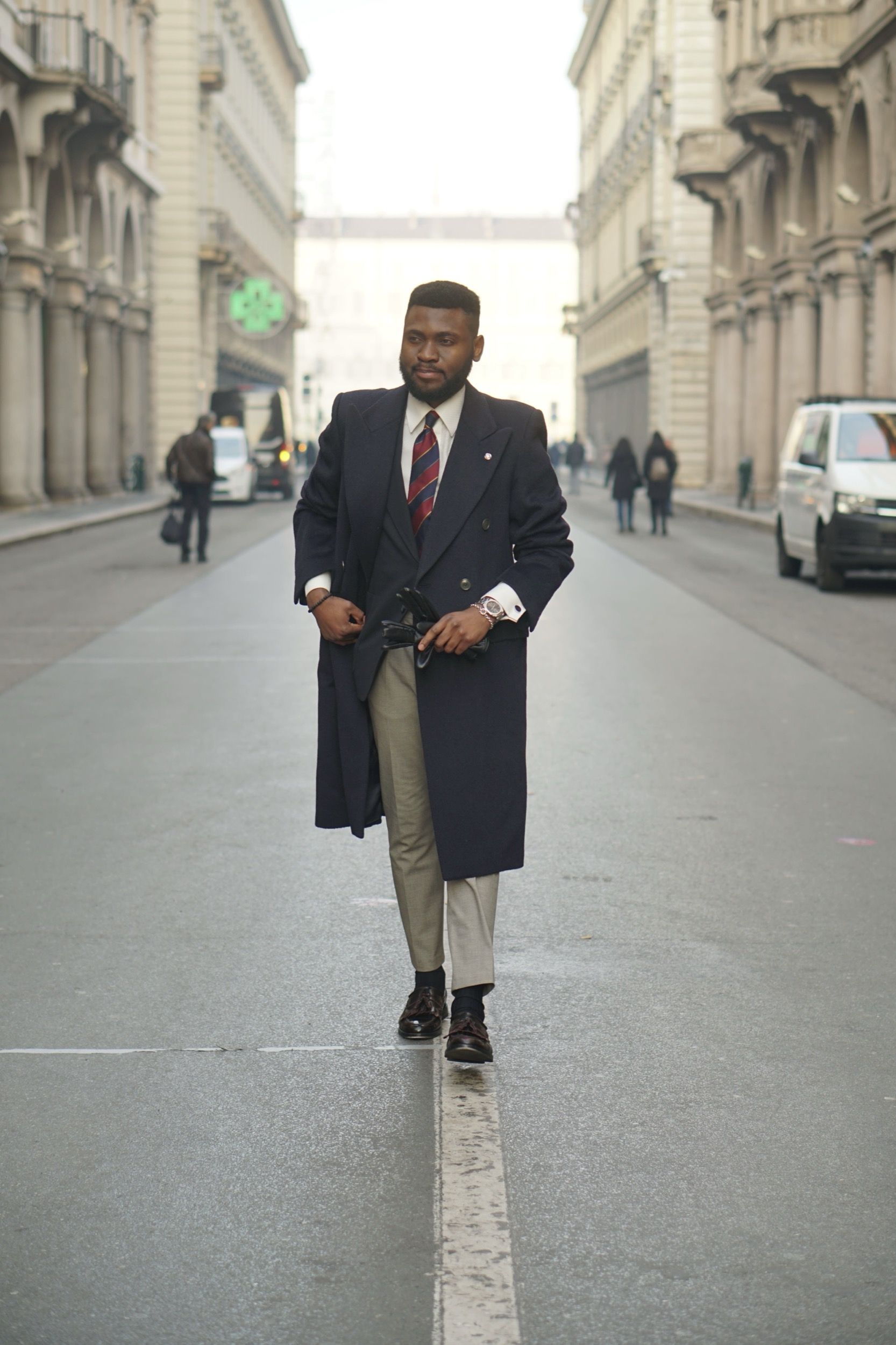
VRBH: Being hyper-visible. And thus deciding to be visible on your own terms, with grace, strength, and irony. The Black dandy is very distinctive, with a freedom of expression through colors, music, silhouettes—a mix of different cultures. For example, Italian elegance is very rigid and full of rules, while the Black dandy subverts them.
IR: It means to never settle for the representation others give you. It means staging yourself every day, with dignity and pride. Being a Black dandy in Italy means elegantly and proudly affirming an identity often marginalized, reclaiming one’s place in a cultural space that still struggles to represent diversity. It is an act of distinction and resistance, combining aesthetic refinement and political affirmation. Through style, we deconstruct stereotypes and redefine Black presence in Italian society with a particular touch of elegance, beauty, and color.
How do you relate to fashion in your daily life?
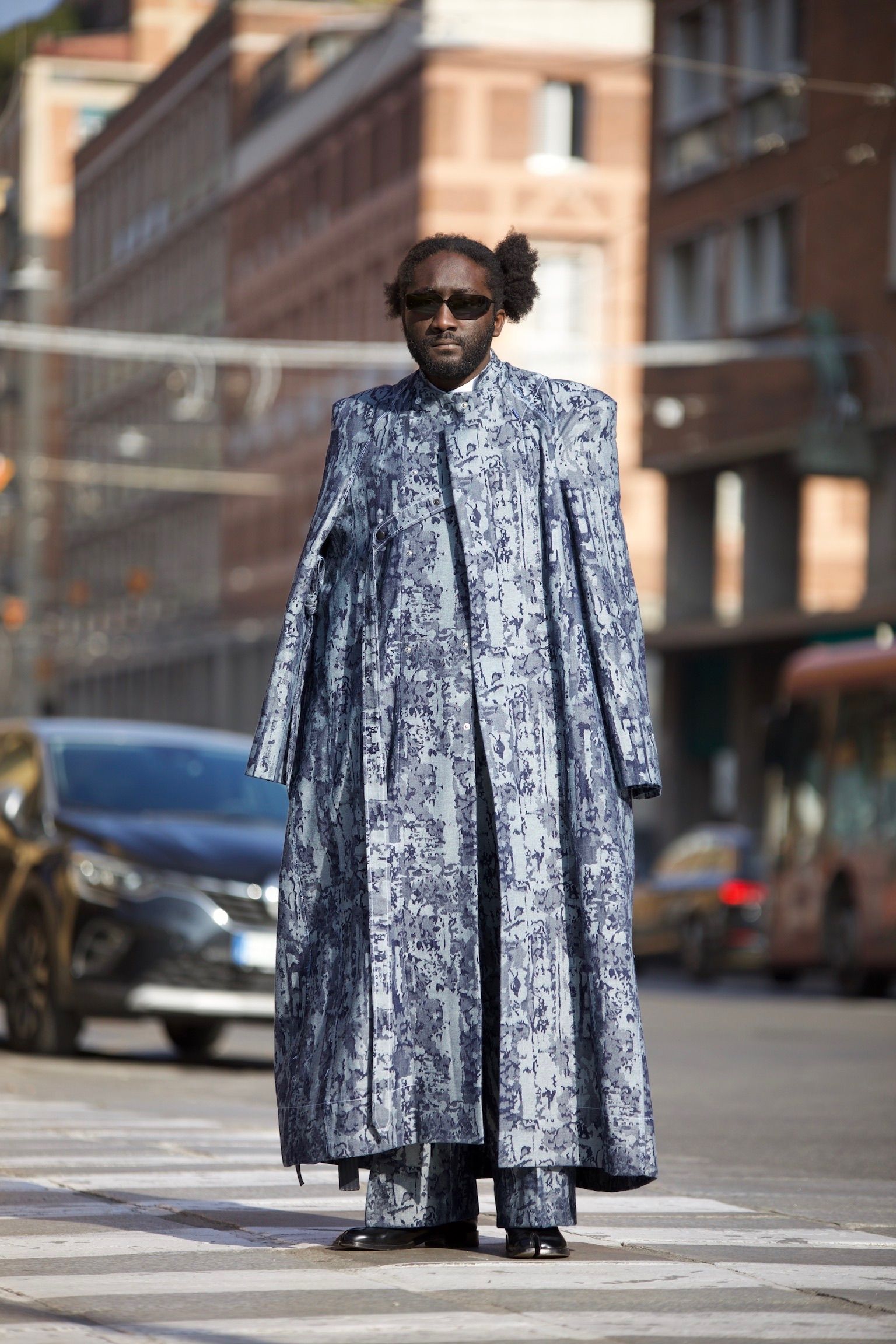
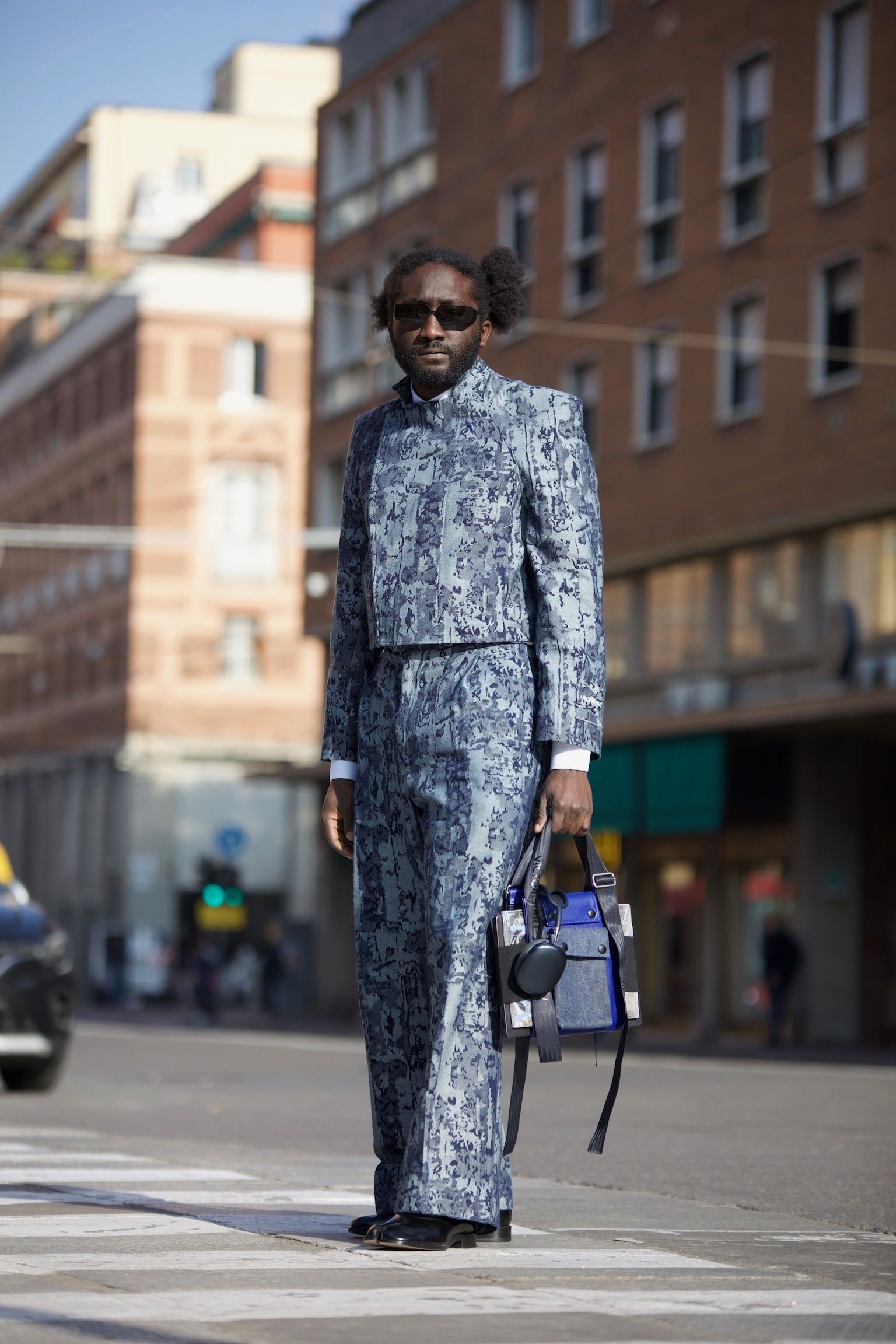
VRBH: Like with a prayer. It is care, choice, narration. Every garment I design, create, or wear is part of a story I carry with me. For me, fashion is about comfort, wearing a beautiful jacket or a coat to free oneself from social stereotypes about what fashion should be for society. It is a true expression of what is put together to communicate one's emotions, through color, gender, silhouette, and interaction with people. Fashion is an armor that protects me from stereotypical gazes about what it means “to be.”
IR: I don't follow trends, I follow my roots. My aesthetic is diasporic and sartorial. In my daily life, fashion is much more than a matter of appearance: it is a way to express who I am, what I feel, and sometimes what I want to say without speaking. Through the clothes, colors, and fabrics I choose, I tell a story, I pay homage to my origins, or I affirm a certain identity. For me, aesthetics is a language, a silent but powerful tool of communication.
In your opinion, did the Met Gala interpret this year's theme well?
IR: Yes, thanks to the fact that this time the curation was Black. Monica L. Miller brought depth, culture, and complexity. The 2025 Met Gala interpreted its theme very well, “Superfine: Tailoring Black Style”, highlighting the elegance and history of Black dandyism as a form of cultural and political expression. Figures like Rihanna and Pharrell Williams brilliantly embodied this theme, combining creativity, homage, and identity affirmation. The event also gave real visibility to Black and independent designers, emphasizing the desire for change toward greater diversity and recognition in global fashion.
VRBH: It is the first Met Gala where I really saw Black fashion treated as art and not just as exotic inspiration in relation to the exhibition. The Met Gala had an extraordinary theme, but the interpretation wasn't very clear when looking at what the guests wore. I think there should have been stricter guidelines, also including references to Black designers—it's not acceptable that 80% of the designers are white when trying to represent Black dandyism for the Black community.
The Risk of Trivializing the Concept of Dandyism
Dandyism is history, culture, class, and provocation. If you reduce it to just "dressing well," you betray it. The risk, when trivializing the concept of dandyism, is to strip it of its deeper meaning. It is not simply about “dressing well”, but about embodying a story, a culture, an aesthetic consciousness that is both a political gesture and a poetic act. Black dandyism is a critical lens through which to read geographies, genealogies, and generations of style, but also the tensions between visibility, power, and representation. At a time when the Met Museum finally chooses to celebrate this aesthetic with rigor and depth, through an exhibition that places Black elegance at the center of cultural narrative, it is crucial that public discourse also abandons the surface to recognize its complexity. The Black dandy is not a passing trend, nor a silhouette to imitate: it is a form of embodied knowledge, a visual manifesto that unites past and future, body and politics, desire and memory. As curator Monica L. Miller reminds us: “Black fashion is not marginal: it is central. It is structural. And it’s time for institutions to recognize it.”
What to read next
Westwing and Victoria Beckham have collaborated on a tableware line
The English designer explores the world of the table
Acne Studios announces a collaboration with Hussein Chalayan
A capsule inspired by the designer's most iconic collections and a dedicated volume published by Acne Studios
The surrealist turn of luxury heels
During the last fashion month, shoes stole the spotlight from clothes