
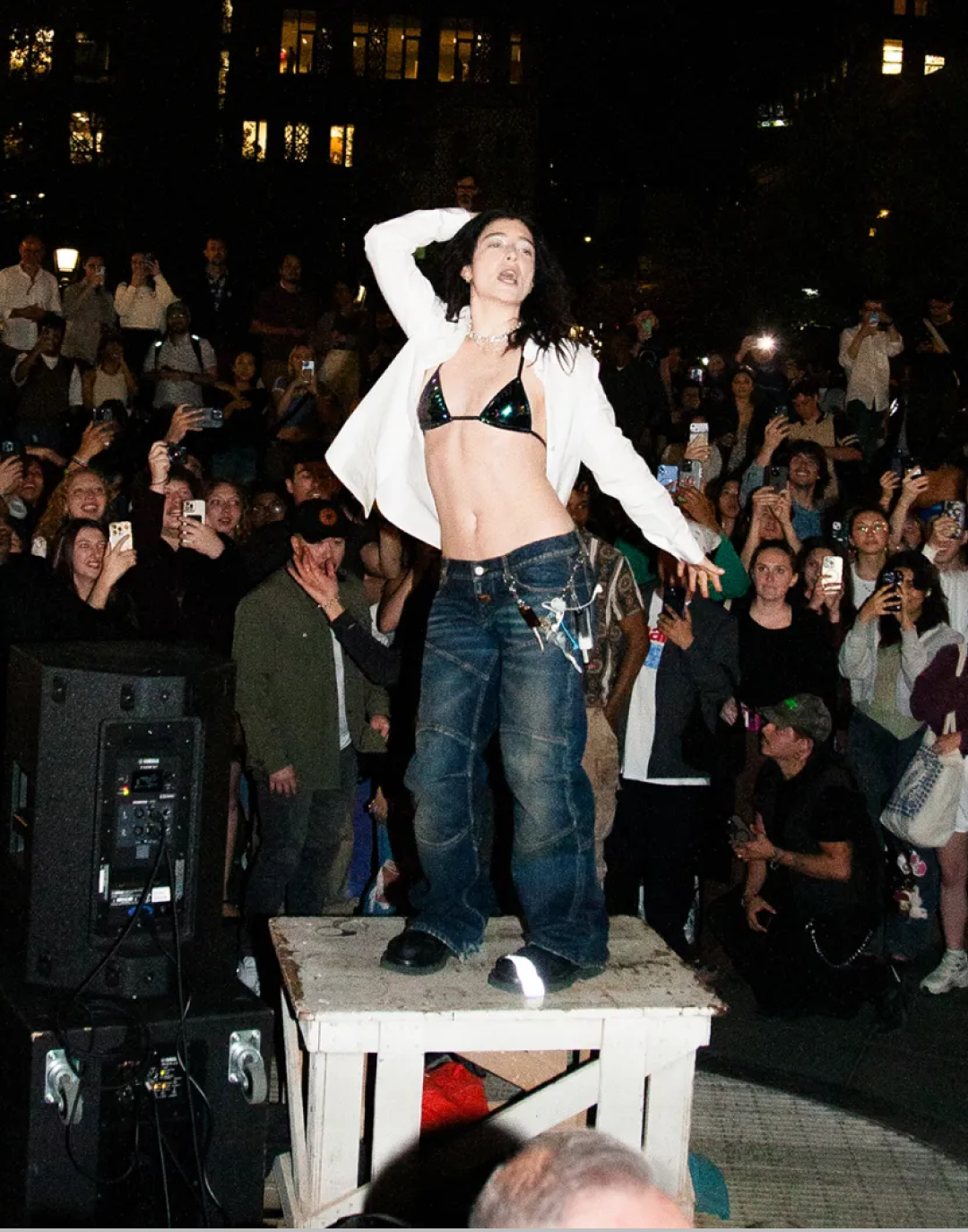
The future of concerts is pop-up shows More and more artists are choosing spontaneous live performances in the streets, accessible to everyone
In recent years, concert tickets have turned into a real luxury (if not a nightmare). Between dynamic pricing, opaque service fees and out-of-control secondary ticketing, going to a live show today is increasingly an economic choice before a cultural one. Over the past two years, average ticket prices have risen by more than 20%, making access to concerts more and more selective. The summer of the Oasis reunion and now the Radiohead shows have pushed live music — which by nature is collective, accessible and inclusive — to a new level of exclusivity.
What are pop-up shows?
@andrepiaf Tyler, The Creator making a bold statement on why he's one of the most brilliant producers of our generation. Here's "Big Poe" opening track from his surprise ninth album #DontTapTheGlass during his Pop-up show at #NYC Under The K Bridge Park. #TylerTheCreator #FYP #ForYouPage original sound - Andre Piaf
And it’s precisely within this fracture that a new form of resistance is emerging: pop-up shows. Spontaneous concerts, free or at a symbolic price, organized in streets, parks and public spaces. Events that live on the edge of the moment, born on social media, gone viral on TikTok and destined to exist only for those who manage to be there, without further distinctions. In 2025 Tyler, The Creator brought this concept to the center of the conversation with a surprise show in Brooklyn, at the Under the K Bridge Park, to present the album Don’t Tap The Glass.
Another major artist who organized a pop-up show was Lorde. In April 2025 the New Zealand singer held a surprise pop-up show at New York’s Washington Square Park to debut the single What Was That. The event, announced only a few hours earlier, was initially shut down by the police due to missing permits, turning the night into a minor media case as the singer decided to perform anyway with minimal equipment, singing directly inside the park’s fountain.
Moving in the same direction are Geese, one of the most interesting bands of the new New York rock scene, who in 2025 brought their music straight into the streets with a pop-up show that went viral on TikTok. An improvised stage, amps assembled on the fly, a crowd forming in minutes and good old rock returning to its physical and immediate dimension.
All the problems with dynamic pricing
ARTISTS TURN OFF DYNAMIC PRICING! ARTISTS TURN OFF DYNAMIC PRICING! ARTISTS TURN OFF DYNAMIC PRICING! ARTISTS TURN OFF DYNAMIC PRICING! ARTISTS TURN OFF DYNAMIC PRICING! ARTISTS TURN OFF DYNAMIC PRICING! FOR THE LOVE OF GOD ARTISTS PLEASE TURN OFF DYNAMIC PRICING!!!! STOP!!!!
— andi (@mcrorwtv) September 22, 2025
In autumn 2025, Kevin Parker aka Tame Impala also experimented with an unconventional format through a spontaneous, off-the-grid event at the Brooklyn Army Terminal with an open-air live show featuring DJ sets, an improvised atmosphere and hundreds of fans gathered on the pier overlooking Manhattan.
What connects all these episodes is the same urgency: rebuilding a direct relationship between artist and audience by removing the economic filter that has come to separate those who make music and those who listen to it. The audience is no longer a passive spectator but an active part of something that happens hic et nunc, with no presales or resale, just presence and listening.
Meanwhile, though, the traditional model keeps creaking. Ticketing platforms are under scrutiny, production costs continue to rise and the younger segment of the audience — the one that should guarantee the future of live music — is being gradually excluded due to skyrocketing prices. Pop-up shows therefore represent the natural response to this system, not a rejection but a parallel track. On one side, stadiums and arenas, often artificially sold out; on the other, music returning to the streets. A return to the origins, yet entirely a child of the present — because without social media and instant virality these events couldn’t exist. And maybe, after years of sold-out yet distant events, we’ll truly return to having small, imperfect concerts that feel real.