





































So, what's going on with the tariffs? After the historic meeting with the Chinese president, Trump decided to reduce some tariffs on the country, which was not a given
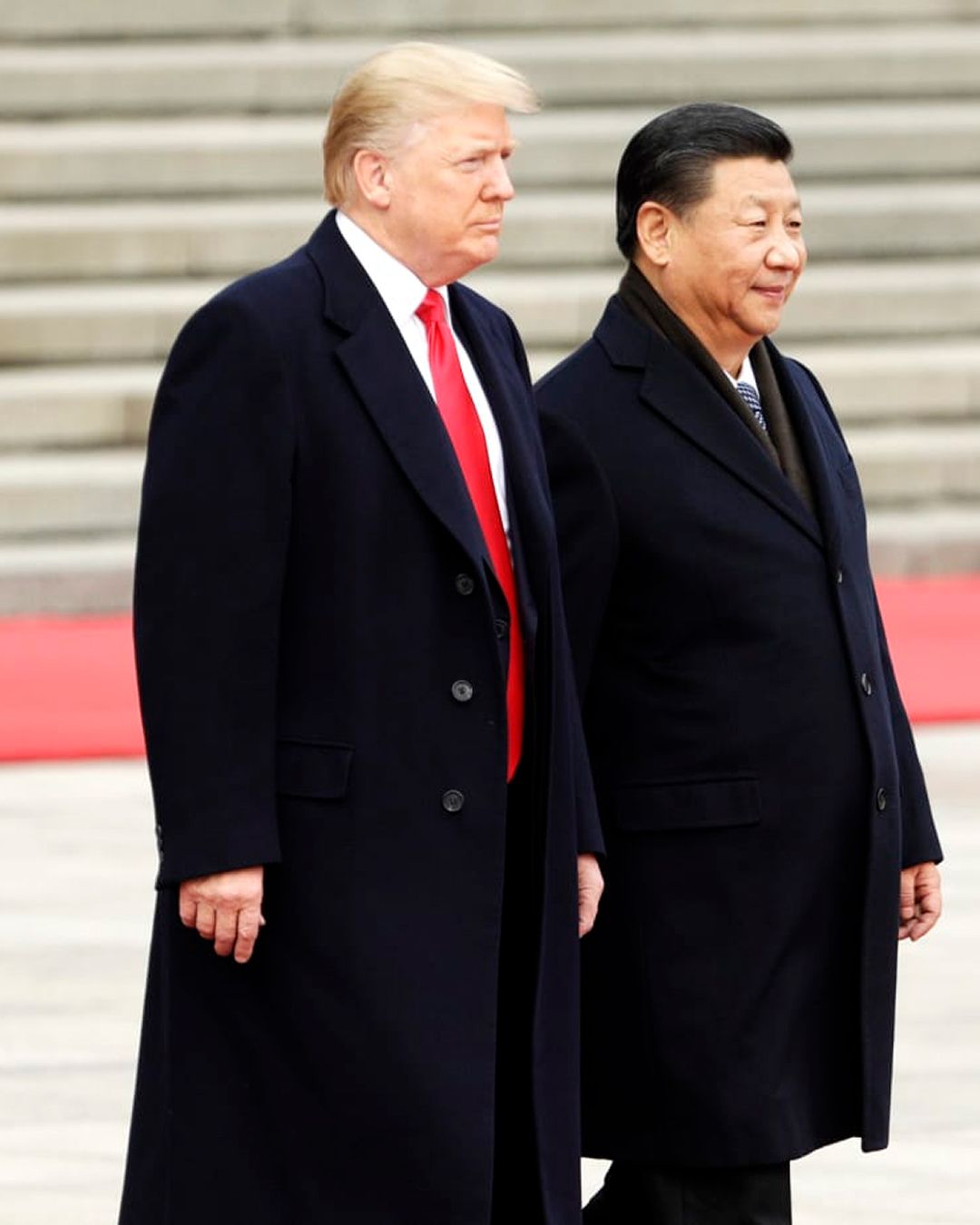
On the diplomatic front, one of the most anticipated meetings of the year was that between Trump and Chinese President Xi Jinping, the leaders of the world's largest economies. They recently met in Busan, South Korea, for a conversation lasting about an hour and a half, attempting to end – or at least mitigate – the effects of the ongoing trade war between the United States and China. According to what was reported to the press, the countries have reached a preliminary agreement on the measures needed to resolve at least the most serious disputes. It cannot yet be claimed that the trade war is over, but it seems that – for now – the two leaders have managed to curb the escalation of the conflict, which was damaging the economies of both nations and, by extension, the global economy.
As US President Trump's meeting with Chinese President Xi concluded in an hour & 40 minutes, lasting longer than expected. Neither of the leaders made any comment regarding their meeting#Trump #XiJinping #APEC2025 #ChinaUSRelations #TradeTalks #BilateralMeeting #CNBCTV18Digital pic.twitter.com/whhd9p6xbx
— CNBC-TV18 (@CNBCTV18News) October 30, 2025
However, many points still remain to be clarified regarding the measures that will be adopted. So far, the only leader who has made any statement is Trump, who announced his intention to halve tariffs on all Chinese goods, reducing them from 20% to 10%. Between February and March, the U.S. president had introduced these sanctions against Beijing, accusing it of not doing enough to curb the trafficking of fentanyl, a narcotic responsible for a severe health crisis in the United States and partly produced in China. In return, Trump stated that Beijing will make greater efforts to combat opioid trafficking. However, the second wave of U.S. tariffs introduced in April against China remains in effect, although they have been reduced on average from 55% to 45%. This is still a positive result for Xi Jinping, as the country’s total exports to the United States had predictably experienced a sharp decline in recent months, with serious repercussions for the national economy.
The Consequences of Tariffs Imposed by Trump
@skynews What did Xi and Trump's meeting tell us about US-China relations? The US president has described the talks with his Chinese counterpart as "amazing", adding he will cut his tariffs on Chinese goods exported. Our asia correspondent Helen-Ann Smith breaks down what happened during the crucial trade meeting. #trump #china #xijingping original sound - Sky News
In response to the tariffs imposed by Trump, China had blocked much of the exports of so-called “rare earths” to the United States, a group of 17 metals essential for the production of advanced technologies. Although relatively abundant on Earth, these elements are not evenly distributed, and their extraction is complex and costly, factors that further increase their value. China has long dominated this market and, according to many analysts, control over “rare earths” has represented a strategic advantage in the trade war with the United States. Their sudden shortage has been particularly felt in the automotive and military sectors, two crucial areas for the country’s economy. On average, an electric or hybrid car contains about 500 grams of components made from rare earths, essential, among other things, for engine operation. The same applies to the F-35 fighter jet – the most advanced combat aircraft available to the West – which uses over 400 kilograms, and for many military submarines, which contain quantities up to ten times higher.
In this context, the Trump administration was somewhat forced to compromise with China. On this point, Trump announced that recent negotiations have led to an agreement that will also ease the “rare earth” issue. China has also reportedly guaranteed that it will resume importing soybeans from the United States: in recent months, the halt in purchases by Beijing had caused enormous problems for U.S. farmers. The issue of microchips still seems unresolved, a sector in which the United States has imposed heavy export restrictions to China. The Trump administration wants to prevent Beijing – Washington’s main technological rival – from using chips employed in artificial intelligence, a market controlled by about 90% by the United States, to enhance its capabilities in strategically important areas, including the military sector.
If the trade war between the United States and China had continued with the intensity of recent months, the consequences would have been quite significant. The U.S. purchases a huge variety of products from China, including many electronic and industrial components. Specifically, entire commercial sectors in the U.S. have been designed around access to these goods at low prices, and such production is hardly replaceable in the short term: in this context, the tariffs initially caused a reduction in companies’ profit margins, leading to higher prices for consumers, which over time would have contributed to general inflation – with all the related consequences, not just locally. The reduction of reciprocal sanctions between the United States and China has therefore provided relief to many companies, but it is still too early to say that the commercial restrictions still in place will no longer have a significant impact on the economies of the two countries: in the long term, they could still put the respective industrial sectors in difficulty, thereby destabilizing the entire West.