.gif 2000w)




















This is the most important week of Bad Bunny's career After making history at the Grammys, the Puerto Rican artist will perform at the Super Bowl Halftime Show on Sunday
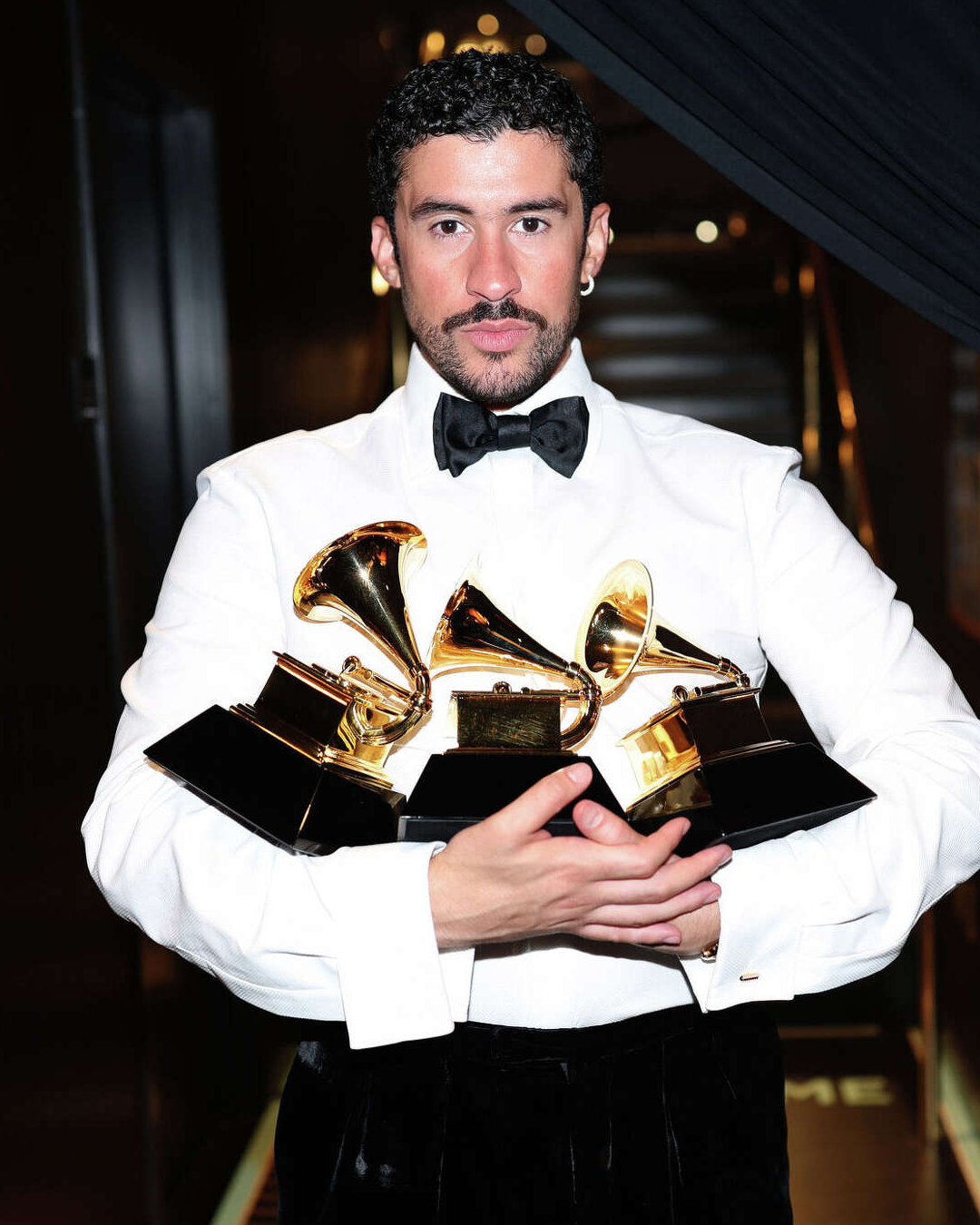
On Sunday February 1, Bad Bunny made history at the Grammys, taking home the Album of the Year award with Debí Tirar Más Fotos – the first album entirely in Spanish to win the industry’s most prestigious prize, in an edition marked by widespread criticism of U.S. immigration policies and of the ICE. In his acceptance speech, Bad Bunny dedicated the award to immigrants and to his people, stressing that “no immigrant is an animal”, a clear response to the propaganda promoted by Donald Trump.
If this win represents a formal turning point for Latin music within the global mainstream, the context in which it arrives is just as significant. Attention is growing around the violent actions targeting Latino communities in the United States precisely as Bad Bunny prepares to headline the Super Bowl halftime show on Sunday February 8. Unlike many superstars who use the football stage as a simple showcase for their success, Benito steps into it as a cultural and political protagonist, carrying with him not only the music of an album that advances a message of identity-based pride.
Who is Bad Bunny?
@applemusic El 8 de febrero, el mundo bailará #AppleMusicHalftime #SBLX @Bad Bunny original sound - Apple Music
Born in 1994 in Vega Baja to a teacher mother and a truck-driver father, before rising to fame as Bad Bunny, Benito Antonio Martínez Ocasio worked as a supermarket clerk. He always had a passion for music, influenced both by Puerto Rican rap and reggaeton legends—like Daddy Yankee and Vico C—and the salsa singers introduced to him by his mother (a blend of tradition and innovation that still defines his sound today). At some point, Benito decided to upload his tracks on SoundCloud, and it was thanks to one of them—Diles—that he caught the attention of producer DJ Luian, head of the label Hear This Music, in 2016.
That marked the official start of his career, where he immediately implemented an ambitious rollout strategy: releasing a new single with a video on YouTube every week, flooding the platform with content, and conquering the Latin music algorithm. The formula worked, and in no time, Bad Bunny captured an ever-growing audience, which led him to collaborate with a long list of established stars such as Drake, J Balvin, Cardi B, Nicki Minaj, 21 Savage, Travis Scott, Future, Will Smith, and Jennifer Lopez, ultimately becoming a top name on the global (Latin) pop scene.
Meanwhile, his fame transcended the boundaries of music and began breaking into iconic spaces of American pop culture: he became a regular guest on Saturday Night Live, crossed over into Hollywood cinema (currently starring in Aronofsky’s latest film, Caught Stealing), and carved out a name for himself within the WWE wrestling federation, a lifelong passion since childhood.
Bad Bunny as a symbol of progress
But that’s not all. Bad Bunny quickly became a symbol of inclusivity and social justice for his country. He was among the first in his scene to openly challenge the machismo culture, painting his nails and appearing in women’s clothing. Hardly groundbreaking if you think of David Bowie or Kurt Cobain, but within the context of today’s Latinx rap world, it was nothing short of revolutionary.
BB wrote songs from a female perspective—for instance, YO PERREO SOLA, a track about women wanting to dance alone in the club without male interference (She’ll call you if she needs you / but for now she twerks alone)—as well as songs against domestic violence like SOLO DE MI (Don’t call me “baby” / I don’t belong to you or anyone / I belong only to myself). His videos often feature trans women, drag queens, same-sex couples, and people with disabilities. Critics argue he’s just riding the cultural wave of the moment—something you’d expect on Netflix—but certainly not the norm in Puerto Rican rap and reggaeton.
Puerto Rico’s anti-colonial struggle
Bad Bunny lanza fuerte crítica contra Donald Trump en su video de NUEVAYoL. pic.twitter.com/3Lq6RAKNpK
— Bad Bunny HQ (@BBPRTV) July 4, 2025
Over time, BB became increasingly engaged with Puerto Rico’s social and political issues, as the island remains trapped in a kind of post-colonial limbo: it can’t be considered a fully independent state because it is under U.S. jurisdiction, yet it’s not part of the U.S. either, since the statehood request—voted for multiple times in popular referendums—has never been approved by the American Congress.
Puerto Rico is still formally an unincorporated U.S. territory, with self-government status: in simple terms, this means it has a governor who must comply with U.S. laws, and its inhabitants hold U.S. citizenship, but they cannot vote in presidential elections. Unsurprisingly, the current Trump administration does not look kindly upon the island. During a rally, it was even called «a floating trash island», sparking outrage among Puerto Ricans—and first and foremost from Bad Bunny himself.
How Bad Bunny became a political activist
We stand with bad bunny and skipping an entire american leg probably is the strongest political stand a popstar can take against ICE & Trump
— W (@live4ga) September 10, 2025
Beyond social media, BB has often used his public TV appearances to deliver political protest messages. In 2018, during a performance on The Tonight Show Starring Jimmy Fallon, he denounced the poor U.S. response to Hurricane Maria, which had devastated the island in 2017: «Over 3,000 people died and Trump keeps denying it», he declared before singing Estamos Bien while harrowing footage of the storm played on screen. In 2020, following the murder of Alexa Negrón Luciano, a Puerto Rican transgender woman brutally shot in the street, Bad Bunny returned to that stage wearing a black satin skirt and a T-shirt that read: «They killed Alexa. Not a man in a skirt».
On many other occasions, BB has personally spoken out on key domestic issues, such as the controversial closure of local schools or, more recently, the incursion of ICE (Immigration and Customs Enforcement) forces on Puerto Rican soil. Strengthened under Trump, ICE sparked violent protests this summer, especially in Los Angeles. While Puerto Ricans living in the U.S. didn’t face major risks given their American citizenship, BB still stood up for the most vulnerable: in this case, the Dominican immigrants living in Puerto Rico who were directly targeted by ICE raids over the summer.
The success of DeBÍ TiRAR MáS FOToS
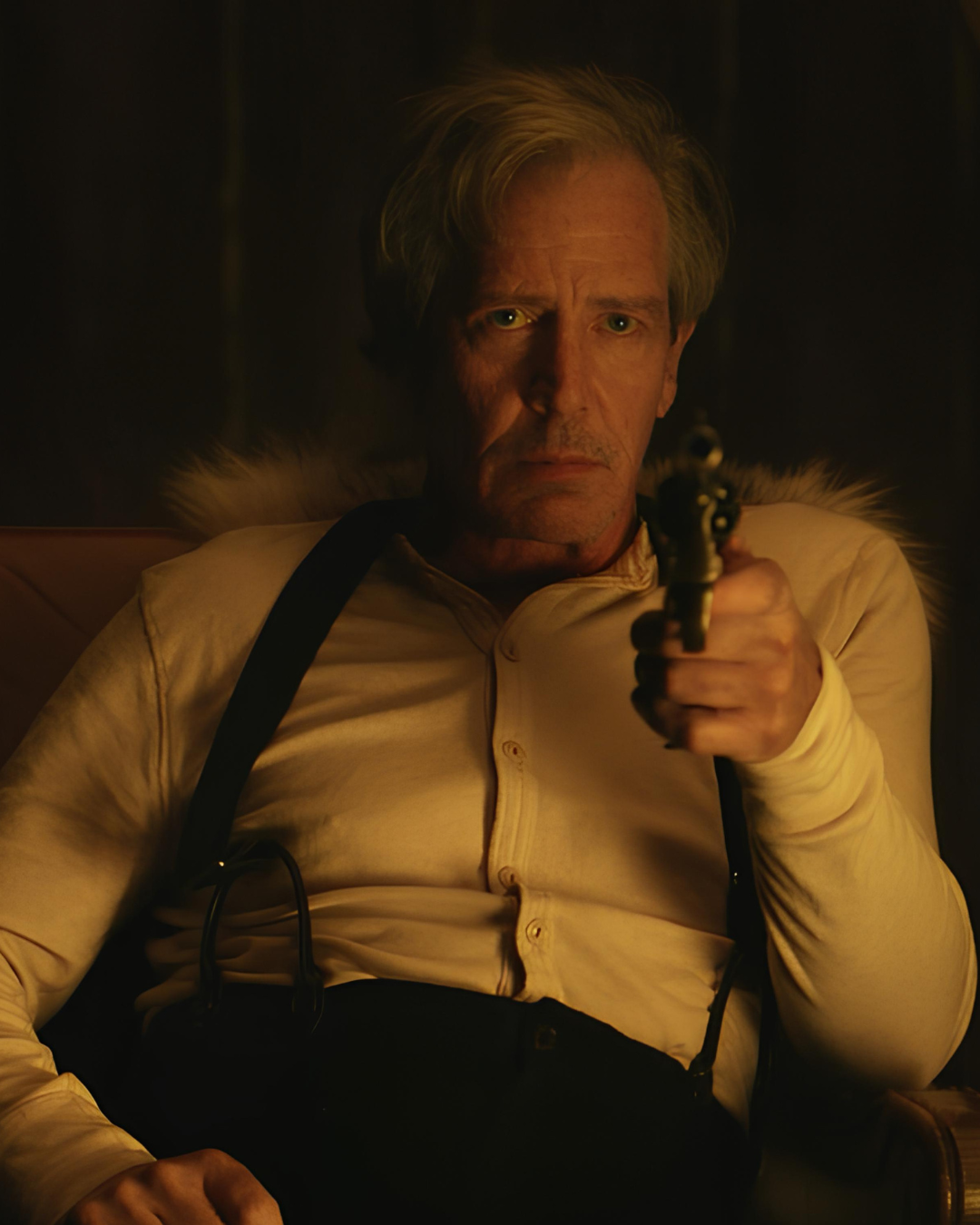
Much of this ethos poured directly into his latest album, DeBÍ TiRAR MáS FOToS (literally, “I should’ve taken more photos”). Sung entirely in Spanish, staying true to his roots, the record stands as a genuine political manifesto. From its cover art alone—featuring nothing more than two plastic chairs—it reads as a tribute to Puerto Rico and its people, a true “street album”. Not in the crime-related sense so popular in trap-reggaeton, but in the everyday meaning of the street as a communal gathering place. The record also features two special guests from outside the music world: Puerto Rican director Jacobo Morales starred in the launch short film, playing an elderly man who no longer recognizes his homeland, gentrified and Americanized beyond recognition. Meanwhile, historian Jorell Meléndez-Badillo, author of the essay Puerto Rico: A National History, wrote all the educational texts on Puerto Rican history that accompany the album’s visuals: from the birth of the flag to the development of folk music.
Musically speaking, the album blends reggaeton with Puerto Rico’s traditional genres such as salsa, plena, and bomba. The songs tackle many themes, yet all ultimately circle back to the struggle for cultural and political resistance and Puerto Rico’s self-assertion: from the dangers of overtourism in TURiSTA to cultural erasure in LO QUE LE PASÓ A HAWAii, up to the album’s symbolic anthem, the opening track titled NUEVAYoL—New York, the main destination of Puerto Rican migration, both a blessing and a curse.
«New York was the symbol of the diaspora. At the same time, it’s where extraordinary things were born, when Puerto Ricans met other Latinos—Cubans, Dominicans—and together created music, art, culture», explains Bad Bunny. The track is built around a sample of Un Verano en Nueva York, the classic anthem by El Gran Combo de Puerto Rico. But it also references another lesser-known Puerto Rican song, Mama Borinquen Me Llama, which itself included verses from a poem by Virgilio Dávila titled Nostalgia, about an immigrant living in New York who longs for Puerto Rico: on one side a city cold as death, on the other a fire burning in his chest—still today the perfect metaphor for the Puerto Rican relationship with the United States.
The fear of ICE raids
bad bunny reveals he is not touring in the U.S. right now due to fear of ICE raids.
— Genius (@Genius) September 10, 2025
"There were many reasons why I didn’t show up in the US, and none of them were out of hate—I’ve performed there many times. All of [the shows] have been successful. All of them have been… pic.twitter.com/7cw0lsDO3r
For the first time, in recent days, Bad Bunny opened up about why he did not include the United States in his tour. As he revealed in his cover story for i-D magazine, his main concern was that ICE could stage raids outside the venues. «People from the U.S. could come here to see the show. Latinos and Puerto Ricans living in the States could also travel here, or anywhere else in the world», the artist explained. «But there was the issue that… ICE could be outside my concert. And it was something we kept talking about and were very worried about».