

























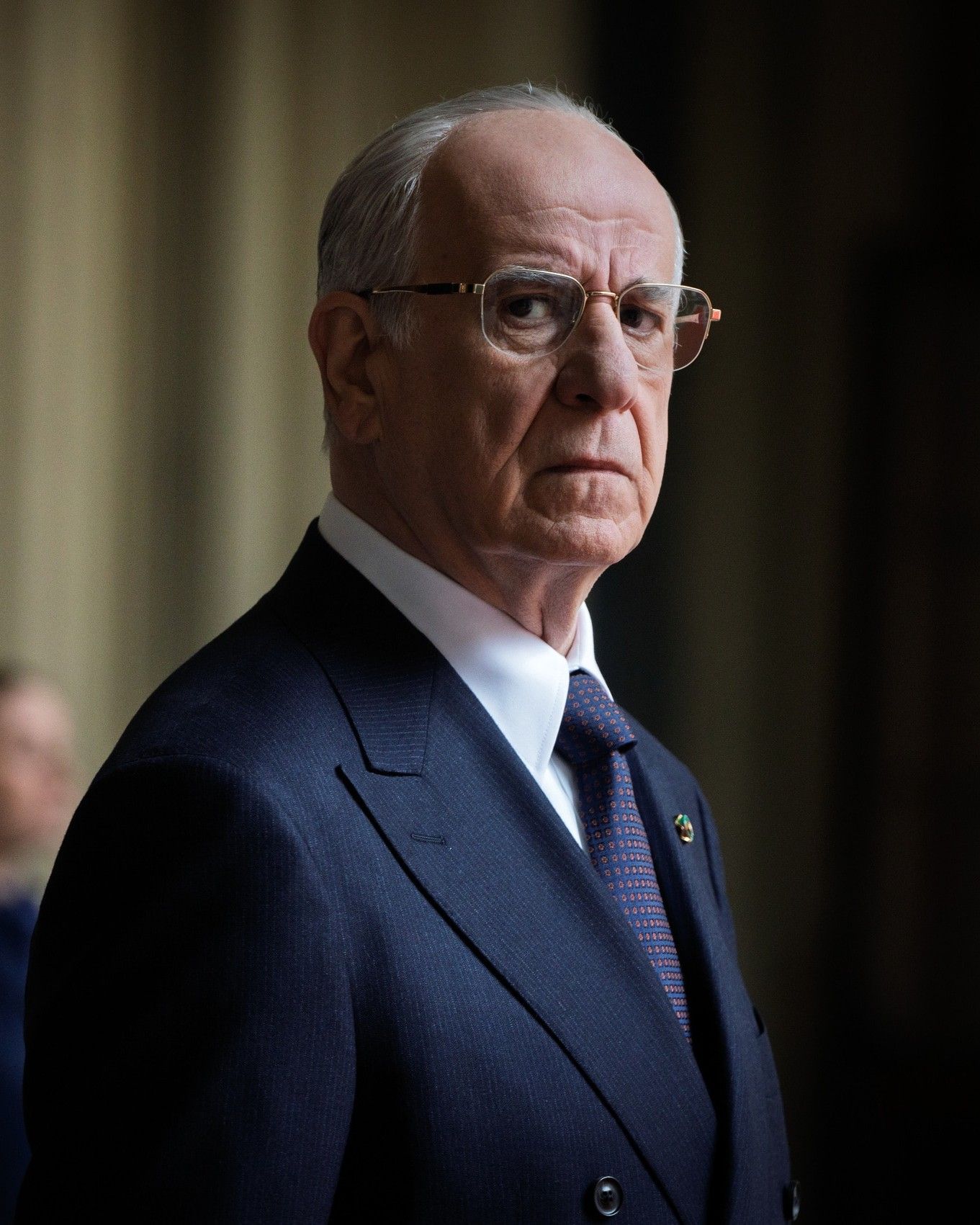
“La grazia” reveals an unexpected side to Paolo Sorrentino A step forward after "Parthenope" for the film that opens the Venice Film Festival 2025
If in his new film La grazia, the opening title of Venezia82, Paolo Sorrentino wonders to whom our days belong, it is legitimate to ask to whom the stories a director tells belong. Usually, authors tend to weave their own obsessions into their projects. The Neapolitan director and screenwriter has always done the same, his reflections on life, death, faith (both in football and spirituality), and the Italy he represented serving as starting points to unravel his theories about the world and uncover a piece of himself each time. With È stata la mano di Dio in 2021, however, there was a shift. Sorrentino’s exhilarating and enraptured aesthetic no longer focused solely on his gaze, nor just on the mockery of a man with a camera who beautifies the ugliness around him, sometimes highlighting it. Instead, he turned the lens directly toward himself, telling the story of his past and the birth of the author Paolo Sorrentino beyond the screen, as we know him.
Of course, right after came Parthenope, which, upon closer inspection, moves away from the personal and intimate tone with which he had previously left us. Although it was a fragment of existence within the larger segment of the author’s life and career, it made it clear that if there have been few or no main female characters in his filmography, there might be a reason for it. With La grazia, Sorrentino thus returns to a more introspective dimension, albeit unexplored. A sweetness that was particularly bitter in his early works, softened over time, and happy to gradually emerge. The story follows the President of the Council, Mariano De Santis, played by his trusted interpreter Toni Servillo, who, nearing the end of his term, must resolve all the lingering issues in his personal and professional life. On one hand, the man cannot stop recalling the love he felt for his wife, who died eight years earlier, and the single betrayal that marked a small stumble in a great love story, which he never fully uncovered. On the other hand, there are the final decisions as President and jurist that Mariano must make instead of passing them on to his successor: two pardons to grant and a law on euthanasia to sign, which will require all his courage. Not to tackle the human and legal issues that have always marked the politician’s path, but to stir an unconscious that has remained immobile throughout his life (as his nickname “Reinforced Concrete” suggests) and, for once, to make decisions beyond his comfort zone.
@sergiofabi2020 L’arrivo al Lido di Paolo Sorrentino, Toni Servillo e Anna Ferzetti. Il film “La grazia” aprirà domani #Venezia82 @labiennale @fremantle @fremantleit @the_apartment_pictures @thematchfactory @mubi @numero10production @paolosorrentino_real @toniservillo @annaferzetti #LaGrazia #BiennaleCinema2025 sonido original - CANZONI ITALIANE
La grazia, which for Sorrentino and his film lies in the beauty of doubt, seems to tell us something more about the author and the progression of his years. To do so, the Italy in which the story is set is a healthy country that has navigated six government crises with care under its President. An unreal nation to imagine today, but one that enhances the uncertainties and torments of its protagonist, making them shine like stains on an immaculate white cloak. In it, Servillo walks through the city center’s streets as his Giulio Andreotti did in Il divo, but heading in an entirely different direction, both politically and otherwise. And so, Mariano must focus for once on himself, on his children, on realizing whether he knows them or not, whether he knows himself or not, whether they know him or not. He wants to break free from his state of torpor, from the immobility (here again, the reinforced concrete) that has characterized his private life and worked in his profession, without ever letting him take risks.
Paolo Sorrentino’s “La Grazia,” featuring Toni Servillo as an Italian president grappling with euthanasia, challenges the moral fabric of Catholic Italy and highlights the profound dilemmas faced by those in power amid ethical chaos. pic.twitter.com/UjSsrVPWPM
— Nyra Kraal (@NyraKraal) August 27, 2025
Mariano’s greatest characteristic, as he loves to repeat, is being a boring man. The same thing Sorrentino often says about himself. And so, La grazia is the story of a protagonist who has, in the end, had a good life, an excellent career, but has never wanted to explore the darker and hidden sides of his psyche and nature. He chooses to do so in an unexpected way, even for himself, and perhaps this is what Sorrentino wants to do by stepping out of his usual territory. To tell of his own insecurities and find unexpected ways to overcome them. To move to a new phase of his life, his career, to give himself a bit of strength and let himself be sent a little to hell. To laugh and make others laugh, always, but this time maybe a bit more. And to listen to Guè, which now explains the many cameos and interviews that came out together earlier this year. A grace, then, Sorrentino has indeed achieved. He has let go of myths and sirens and returned to having “something to say,” about himself and the future, which may be a void, but there’s always time to fill it.