































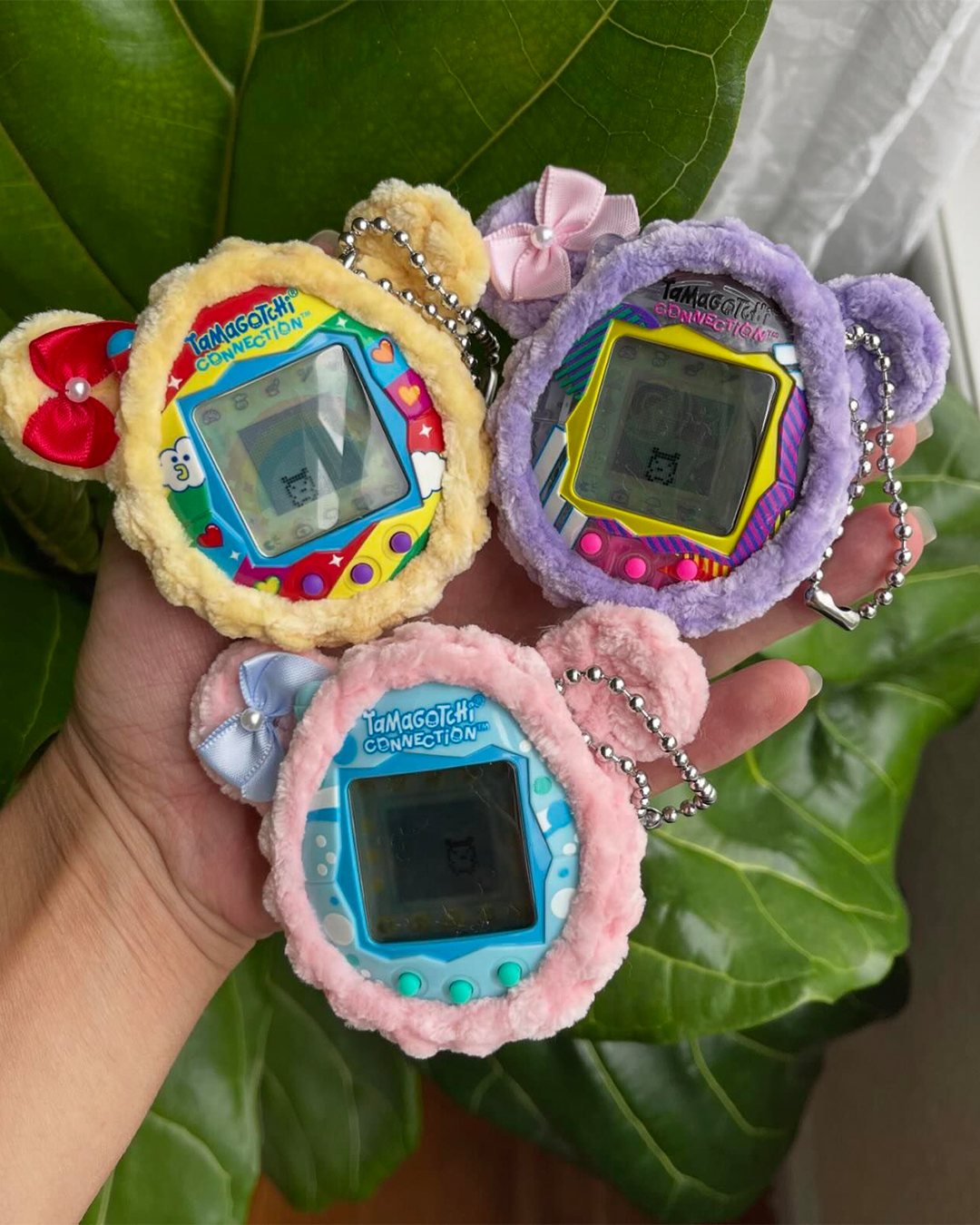
Tamagotchi sales have not been this high since the 1990s The new-wave of nostalgia has not even spared the little Japanese eggs
When it comes to authentic Y2K aesthetics, Tamagotchi cannot be left out. For entire generations – Millennials and Gen Z – the game was a defining part of their youth, filled with both joy and trauma. Produced by the Japanese company Bandai in 1996, Tamagotchi was popular among both kids and teenagers: some bought it just to play, while others clipped the colorful egg-shaped device onto the belt loops of their low-rise jeans. The game became so popular that, in the year of its release alone, 400,000 units were sold, rising to 13 million in 1997. Its cultural relevance meant that Tamagotchi kept growing over the years, with collaborations ranging from Star Wars to BAPE.
The popularity didn’t always remain the same though; in the 2010s, Tamagotchis had become mostly a collective nostalgia object, but this changed when in 2019 Bandai decided to relaunch the product in Europe, the UK, and the United States. With brand-new egg versions and a recent collaboration with Sanrio, sales between 2022 and 2023 were so profitable that last September Bandai opened the first Tamagotchi flagship store in London, at Camden Market. In July 2025, Bandai also launched Tamagotchi Paradise, a new version of the game that lets users connect with each other and make their little monsters battle—or even fall in love. According to the Japanese company, August was one of the most profitable months in Tamagotchi’s history, reaching 100 million units produced since 1996, as reported by the Japan Times.
its been a whike since i posted here....
— (@scramblegotchi) August 31, 2024
i went to the first london tamagotchi meet up today!! it was so much fun pic.twitter.com/izHEGjgA88
A precursor to Labubu, the new Tamagotchi arrived at the perfect time for the perfect generation. As Priya Jadeja, the game’s brand manager, explained, after the 2019 relaunch they expected most sales to come from nostalgia, but that wasn’t entirely the case. Jadeja noticed a remarkable increase in sales among younger kids, who had never owned such a device before. Internationalization has also become a decisive factor: 49% of buyers are in Japan, but the United States already accounts for 33% of demand, while Europe represents 16% and the rest of Asia just 2%. Tamagotchi has now evolved from a toy into a device, especially since the 2023 version was launched as a wearable, living up to its name: a Japanese wordplay between “tamago” (egg) and “uotchi” (watch). With a touchscreen LED display, ultra-high-definition graphics, and bright colors, the 2024 version is a far cry from the original 8-bit graphics. Yet the craze has already taken over social media.
The Tamagotchi revival has had a significant impact on social media, where the hashtag #Tamagotchi has racked up millions of views on platforms like TikTok and X, with 788.4K monthly searches worldwide. Users share videos and photos of their experiences with the game, from strategies to take care of their virtual pet to aesthetic customizations of the device itself. This digital renaissance has helped create a global community of fans, connecting different generations through nostalgia and innovation. The latest Tamagotchi versions now include advanced features like online connectivity and access to the Tamaverse – the metaverse dedicated to the game – allowing users to interact in ways that were once unimaginable.
@tamagotchi_lovers Tamagotchi Paradise Connection with my little sister @たまごっち/Tamagotchi【公式】 #tamagotchiparadise #tamagotchi #gamplay som original - Trilha Retrô
Today, Tamagotchi is not just a game but also a fashion accessory that has found its place in contemporary trends. Many fans now use Tamagotchi as a decorative charm for bags and backpacks, blending nostalgia with style. This practice reflects the current trend of “birkinification”, where luxury handbags are hyper-personalized with toys, pearls, and countless other “kawaii” details. It’s no surprise that companies like Bandai are capitalizing on this trend, expanding the Tamagotchi brand into new markets and collaborations. The perception of Tamagotchi as a perfect mix of nostalgia and innovation has led in recent years to collaborations with brands like Sanrio and even a capsule collection with Max Mara. In a way, the brand’s life cycle mirrors the game itself: born, grown, dead, and reborn under a new light.