






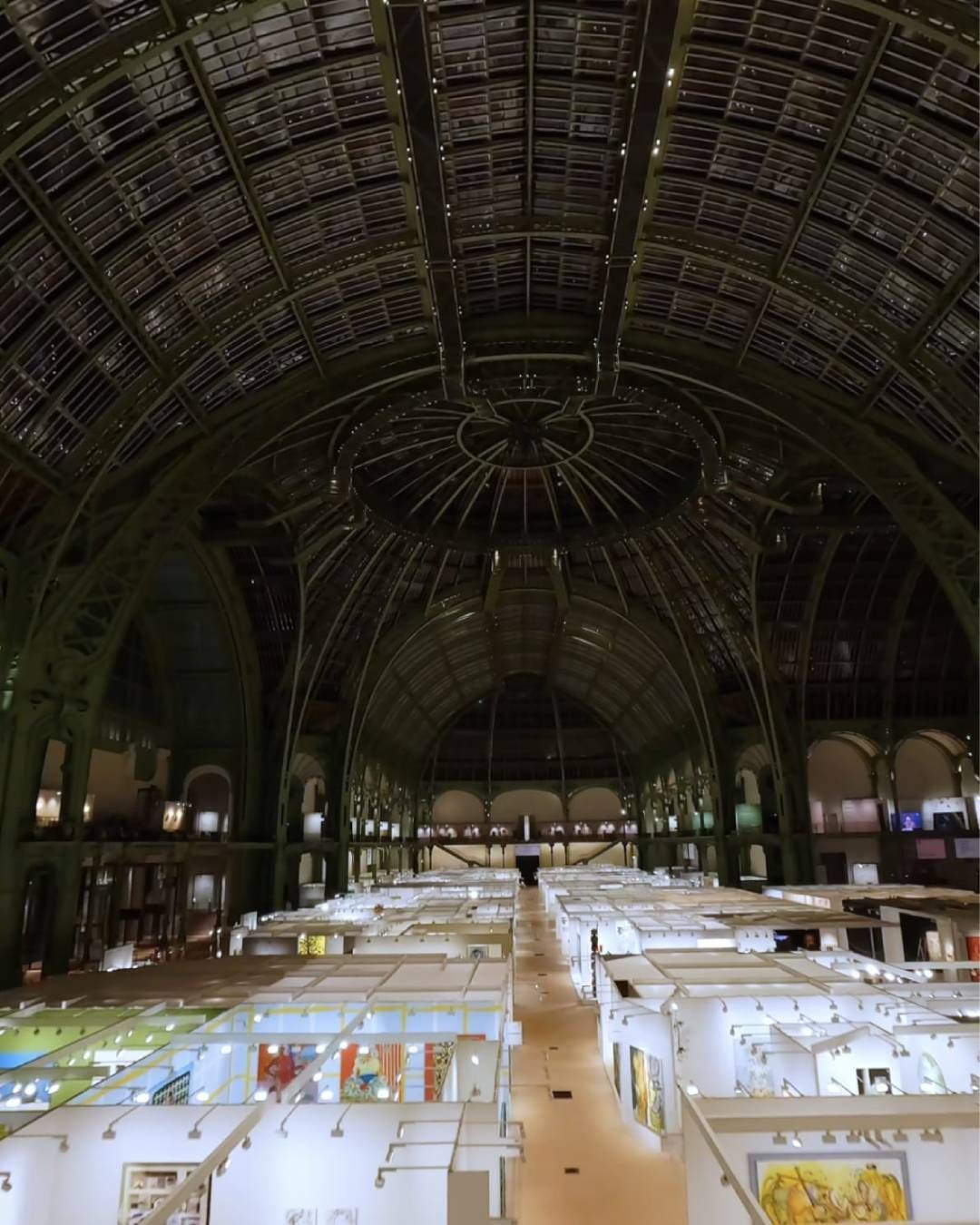





















With Biennale College Cinema and the support of CHANEL, Venice builds a space where emerging filmmakers can still take risks Because the future of cinema needs no permission

Every September, in Venice, people talk about the future of cinema as though it were something to be predicted. Signals are sought in the competition films, in names destined to become familiar, in new formats and the platforms reshaping the way we watch. Biennale College Cinema starts from a different perspective: the future is not something to wait for or guess at — it is something to be made possible. That means giving time, tools, resources and, above all, freedom to those who have not yet made a film, but who already possess something that cannot be taught: a voice.
Founded in 2012, the Venice Biennale's programme dedicated to training and supporting young international filmmakers accompanies twelve projects each year through every stage separating an intuition from a finished work: from writing to distribution strategy, through financial planning and production scheduling. Four of the projects selected for the 2025–26 edition made it all the way to the end of the programme and were presented in the official selection of the Venice International Film Festival. This is a significant fact — not only for what it says about the College, but for what it reveals about the industry: today, for an emerging filmmaker, the hardest step is not imagining a film, but securing the space to make it without having to render it immediately reassuring, recognisable or marketable.
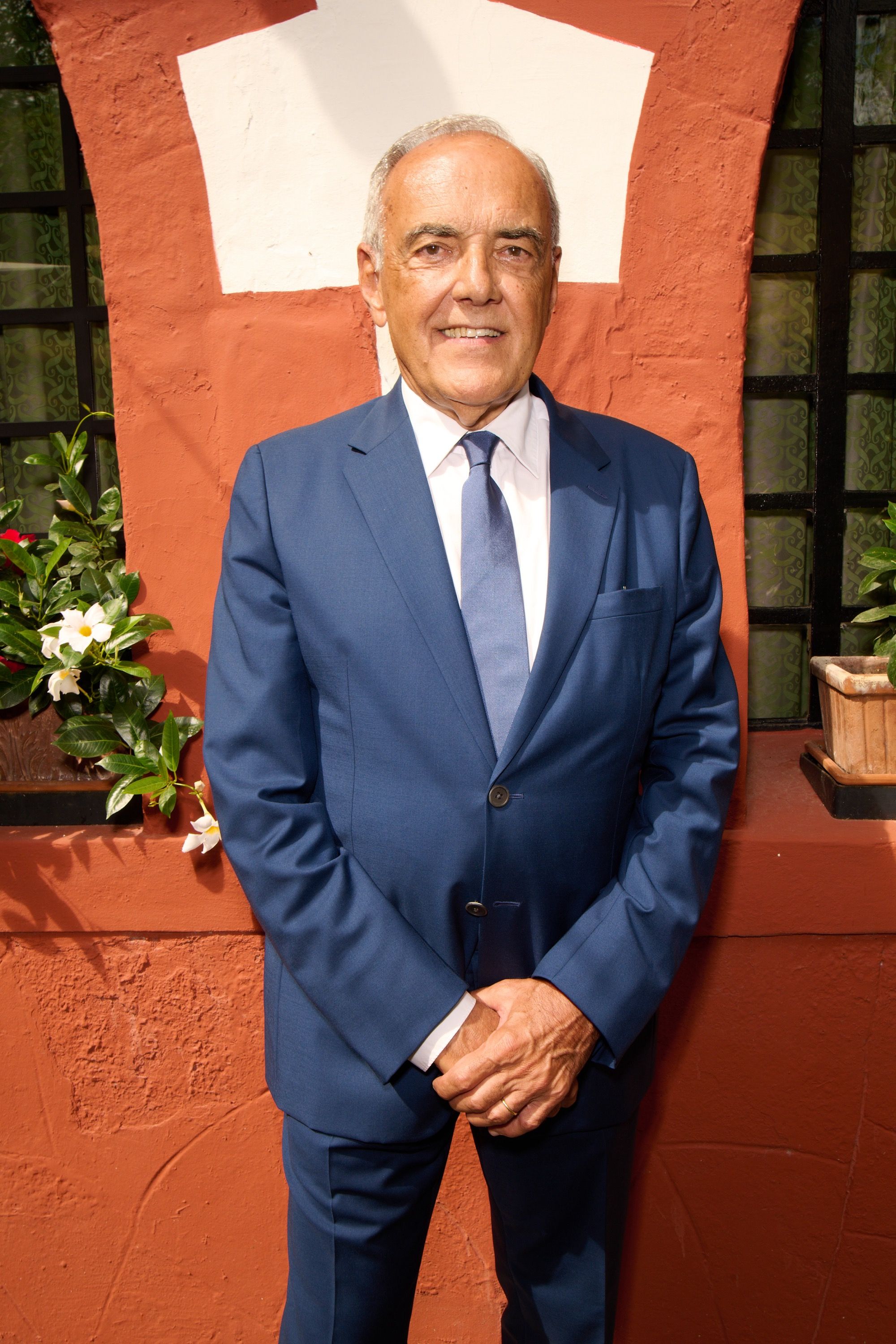
"We look for an original voice, a talent we hope is genuine and who might begin here a career destined for significant development," explains Alberto Barbera, artistic director of the Venice Film Festival. For Barbera, the point is not to produce abstract promises. Many of the films born within the College have travelled through international festivals, won awards, found distribution in cinemas or on platforms; several directors have since returned to Venice with subsequent works or gone on to other festivals. The measure of the programme therefore lies in the continuity it manages to generate. It is not a prize that ends at the moment of presentation, nor an isolated grant: it is the concrete construction of a trajectory.
When asked what a director needs today in order to emerge, Barbera initially answers with a quip: "luck." Access to the profession seems simpler because images are everywhere and the tools to produce them have become more widely available; in reality, turning an idea into a film and that film into a career has grown more complex. The industry tends to concentrate attention on larger projects and on works capable of promising a commercial return, while auteur cinema faces increasing difficulty in securing funding. "A director needs to be guided through a process as complicated as making one's professional debut — a process whose entry point today appears easier, but is in fact far more complex."
Biennale College intervenes precisely in this space. Tutors help teams develop their projects, strengthen the screenplay and build an effective production path, without pushing them to anticipate market demands. It is a temporary suspension of the logic that normally governs production: not a zone shielded from the world, but a place in which to arrive at that confrontation with the world having already defined one's own language. "Here they find a space of absolute freedom. In this first experience, freedom is fundamental, because it allows them to demonstrate that they have talent, that they can tell stories and engage audiences."
Testimonies from the filmmakers confirm that financial constraints, within a structure capable of supporting them, do not necessarily coincide with creative constraints. On the contrary, they can become a form of concentration. Gabriel Gutiérrez Morales recounted that his project's limited budget was not experienced as a restriction, but as an opportunity to be more honest and say exactly what he wanted to say. Maria Giovanna Cicciari described the experience as "liberating," emphasising that the real reward was the freedom to shoot and make her own film. One of the edition's directors described the need to trust her instincts over nine months of intensive work: without time to retreat into a comfort zone, every decision had to be immediate, present, personal.
The numbers give a sense of scale to this work without exhausting its meaning. Over fourteen editions, 49 projects have been realised thanks to the College grant, which has grown from 150,000 to 200,000 euros; a further 28 films have found an independent production path following the first workshop. Nearly eighty works born directly or indirectly from a process that begins on San Servolo, with ten days of intensive work and teams from around the world. For the new selection, more than 400 applications arrived from over a hundred countries. Behind each figure is a creative duo formed by a director and a producer and, above all, a potential access to cinema that would otherwise not have existed.
CHANEL's support for the fourteenth edition is part of a history that long predates the contemporary concept of cultural partnership. In 1920, during her first visit to Venice, Gabrielle Chanel met Sergei Diaghilev and funded the revival of the Ballets Russes. About ten years later, also in the city, she met the young Luchino Visconti and helped launch his career by introducing him to Jean Renoir, who would become his mentor. Venice thus becomes the point of contact between two parallel stories: that of a Maison which built part of its identity through dialogue with artists, and that of an institution which today seeks to make cinema more accessible to those who have yet to enter it.
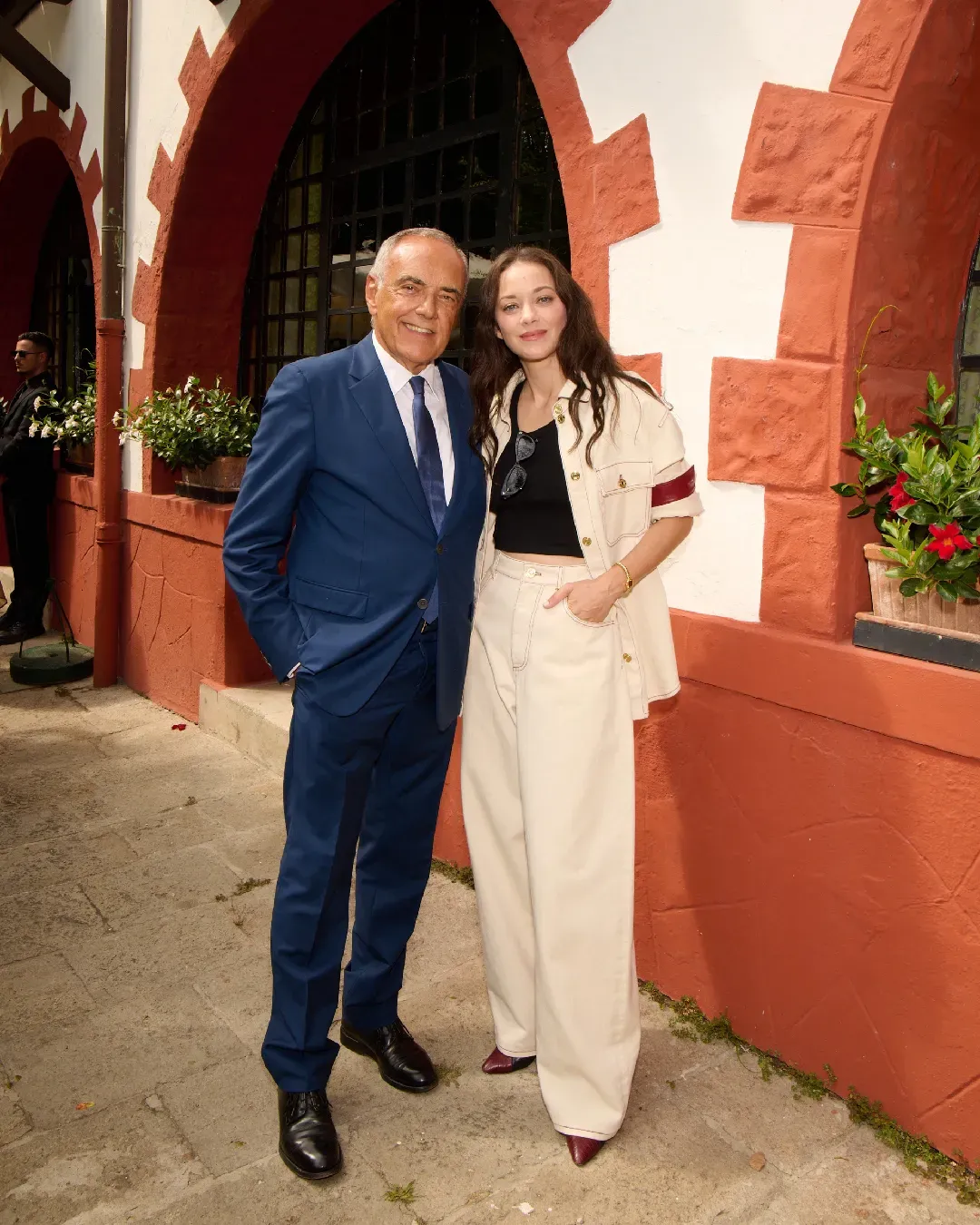
For the 2025–26 edition, this bond also took the form of Marion Cotillard, actress and ambassador of the Maison, chosen as mentor for the programme. In her remarks at the press conference, Cotillard stressed the importance of protecting works that are not made to reach millions of viewers or generate immediate financial returns. What struck her about the four films was what she described as an "artistic fire": the urgency to tell stories and the possibility of doing so through singular, unformatted projects that, without a programme like this, might risk never existing. "It is essential to support projects that are not formatted at all, singular works that might not exist without this programme," said Marion Cotillard. "They must exist so that artists can be supported and so that audiences continue to have access to demanding films — films capable of breaking the mould."
For Barbera too, the Maison's contribution goes beyond the financial dimension. Its history alongside cinema, the ability to involve professionals and directors as mentors, and the experience accumulated in supporting creation all enter into the very structure of the project. A structure that, to function, cannot become fixed: it must change alongside cinema. "CHANEL brings experience and the ability to involve other directors as mentors for the young filmmakers. The project must follow cinema's transformations: it cannot remain locked inside a cage forever."
For decades we have thought of festivals primarily as places of consecration: spaces that select, order and screen films already made. Biennale College shifts this responsibility upstream. Venice does not simply recognise a work once it is finished, but participates in building the conditions that allow it to come into being, and then accompanies it at the moment of presentation. Cannes, Berlin, Locarno and Rotterdam have developed programmes over the years aimed at new filmmakers and at cinematographies that face greater difficulty accessing capital. Venice came later, Barbera acknowledges, but in 2012 it chose a more ambitious formula: not merely a contribution, but an entire journey. "I believe it is essential for a festival to play an active role. We don't simply provide financial support: we build the path, we follow the directors through the production process and, when the film is finished, we help them present it."
This is perhaps the most compelling response to the crisis running through contemporary cinema. Not defending a past form out of nostalgia, nor chasing every technological shift as though it were automatically progress, but ensuring that diverse filmmakers can continue to experiment. Cinema does not stay alive by preserving the rules of the twentieth century intact; it stays alive if there are places willing to welcome what does not yet have a recognisable form.
Barbera does not share the recurring notion that cinema is dead. Or rather: he accepts that a certain cinema is dead — the cinema of the last century, the system through which generations of audiences learned to love it. But in this very disappearance he sees the beginning of something, not its conclusion. "That cinema — the cinema of the last century we were born into and grew up with — is dead. But today extraordinarily interesting cinema is being made all over the world, very different from the past, of course. The history of art is a history of evolutions, changes, revolutions and sudden leaps. That is what is happening to cinema too, and I am tremendously excited about its future."
The future described by Biennale College Cinema is therefore not a vague promise. It has the face of those who arrive in Venice with a treatment and, nine months later, return with a film; of those who come from a country where access to production is limited; of those who discover that a micro-budget can compel the gaze to become more precise; of those who do not yet need to know how to please everyone. In an increasingly cautious industry, perhaps the truly radical gesture is precisely this: granting a new voice the right to ask no one's permission.
What to read next
Miu Miu's commercial boom is coming to a halt
The rest of the Prada Group, however, is holding up well
Stephen Jones shares his vision of fashion at SSENSE’s Salon des Refusés
From London to Paris, a look back at the journey of an extraordinary milliner who came to shake up fashion’s status quo
5 Style Lessons We Can Learn from Jeff Goldblum
How to put together a look inspired by the iconic actor