























Prada’s latest investments have nothing to do with fashion From space suits to contemporary art
There is a sense of new investment activity within the Prada-Bertelli family, whose wealth extends far beyond the runway, reaching as far as space exploration. The recent acquisition of Versace is also part of this broader picture, signaling an ongoing restructuring of the group and its creative and commercial direction. At a time when luxury is increasingly shaped by financial operations, governance changes, and evolving brand identities, the Milanese family, which controls approximately 80% of the Prada Group, continues to strengthen its position, having received roughly €330 million of the €424 million distributed to shareholders on May 19, marking a 20% increase compared to the previous year, when the amount stood at around €280 million.
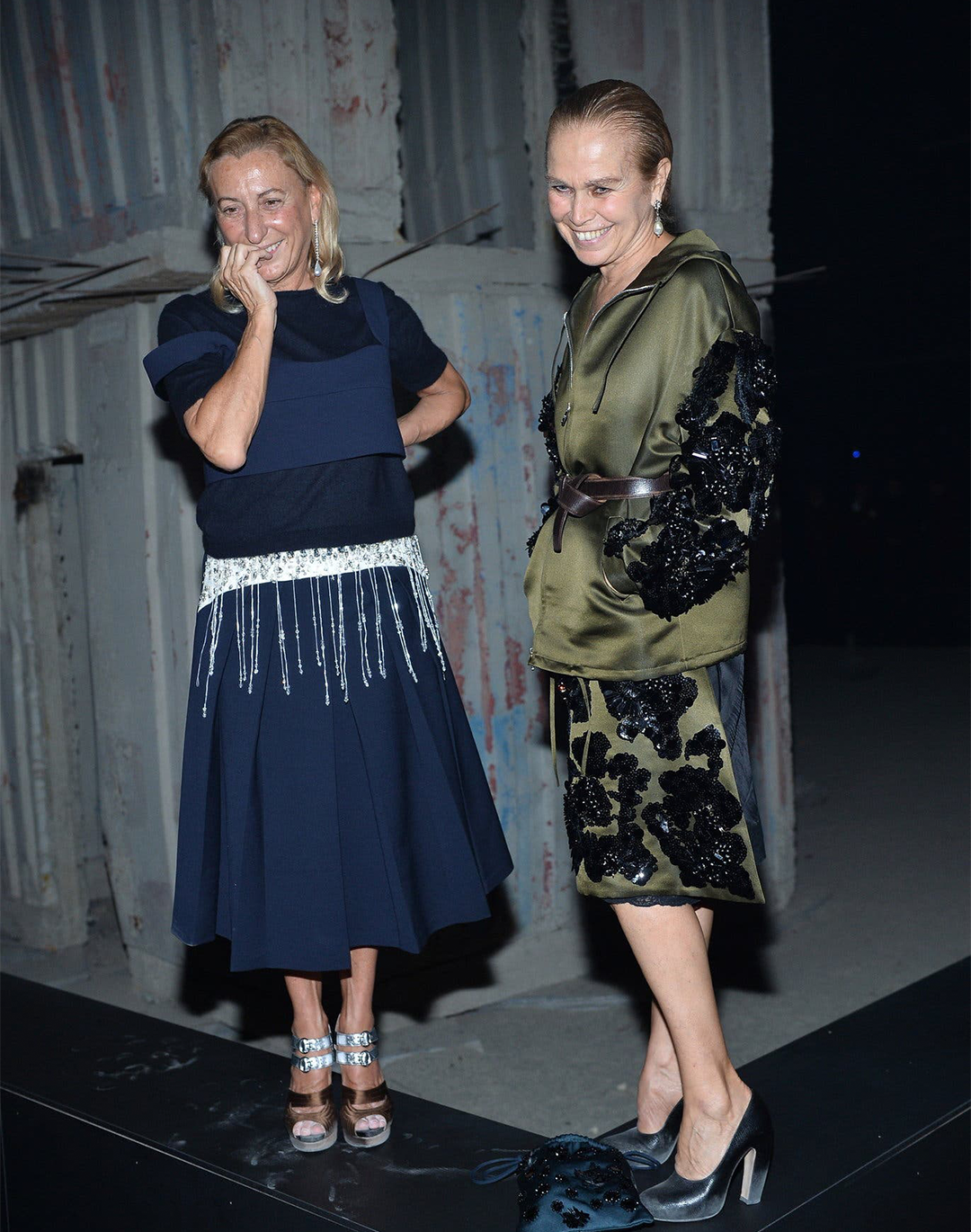
Miuccia Prada and Patrizio Bertelli appear to be reinvesting part of these resources into an increasingly diversified network of projects and holdings. According to Glitz Paris, at the beginning of April Miuccia Prada expanded this ecosystem by establishing a new fund, Bellatrix, a discreet investment vehicle that already owns 76% of Aegida Space, a company founded by her son Lorenzo Bertelli at the end of 2025. But what exactly is it?
Prada Is Heading to the Moon
At a time when the interests of many of the world's wealthiest individuals are turning towards space, Lorenzo Bertelli, through Aegida Space, acquired a 0.2% stake in Axiom Space, the American company involved in missions to the International Space Station, adding to a collaboration that has already been underway for some time. The stake is estimated to be worth around €5 million, with an additional investment of approximately €1.5 million allocated to cover potential future write-downs, given that the company is still in a development phase. It is worth noting that in October 2024 Prada was selected to contribute to the design of the spacesuits that will be worn by astronauts on the Artemis III lunar mission, in partnership with Axiom Space.
Despite this diversification of investments, the main source of funding remains the Prada Group and the dividends distributed to shareholders through the family’s holding companies. At the centre of this structure is Ludo, considered the family’s true treasure chest, a holding company that functions as an investment vehicle, collecting dividends from the Prada Group and reallocating them into other assets such as real estate, culture, and art. The company currently holds more than €700 million in assets and reported a profit of approximately €60 million in 2024, derived almost entirely from dividends paid by the Prada Group. Ludo owns 53.85% of Ludo Due, a second holding company that in turn controls 65% of Prada Holding. Miuccia Prada retains usufruct rights over Ludo, while her sons Lorenzo Bertelli and his brother, filmmaker Giulio Bertelli, own 50.5% and 49.5% of the company respectively.
Bitcoin, Fashion and Collecting
Alongside space, the family’s investments also extend into digital and cultural territory. The holding company owns a more enigmatic asset: the Pavesi Collection, a high fashion archive valued at more than €6 million, believed to be linked to the legacy of Manuela Pavesi, Miuccia Prada’s longtime collaborator and a pivotal figure in shaping the brand’s aesthetic evolution, who passed away in 2015.
Real estate represents another strategic area of investment. A significant portion of the family’s resources has been directed towards the district informally known as “Soupra” (South of Prada), a former industrial area in southern Milan that is currently undergoing rapid transformation. Fondazione Prada also plays a central role in this context. Today it stands as one of Europe’s most influential contemporary art institutions and a key player in the urban regeneration and gentrification of the surrounding neighbourhood. Art remains the symbolic core of the cultural empire that Miuccia Prada began building in the 1990s. Her collection includes works by some of the most sought-after artists among international collectors, including Jeff Koons, Damien Hirst and Anish Kapoor, alongside major figures of contemporary Italian art such as Lucio Fontana.
Against this backdrop, the family’s investments continue to expand across finance, culture and technology and perhaps, in the future, a Prada flag may indeed come to brush against the surface of the Moon. Until then, all eyes remain on the next moves of the most powerful dynasty in the Italian fashion system.