
Paloma Wool sets up in Paris until the end of the year The Spanish label has taken up residence at 51 Rue de Turenne
Another pop-up in the Marais? Not exactly. Until the end of the year, Paloma Wool is settling in Paris, on one of the neighborhood’s busiest streets. While the opening is temporary, it raises the question of a permanent installation -a possibility that doesn’t seem far-fetched. The Parisian address now appears in the brand’s Instagram bio alongside Barcelona, London, and New York, cities where Paloma Wool already has permanent stores. A signal far from insignificant for a brand that has been accelerating its physical presence internationally over the past seasons. After several ephemeral activations in the capital, this new space feels less like a marketing stunt and more like the next step in its expansion strategy. Located on one of the Marais’ most frequented streets and a stone’s throw from high-end vintage boutiques, the store occupies a highly strategic position. Here, retail serves as both a point of sale and an image-building tool.
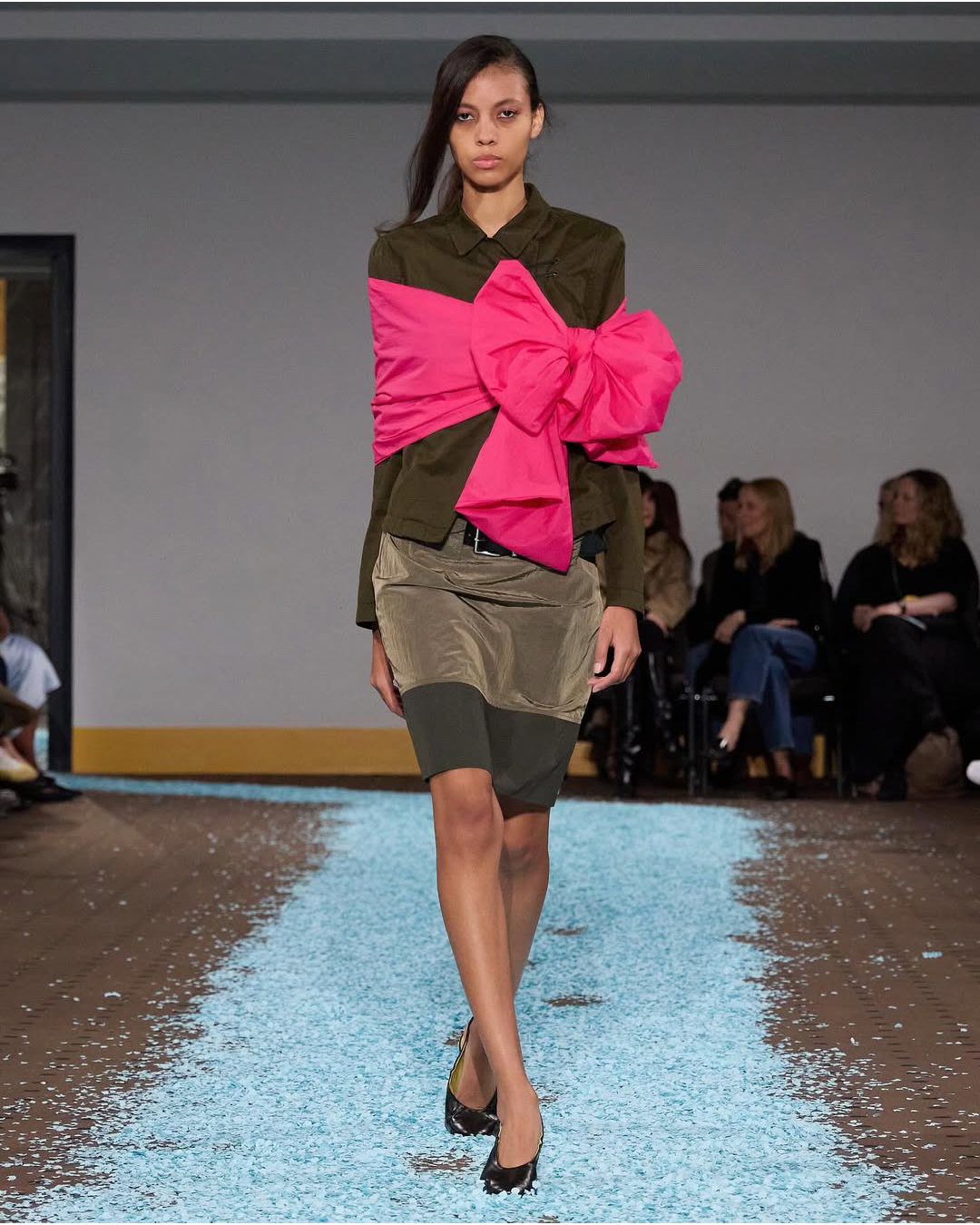
Inside, Paloma Wool maintains the setup that made its previous pop-ups successful: shopping is done pencil in hand, noting desired pieces on paper before they are brought to the fitting rooms. This signature system is designed not only to manage customer flow efficiently but also to ritualize the act of shopping. More than a logistical solution, it creates a premium, almost ceremonial experience -a sharp contrast to the instant consumption imposed by e-commerce. On the racks, the Spring-Summer 2026 collection sits alongside a few winter pieces that have already become iconic, such as the Jolie Snaps boots, a hybrid model with snaps that converts into ankle boots. In terms of silhouettes, the brand remains true to what has made it successful: shades of blue everywhere, flowing and semi-transparent fabrics, and a near-instinctive approach to layering.
The real Paloma Wool phenomenon, however, extends beyond the store walls. Across Paris, the brand’s speckled blue tote bags and paper bags have become ubiquitous, instantly recognizable. A symbol of belonging almost as powerful as the clothing itself. On social media, visiting the store has become almost mandatory. Whether leaving with a piece or not, the experience is documented. The space is designed for it: mirrors, clean lines, minimal furniture, soft lighting. Everything seems intended to be captured, shared, and fed back into TikTok’s “For You” pages and Instagram stories. At Paloma Wool, shopping is not just about a dress or a pair of boots; it’s about being part of a clearly defined community.
Content creator Marie Anna recently summarized the phenomenon in an Instagram carousel: “Who is the Paloma Wool girl?” More than a customer, the “Paloma Wool girl” now embodies a figure in her own right. Visits to the store resemble a ritual. Every pop-up triggers the same images: filmed try-ons, mirrors saturated with selfies, branded bags in the streets, silhouettes instantly shared on TikTok. Gone are the days when long queues were the only measure of a store’s success -at Paloma Wool, virality is now measured by how quickly the brand infiltrates feeds.
Perhaps the most interesting aspect is the paradox: despite its digital omnipresence, Paloma Wool relies very little on traditional influencer mechanics. Little to no gifting, no over-solicitation of influencers, no flashy campaigns. Desirability seems to sustain itself organically. The brand thrives on a rare kind of organic power, where the community effectively acts as its own media. In Paris, this new store could very well confirm what many have long suspected: Paloma Wool is no longer just a cult social media brand, but one of the most influential independent labels of its generation.