


























Who even cares about Vogue World? Now in its fourth edition, no one understands the point of the event
Vogue World has reached its fourth edition and, as every year, has left European fashion enthusiasts a bit perplexed, culturally distant from the American sense of spectacle. The show should be a mix between a fashion show and a charity event that aims to celebrate together the fashion seen in the last year and the “cultural weight” of Vogue. Cultural weight that, to be frank, has become increasingly lighter in recent years during which the magazine has become a kind of violin with which the industry plays a serenade to itself. Vogue World is a reflection of this new status quo: that of a publication that would like to become both a media company and a brand; as well as that of a fashion that, under the dress, really doesn't know how to hide anything. In fact, at least from the European point of view, interest in the show is practically nil.
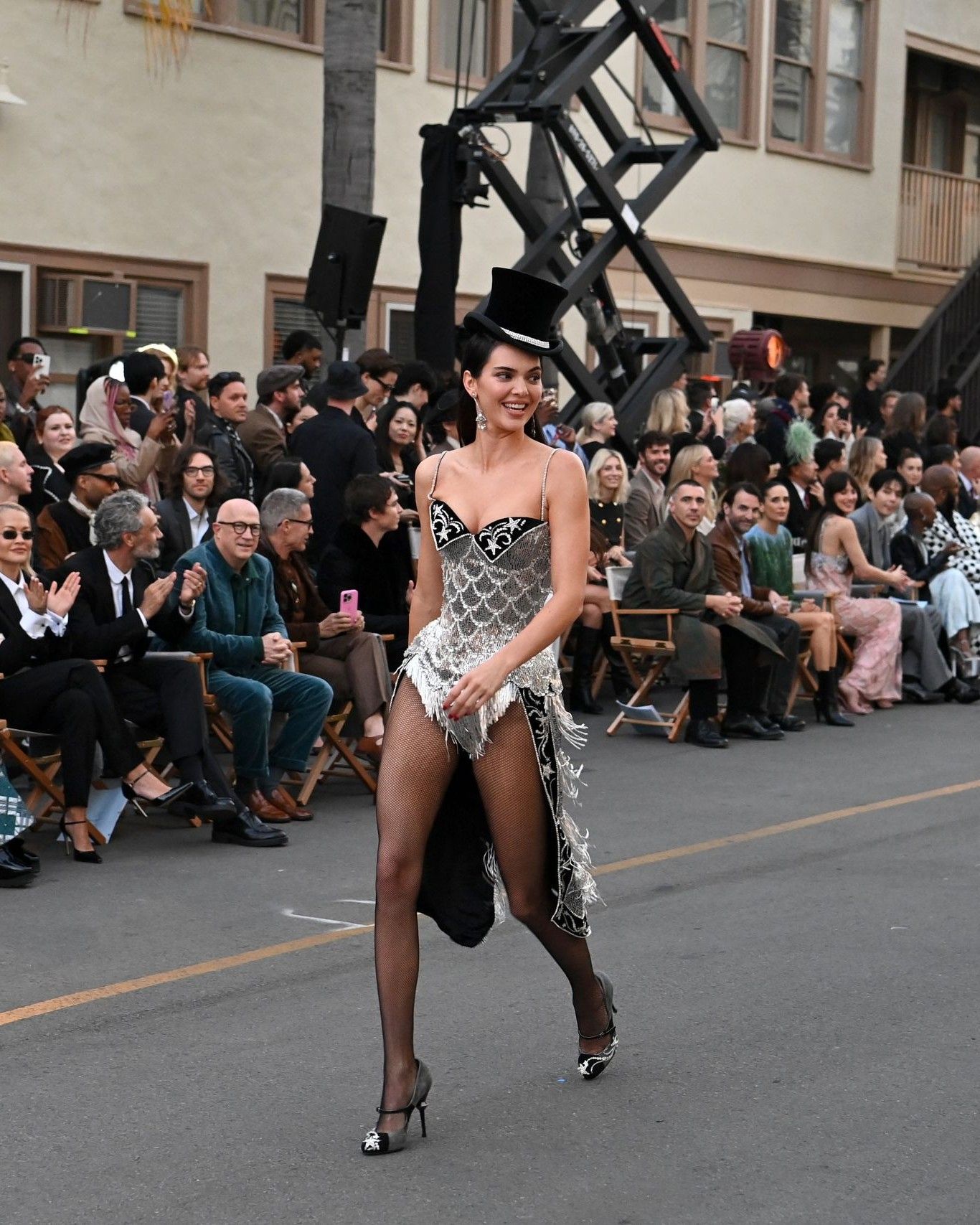
But what strikes the most is the fact that this fifteen-million-dollar event is a zero-sum game: it is not a real fashion show where new things are seen (there were some custom looks from Balmain, however), it is not an artistic moment where culture is produced and not even a moment of encounter with the wider public since it is an event for VIPs by VIPs. The only output that is not strictly economic or financial is a series of images of a costume parade where Alex Consani dressed as Orlando walks alongside a cosplay of Diane Keaton in I & Annie and Angela Bassett reprising the role of Queen Ramonda from Black Panther. All the taste but zero calories: the event is in fact the Diet Coke of fashion. It says a lot, in fact, that this pharaonic event has no concrete impact except for the money it makes for Vogue.
The money behind the show
Despite the doubts of the entire industry, Vogue World generates big revenues for Condé Nast, mainly exploiting sponsorships and partnerships with major brands like Chase Sapphire Reserve, eBay or Eli Lilly that invest millions of dollars to gain visibility among influencers, entrepreneurs and jet set figures who amplify exposure on social media and in the press. These collaborations cover production costs but speculate in a often profitable way on exclusive merch like the capsule collection signed by Fear of God for this year's edition. This year's edition should have generated, according to various sources including Lauren Sherman of Puck, over 30 million dollars, that is, 50% compared to last year, and about 19% of Vogue's total revenues.
There is also charity. Ticket sales, whose price ranges from 500 to over 5,000 dollars, are usually donated entirely to selected charitable causes. This year the 4.5 million dollars in proceeds went to the Entertainment Community Fund to support costumers and industry professionals affected by the fires in California. Last year, when it was held in Paris, about one million euros was donated to the Olympic partners of that year. A certainly noble humanitarian dimension but one that also serves to justify the event as a high-level public relations opportunity that then stimulates digital subscriptions as well as the perception of Vogue, especially in a historical moment marked by a decline in print sales and competition from new digital media.
A wasted opportunity?
@voguemagazine Swoon! #HunterSchafer stepped out on the #VogueWorld original sound - Vogue
The event's audience is in fact quite large. We don't know how many viewers there were in total across the different platforms but just the official YouTube video of this year's edition currently counts 7.7 million views. The numbers could be disproportionately larger: for the 2023 London edition, a Vogue spokesperson told the Washington Post that the overall audience was 93 million viewers. Which would be a magnificent thing if Vogue World, like the Met Gala, were the occasion for designers and their ateliers to produce beautiful one-off pieces, for the public to attend what is effectively a street parade or for Vogue to offer some kind of platform to launch new designers and concretely assert the magazine's role as "talent maker". But it is not.
We were talking at the beginning about the “American” nature of the spectacle. In fact, in the Treccani Dictionary definition of the Italian slang “americanata”, often referring to films, reads: «Any thing or enterprise eccentric, surprising, exaggerated and sometimes a bit tacky, based on the stereotyped image of the ways and manifestations in use in the United States of America». Unfortunately, Vogue World fully falls into this definition of perhaps a bit naive taste for the grandiose and the spectacular for its own sake. So much for its own sake that it even comes off as a bit cringe when the more discerning viewer realizes they are watching a series of famous people in costume walking a bit emphatically, with dramatic high school Shakespeare gesturing, for an audience of other famous people. Anyone who wasn't being paid to be there was paying to be there.
Vogue World 2025 tried to replicate the iconic Atonement green dress worn by Keira Knightley but it’s not even close pic.twitter.com/5ZpQjdTOBS
— mizge (@mihailo____) October 27, 2025
In this sense, Vogue World does not turn out to be as spectacular or progressive as it would like to be. It could be an international and pharaonic version of the much more progressive Donna Sotto le Stelle, which at least had the merit of making fashion and designers dialogue with the largest audience, using a national-popular medium in a truly collective and participatory dimension (the show was in Piazza di Spagna, in Rome) with interviews with designers and live commentary, providing a service to the public beyond the sterile wonder of seeing a crossover of all the stars of Hollywood in the world. Donna Sotto le Stelle, at least, had an educational value as well as advertising.
In fact, unintentionally, the show has almost demonstrated how much fashion depends on the aforementioned celebrities: without them, the show was a compilation of "moments" disconnected from each other, since the mix was of real cinematic costumes, runway looks taken as is from the shows and a few rare customs that got lost in the mayhem of sequins. Vogue World really has a very large audience but, beyond “having it” in the strict sense, it does not intend to engage it or enrich it. A fact that reflects both the reasons why Vogue is a magazine whose subscribers flip through only for the pictures, and the problems of an institutional fashion that follows pre-established movements in a now mechanical way, without real taste or depth of thought, and wants an oceanic audience without bothering to meet it truly face to face.