




















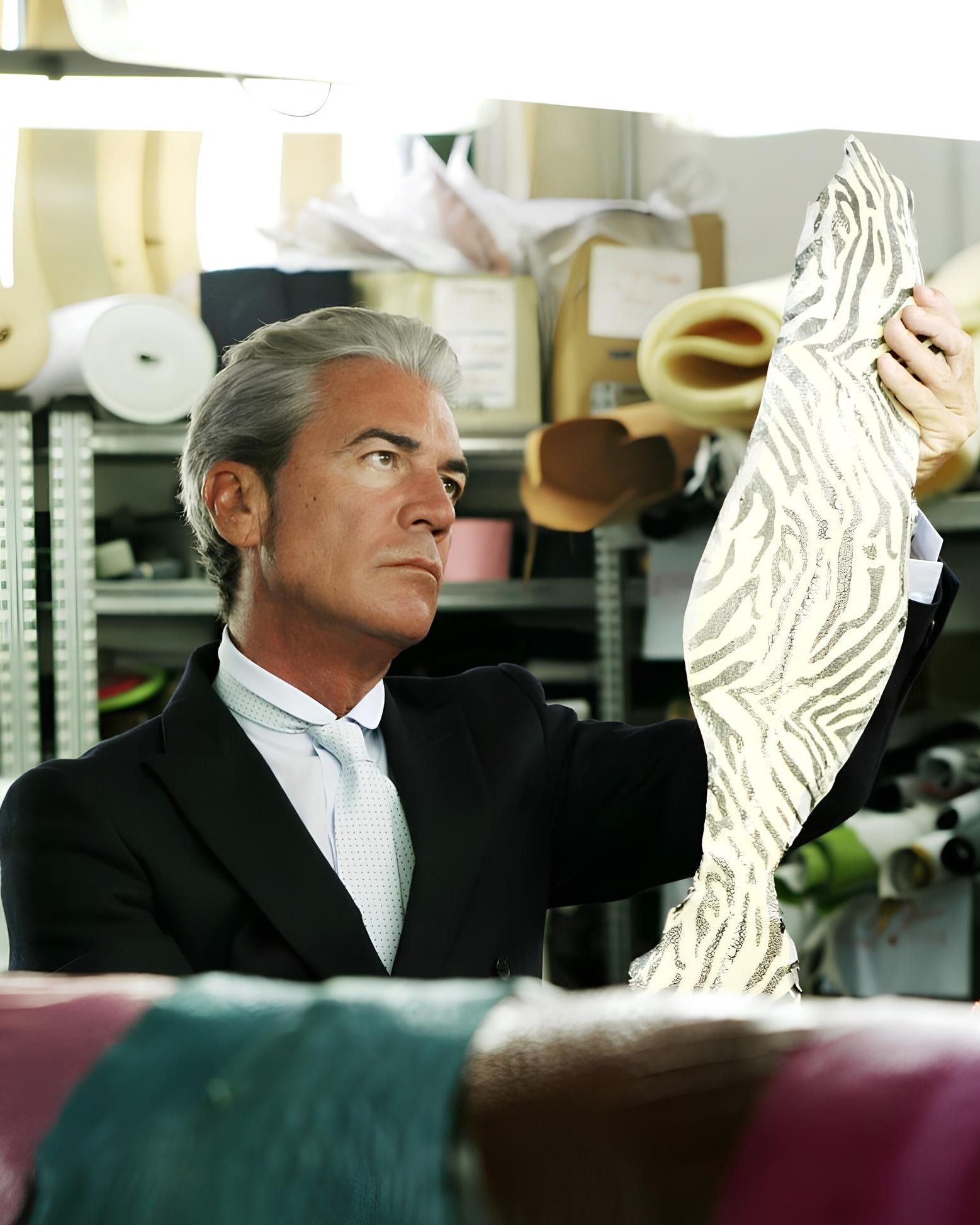
Farewell to Cesare Paciotti A lifetime devoted to Made in Italy footwear
Cesare Paciotti, Italian designer and entrepreneur in the footwear sector, died yesterday, October 12, in Civitanova Marche, the Marche town where he was born and built his career. He was 69 years old, and the causes of death were not disclosed, although there are reports of a sudden illness that struck him in the early evening hours. Surrounded by his family and children, Paciotti leaves behind a legacy in the world of fashion that stood out for the consistency in promoting the independence of his own name and the craftsmanship of the Italian province, that of the Marche in his case, where the family shoe factory was located from which his fortune began in the 1980s. Precisely his eponymous brand, independent, Italian, and rooted in artisanal tradition, contributed to consolidating the image of Made in Italy as a synonym for manual quality. Without reaching the levels of fame of other mega Italian luxury brands, Paciotti was a legendary name in that “pop fashion” Italian that had its period of glory in the early 2000s, becoming with his dagger logo a recognizable brand for entire generations of Italians and non-Italians alike, and which today has rightly become a cult.
The Career of Cesare Paciotti
Born in 1958 in Civitanova Marche, one of Italy's capitals of footwear production thanks to its position on the Adriatic coast and proximity to specialized industrial districts, Paciotti grew up in an environment steeped in family tradition. His parents, Giuseppe and Cecilia, had founded in 1948 a small artisanal workshop dedicated to the creation of custom women's shoes, entirely handmade with top-quality materials. From childhood, Cesare absorbed the basics of shoemaking along with his sister Paola until he became a master shoemaker himself. In the early 1970s, he enrolled in DAMS at the University of Bologna, studying art history and theater. During his studies, Paciotti began sketching shoe prototypes, combining his father's lessons with freer and more experimental ideas. It was during these years that he developed the idea of a design that united sensuality and strength, themes that would become central in his future career.
In the mid-1970s, after completing his studies and undertaking travels around the world, Paciotti returned to Civitanova. In 1980, at about 24 years old, he took creative control of the family business together with his sister Paola, who handled the operational and managerial aspects. Together they founded Paciotti S.p.A. and launched the first collection under the Cesare Paciotti brand, a step that marked the transition from an artisanal workshop to a true brand. The initial collection maintained the paternal heritage, with classic shoes for a bourgeois audience, but already introduced elements of innovation, such as more tapered shapes and more luxurious materials. Success came quickly: brands like Versace (Paciotti personally knew Gianni), Romeo Gigli and Dolce & Gabbana commissioned custom productions that fueled his still nascent business.
The Boom
cesare paciotti dagger heels fw17 pic.twitter.com/Ugowzr0MYQ
— (@badestoutfit) September 22, 2024
Paciotti retained much of the workforce inherited from his father, transferring production to a new facility about twenty kilometers from Rome for logistical reasons, but without altering its artisanal core. In a few years, he achieved a more than healthy annual turnover. It was during this decade that he introduced the iconic dagger-shaped logo, initially for a men's line. This undoubtedly romantic and imaginative symbol soon became the most recognizable emblem of the brand in an era when Italian fashion was rediscovering rock and punk. Later, as reported in an online biography of his, the designer explained that he chose the dagger because it was a very recognizable symbol but also because throughout all eras it had been a “tool” for men. Soon the logo represented the entire brand.
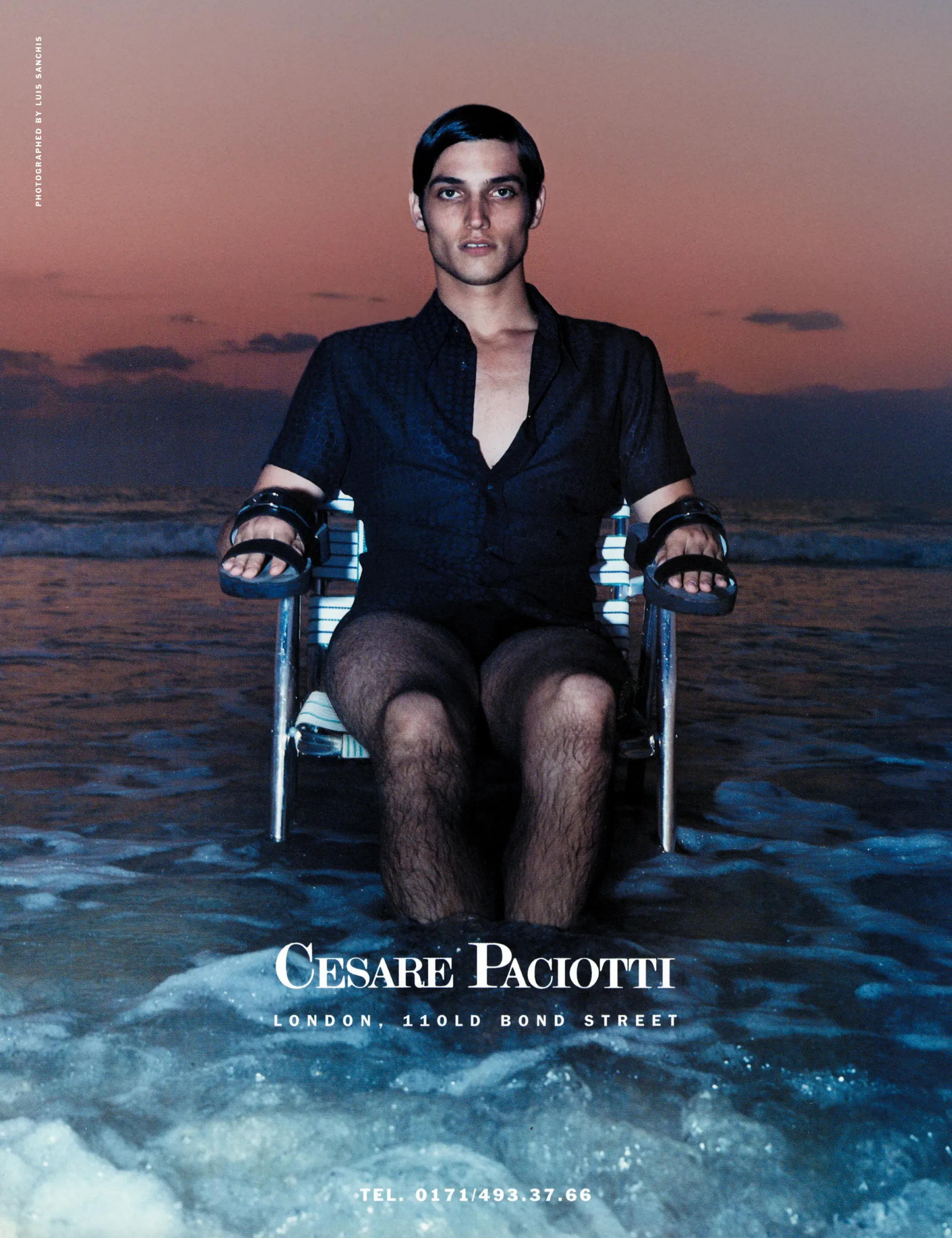
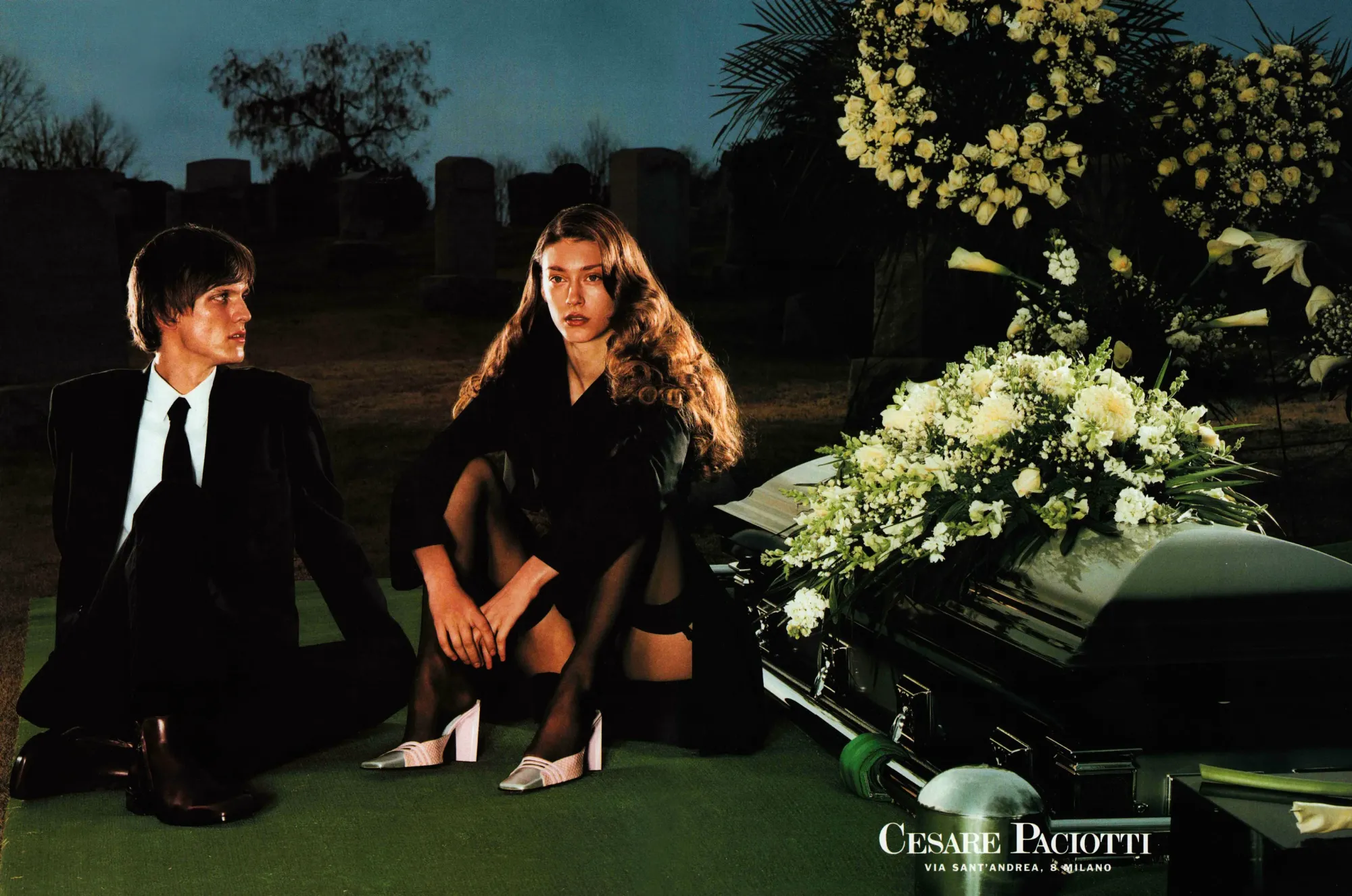
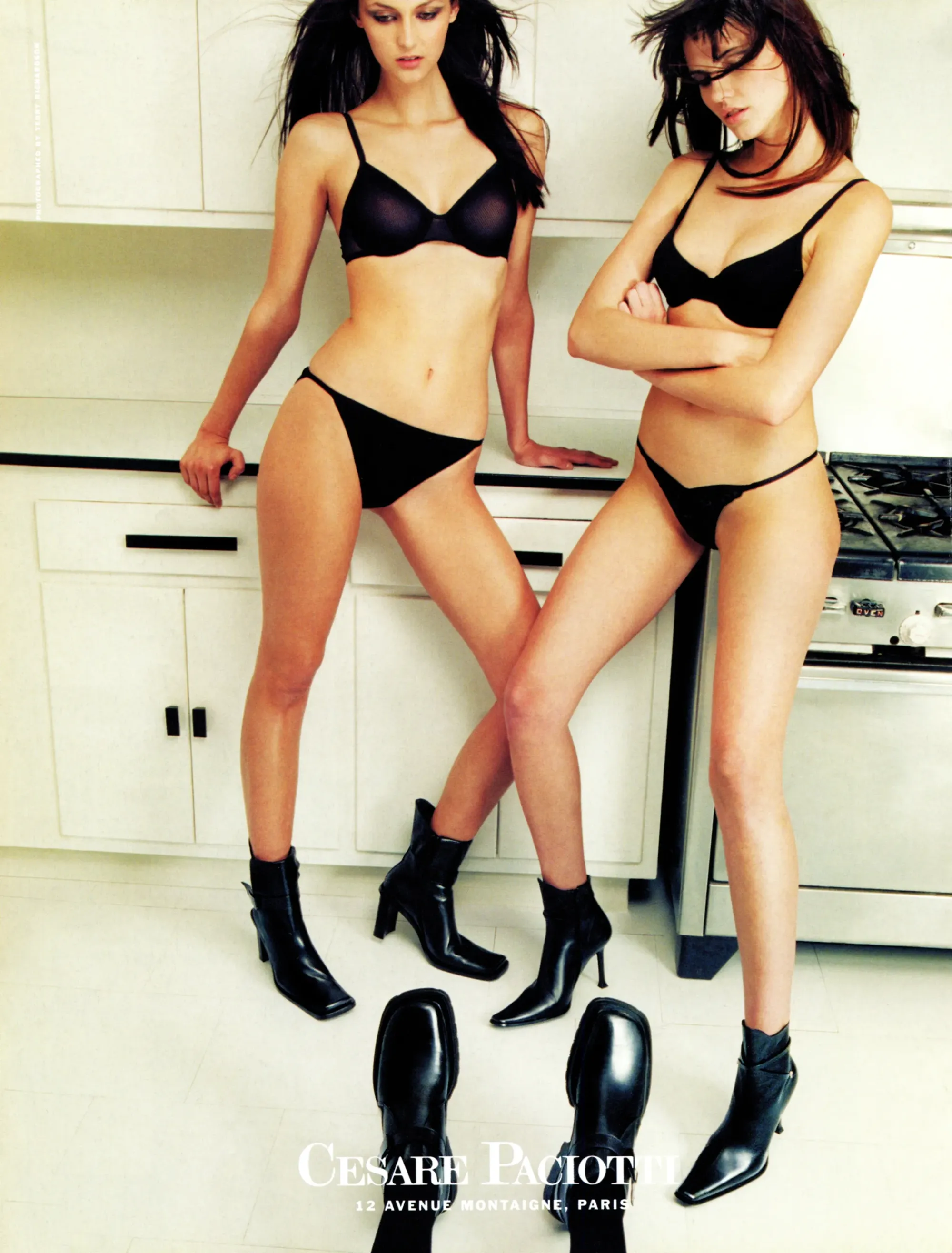
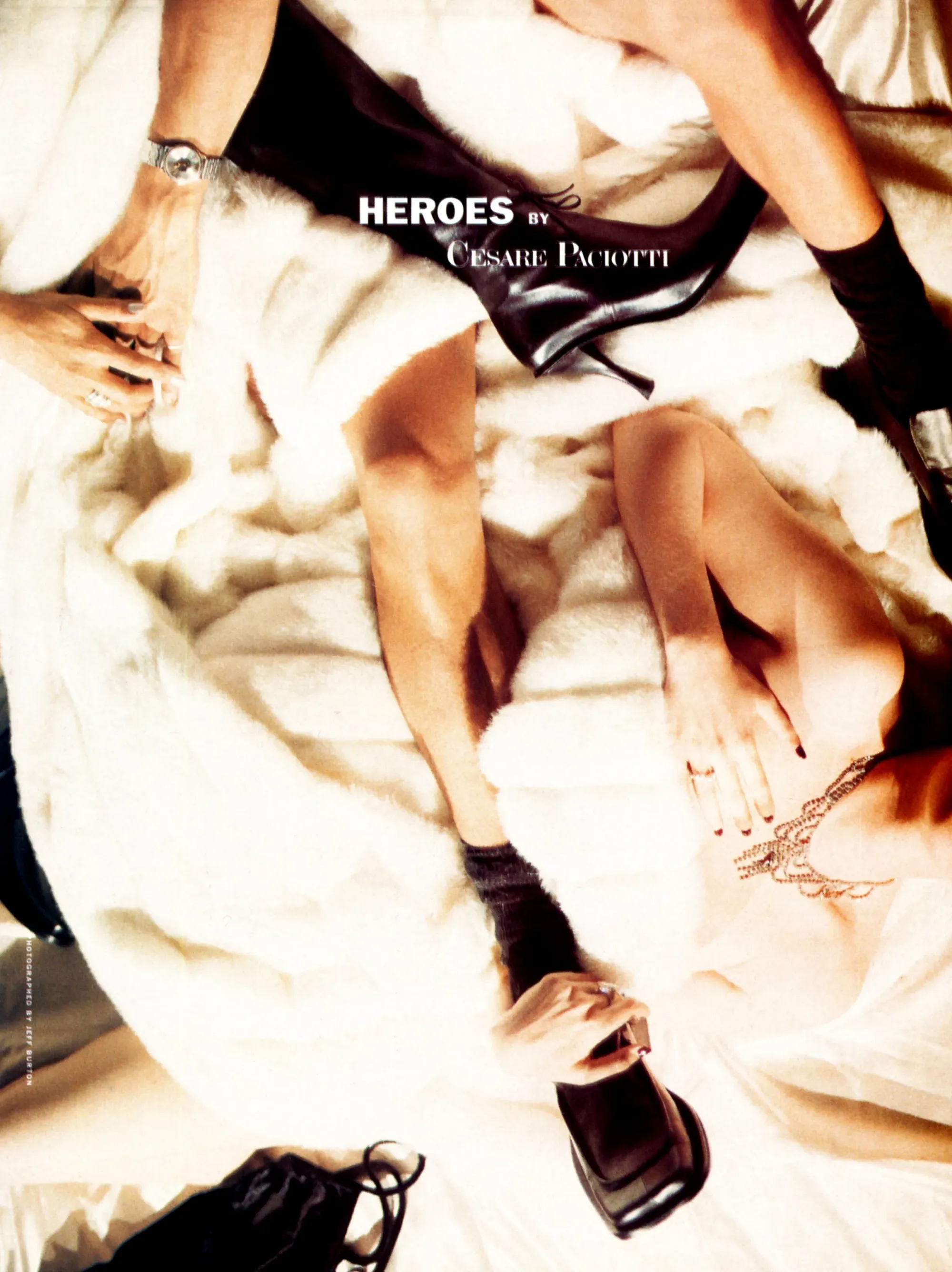
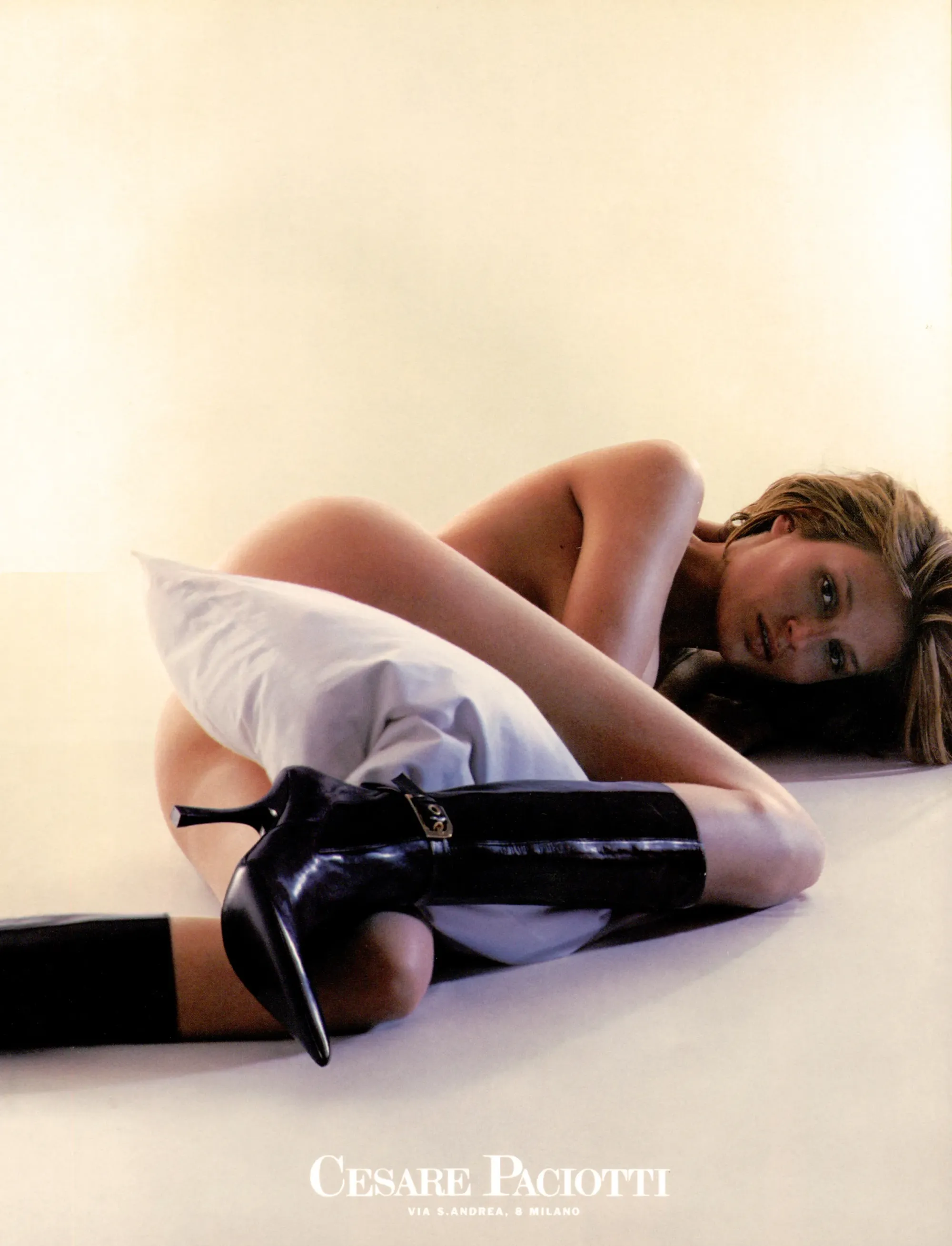
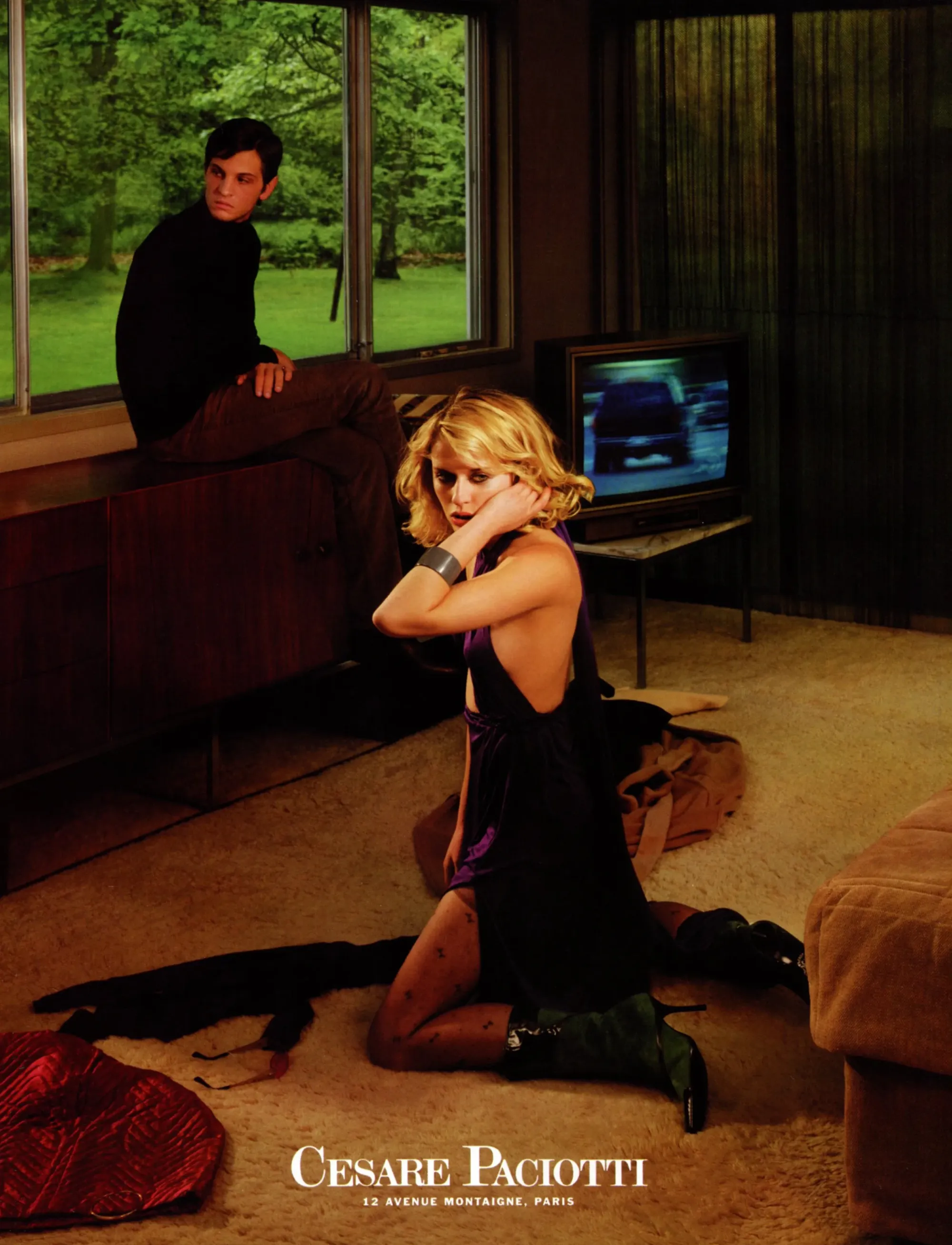
The turning point came in the early 1990s. In 1990, Paciotti revolutionized the women's collection, which until then had remained anchored to more sober shapes. Drawing on a consolidated artistic maturity, he introduced into his collections a vertiginous, tall, and unmistakable stiletto heel, which in some ways expanded the original symbolic meaning of the dagger logo. In the same period, the brand invested in international communication, collaborating with influential photographers like Ellen von Unwerth, Terry Richardson, Steven Meisel and Mario Sorrenti. Before settling into registers of sensuality and opulence, his campaigns had decidedly dark tones: a stunning shot from the SS98 campaign depicts model Franco Musso (one of the faces of Tom Ford's Gucci, among other things) tied to a chair among the sea waves; the SS20 campaign was set during a funeral; in the FW99 one, signed by Terry Richardson, two girls in heels and lingerie look at the outstretched legs of a man on the floor, presumably dead; in the same year, the one for the Heroes line simply showed a tangle of male and female legs among the sheets; in the FW00, instead, Annie Morton was a woman getting dressed in a hurry as if after an encounter with a lover.
In the 2000s, success amplified thanks to celebrities. Paciotti shoes graced the feet of stars like Beyoncé, Paris Hilton, Rihanna, Alicia Keys, Anne Hathaway and Lady Gaga, who wore them on red carpets and at concerts. Iconic models emerged in this period: from fur-lined sandals to asymmetrical pumps that played on precarious but fascinating balances. Diane Kruger wore them at the GLAAD Awards in 2016, while Lea Michele opted for a pair of black décolleté at the Billboard Music Awards in 2017. These appearances not only led to a turnover approaching 500 million dollars annually, but consolidated Paciotti as a designer dedicated to female empowerment. In 2007, he expanded the offer with the debut of the apparel line Paciotti 4US, a complete clothing collection that included skirts, tops, and leather accessories, maintaining the DNA of the dagger and the sharp heel. This move aimed to create a broader brand ecosystem, extending the appeal from footwear to a coordinated wardrobe.
In parallel, Paciotti diversified the portfolio with jewelry and watch lines, always under the aegis of accessible luxury. As he once told Harper’s Bazaar, he preferred the late night hours to create, when inspiration flowed freely, far from morning distractions. Throughout his career, he maintained an eclectic approach, blending craftsmanship with glam-rock details and pure volumes. The brand was celebrated by the international press for its fidelity to Made in Italy, and Paciotti himself was seen as a "true artisan" who had elevated a provincial district to a global stage.
From 2010 onward, creative direction gradually passed to a heterogeneous collective, which reinterpreted the heritage in a more inclusive key, with themes like "In der Mitte" (for genderless and non-binary designs) and "Hard Deco" (a mix of historical punk and geometric electronic vibrations). In recent years, then, his presentations at Milan Fashion Week have reflected this change attracting an increasingly young audience that, with the return of Y2K aesthetics, has reignited interest in the brand that is now preparing for a new phase. Cesare Paciotti's legacy lies in his ability to transform a local craft into a global icon: his brand continues to operate from Civitanova, custodian of a long family tradition, reminding us that in fashion, as in life, true impact derives from persistence more than from clamor.
What to read next
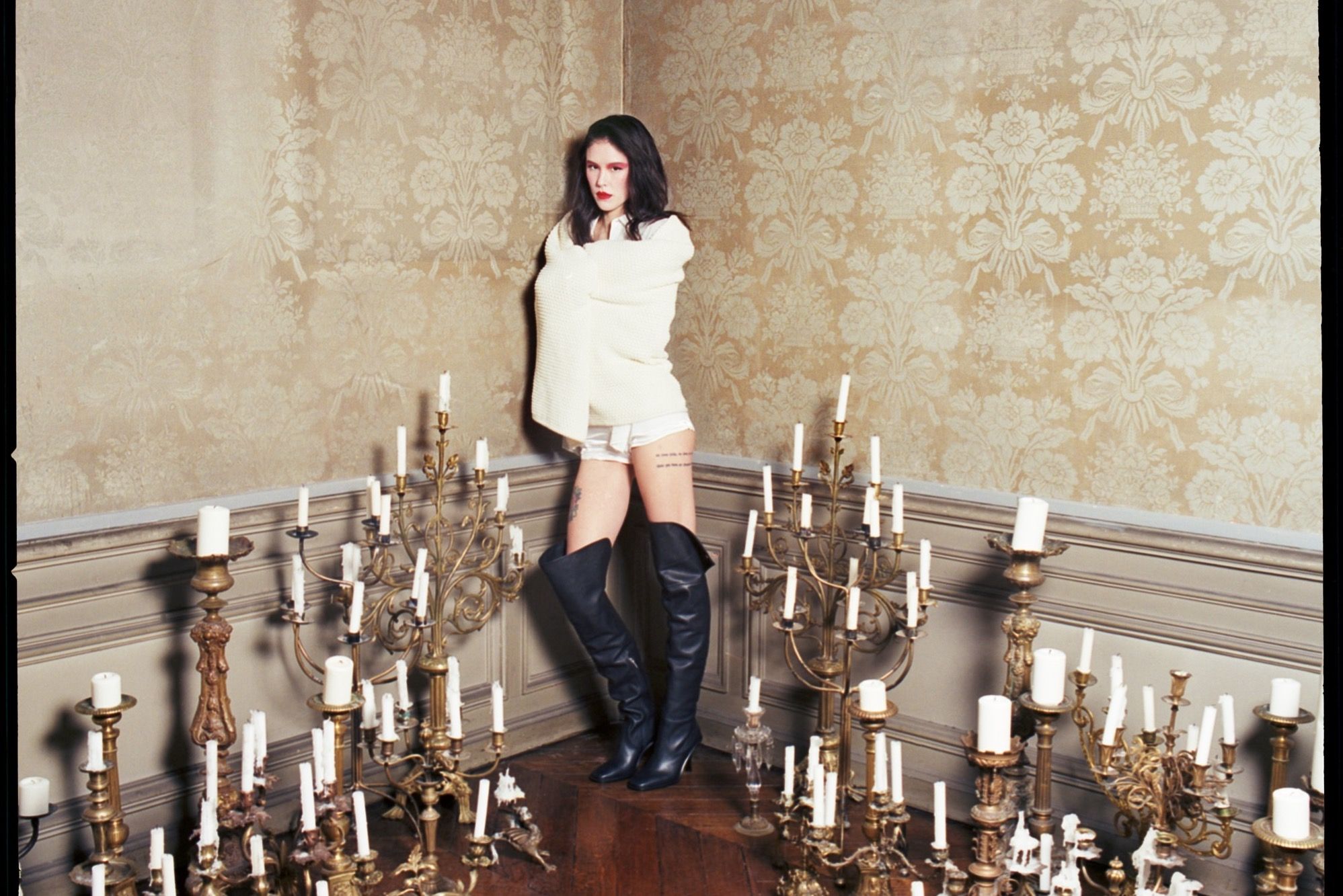
How an icon is reborn: a new chapter at Paciotti
The historic Italian brand returns with a renewed identity, that doesn't forget its past

But what exactly does the Chief Brand Creative Officer at Louis Vuitton do?
The brand has just appointed one, even though it already has two creative directors