
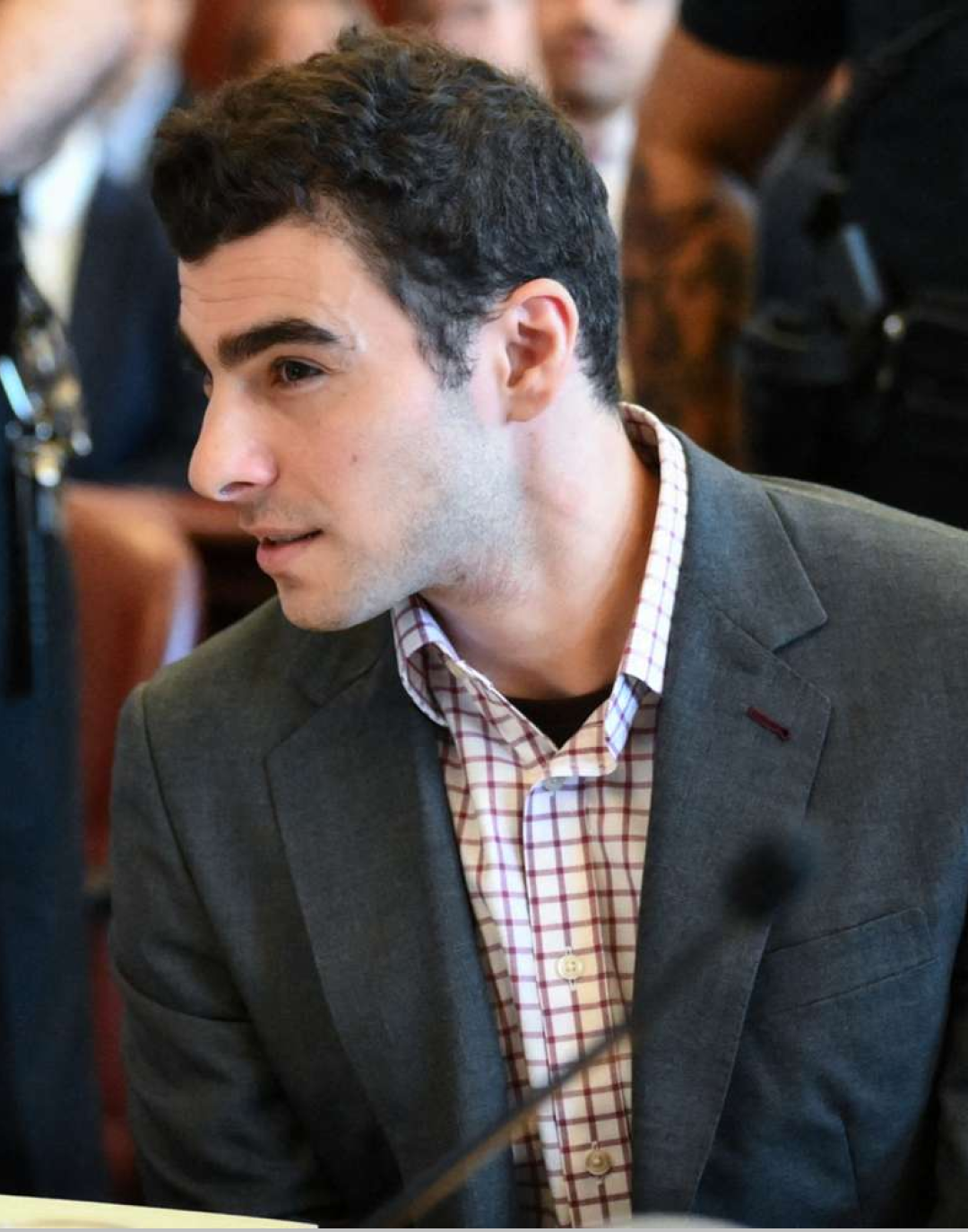
Luigi Mangione is a our new style inspo? The two outfits worn at the preliminary hearings have already gone viral
Everything the young “anti-hero” of Gen Z does seems destined to reach unheard-of levels of virality. After the photos in which he appeared as a martyr and the bizarre case of the Shein campaign, Luigi Mangione has returned as the main topic on social media because of his style during the preliminary suppression hearings related to the murder of the United Healthcare CEO, a crime for which he is accused of being the killer. And while very little is known about the progress of the charges, Mangione’s outfits could easily rival Ralph Lauren’s wholesome preppy campaigns.
Luigi Mangione’s outfit at the preliminary hearing
Luigi Mangione... the man you are pic.twitter.com/i8ufMmDJ3t
— L. (@armyslover) December 1, 2025
Both yesterday and today, Mangione chose two sober yet striking looks, capable of communicating to his adoring audience an image that is gentle yet heroic. On Monday, December 1st, he appeared wearing a bordeaux micro-check shirt on white, unbuttoned at the collar to convey a relaxed attitude, paired with an anthracite-grey blazer. On Tuesday, he repeated the formula, this time with a pink gingham shirt and a navy-blue jacket. Everything looked far too intentional to be random.
The care for his appearance also seemed designed to project confidence, without revealing any worry or fatigue. Mangione entered the courtroom with a shorter haircut and a few days of beard growth, visible but tidy. Yet if the photos, taken out of context, could resemble those of an ordinary office worker, a comparison between last year’s appearance and his current one makes it clear that mental strain has left its mark on the new social media sex symbol.
Luigi Mangione’s identikit
@sup.thomas Who's got some Orange Vans? #fypシ #luigimangione #streetwear #halloween2025 #fancam original sound - sup.thomas
This is not the first time Luigi Mangione’s outfit has become an online headline. In fact, last year, before his name was even known, the race to identify the killer brought a great deal of attention to the clothes he was wearing, sparking a hunt led by social media sleuths. In a very short time, information began to pile up not only about his movements and the murder weapon, but also about the clothes worn by the killer, especially a backpack filled with Monopoly money, a hoodie and a military-style jacket. The information spread so widely that the brands involved were completely unprepared to find themselves at the center of the storm.
The effects arrived quickly. The backpack worn by Mangione sold out on the official website of Peak Design. The green military jacket by Levi’s became the object of a true online treasure hunt, with Reddit flooded with discussions trying to identify the exact model. According to TMZ, over 6000 users attempted to purchase it on Macy’s.
What happens when a serial killer wears your brand?
This is not the first time something like this has happened. One only needs to think of the Ferragni case and the viral apology video that turned a 600-euro grey Laneus tracksuit into an impossible-to-find piece. Still, not all brands involved are thrilled. WWD reached out to spokespeople for Levi’s and Tommy Hilfiger at the time, but with little success. According to Evan Nierman, a crisis management expert, such events highlight how crises can unexpectedly become opportunities. For an independent brand like Peak Design, which had been relatively unknown until then, this sudden exposure generated a boom in interest and sales, bringing it to the center of the media spotlight.
Although it was Peak Design’s own CEO, Peter Dering, who alerted the New York Police Department that the alleged killer’s backpack belonged to his brand, Dering refused to further comment on the case, putting as much distance as possible between Mangione and Peak Design. However, it is essential to distinguish between chance and planning. No marketing strategy could ever have predicted or deliberately exploited such a dramatic event. In situations like these, it becomes an unpredictable side effect that highlights the complicated relationship between visibility, virality and ethical responsibility.
Luigi Mangione’s merch
luigi mangione graphic tshirts, mock ups by me #LuigiCrave #LuigiMangione pic.twitter.com/0AnHZdVMxS
— tommy (@ywwwot) December 10, 2024
The collective obsession with Luigi Mangione has reached such extremes that it has created a parallel market of merchandise inspired by his image and by the developments of the case. Phrases like “Deny, Defend, Depose”, engraved on the bullets used in the murder of UnitedHealthcare CEO Brian Thompson, have turned into viral slogans, ending up printed on a wide range of items, from tumblers to hoodies to baseball caps. Although Amazon has removed Mangione-related products from its catalogue, such as T-shirts and bags with the phrase “FREE LUIGI”, the merchandise continues to proliferate on platforms like Etsy and Sivelos.
Among the best-selling items are T-shirts featuring collages of Mangione’s photos surrounded by engraved bullets, or even an ironic reinterpretation of Luigi from Super Mario, depicted with a green cap, hoodie and machine gun, echoing the viral imagery that has formed around the alleged killer. What is most absurd is the complete disconnect between this fast, consumerist obsession and the reasons Mangione committed the crime. If one wants to idolize an anti-capitalist “folk hero” and anti-establishment figure, it certainly cannot be done with a mass-produced T-shirt shipped from Amazon in under 48 hours, right?