
How Italian neighborhoods have become a brand When urban identity becomes marketing, some people are left out of the picture
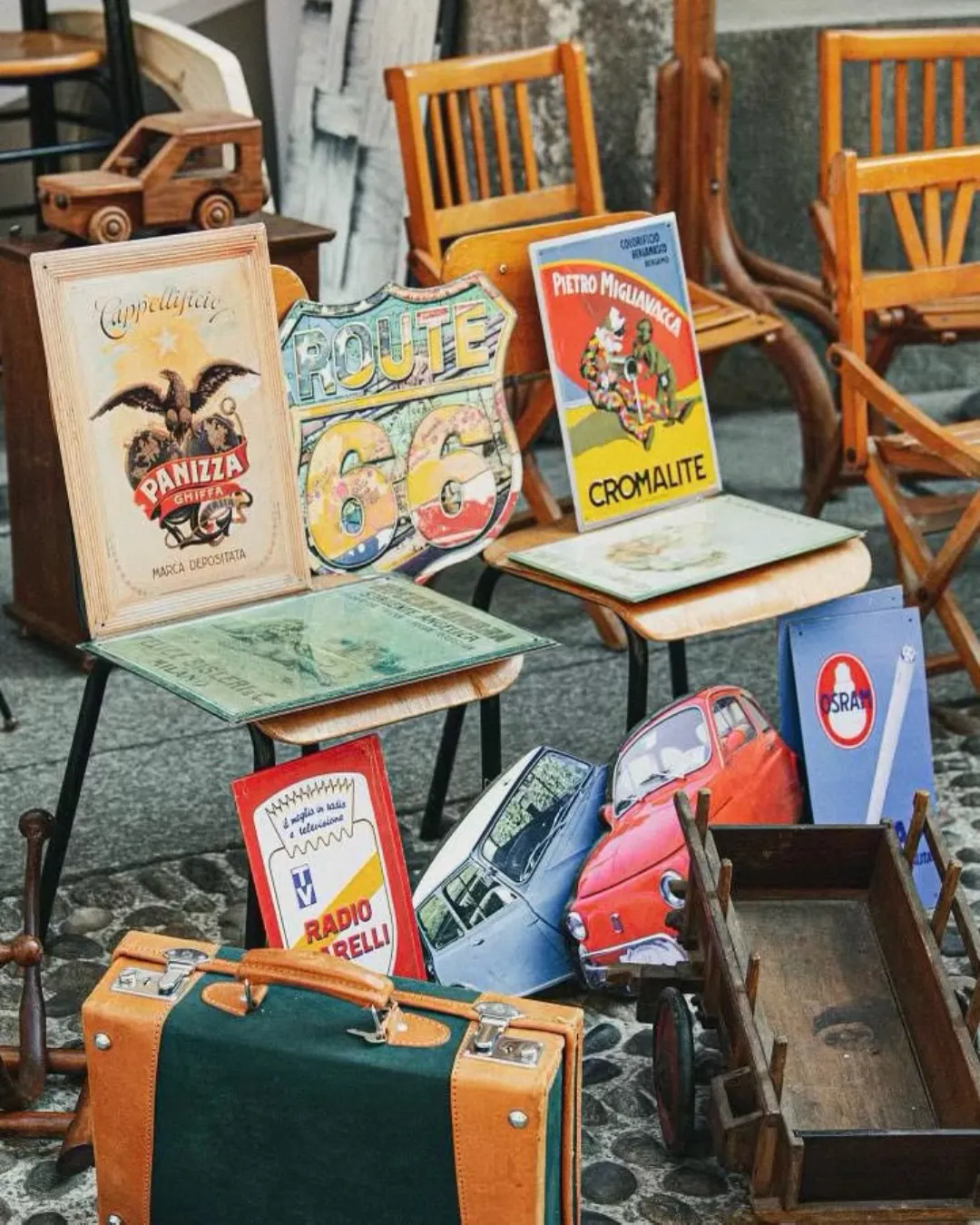
At a certain point, some neighborhoods begin to behave like brands. They have a recognizable name, an aesthetic, an audience, a promise. They have the right venues, curated signs, festivals, markets, Instagram profiles, editorial maps, apartments described in listings as «in the heart of the city’s most creative district». Walking through them, you no longer know whether you are crossing a neighborhood or a brand identity.
It happens in Milan with NoLo and Isola, it happens in Rome with Pigneto and Trastevere, and it has been happening for years in Brera, now less a geographical area and more an imaginary world: art, design, aperitivo culture, Fuorisalone, urban elegance. Every neighborhood has its own implicit palette, its own tone of voice, its own target audience. But the question remains the same: who decides this narrative? Who authors the cultural project of a neighborhood?
Narrated gentrification
Gentrification is often described through its most visible effects: rising rents, changing venues, shops closing, new residents arriving, long-time inhabitants struggling to stay. But today urban transformation also operates on a less material and equally powerful level: storytelling. A neighborhood is not only renovated, it is rewritten. Some parts are highlighted, others disappear. Multiculturalism becomes vibrancy, nightlife becomes energy, working-class identity becomes authentic, while real estate pressure is hidden behind words like rebirth, regeneration, creative district.
NoLO
NoLo is perhaps the most interesting Italian case because it contains all the ambiguity of the phenomenon. The name, an acronym for North of Loreto, also emerged from a grassroots push involving local networks, residents, cultural initiatives, and neighborhood practices. It is not simply a label imposed by a real estate multinational. At first, it feels like an affectionate gesture, almost community-driven: giving something a name means making visible what was previously more blurred, building belonging, recognizability, and local pride.
The problem is what happens afterward. Once the name enters common language, the media, events, and real estate listings, it no longer belongs only to those who created it. It becomes a lever. Linkiesta, in a 2024 article about the NoLo case, describes a gentrification driven by a «symbolic resignification of the territory», later commercialized and used by the real estate market, also emphasizing the role of media, social platforms, and events in accelerating processes already underway.
This is where the branded neighborhood reveals its most complex side. An urban identity can emerge from the bottom up, but it does not necessarily remain in the hands of those who created it. It can begin as a community narrative and quickly become commercial language. It can help assert the identity of a previously undervalued neighborhood, but it can also end up altering its value so dramatically that it excludes the very people who once lived there.
Isola
Ci sono particolari a Milano che ti fanno innamorare della città e della vita. (Milano, quartiere Isola Da Tomaso - foto andrea cherchi) pic.twitter.com/m8U7dUsMi2
— andrea cherchi (@cherchiandrea) December 10, 2023
Isola tells another version of the same dynamic. For years it was described and experienced as a neighborhood with a strong working-class identity, artisanal culture, and close-knit community life. Then the transformation of Porta Nuova, the verticalization of contemporary Milan, and the arrival of new economic and symbolic flows changed the way the neighborhood is perceived. Today it is part of the narrative of international, creative, financial, and real-estate-driven Milan. It has not completely lost its memory, but that memory now coexists with a far more marketable narrative.
A study published in Cities dedicated to cultural gentrification in Milan shows how cultural investments do not always act as the initial cause, but can instead amplify socio-economic transformations already underway, producing different trajectories from one neighborhood to another. This is a crucial point: culture is never neutral in urban space. It can generate access, vitality, and imagination, but it can also become an accelerator of value, and therefore of exclusion.
Pigneto
@michelecirillo.ph Pigneto - Through my eyes - Giugno 2024 Shot with Sony Alpha @sonyalpha Editing: PremierePro @adobevideo #pigneto #fanfulla #roma #quartieri original sound - michelecirillo.ph
In Rome, Pigneto works as an almost perfect parallel. For years it was portrayed as a working-class, Pasolinian, alternative, nightlife-oriented neighborhood. Then it became creative, then food-oriented, and increasingly appealing to those seeking a certain idea of the city: less monumental, rougher, more “real.” But here too, authenticity becomes a product. A 2024 investigation by IrpiMedia describes the pressure of rents and short-term rentals in the neighborhood, mentioning apartments offered between €1,200 and €2,500 per month and listings marketing Pigneto as one of the capital’s “emerging” districts.
It is a recurring formula: first a neighborhood is perceived as difficult, peripheral, neglected, or undesirable. Then artists, students, independent venues, new residents, media, tourism, and investors arrive. At that point, the same characteristic that once seemed like a limitation becomes value. The neighborhood is no longer out of the way, it is authentic. It is no longer working-class, it is vibrant. It is no longer cheap, it is emerging.
Brera and Trastevere
Brera and Trastevere represent the next stage: when the neighborhood has already become an image. Brera is a visual promise: galleries, design, boutiques, courtyards, cultured and photogenic Milan. Trastevere is often consumed as a pre-packaged version of Roman identity: alleys, cobblestones, trattorias, hanging laundry, nightlife, tourism. In both cases, the neighborhood is not only inhabited but consumed as an experience. Visitors seek an already-narrated version of the place. Those who live there risk becoming part of the scenery.
The point is not to say that every form of urban storytelling is negative. Neighborhoods have always had reputations, nicknames, emotional boundaries, and informal identities. No place has ever been just a sum of buildings. The problem begins when this identity is extracted, cleaned up, and monetized without returning value to those who produced it. When the neighborhood narrative serves more to sell it than to make it livable. When storytelling becomes stronger than social reality.
Who really benefits from the branding of neighborhoods?
Place branding, in theory, should build a shared perception of a place by enhancing its characteristics, communities, and attractiveness. But in practice, power is never equally distributed: long-time residents, newcomers, shop owners, property owners, tourists, institutions, and media do not carry the same weight in deciding what a neighborhood means. A study on the bottom-up place branding of NoLo describes precisely the intertwining of grassroots branding and social impacts on hyper-diverse local communities. Even when the origin is participatory, the effects are not automatically fair.
This is where the most uncomfortable question must be asked: who profits when a neighborhood becomes cool? Do the people who have lived there for years benefit? Those who built social networks, businesses, associations, and habits? Or do those who arrive later benefit, once the identity is already ready to become a price per square meter, a tasting menu, a short-term rental, a cultural event, social media content?
The branded neighborhood selects. It showcases venues, facades, outdoor seating, murals, festivals, “authentic” shops, but pushes out elderly residents, low-income inhabitants, families, and businesses that can no longer afford rising rents. The neighborhood is described as more alive, but we must always ask: alive for whom?
The right to choose the future of one’s neighborhood
Gentrification as branding is difficult to criticize. It can generate services, improve safety, public life, media attention, and deepen the culture of an area. For this reason, the issue is not whether a neighborhood matters, but whether it remains accessible. Not whether it has become more beautiful, but for whom. Not whether it works better as an image, but whether it still functions as a shared place.
It is clear that neighborhoods like Isola, NoLo, Pigneto, Brera, or Trastevere have developed a brand identity, but who truly has the right to reshape it? Who gets to decide the fate of a space? Who can remain within the narrative without being turned into background scenery? Because when a neighborhood becomes a brand, the risk is not only that its audience changes. It is that it loses the possibility of being narrated by the people who actually live there.