
Everybody is talking about Tokyo Style pizza A a new variant that's meeting great success, in New York and beyond
A new reinterpretation of pizza called Tokyo Style has become popular. A similar phenomenon had already been seen a few years ago with Detroit style, a pan pizza originating from the eponymous U.S. city, characterized by a tall, soft dough and cheese-covered edges. Unlike the latter, however, Tokyo Style maintains an appearance almost indistinguishable from that of the classic Neapolitan pizza, while being based on quite different preparation techniques.
Tokyo Style first became established in New York, where the famous Japanese pizzaiolo Tsubasa Tamaki – described by the New York Times as Tamaki «one of the most acclaimed» in the city for his very high standards – opened a new restaurant. The venue has become a destination for food influencers and content creators, who have helped turn this pizza variant into a viral phenomenon on social networks.
What distinguishes Tokyo Style pizza
@notapizzeria ever heard of tokyo style pizza? heavily inspired by neapolitan pizza, they use a pinching technique to achieve unique textures in the crust, in addition to a salt punch into the oven! #pizza #tokyostylepizza original sound - not a pizzeria
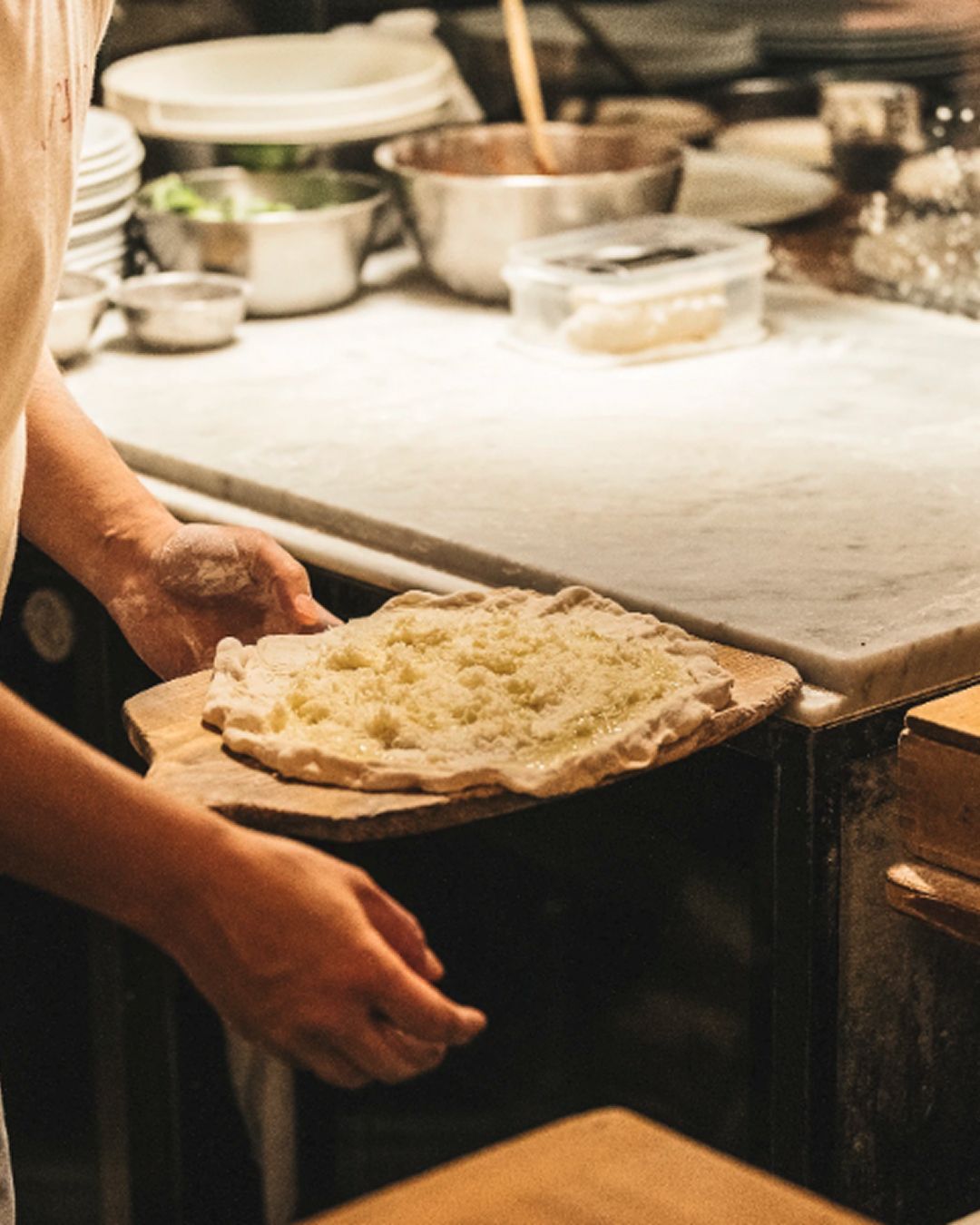
The dough of Tokyo Style is made by mixing Japanese and American flours. The mixture is then left to rise for about thirty hours – much longer than traditional Neapolitan pizza, which usually involves a leavening period between eight and twenty-four hours. During preparation, the edge is also pinched along the entire perimeter so that it traps air inside: the crust after baking is therefore particularly puffy. «This is an extremely delicate hand technique, designed to retain as much air as possible in the dough,» Tamaki himself explained to the food magazine Broadsheet.
The cooking of Tokyo Style usually takes place in a wood-fired oven with a base of refractory stone, a material capable of storing and distributing heat evenly, on which salt is sprinkled to absorb part of the dough’s moisture and make the pizza more crispy and flavorful. At the end of baking, aromatic wood chips are also added, giving the final product a light smoky note. The result is a pizza that is visually identical to Neapolitan pizza, but with a more intense and complex flavor. «The secret [of Tokyo Style] lies in the targeted pursuit of umami flavor and millimetric control of seasoning,» Tamaki emphasized.
The importance of Japan for pizza
Tokyo Style itself actually has quite a long history: it was codified about thirty years ago and its creation is attributed to Susumu Kakinuma, mentor of Tamaki and now a highly respected figure in the Japanese culinary scene. In the 1990s, Kakinuma spent a training period in Naples, where he studied traditional pizza making, before returning to his country and beginning to develop his own reinterpretation of the dish, which gradually became known as Tokyo Style.
Although this new reinterpretation of pizza spread starting from New York, it is no coincidence that its origins are Japanese: for some time, many experts and industry professionals have considered Japan the second country in the world after Italy where pizza is made with the greatest rigor and care.
More broadly, both in Italy and abroad, in recent years attention has further increased toward a more sophisticated kind of pizza: doughs and toppings have become subjects of study and experimentation for many pizzaiolos and restaurateurs, thanks also to the contribution of certain figures who have expanded its language, identity and techniques (such as Francesco Capece of Confine in Milan, or Luca Pezzetta of Futura), introducing variations and innovative processes.